Zahovay Ernest

život

Nyiló nárcisz (Kvetoucí narcis)
Melánia Olláryová, Tanečný orchester Juraja Berczellera
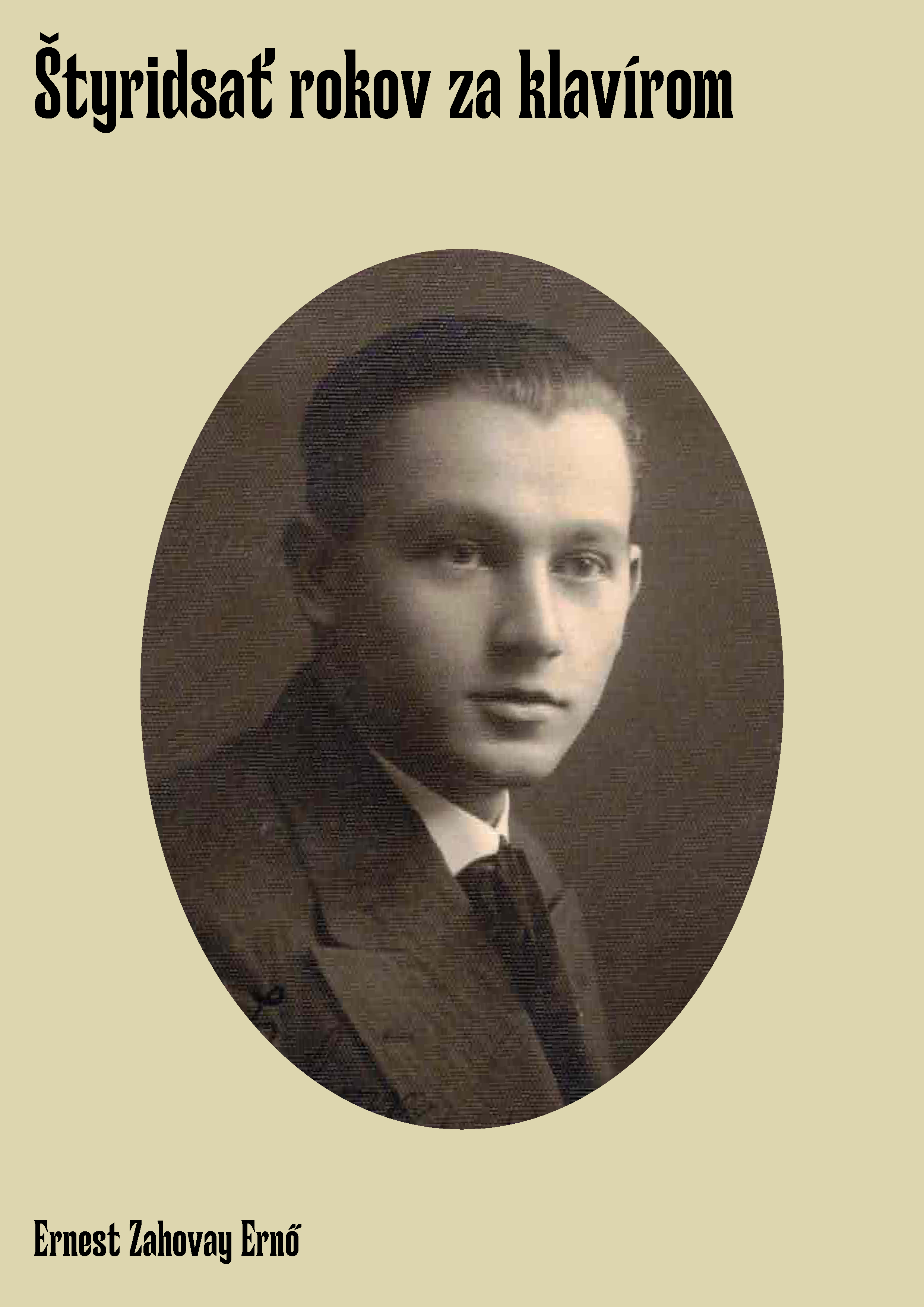
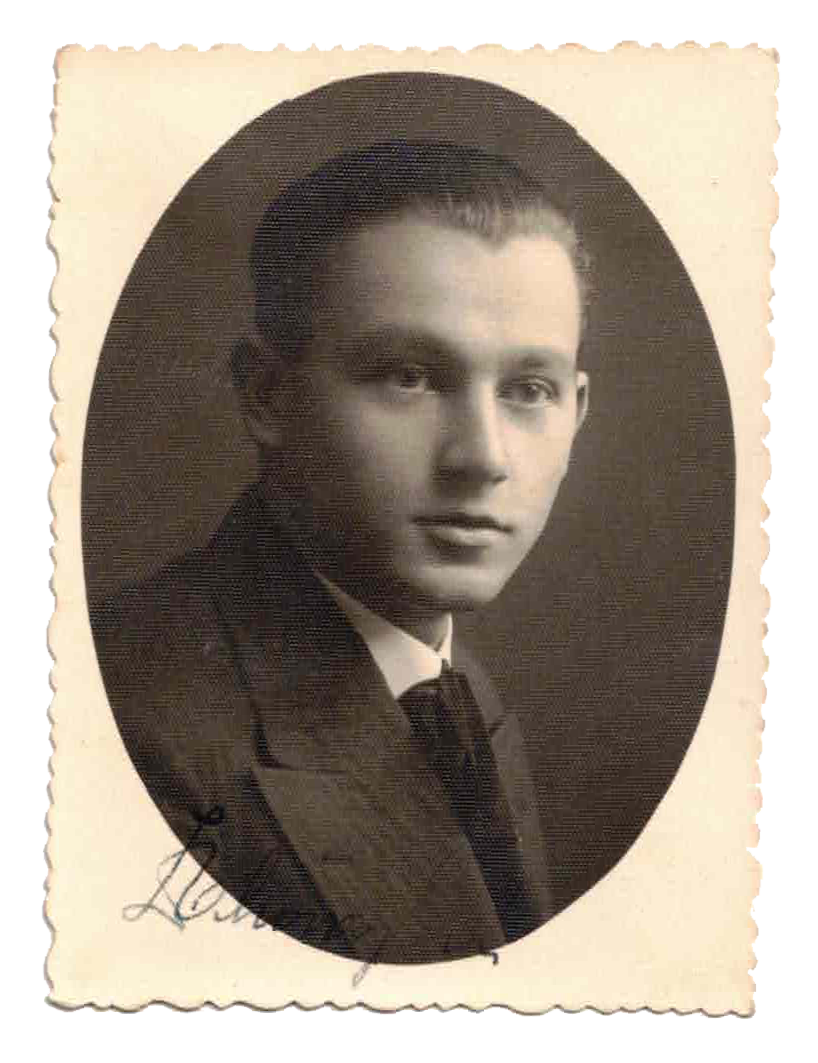
Black and white portrait of a young man in a suit and tie, with a serious expression, inside an oval frame on a textured background.

Ako 17 ročný mládenec
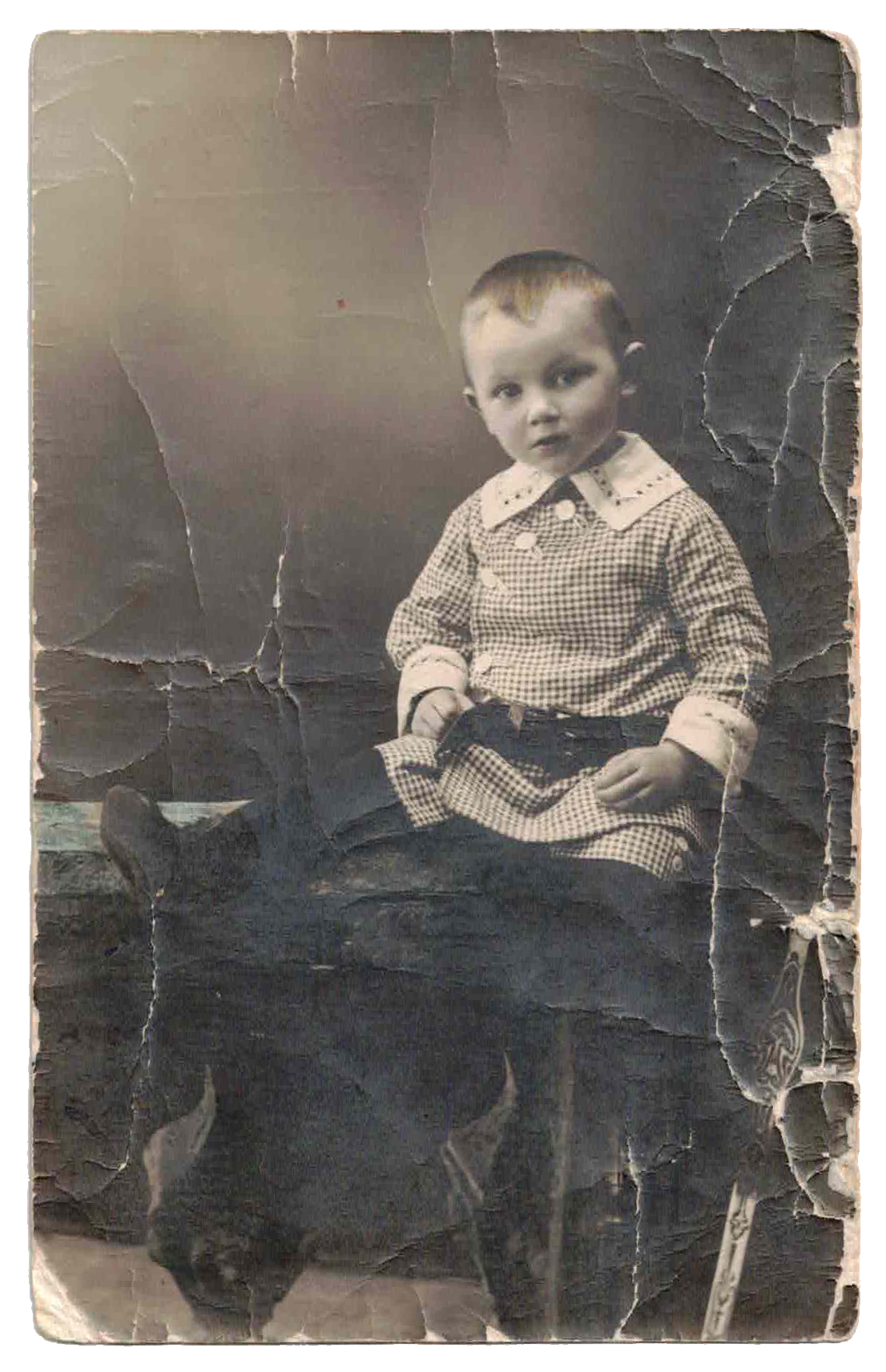
Black and white photo of a young boy sitting on a chair with a torn and worn background.

Ako 2.5 ročný

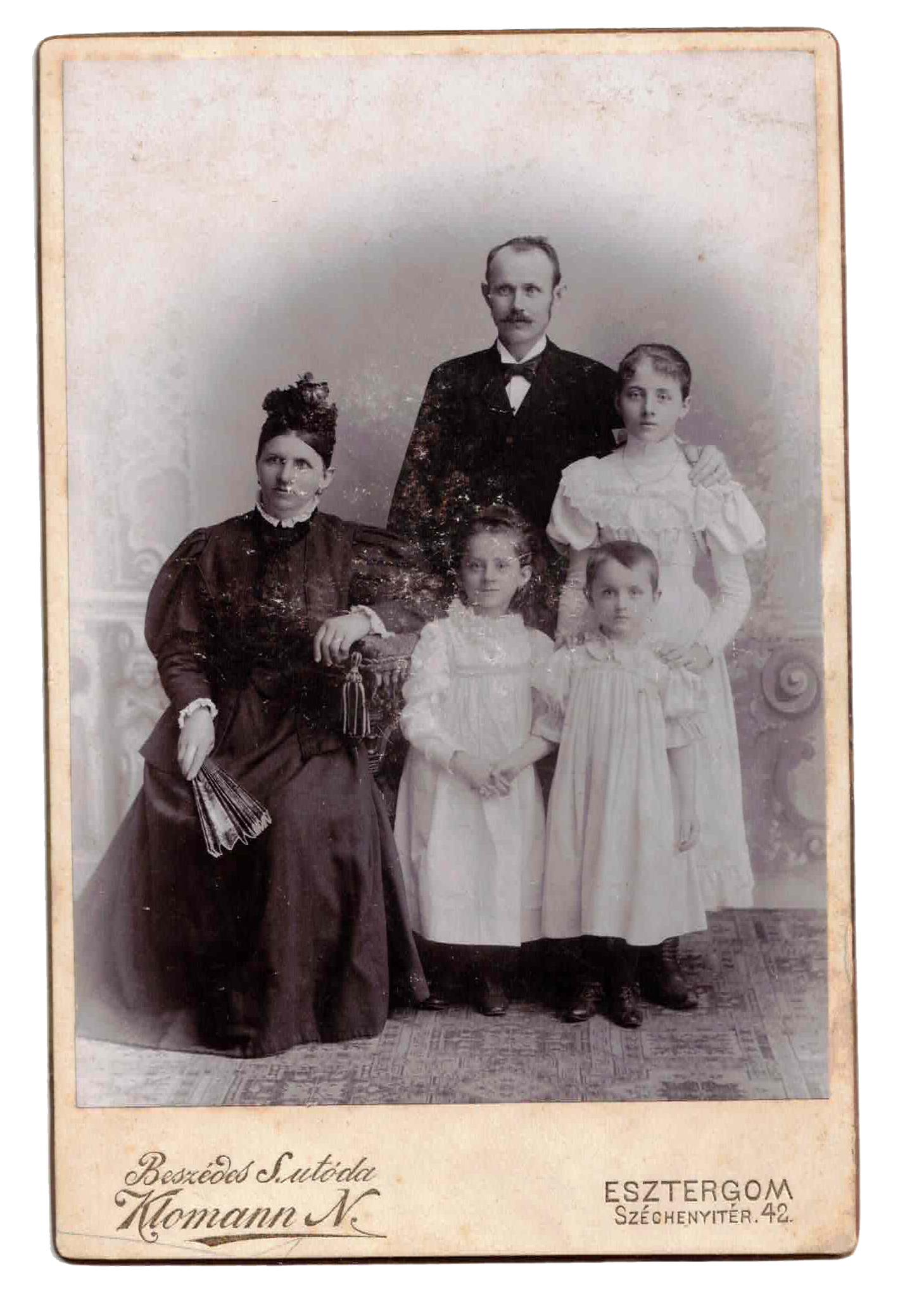
Black and white vintage photograph of a man with three children in formal attire, with two children standing and one sitting, possibly from the late 19th or early 20th century, with handwritten text below.

Rodina Ernestových starých rodičov

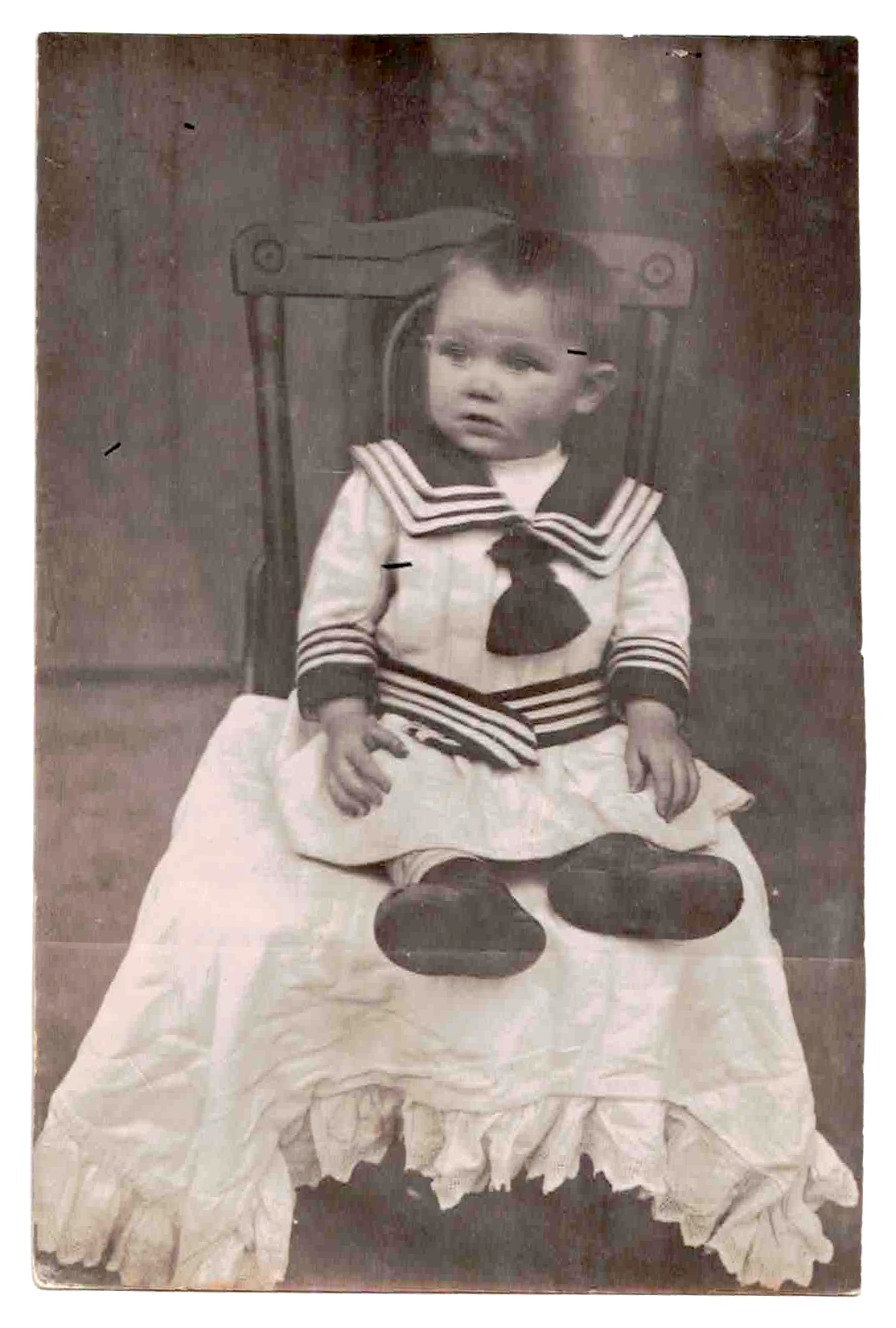
A young child sitting on a chair, dressed in a sailor-themed outfit, with a ruffled skirt and dark shoes, in a vintage black-and-white photograph.

Dieťa sťa bonbón. Asi 1,5 ročný

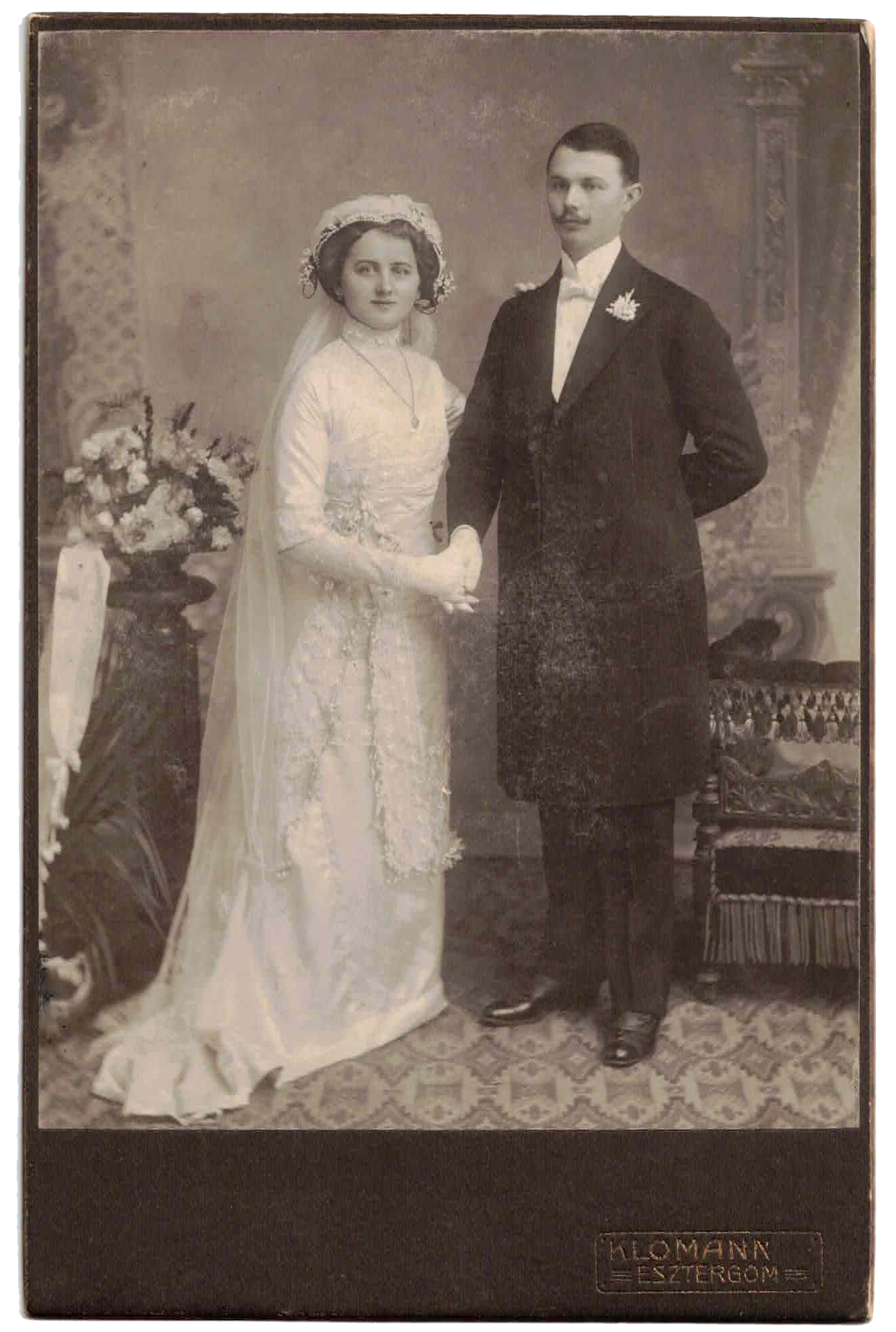
A vintage black and white photograph of a bride and groom standing together indoors. The bride is wearing a long white wedding gown with lace details, gloves, a veil, and a headpiece. The groom is dressed in a dark suit with a white shirt, bow tie, and a floral boutonniere. They are holding hands, and there are decorative vases with flowers and an ornate backdrop in the background.

Starí rodičia

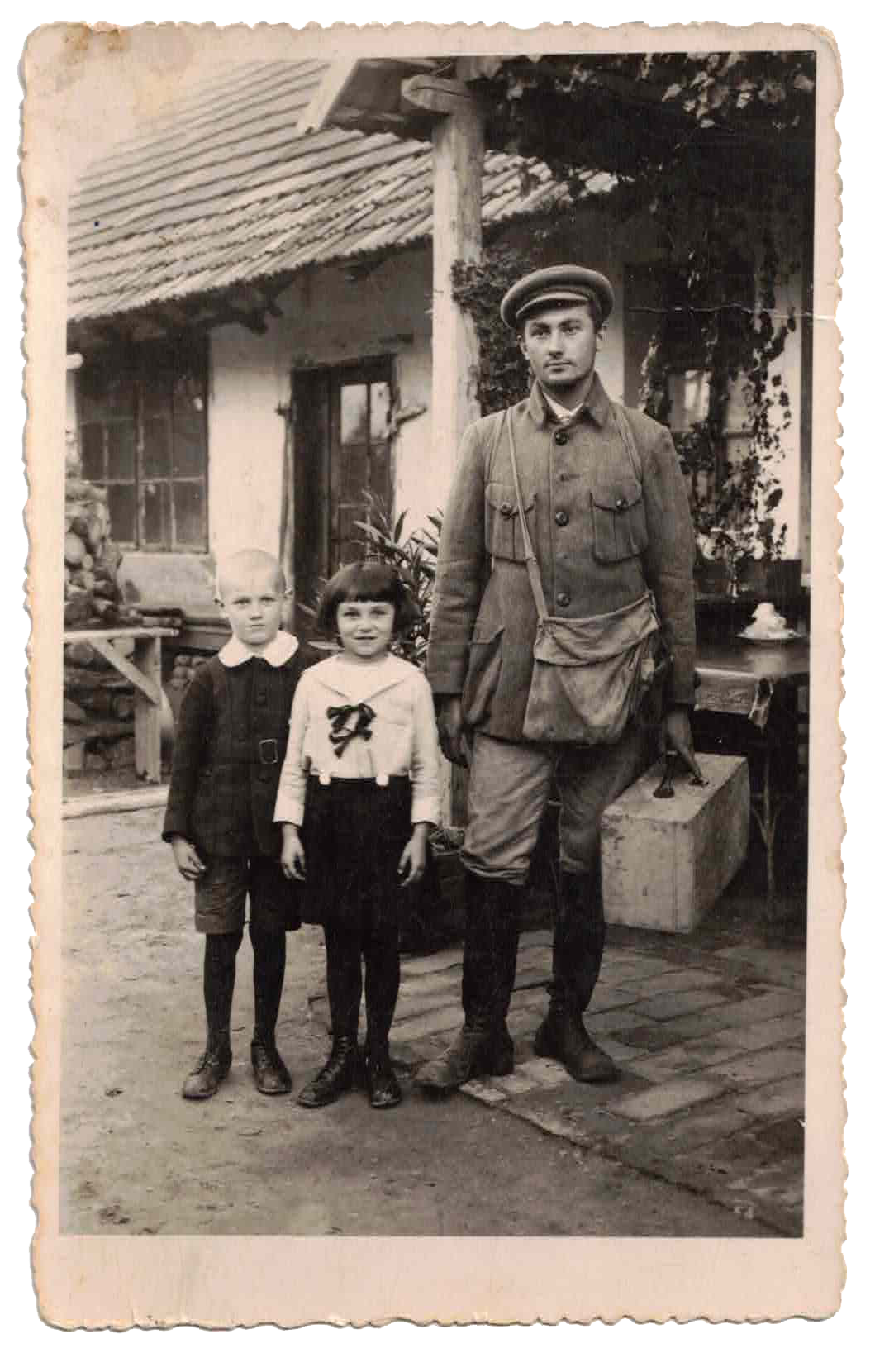
A black-and-white photograph of a soldier standing outdoors with two children, one boy and one girl, in front of a house with a tile roof, window, and door. The scene appears to be from an earlier time period, possibly wartime.

Strýkov návrat z vojny a malý Ernest so sestrou

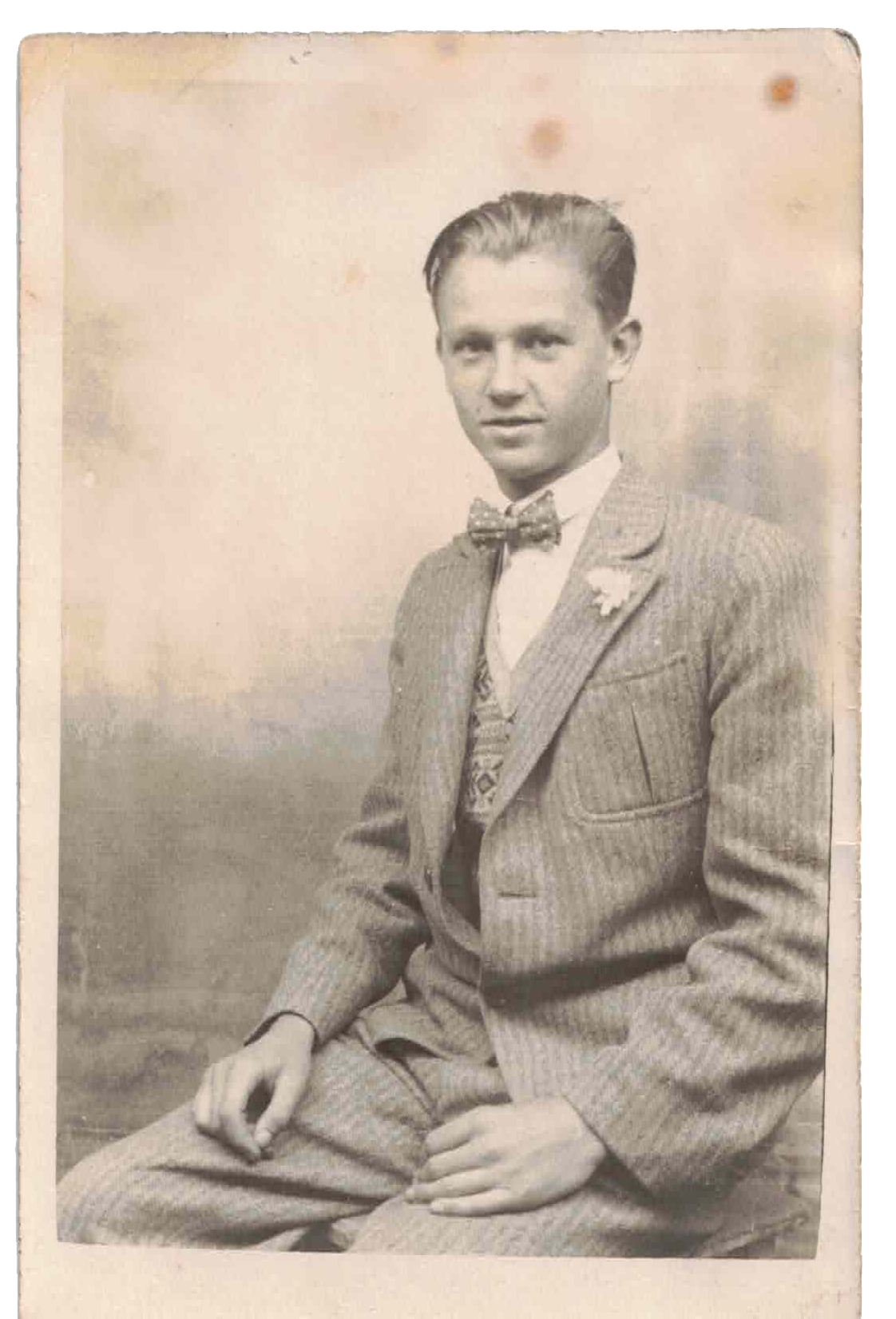
Black and white vintage photograph of a young man dressed in a suit with a bow tie, sitting with one hand resting on his lap and the other on his knee, looking at the camera.

Ernestov prvý oblek

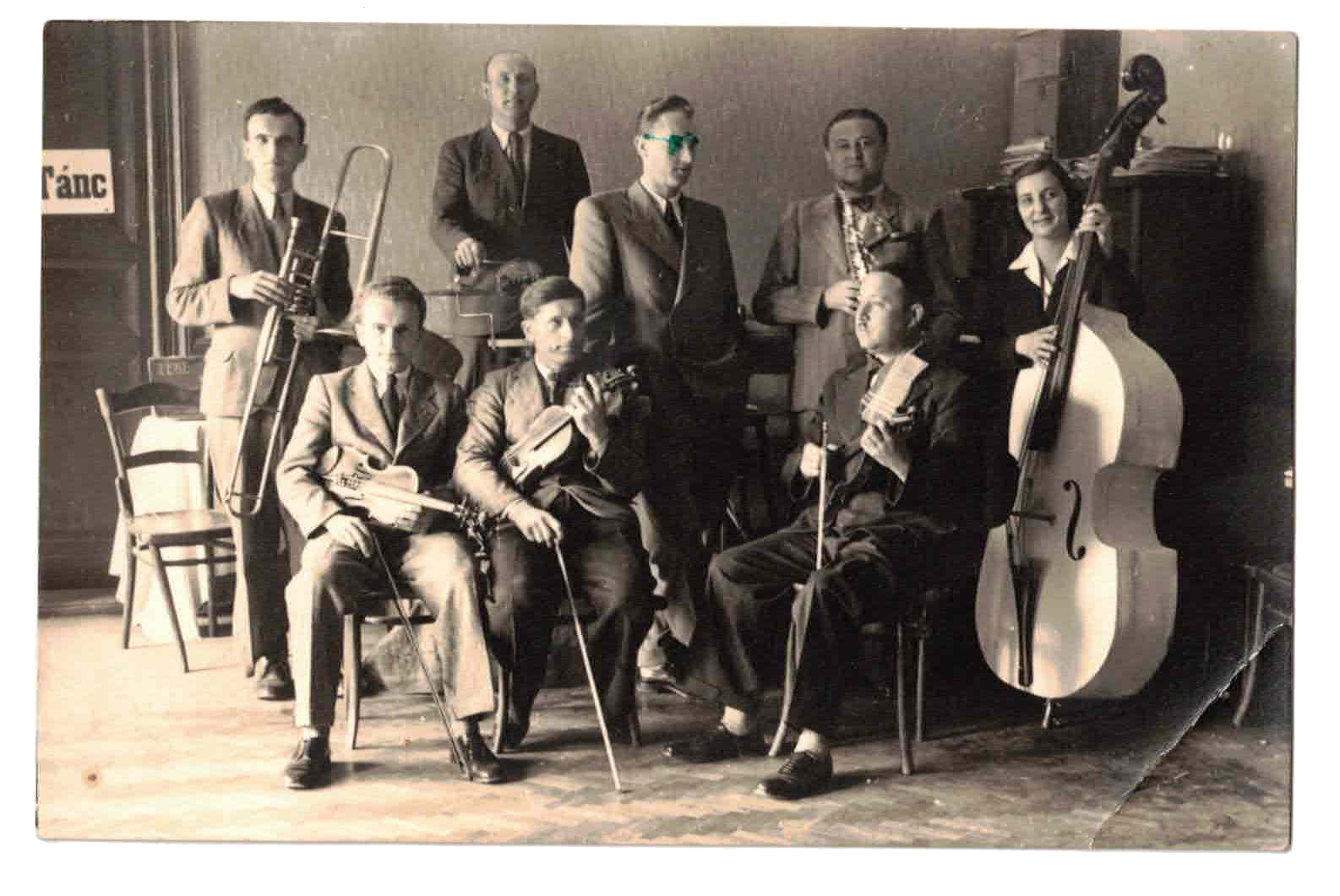
Black and white photo of a band with nine members holding musical instruments, including a double bass, violin, trombone, and clarinet, in a room with a plain wall background.

Máj 1933. Posledné muzicírovanie v hostinci u strýka. Potom sa šlo hrať do sveta!
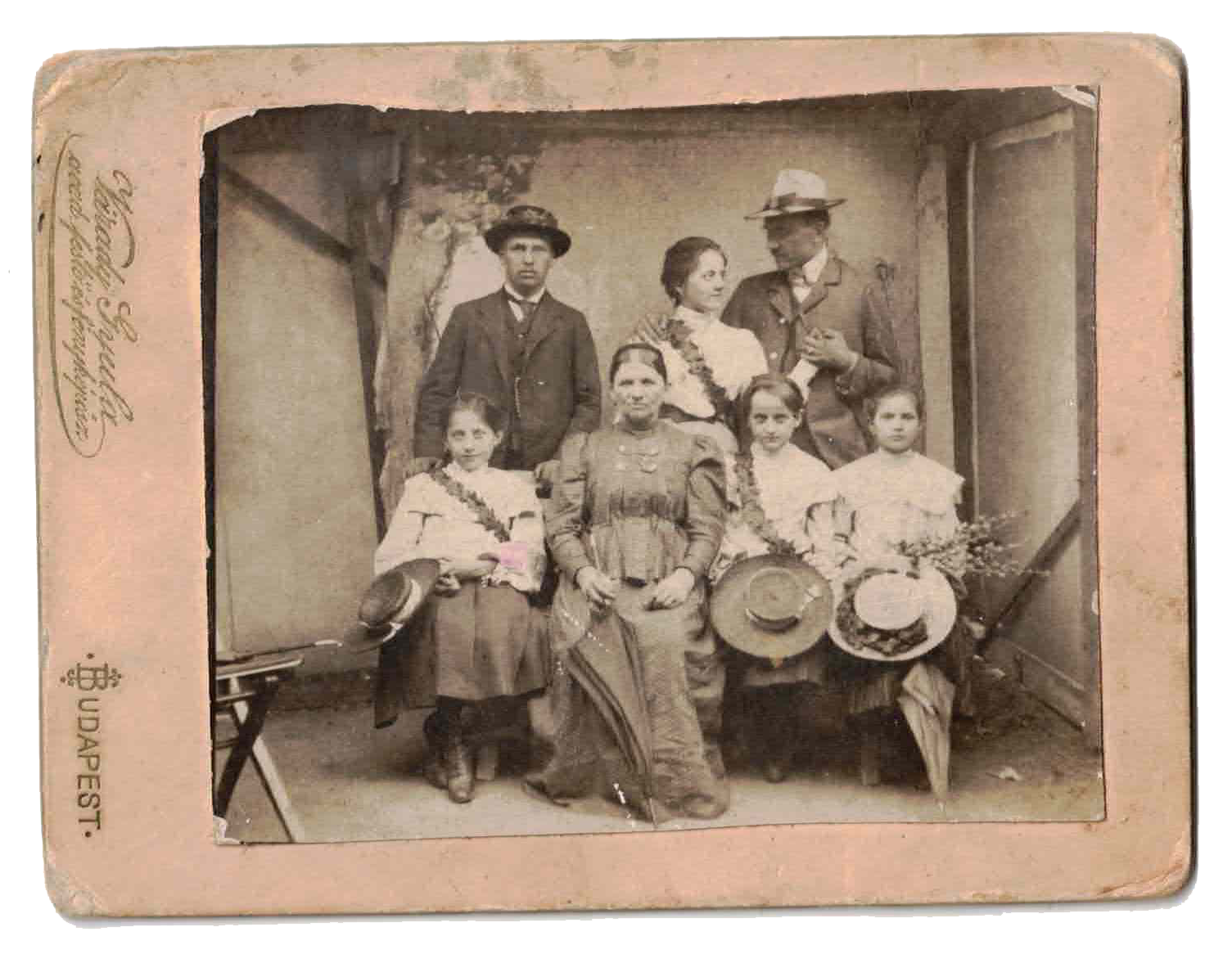
A vintage black-and-white group photo featuring a man, a woman, four girls, and a boy, posed outdoors with trees in the background. The man and woman are at the center, with the children around them, some holding hats and flowers.

Ernestovi prarodičia a ich štyri dcéry. Jeho stará mama je prvá vpravo

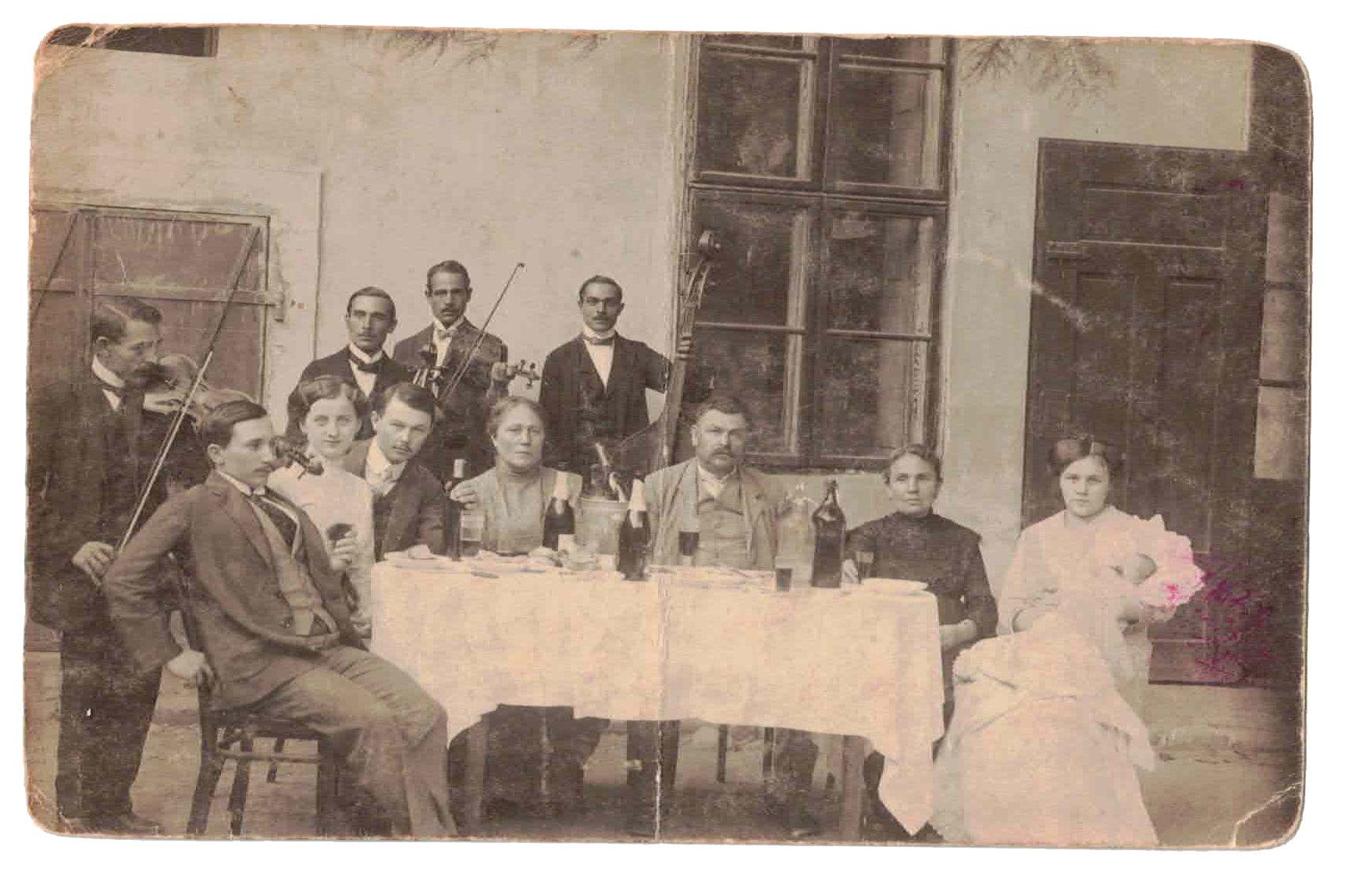
A vintage photograph of eleven people, six men, three women, and two children, gathered around a table outdoors in front of a building with an open window. Some men are holding musical instruments, such as violins, and there are bottles and glasses on the table, indicating a social gathering or celebration.

Ernestove krstiny (1913), veselica s cigánskou kapelou.
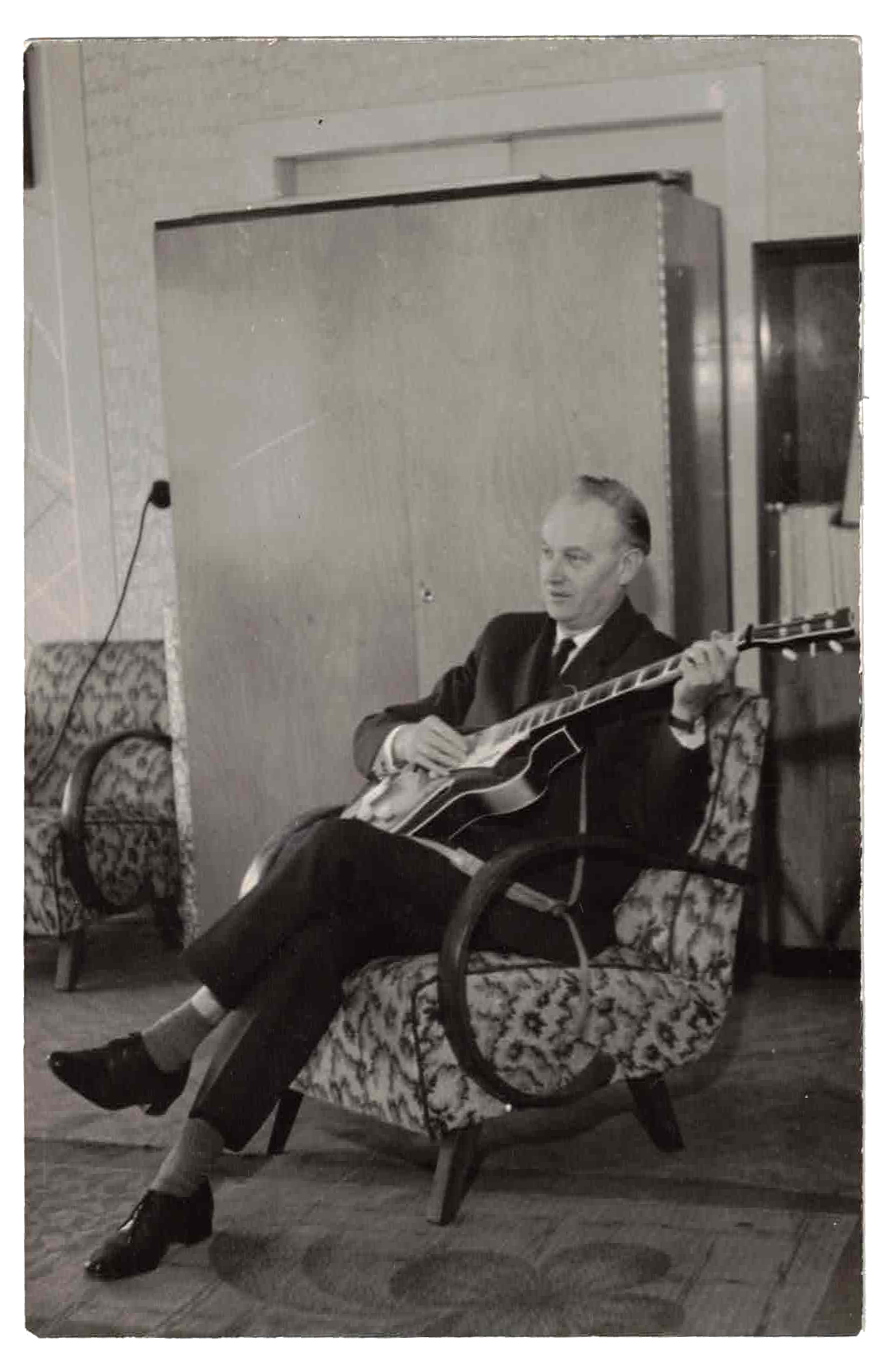
A black-and-white photo of a man sitting on a patterned upholstered armchair, playing an acoustic guitar. He is dressed in a dark suit and light shirt, with crossed legs and high heels. The room appears to be a vintage living room with another similar armchair, carpet, and a wooden cabinet in the background.

V neskorších 60-tych rokoch, keď to s rodinou vyzeralo vážnejšie, Ernest skončil “potulný život muzikanta” a začal hudbu vyučovať

Old black and white photo of a family standing outside a building, with five people, including two men, one woman, one girl, and one boy, dressed in vintage clothing from the mid-20th century. The woman and girl are wearing headscarves, and the boy is holding a guitar case.
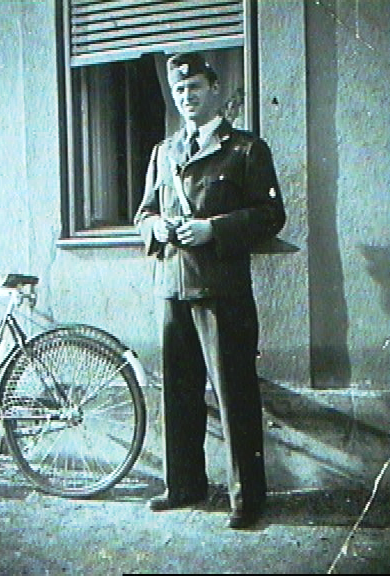
A young man standing outside near a bicycle in front of a building with a window and a partially open shutter.

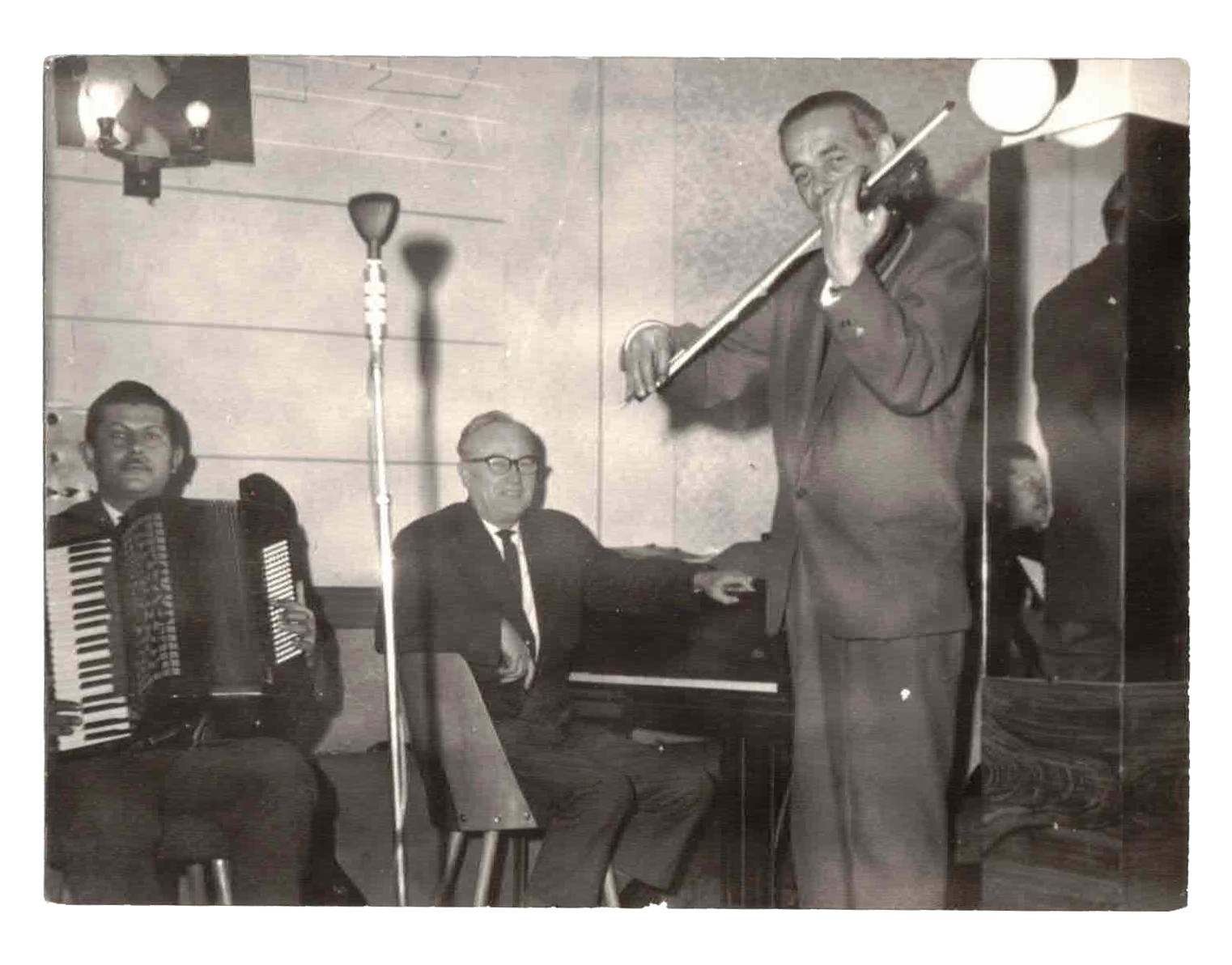
Kapela v zložení Adler Endre (husle), Halász Miška (harmonika), Ernest (klavír). V lete hrávali v záhradnej kaviarni hotela Dunaj (bývalého hotela Zahovay)

Three men in suits sitting on a carnival ride or amusement park ride, smiling and looking to the right.

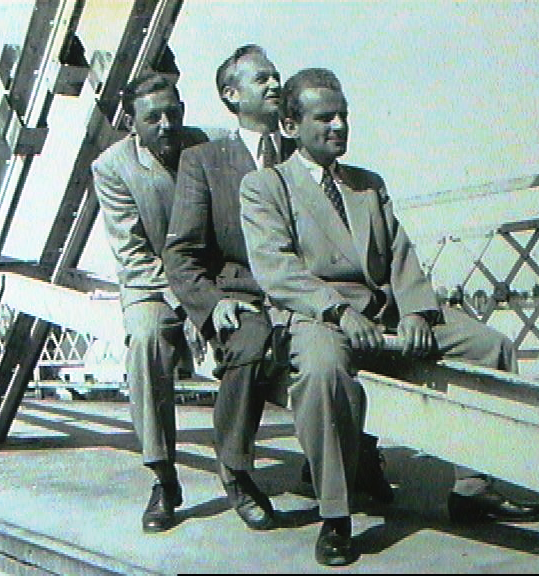
“Pózeri” na zbombardovanom moste medzi Párkányom (Štúrovom) a Ostrihomom. Prvý je priateľ je textár J. Hoffbauer, druhý je Ernest, tretí je jeho výborný harmonikár M. Halász.

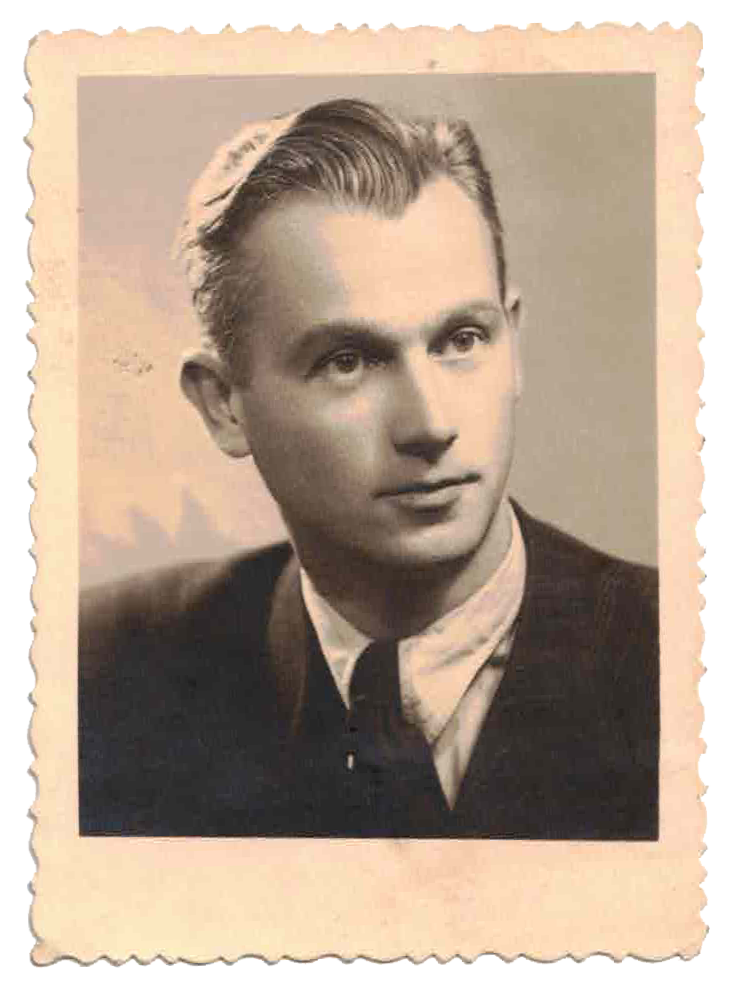
Black and white portrait of a young man with slicked-back hair, wearing a suit and tie, vintage style photograph
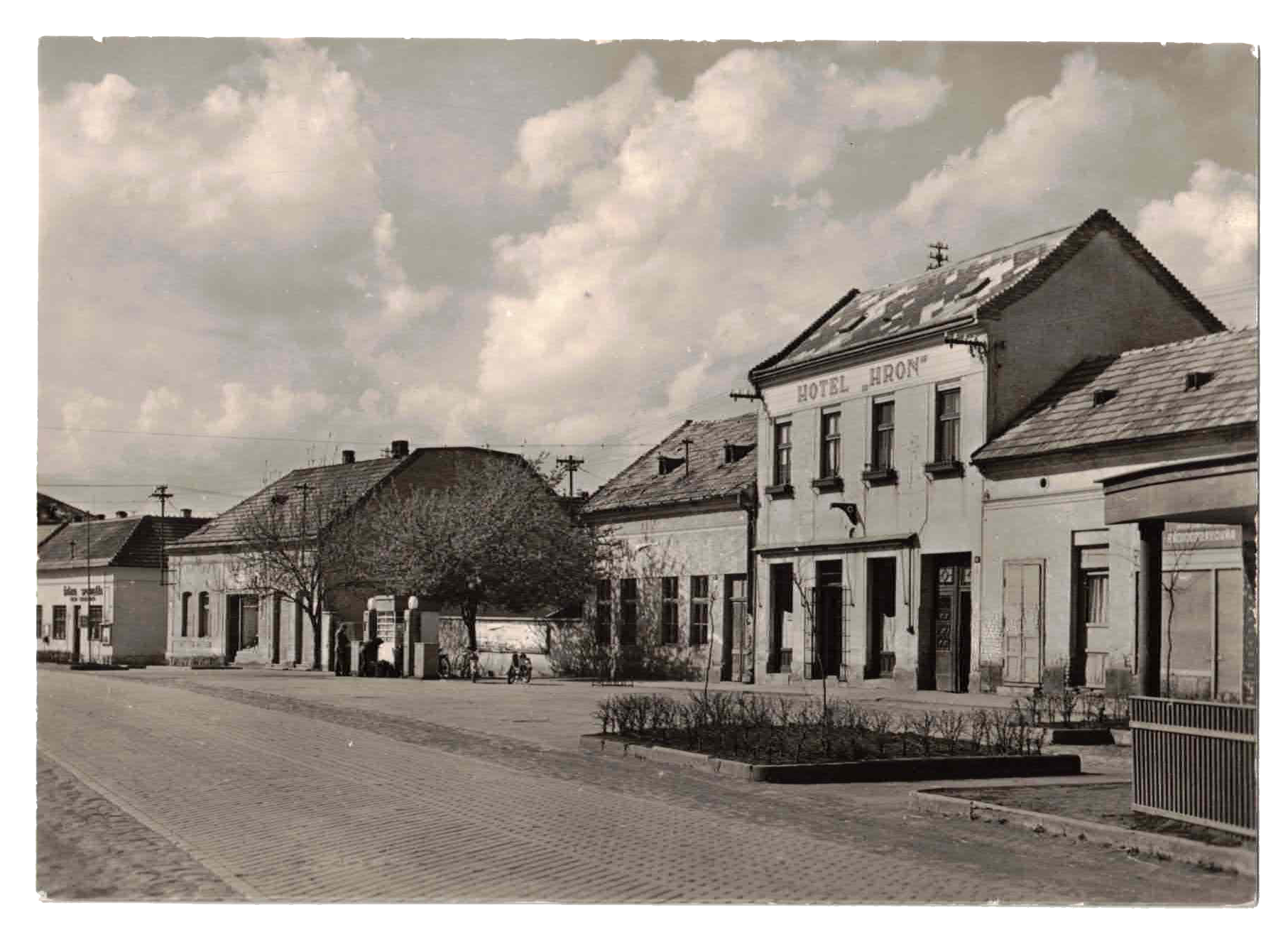
A historic small-town street scene in black and white, featuring a row of old buildings, including the Hotel Iron. The street appears quiet with only a few bicycles parked, and trees are lining the sidewalk under a partly cloudy sky.

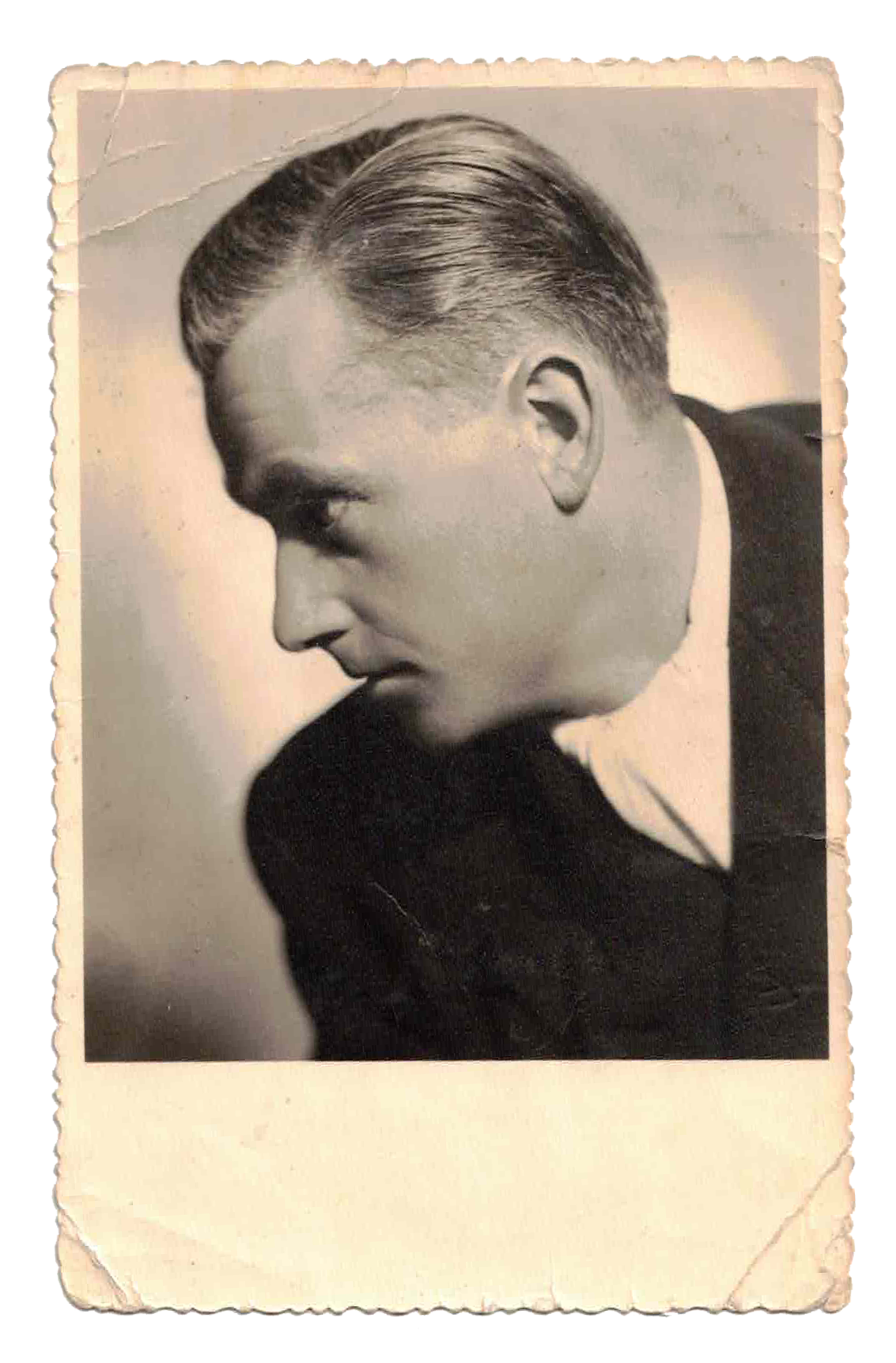
Ernestov portrét, rok 1943

Štúrovský hostinec, kde Ernest hrával

Black and white photo of six people, five standing and one sitting in front. They are outside near a wall, smiling and posing for the picture.

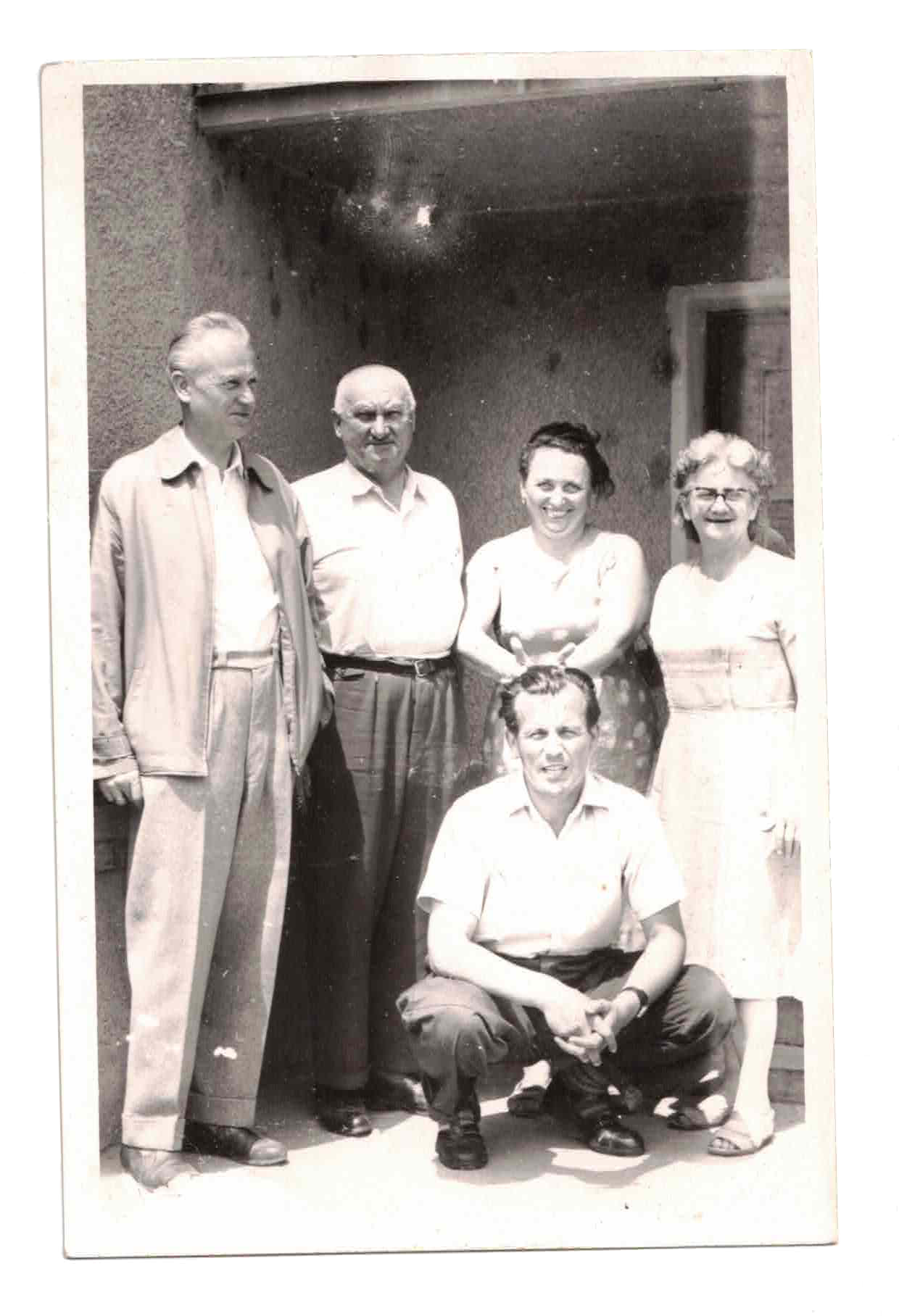
Pred hotelom Zahovay s majiteľom strýkom Ferom

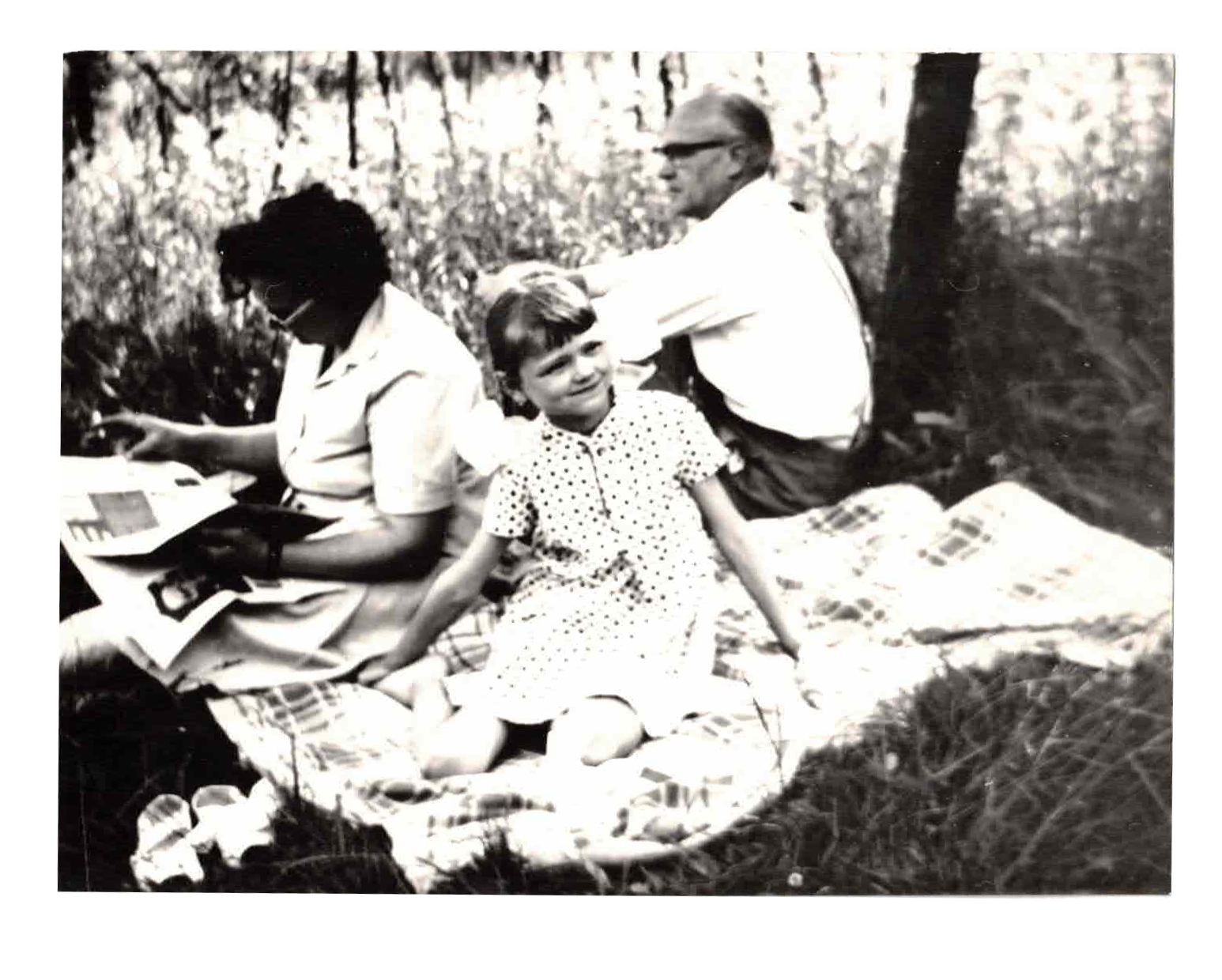
Black and white photo of three people sitting on a blanket outdoors. One woman is reading a book, a young girl with short hair and a polka dot dress is sitting on the blanket, and an older man with glasses is sitting behind her. They are surrounded by trees.

Výlet fotený samospúšťou. Ernest mal rád technické výdobytky. Vlastnil aj kameru a premietačku. V nedeľu si ako rodina po obede premietali.

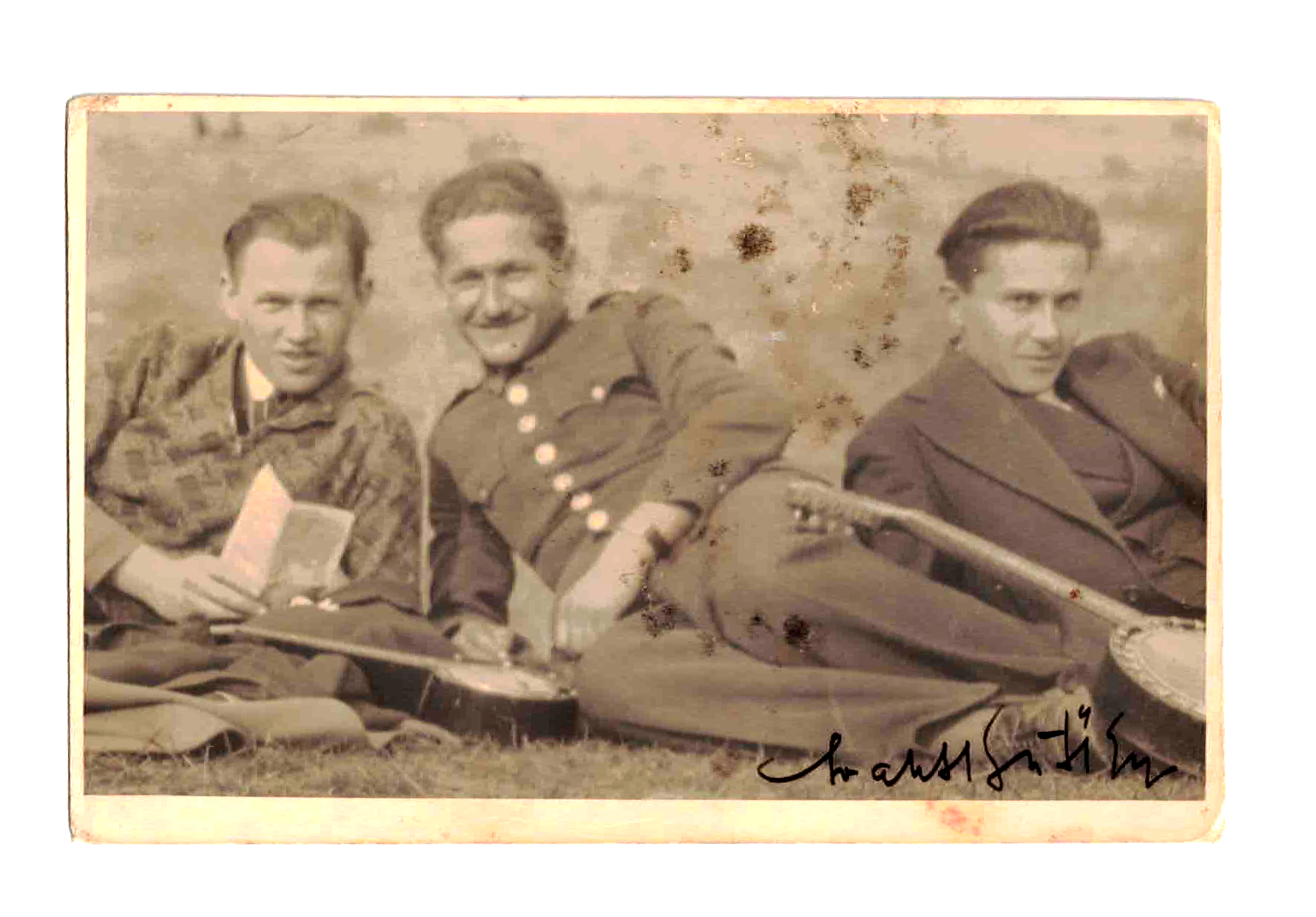
Three young men in military uniforms sitting on the ground, holding musical instruments, with one holding a book, in front of a textured background, with an illegible signature at the bottom right.

Cestou do obľúbeného Kováčova (1933)

A black and white photo of a man playing the flute, a man playing the accordion, and a man sitting at a piano in a room with a wood-paneled wall and a hanging light fixture.
A black-and-white photo of a man and woman standing on a grassy roadside near trees and bushes, facing each other.

Taktieť v kaviarni hotela Dunaj

Two women in vintage clothing sitting on a bench by a body of water, engaged in conversation.
Black and white vintage portrait of a young man with neatly combed hair, wearing a suit jacket and a collared shirt.
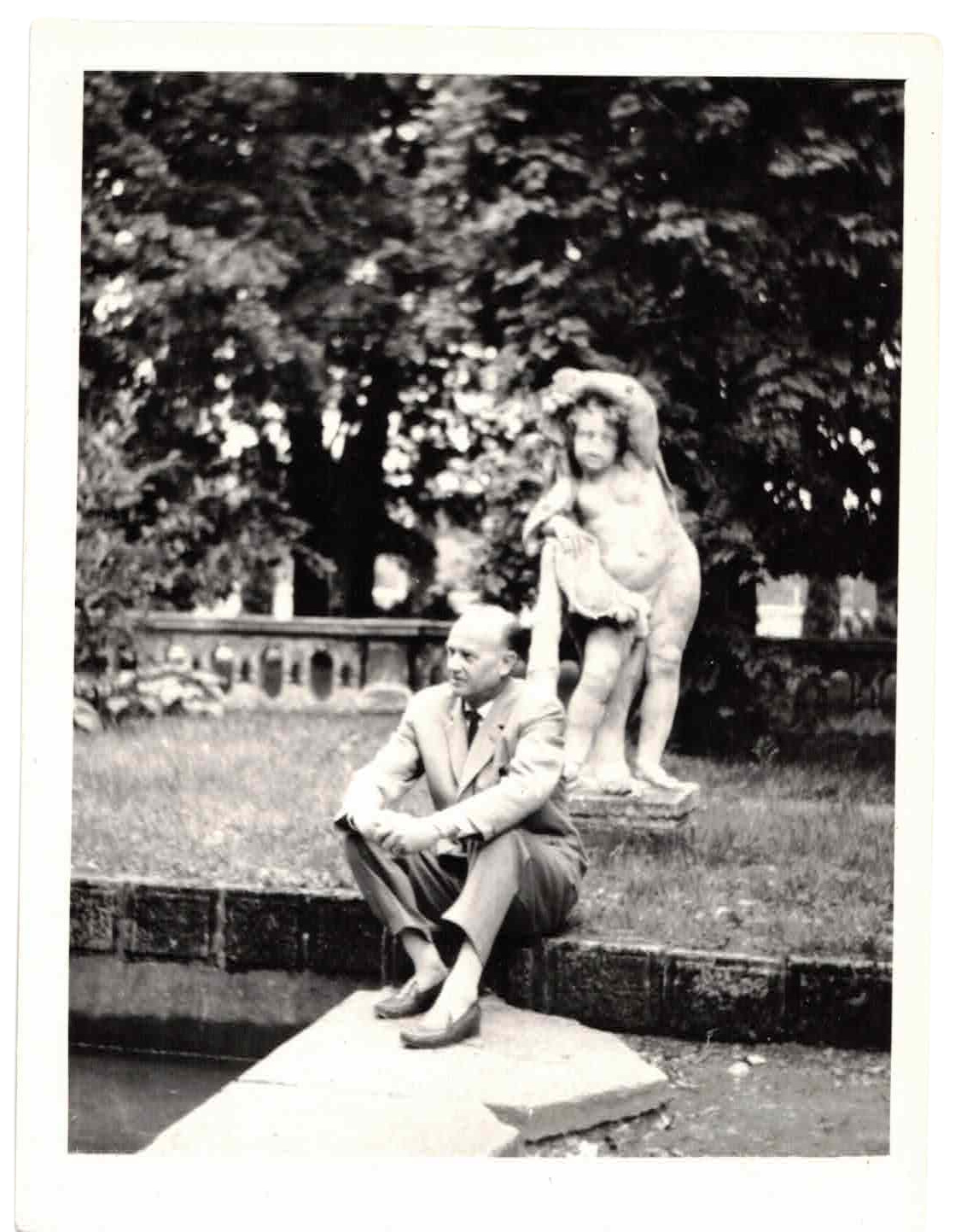
A black and white photograph of a man sitting on a stone ledge with a sculpture of a woman behind him, set in a garden with trees and a stone fence.

V piešťanoch počas svadobnej cesty. Amor svoju prácu už vykonal

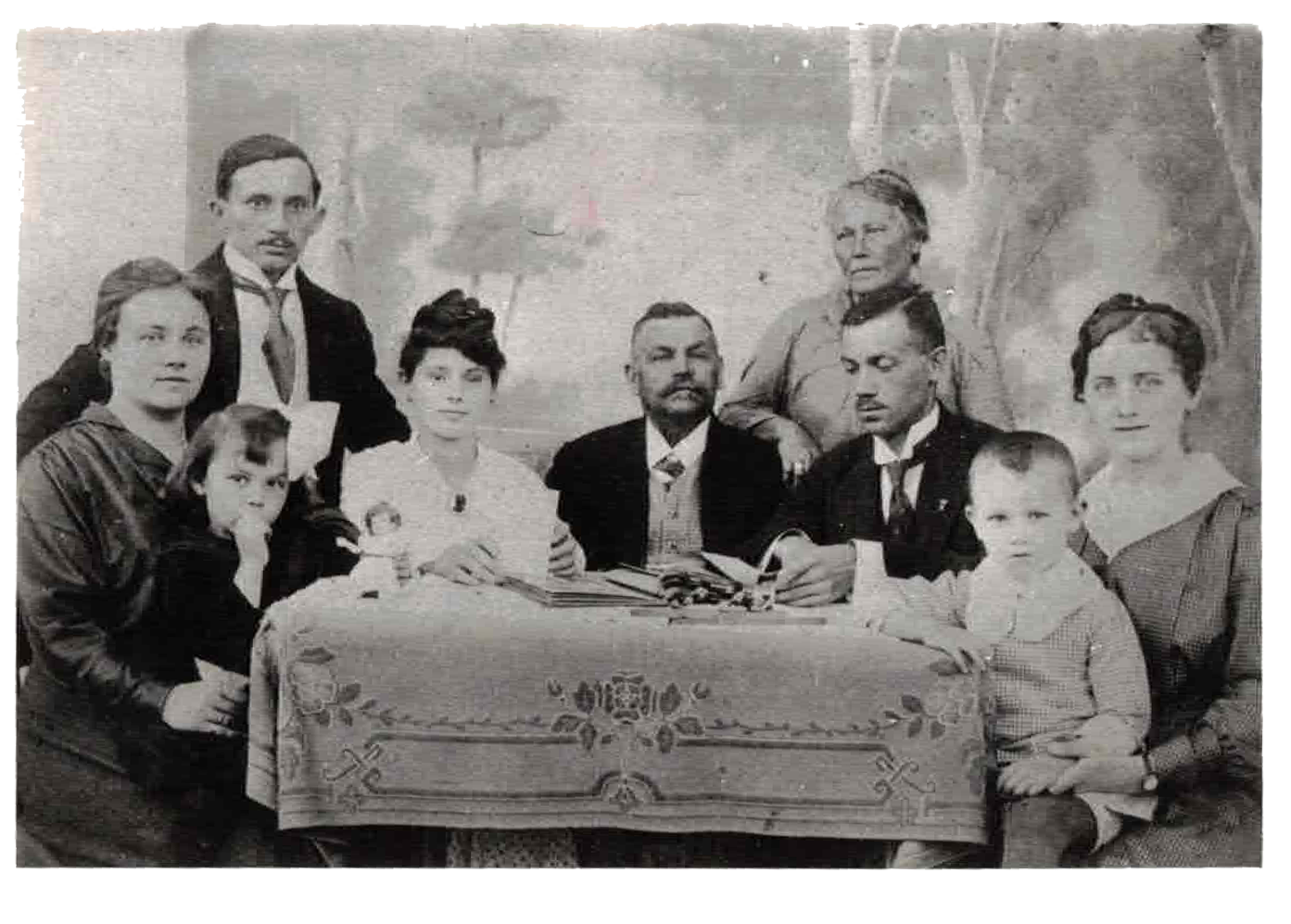
A black-and-white family portrait showing nine people gathered around a table with a embroidered tablecloth. Four women, three men, and two children are present, with some seated and others standing behind. The scene has a plain backdrop with painted scenery.

Rodinná fotka v ateliéri, Ernest s tetou napravo, mama so sestrou v ľavo

Black and white vintage photo of a young man with a neatly combed hairstyle, dressed in a tuxedo, looking down and to the side.
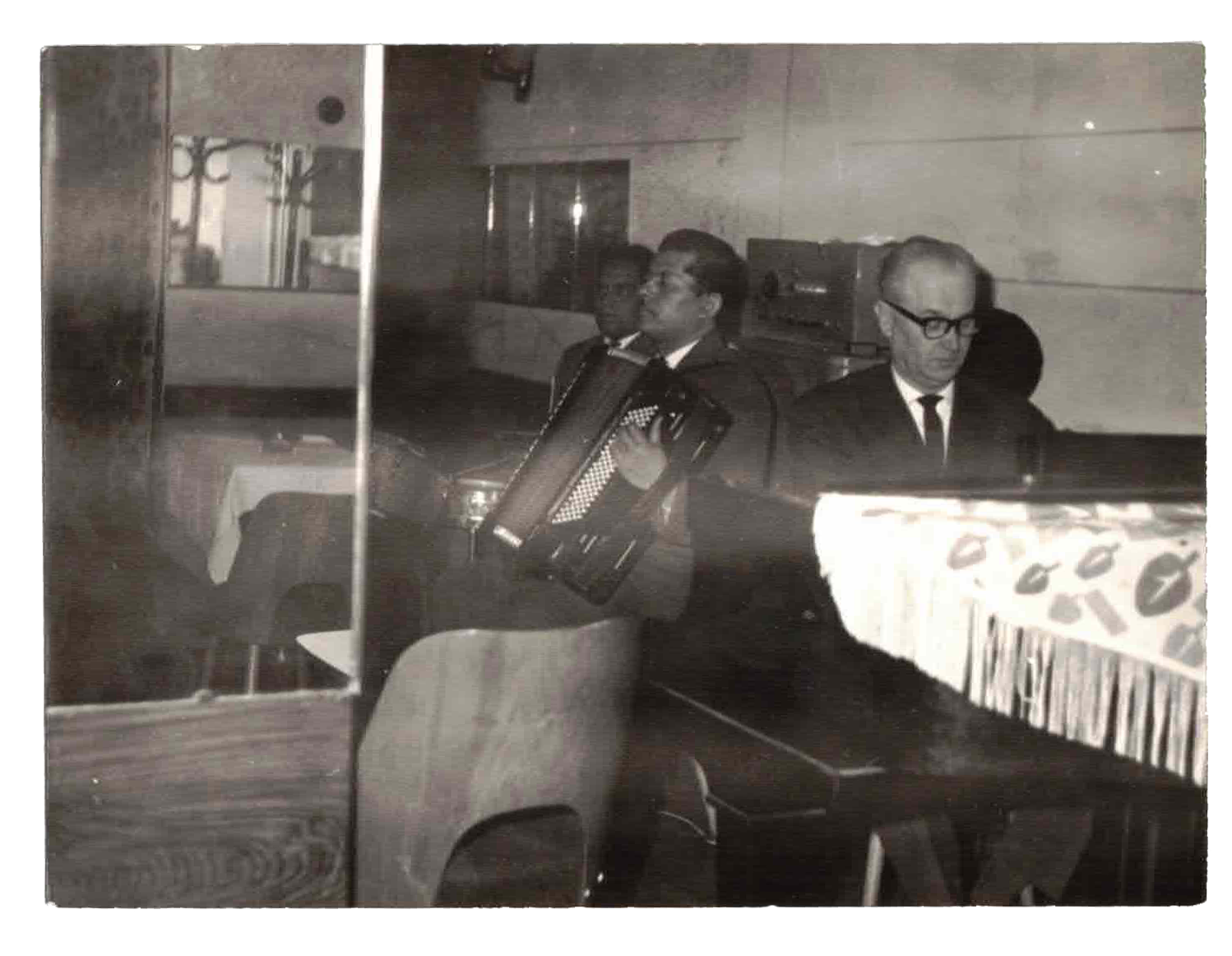
Two men in suits sitting at a table in a restaurant or cafe, with one playing an accordion and the other looking at his keyboard or piano, in a black-and-white photo.

1943

V kaviarni hotela Dunaj

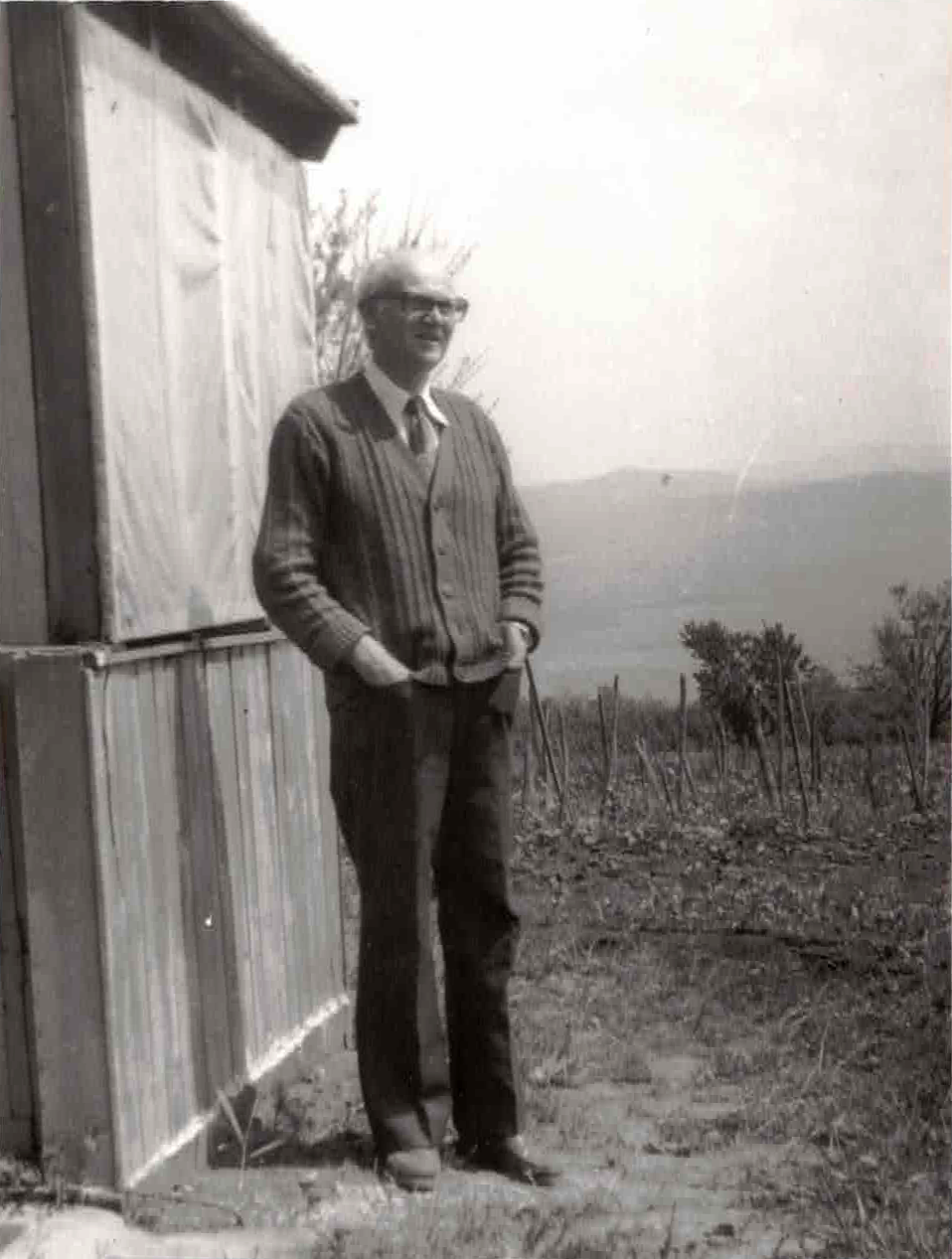
A man with light-colored, spiky hair and glasses stands outdoors beside a rustic shed, with a landscape of hills and sparse vegetation in the background.

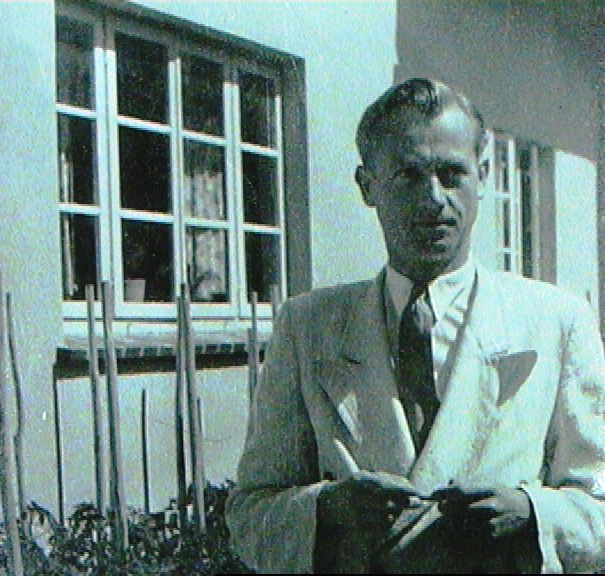
Takto si otca pamätám ja, jeho dcéra Agi. Túto fotku fotil jeden novinár. Ernest má oblečený tesilový oblek a je s rodinou čerstvo nasťahovaný do paneláku (1974)

V záhrade pri Bajtave, výhľad, ktorý nikdy neomrzí

Black and white photo of a man working on a woodworking project outdoors in a backyard, with a small wooden house or shed in the background and some trees and fencing around.
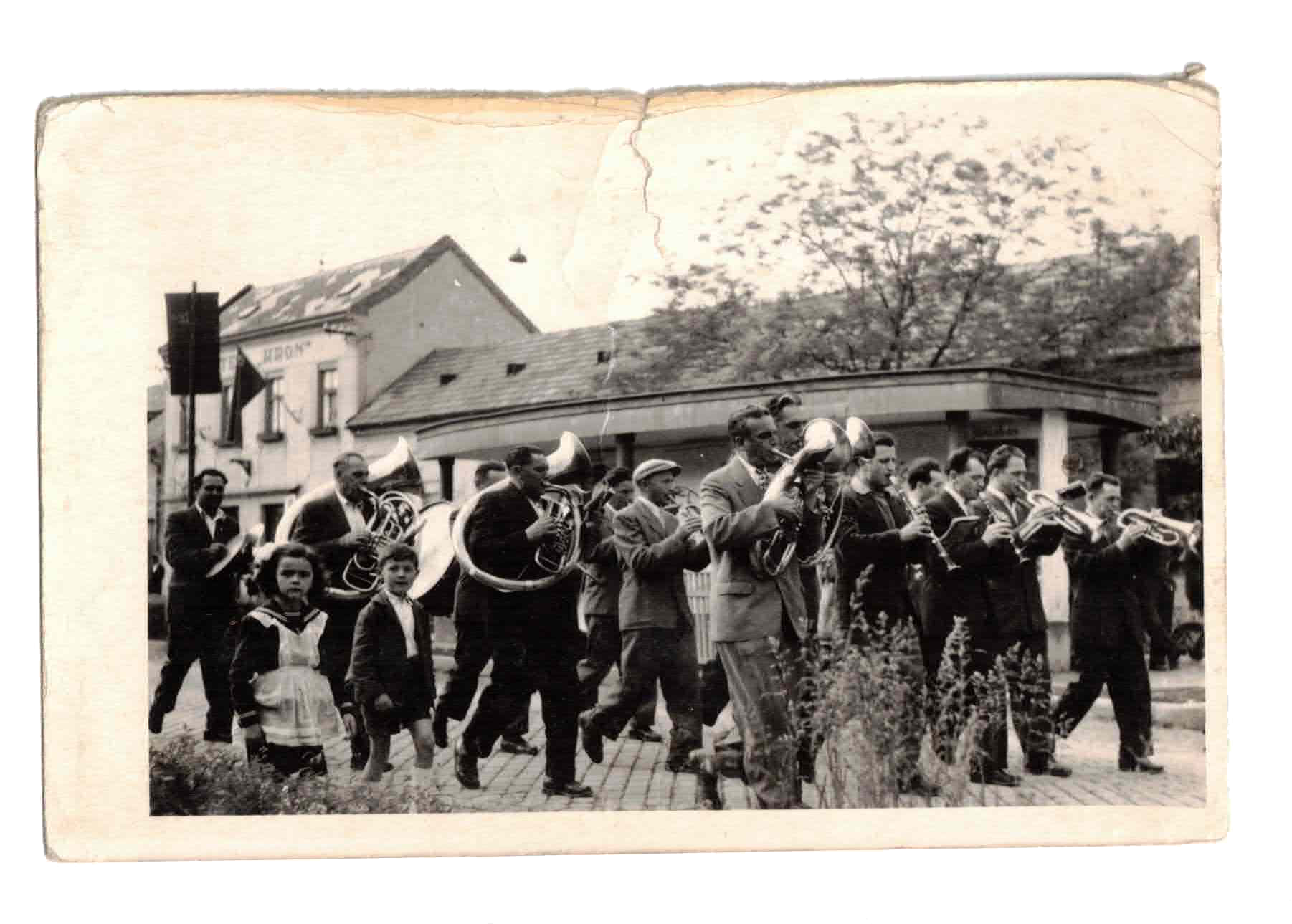
A black and white photo of a marching band playing musical instruments outdoors, including children and adults, with a building, trees, and a lamppost in the background.

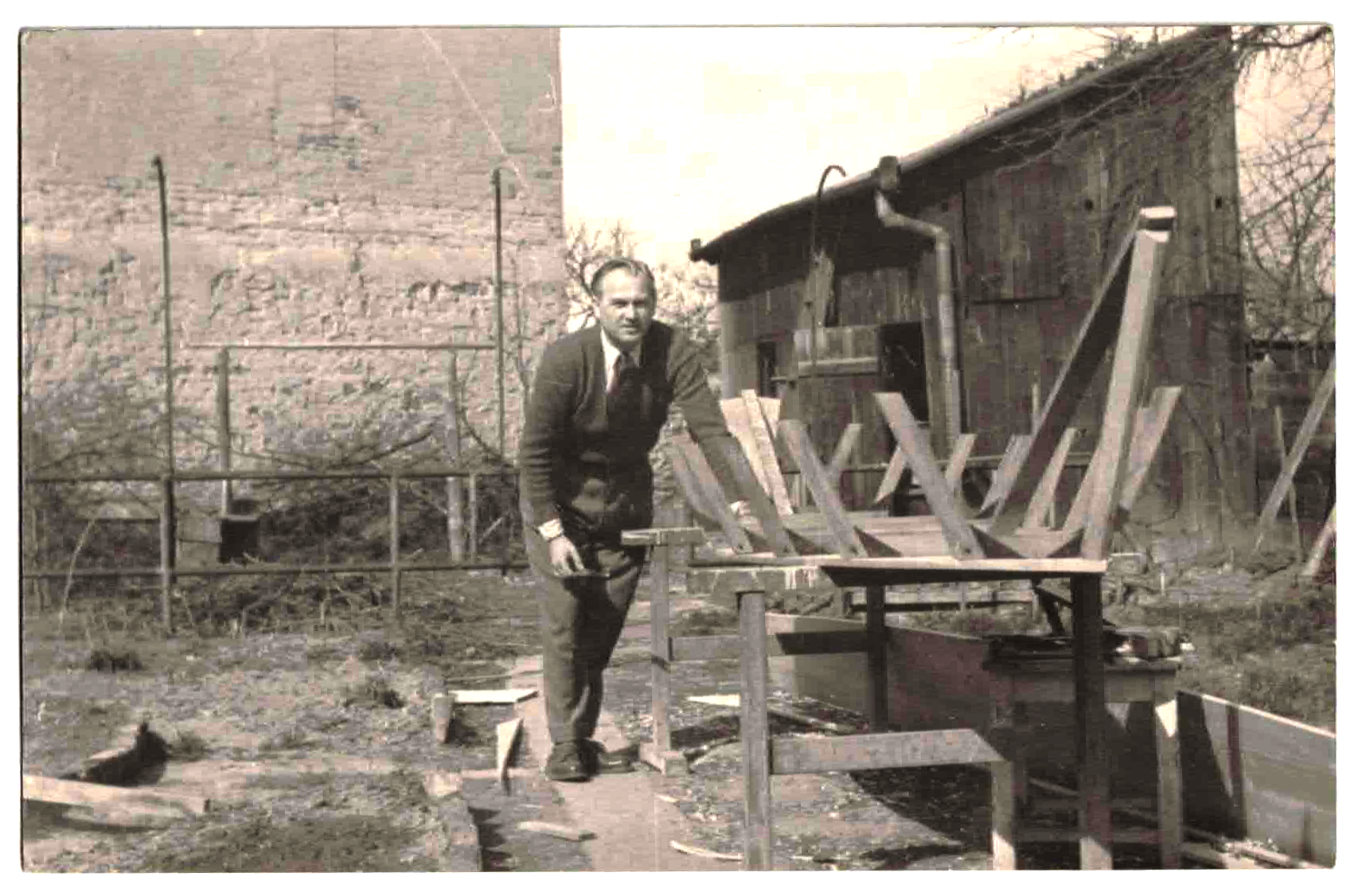
Rieku Dunaj mal vždy veľmi rád. Kúpil si časopis Ezermester a postavil čln. Kúpil malý motor Tümmler a plavil sa s rodinou po Dunaji a jeho malých ostrovoch až do bodu, kde sa stáča na Maďarsko.

Kapela s ligotavými nástrojmi, ktorá Ernestovi učarovala v 4 rokoch, keď sa vytratil z domu
Black and white photo of a group of people sitting at a table during a meeting or social event. Four men are seated, with bottles of beer in front of them, and a woman is standing and talking to two women seated at the table. The setting appears to be indoors.

Oslava

Black and white portrait of a young man with neatly combed hair, wearing a button-up shirt with pockets, outdoors with trees and sky in the background.
Black and white portrait of a young man with neatly combed hair, wearing a collared shirt and tie.

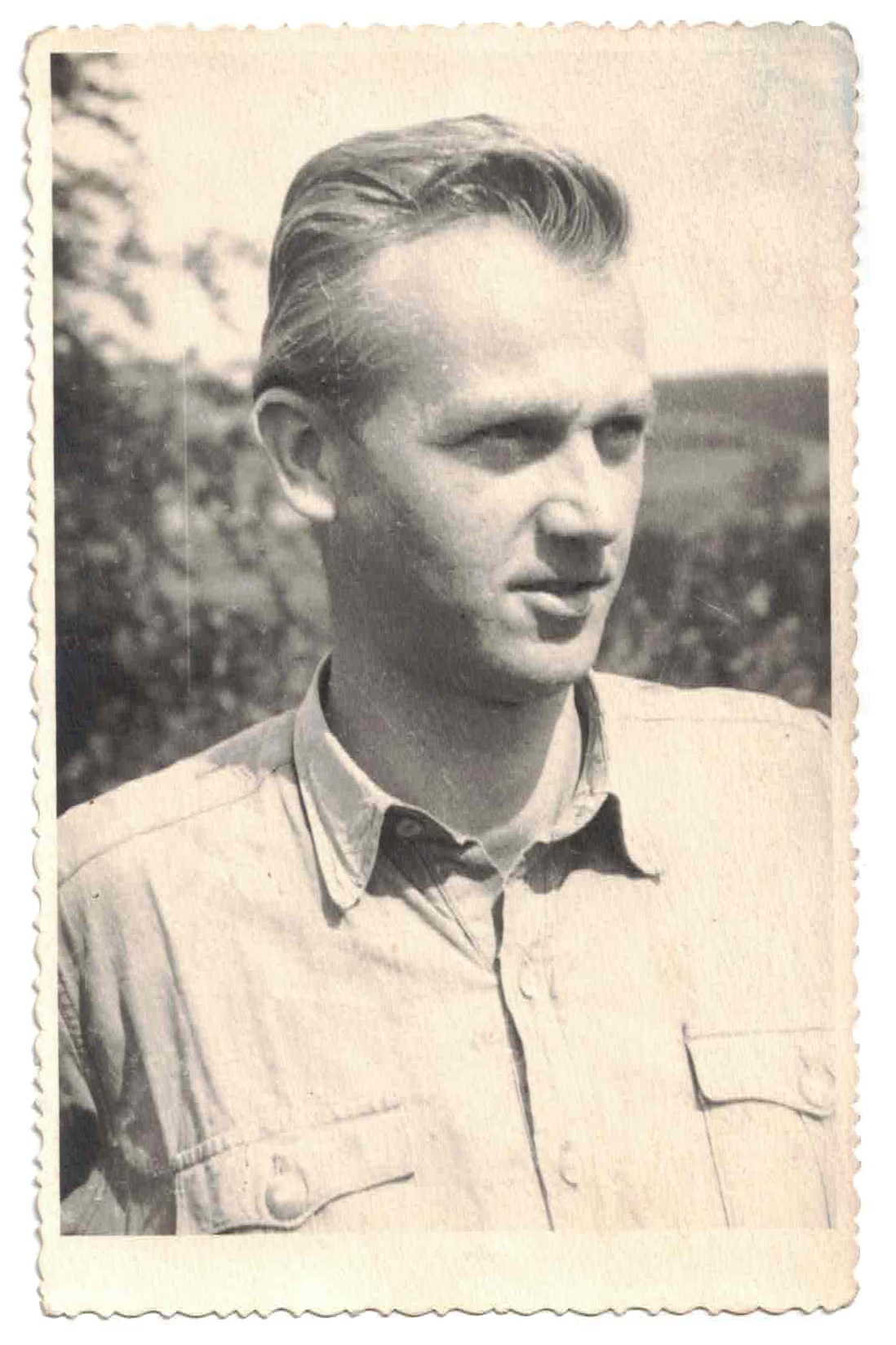
Ernest v nemeckom Gieboldehausene ku koncu vojny. Mal šťastie, že ako klavirista bol u dôstojníkov pečený-varený

1938

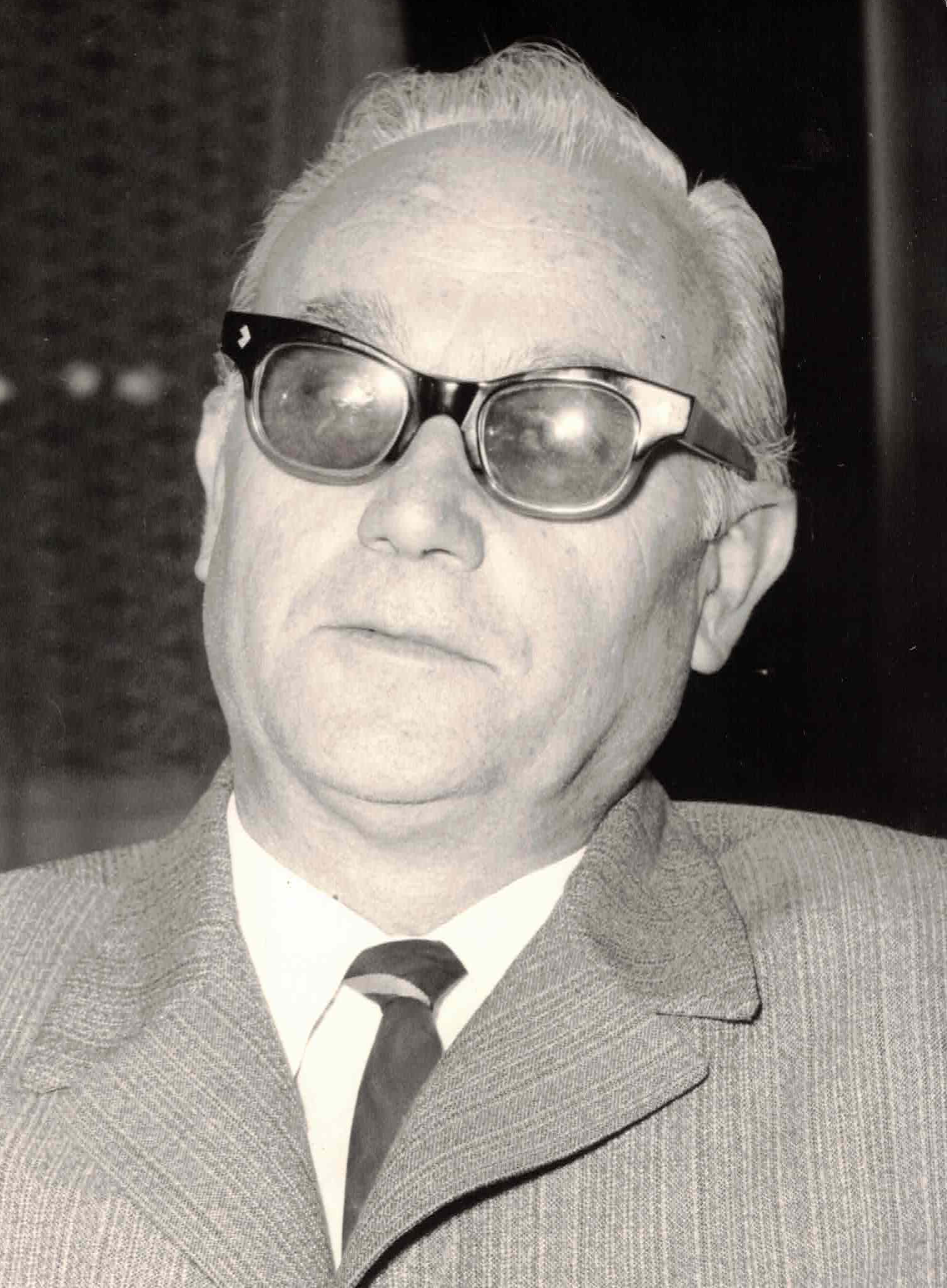
Black and white photo of an elderly man with white hair wearing glasses, a suit, dress shirt, and tie.
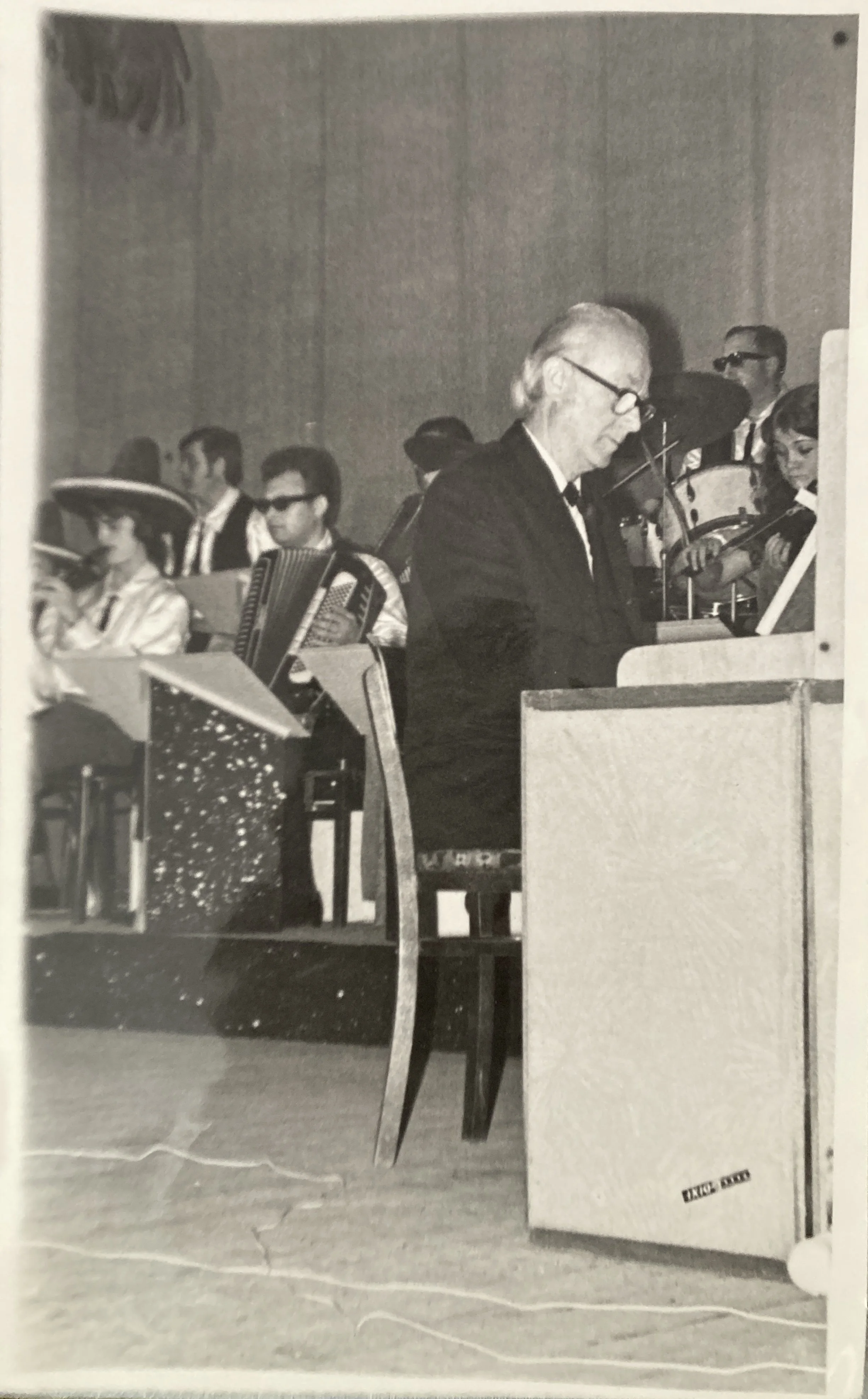
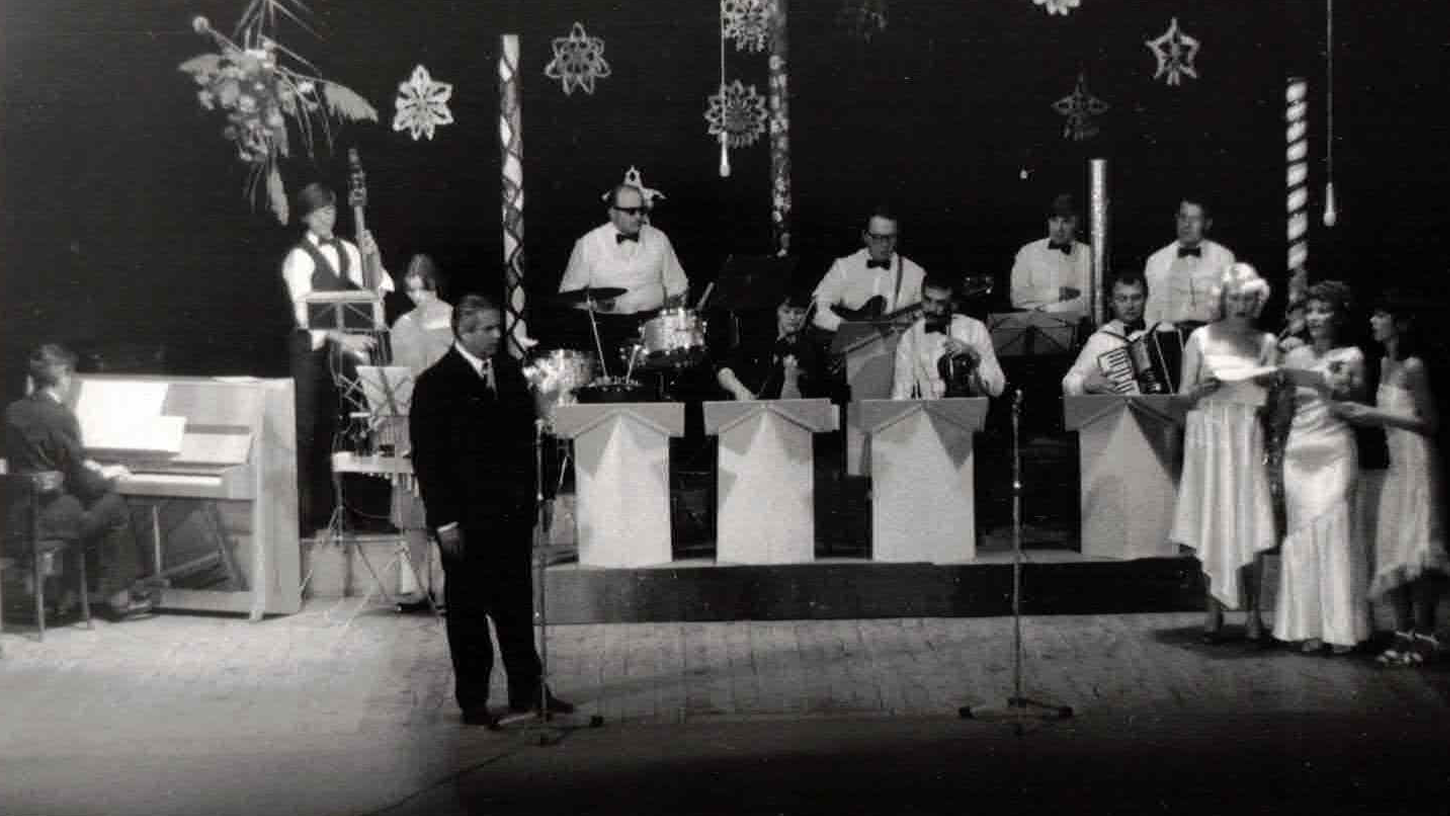
A vintage black and white photo of a band performing on stage with Christmas decorations, including snowflakes and candy cane patterns, in the background. The band features a pianist, a singer, a drummer, a guitarist, a saxophonist, an accordion player, and a group of women singing.

Jeden z Ernestových autorských večerov v štúrovskom kultúrnom dome (1974)

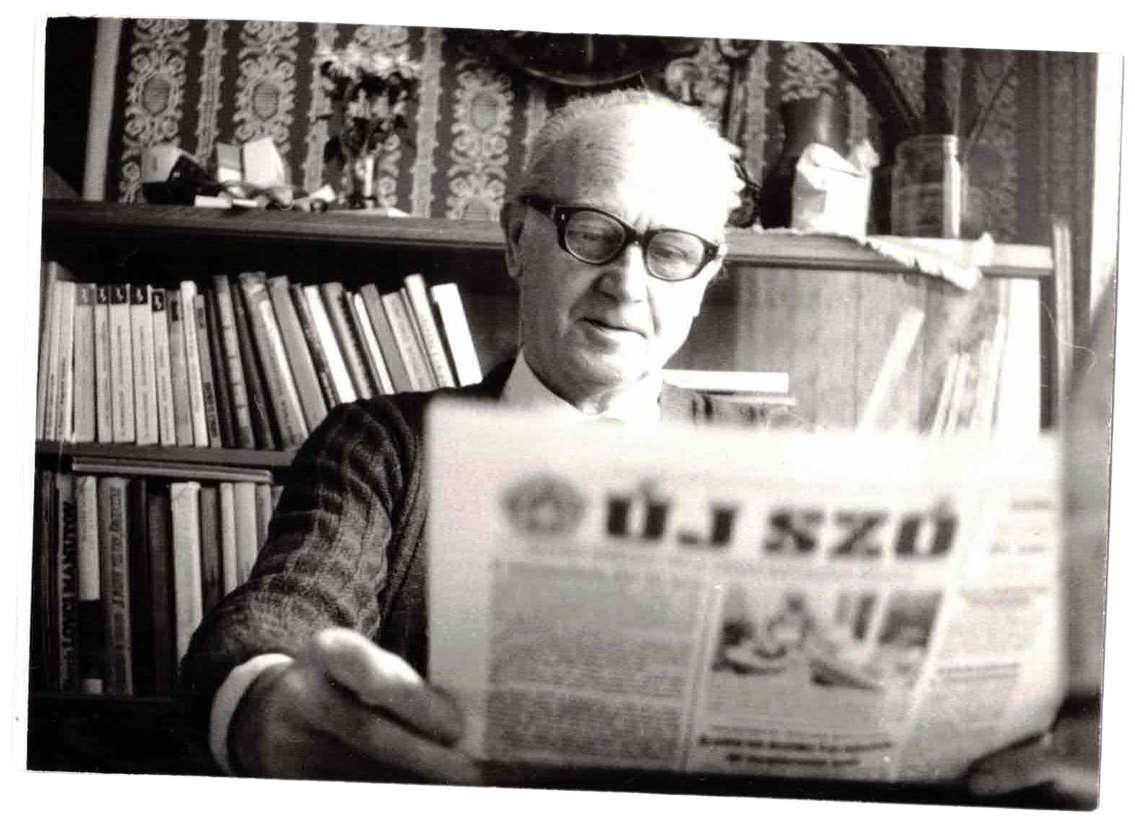
An elderly man with glasses reading a newspaper in a room with bookshelves and patterned wallpaper.
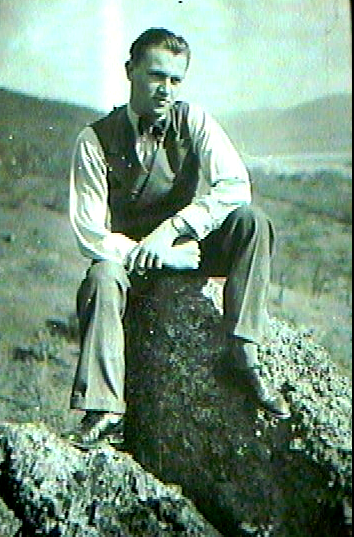
A man with slicked-back hair wearing a vest over a collared shirt, sitting on a rock or large stump in an open grassy field with hills in the background.

Ernest by radšej volil stranu Malého psíka ako režim

Ernest v Kováčove, kam rád chodieval

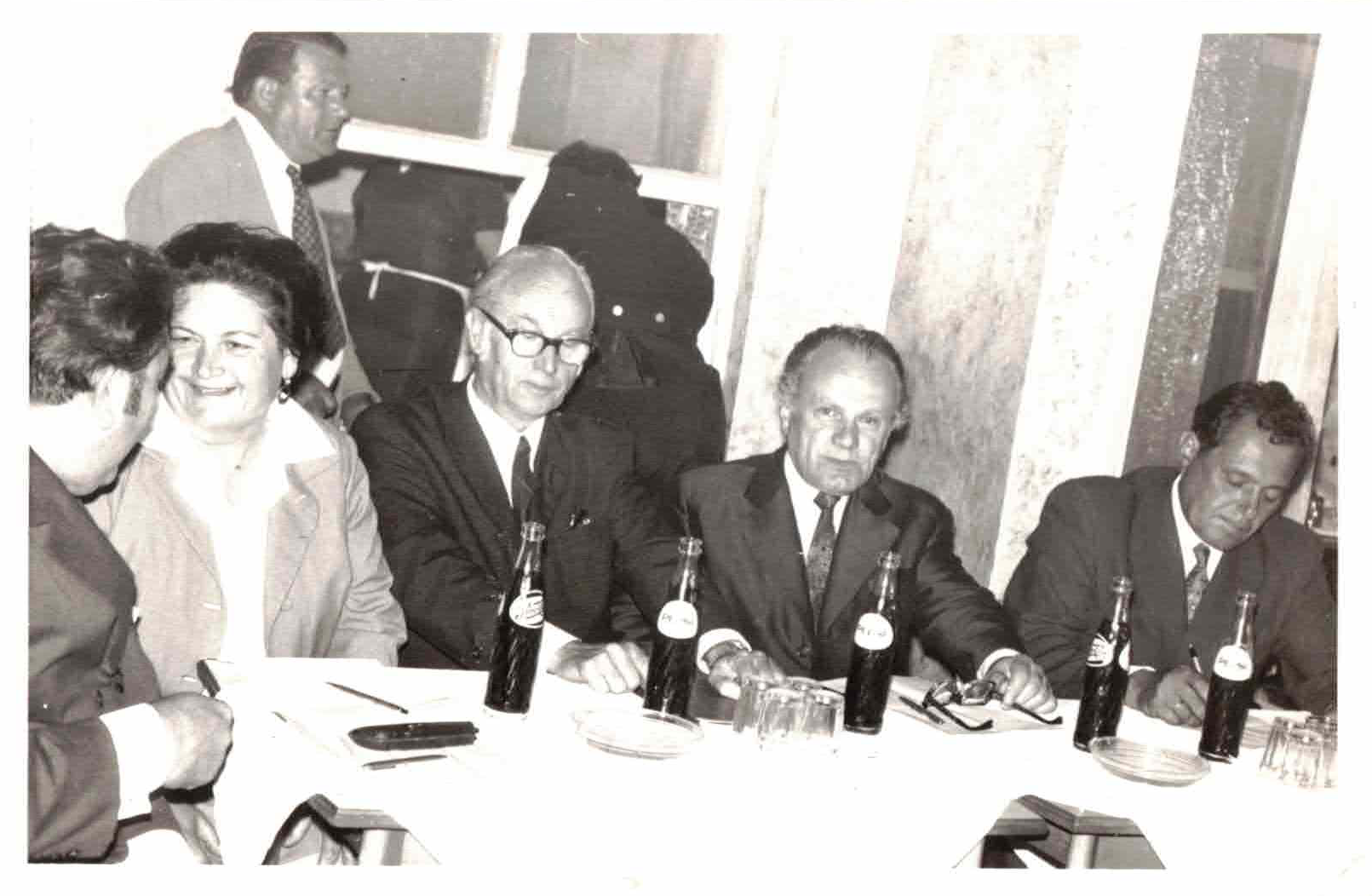
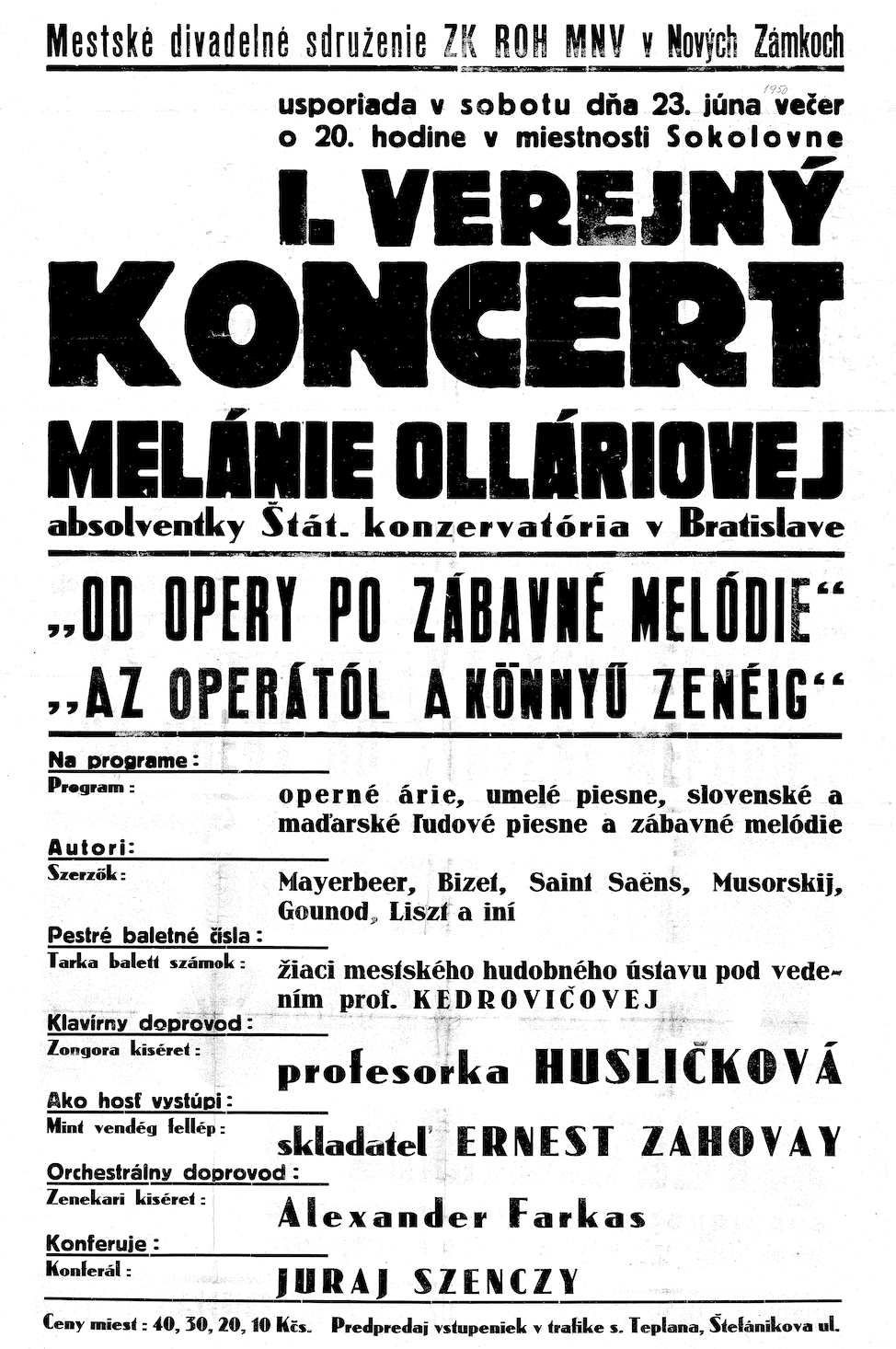
Pohostenie u pána primátora na Mestskom úrade v Štúrove pri príležitosti udelenia ceny Pro Urbe (1984)

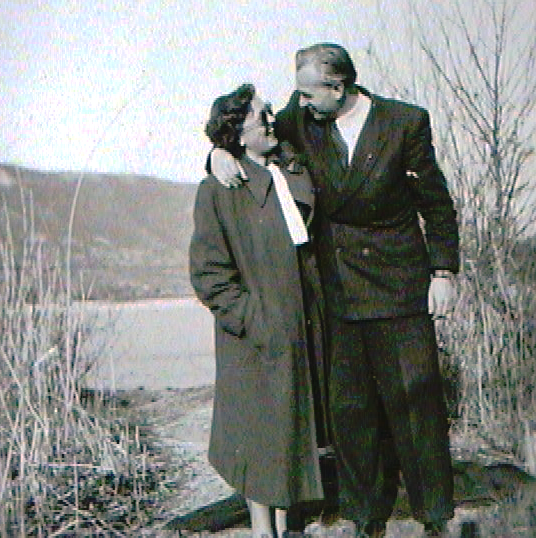
A black-and-white photo of a man and woman standing outdoors near a body of water, with trees and hills in the background. They are smiling and looking at each other, with the man embracing the woman.

Fotky robené na sampspúšť. Ernest mal rád technické vymoženosti a novinky doby

A man in a light-colored suit and dark tie, standing outside near a building with barred windows, holding a cigarette.
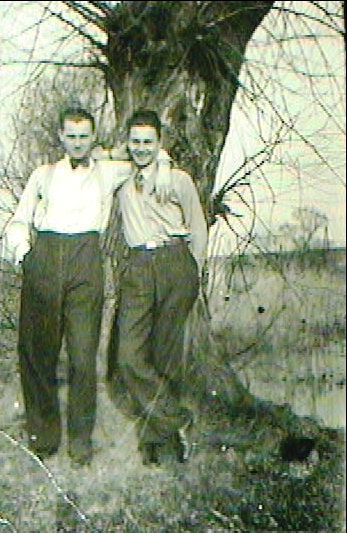
Two young men standing next to a large tree outdoors.

V nemeckom Gieboldehausene v zajatí. Avšak vďaka tomu, že Ernest bol dobrý klavirista, mohol zabávať dôstojníkov (oblek mu ušili z posteľnej plachty)
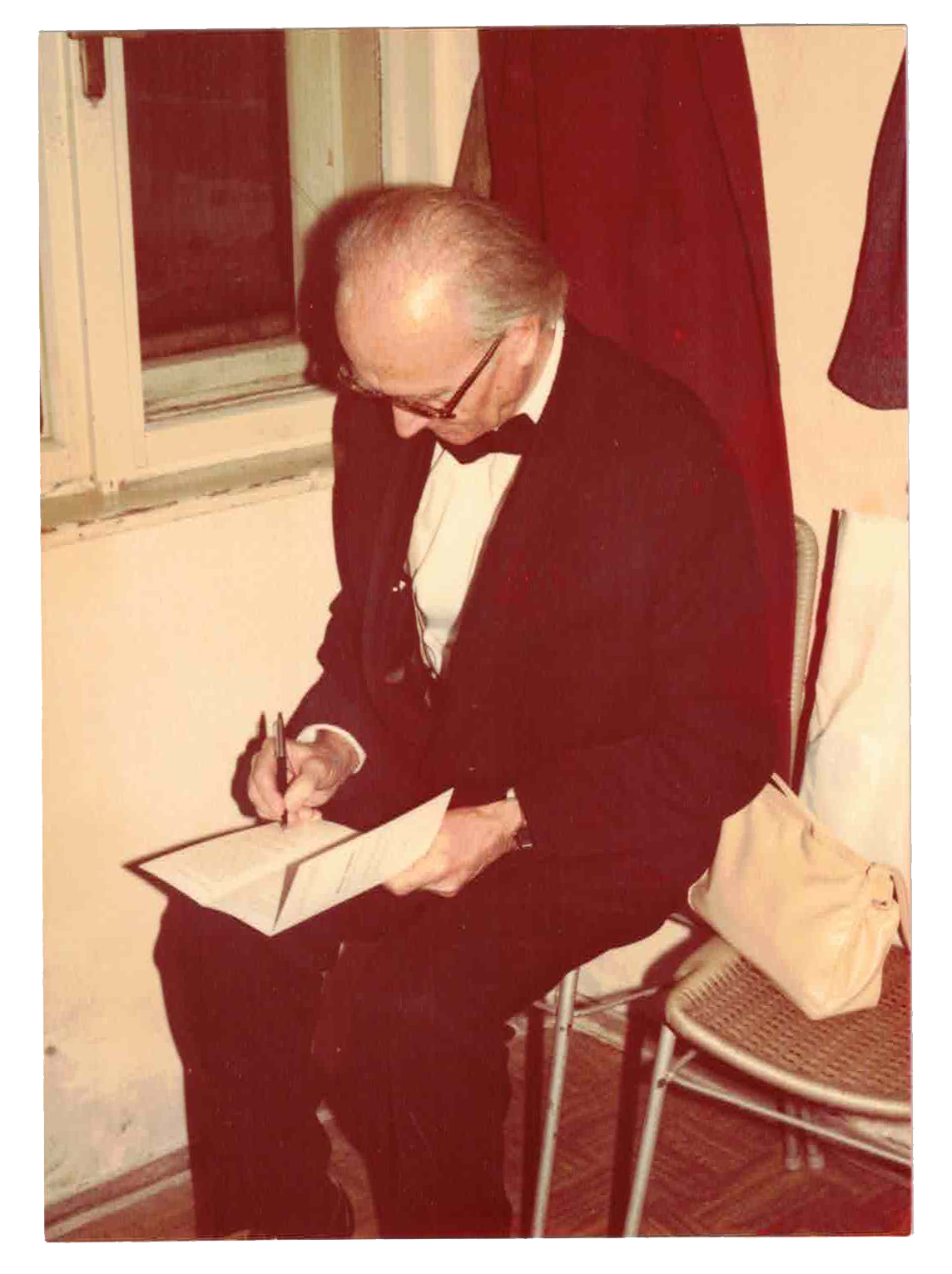
An elderly man dressed in a tuxedo with a bow tie, sitting on a chair, writing on a piece of paper or a card, with glasses and receding hair, in a room with a window and a beige bag on a chair.

Ernest po autorskom večierku dáva autogramy. Bol to posledný autorský večierok za jeho života (1990)

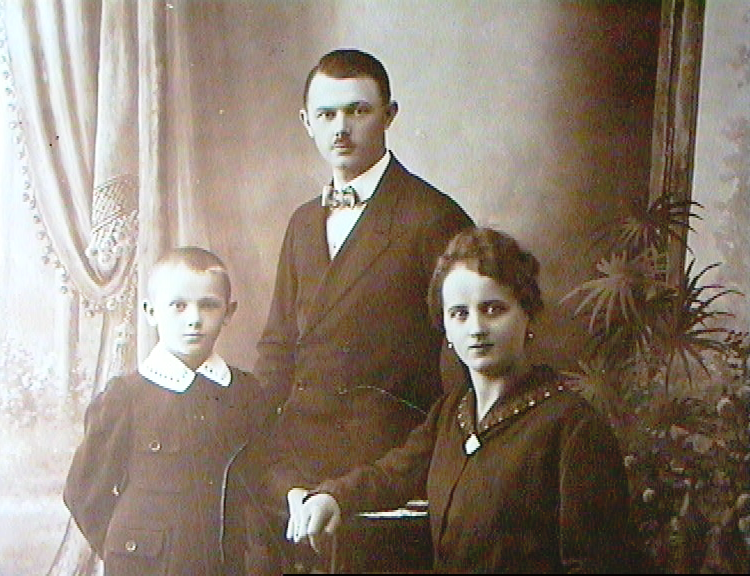
A black-and-white portrait of a family with a man, woman, and a young girl, dressed in early 20th-century clothing, posed indoors with curtains and a potted plant in the background.

Malý Ernest, syn svojich rodičov

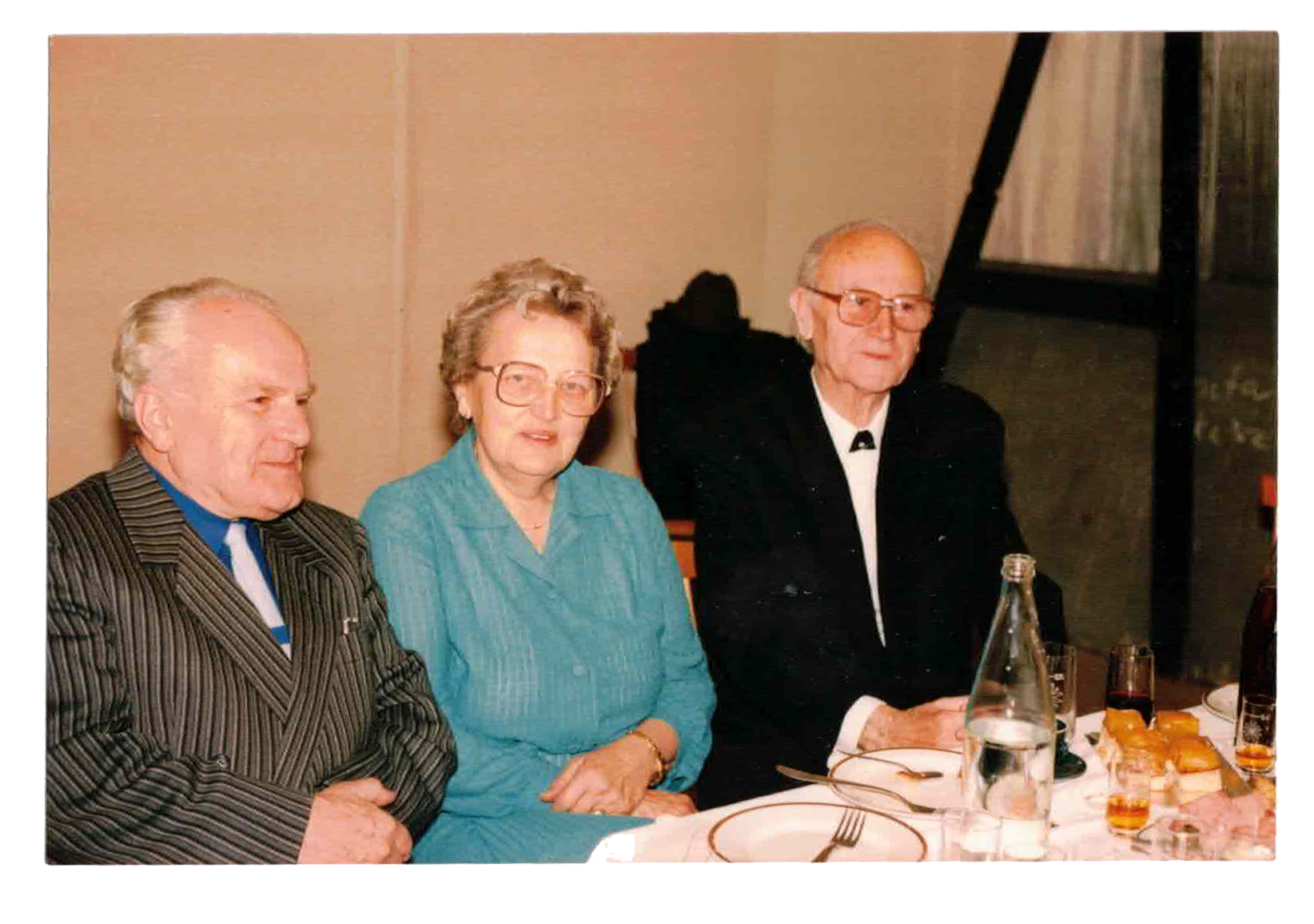
Three elderly people sitting at a dinner table with drinks and food, dressed in formal attire, indoors with beige walls and a black metal staircase in the background.

Obľúbené spoločné výlety. Najprv len Ernest so ženou, neskôr sa pridala aj dcéra Agi s bratom

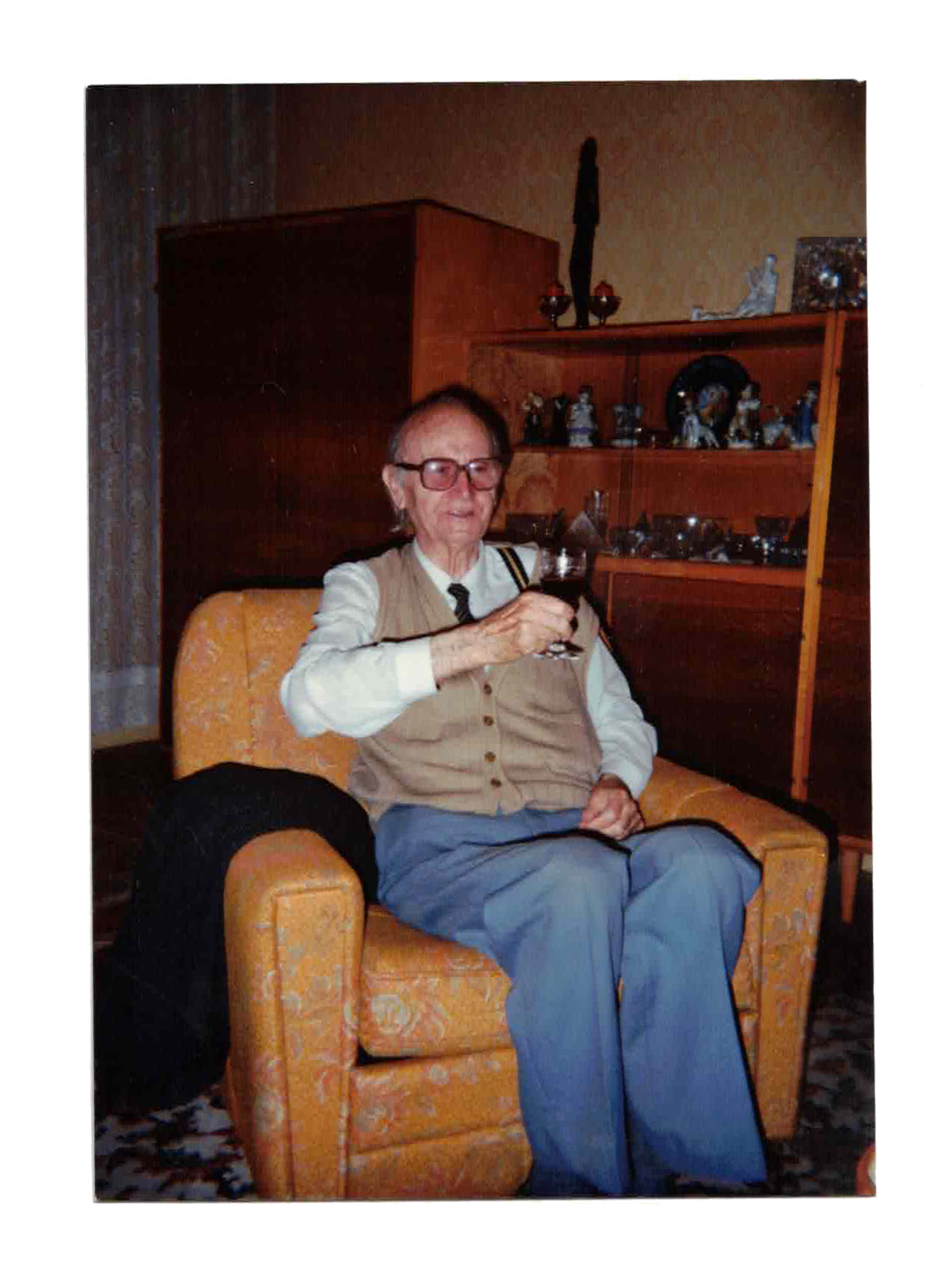
An elderly man with glasses, wearing a beige vest, white shirt, and gray pants, sitting on an orange armchair, holding a glass of dark liquid, in a room with a wooden cabinet filled with various figurines and decorative items.

80tka, na zdravie!Po tejto oslave nasledovalo ešte päť posledných rokov

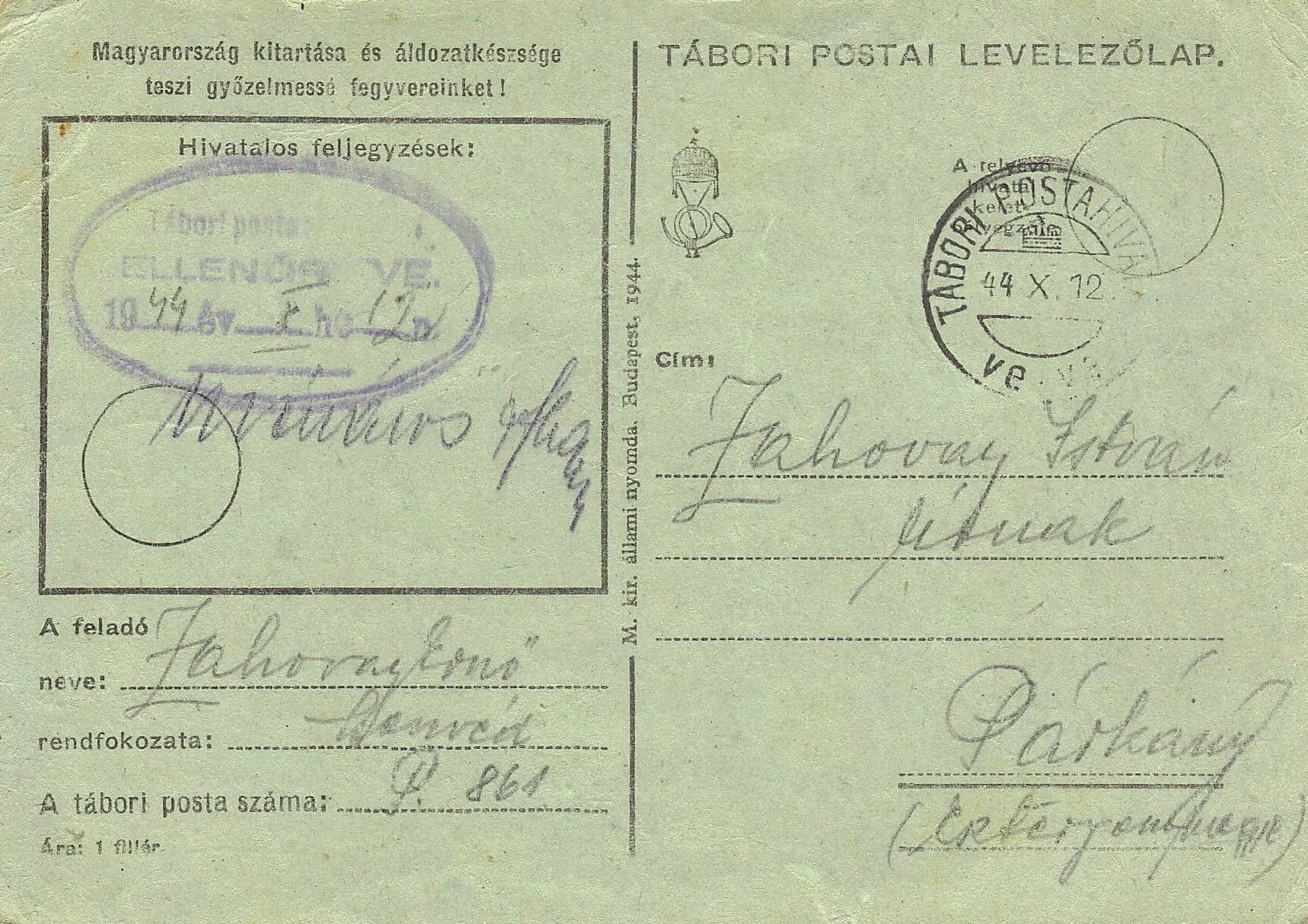
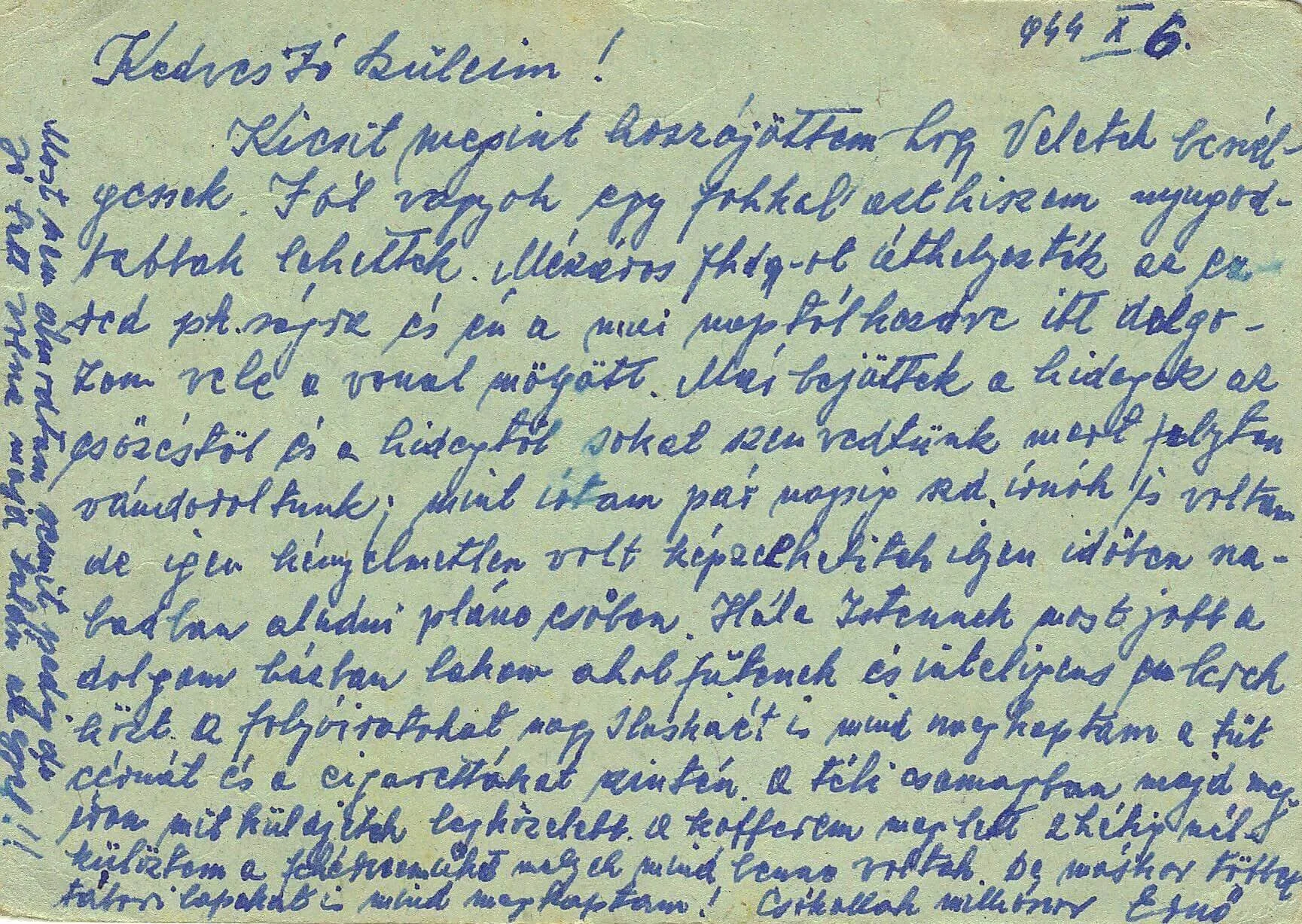
Nastali zlé časy. Ernest dostal povolávací rozkaz na frontu
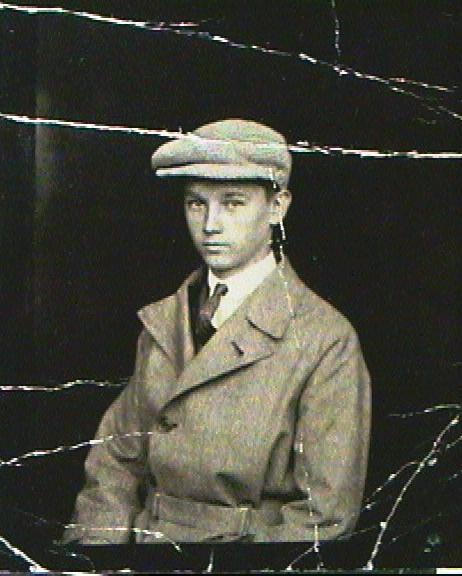
Black and white photograph of a young man wearing a flat cap and a coat, with a serious expression, against a dark background.

12-ročný Ernest

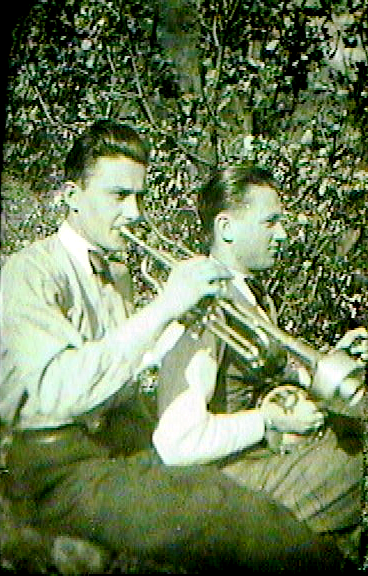
Two young men playing trumpets outdoors near bushes.

Tridsiate roky, obdobie prvých úspechov prvej vlastnej kapely
Black and white photo of a man and woman in historical clothing standing outdoors, the woman looking at the man while he looks into the distance.

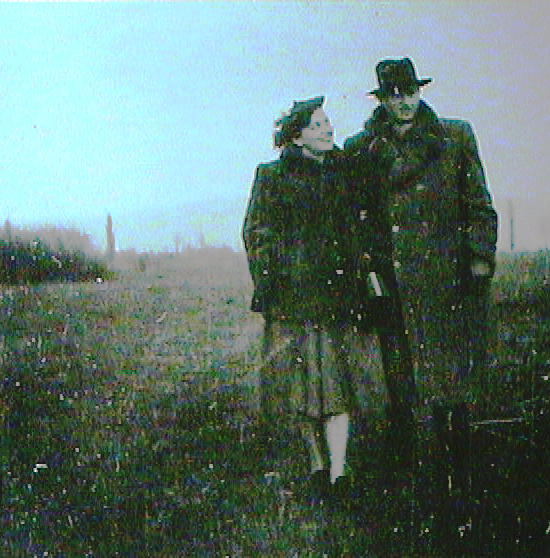
Zimná idylka

Ernest (Ernő) Zahovay (1913) bol skladateľ a klavirista pochádzajúci zo Štúrova. Hudbe sa venoval od detstva, vynikal mimoriadnym hudobným sluchom a už v mladom veku dokázal po jedinom vypočutí zahrať skladby na viacerých nástrojoch. Jeho profesionálna kariéra sa začala v 30. rokoch 20. storočia, keď sa stal jedným z prvých profesionálnych skladateľov tanečnej hudby na území dnešného Slovenska a Maďarska.

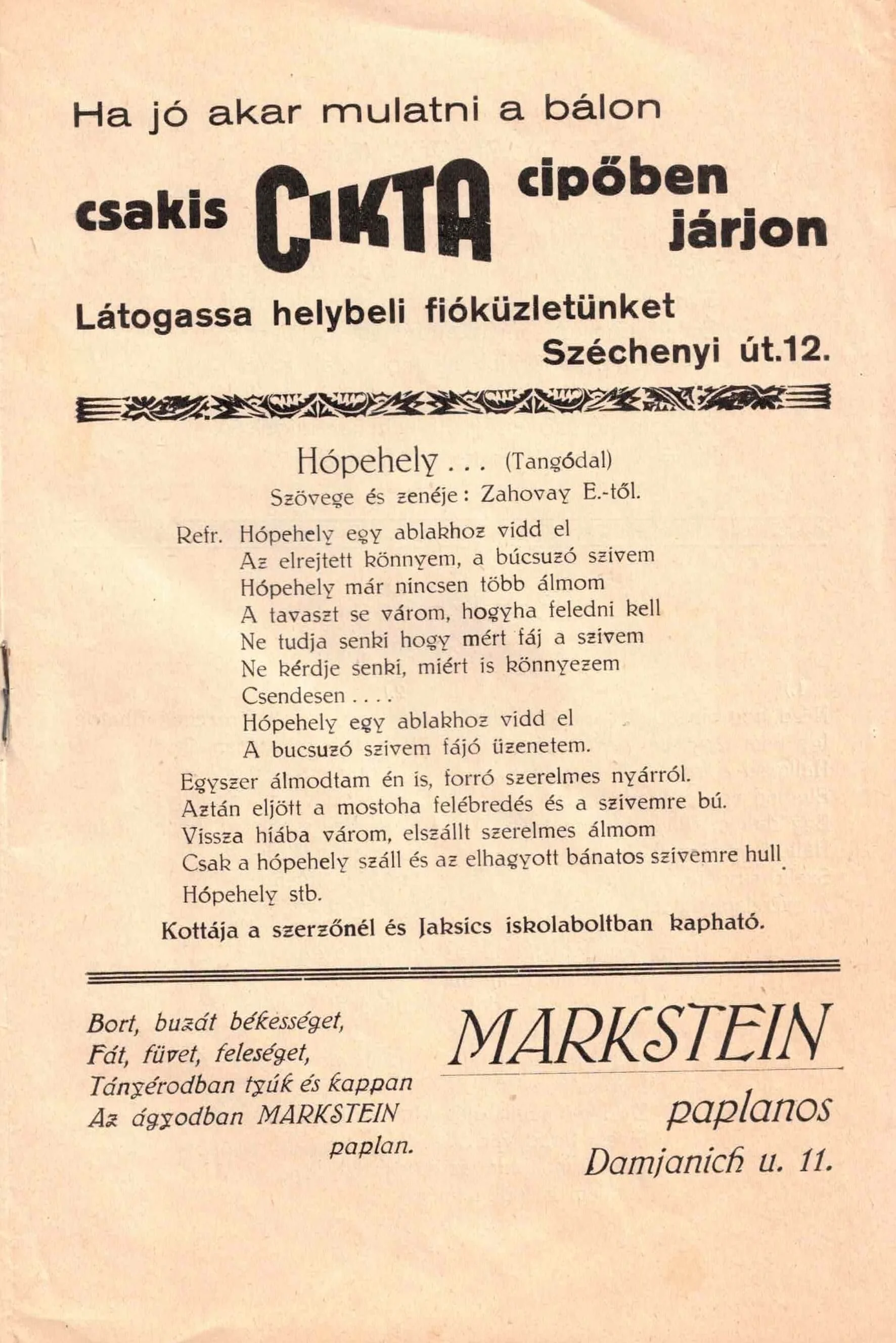
Zanechal po sebe približne 500 skladieb, pričom časť textov napísal sám. Jeho tvorba zahŕňala najmä tangá, anglické valčíky, pochody, šansóny a tanečné skladby ovplyvnené swingom i latinskoamerickou hudbou. Vďaka melodickej invencii a schopnosti reagovať na dobové trendy patrí medzi významné osobnosti hudobnej histórie regiónu.

Po začiatkoch s mandolínou, bendžom a gitarou sa naplno venoval klavíru, ktorý sa stal jeho celoživotným nástrojom. Pôsobil v Maďarsku aj Československu, počas vojny pokračoval v hudobnej činnosti aj v náročných podmienkach a jeho skladby vysielal rozhlas v Bratislave i Košiciach.

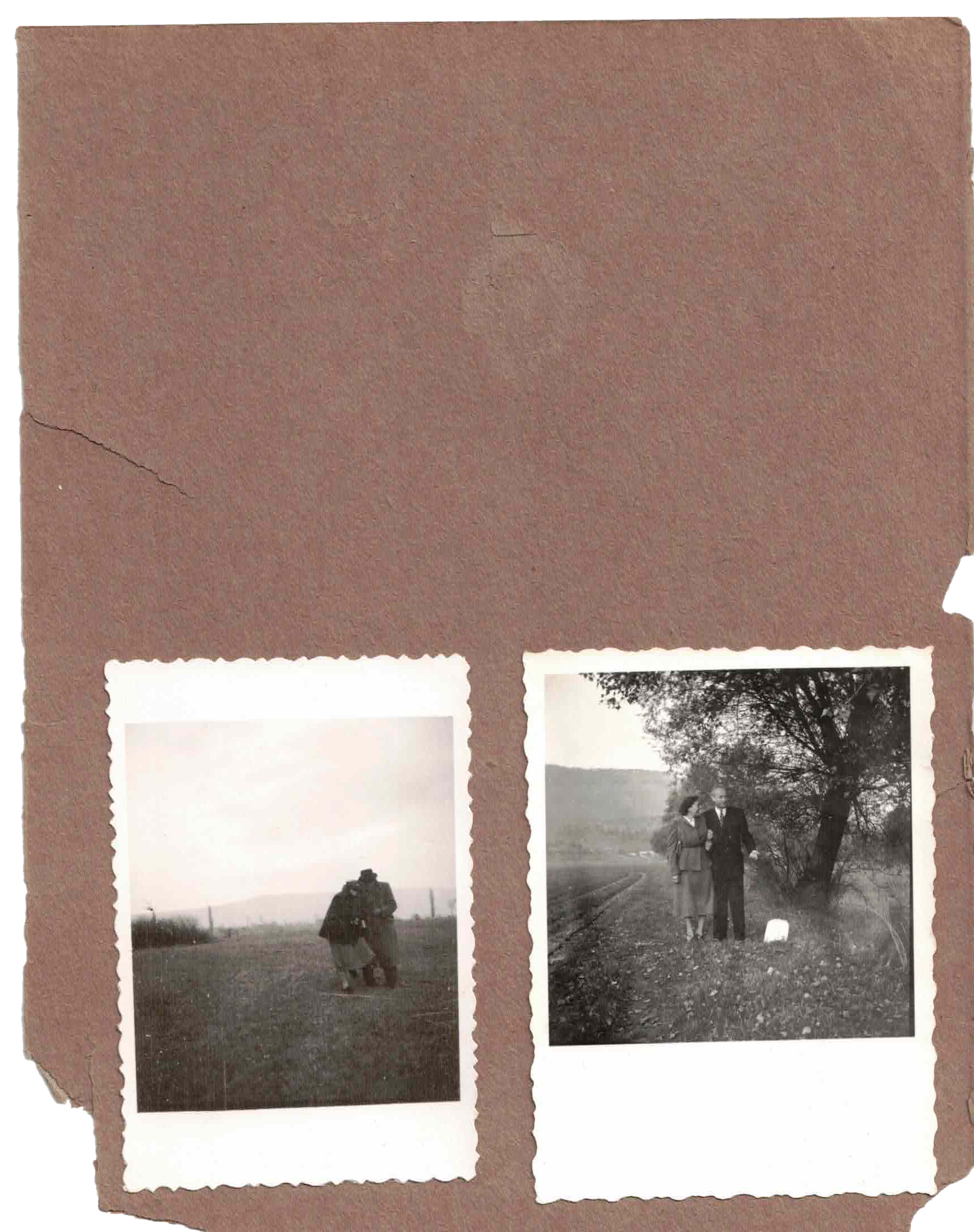
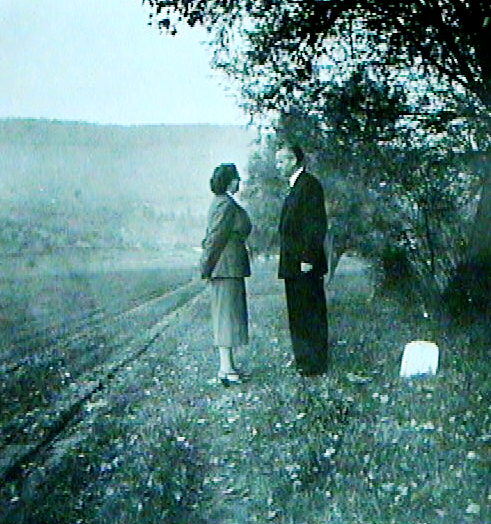
Two black-and-white photographs on a torn page of a scrapbook or photo album. The left photo shows a person wearing a coat and holding something, standing on a field with a person in the background. The right photo depicts two people walking on a dirt road beside a tree, engaged in conversation.

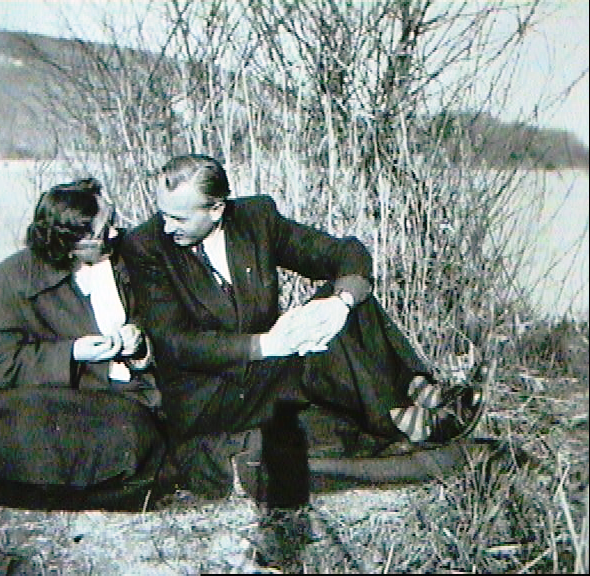
Rande so ženou, o pár rokov sa narodí dcéra Agi

významné obdobia

1930

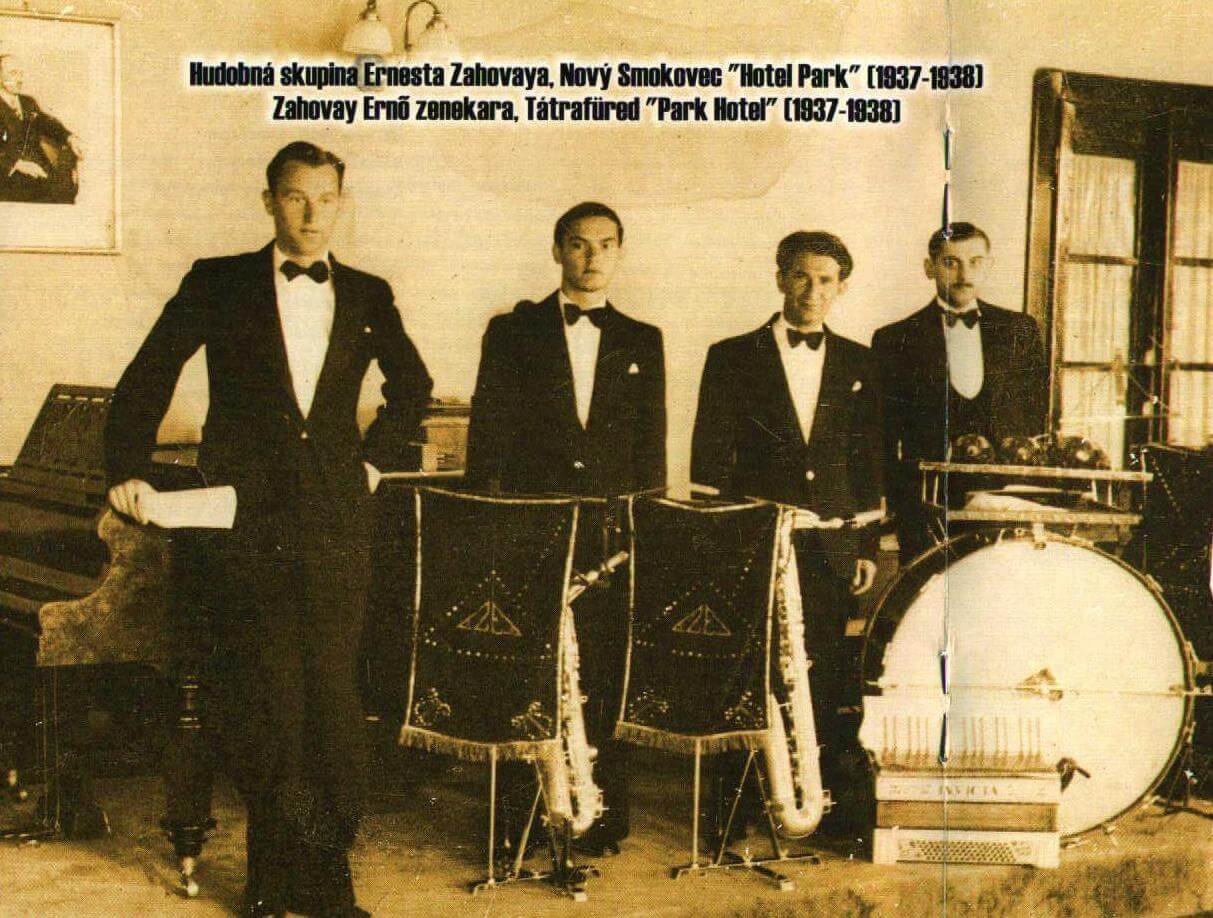
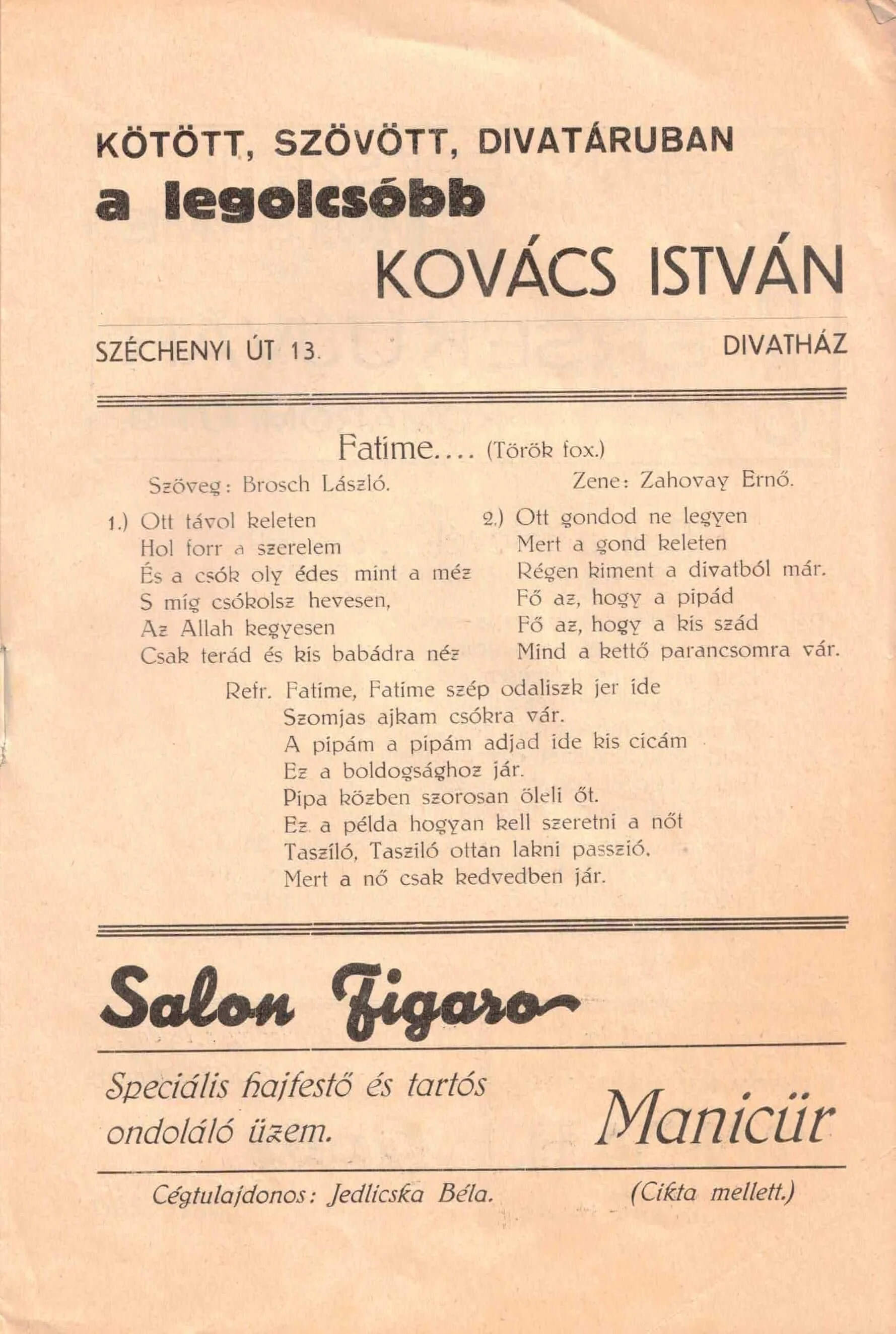
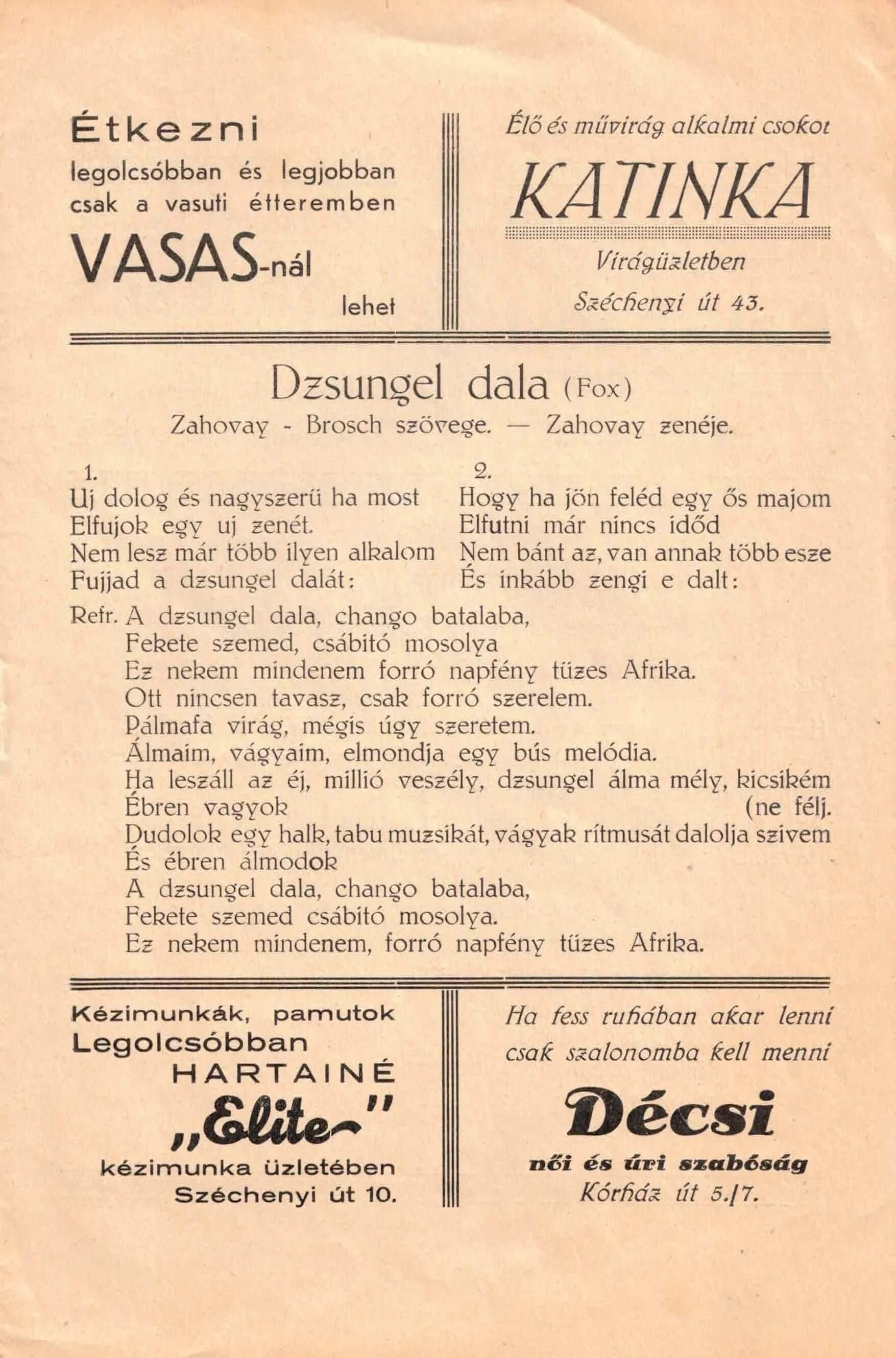
A vintage poster for a 1938 jazz band, the 'Pank-Hotel' New Smokovec, located in Slovakia, featuring a collection of musical genres including jazz, swing, and dance. The poster has a peach background with black text.

1938 - 1943

Black and white photograph of a man with glasses playing a piano in a room with several seated and standing people, possibly at a social event or gathering.

50.roky

70.roky

1986

Ako sedemnásťročný navštívil hudobné vydavateľstvo v Budapešti, kde po prvýkrát predstavil vlastnú skladbu profesionálnym vydavateľom. Tento odvážny krok odštartoval jeho skladateľskú kariéru.
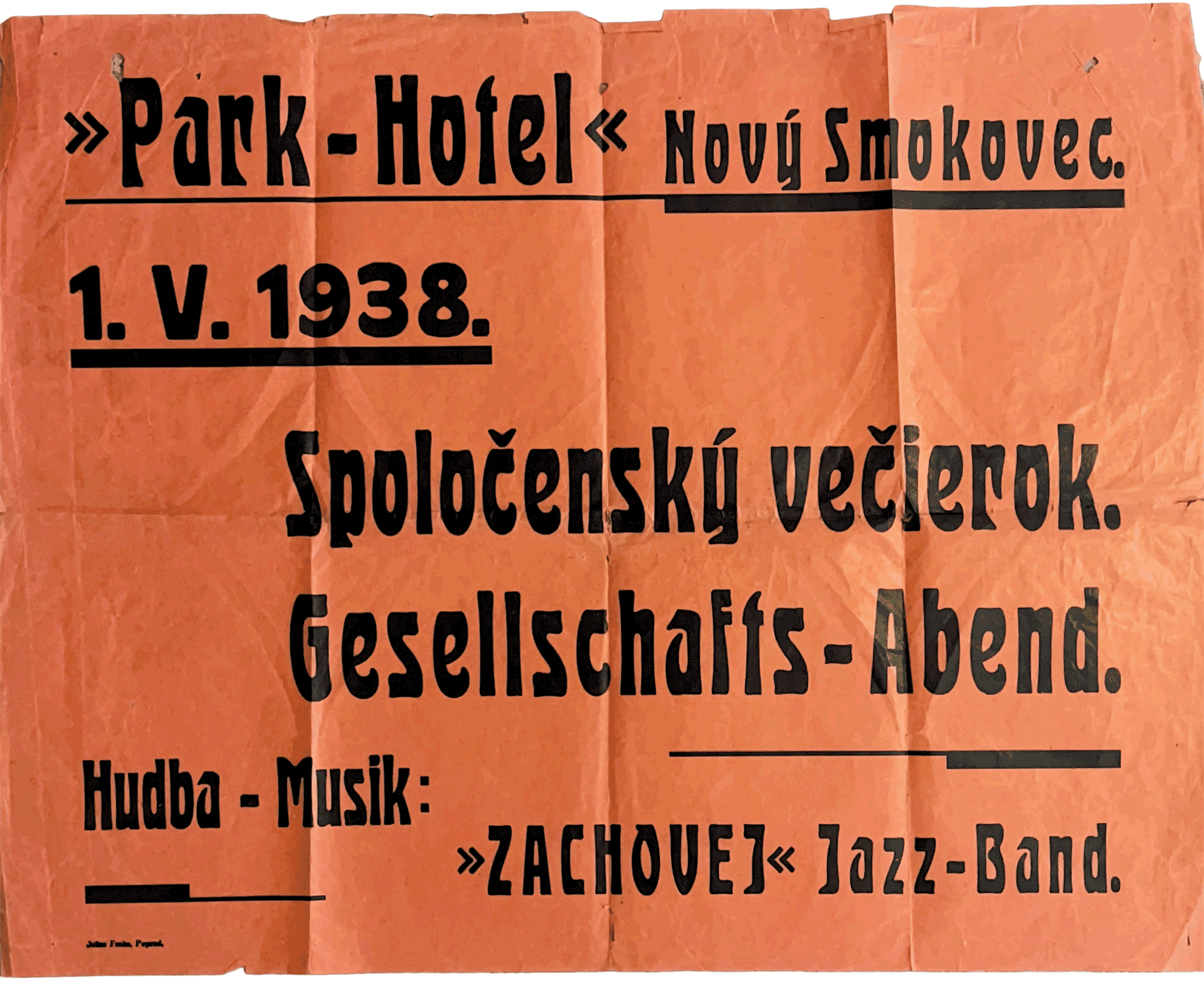
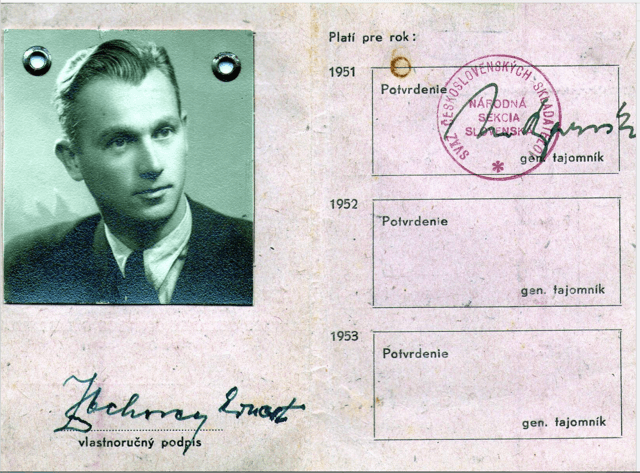
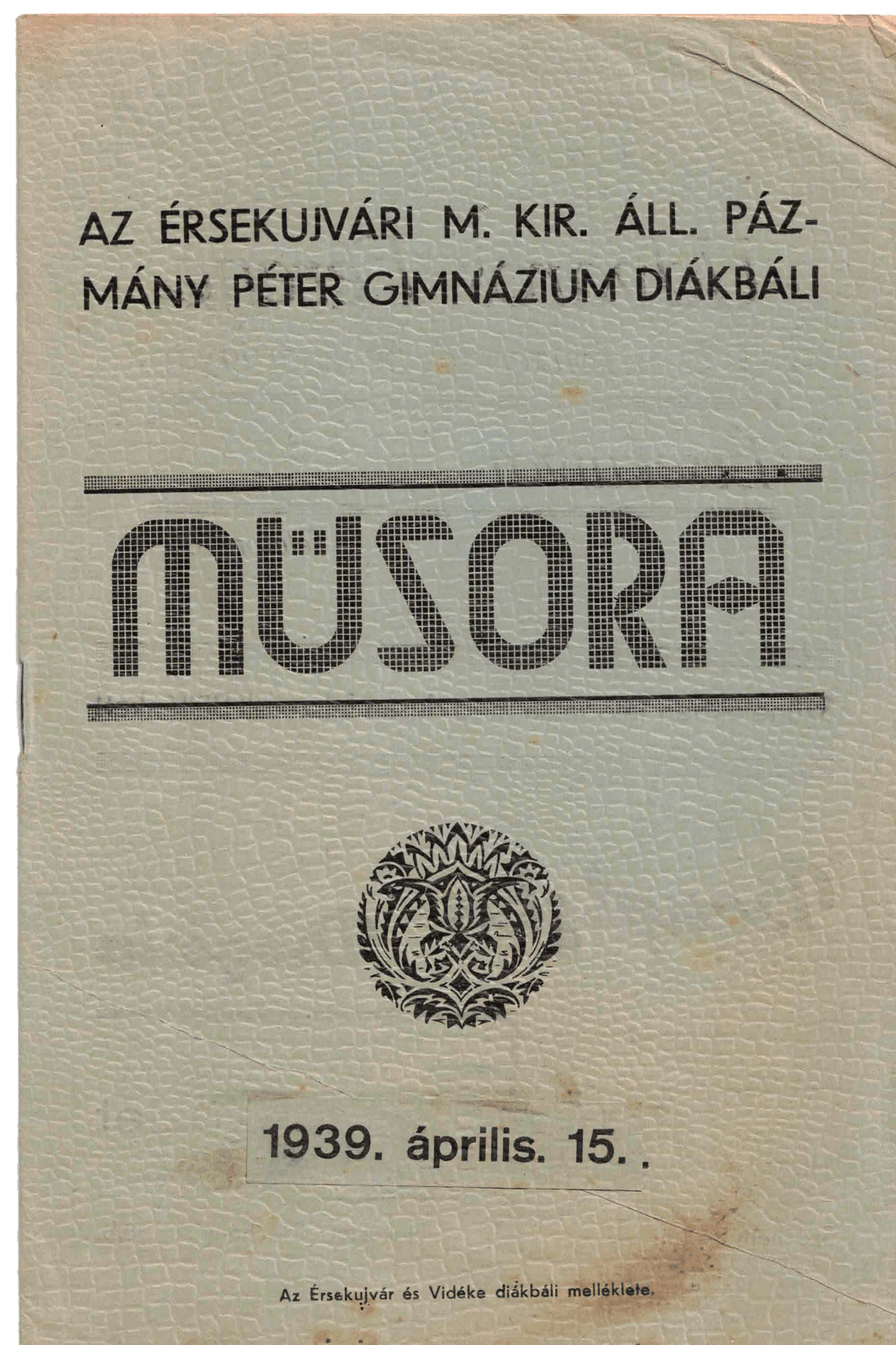
So svojimi skladbami pravidelne získaval ocenenia v celoštátnych hudobných súťažiach a zaradil sa medzi úspešných autorov populárnej hudby svojej doby. V roku 1938 sa stal Zahovay miestnym poverencom Zväzu maďarských autorov a zakrátko aj členom pražského Ochranného svazu autorského

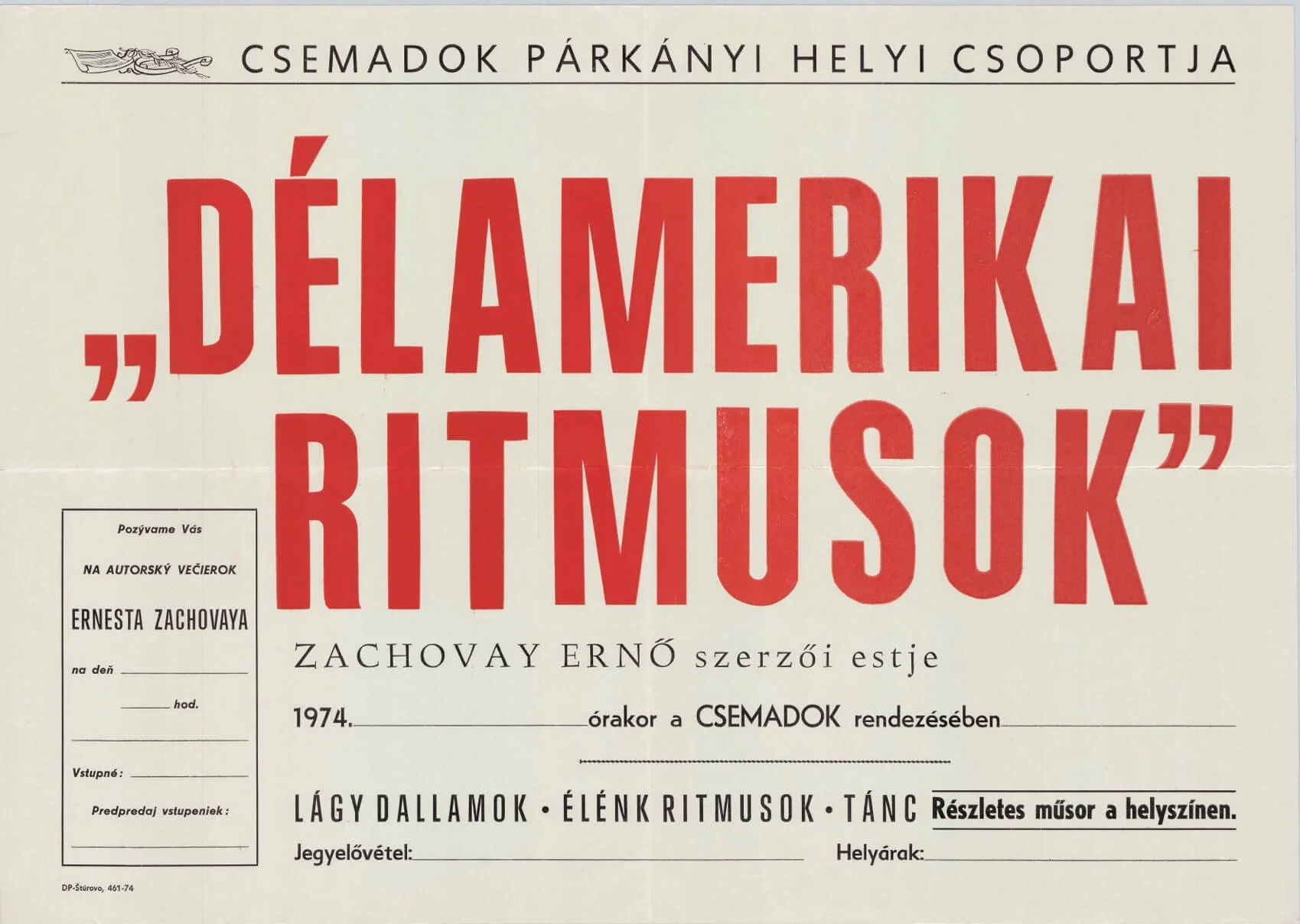
Vintage Hungarian event invitation from 1974, featuring bold red large text and details about a performance involving dance and music presented by Ernesta Zachovaya.
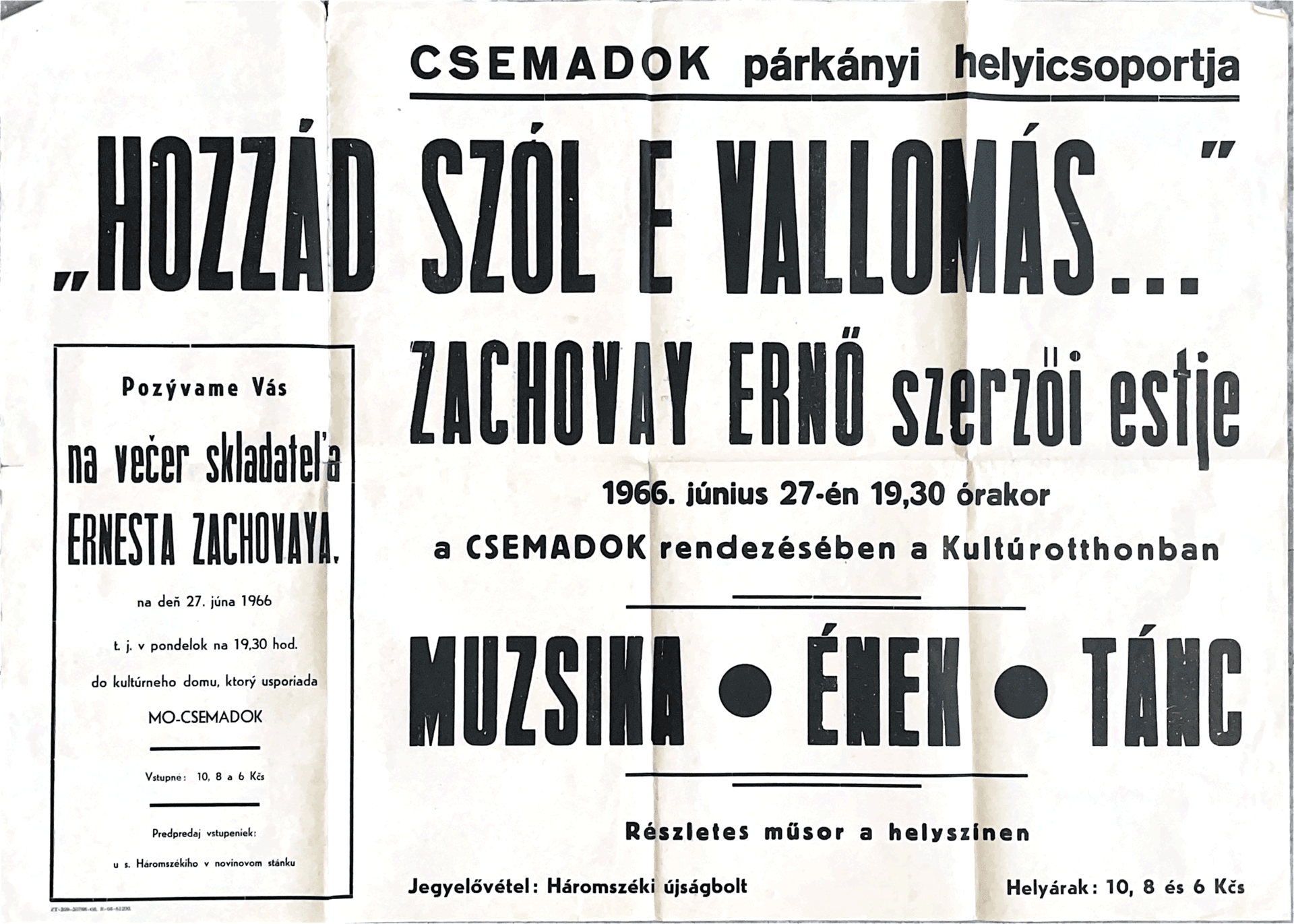
A vintage Hungarian poster advertising a cultural event featuring music and arts, dated June 27, 1966.

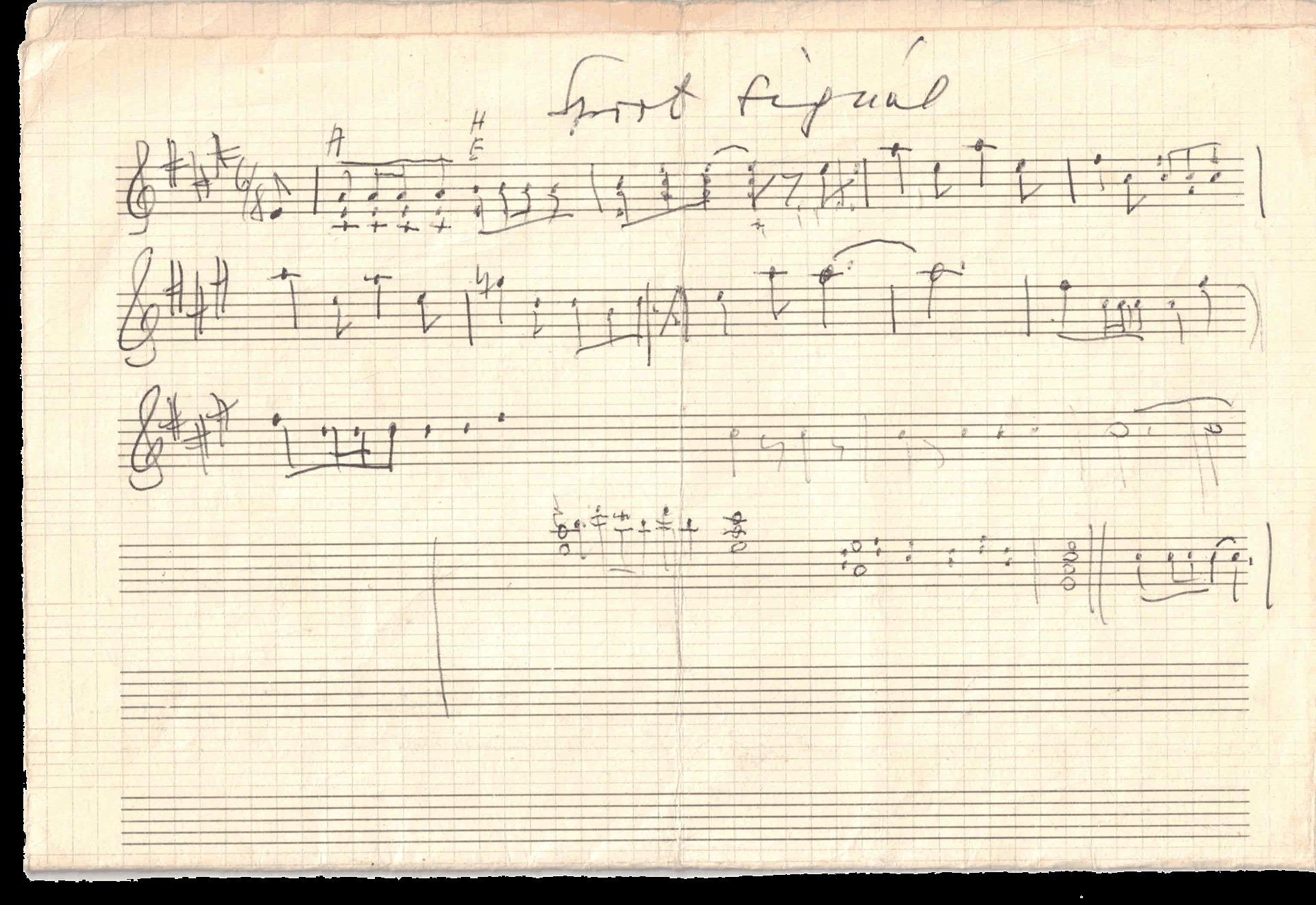
Skomponoval športový signál, ktorý sa niekoľko rokov používal v Československej televízii ako úvodná znelka športového vysielania a stal sa známym širokej verejnosti.
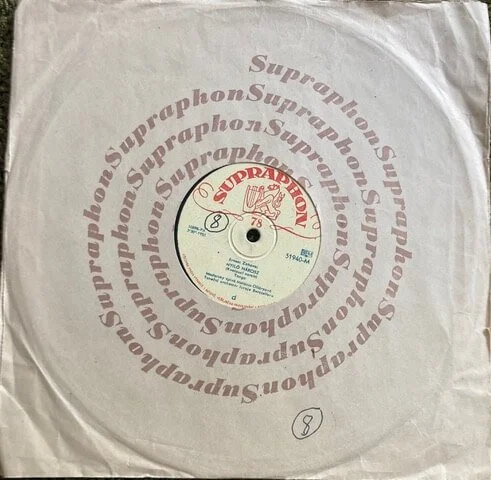
Československý rozhlas nahral viac ako 30 jeho skladieb do svojho archívu, čím sa jeho tvorba zachovala pre ďalšie generácie poslucháčov.
A vinyl record partially inside a paper sleeve, with a red 'SUPRAPHON' sticker on its label, and the pattern 'SupraPhon' repeated in a circular layout on the sleeve.

Za celý život napísal zhruba 500 piesní, niektoré s vlastným textom, niekoľko operiet a ďalšie. Za celoživotný prínos ku kultúrnemu a spoločenskému životu mesta získal ocenenie Pro Urbe, udeľované primátorom mesta za mimoriadne zásluhy.

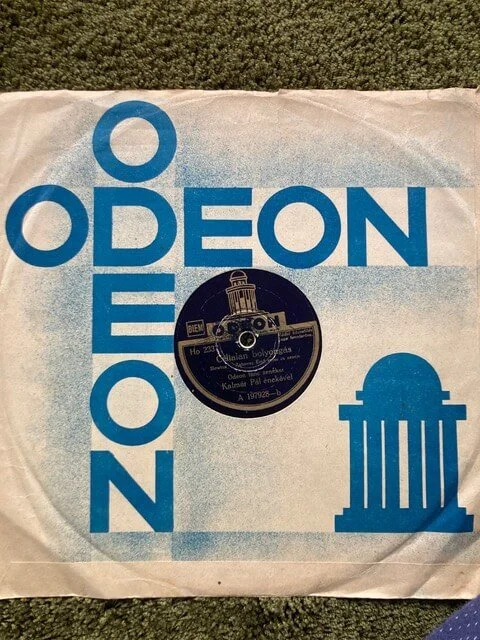
Vintage Odeon record with a paper sleeve displaying the Odeon logo and a graphical illustration of a building or monument.
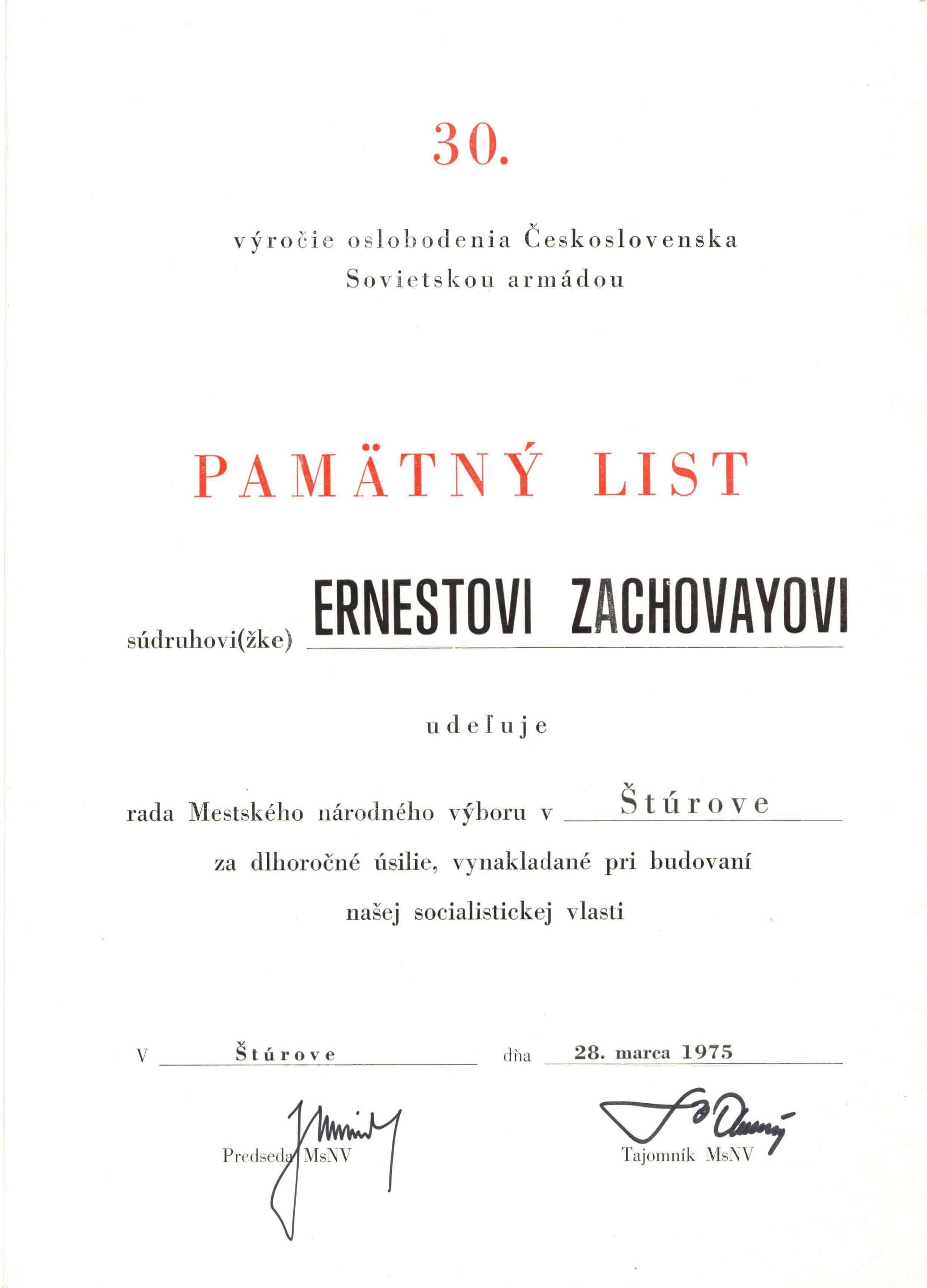
Official document in Slovak language, dated March 28, 1975, with signatures and official stamps, commemorating the 30th anniversary of the liberation of Czechoslovakia by the Soviet army.

archív

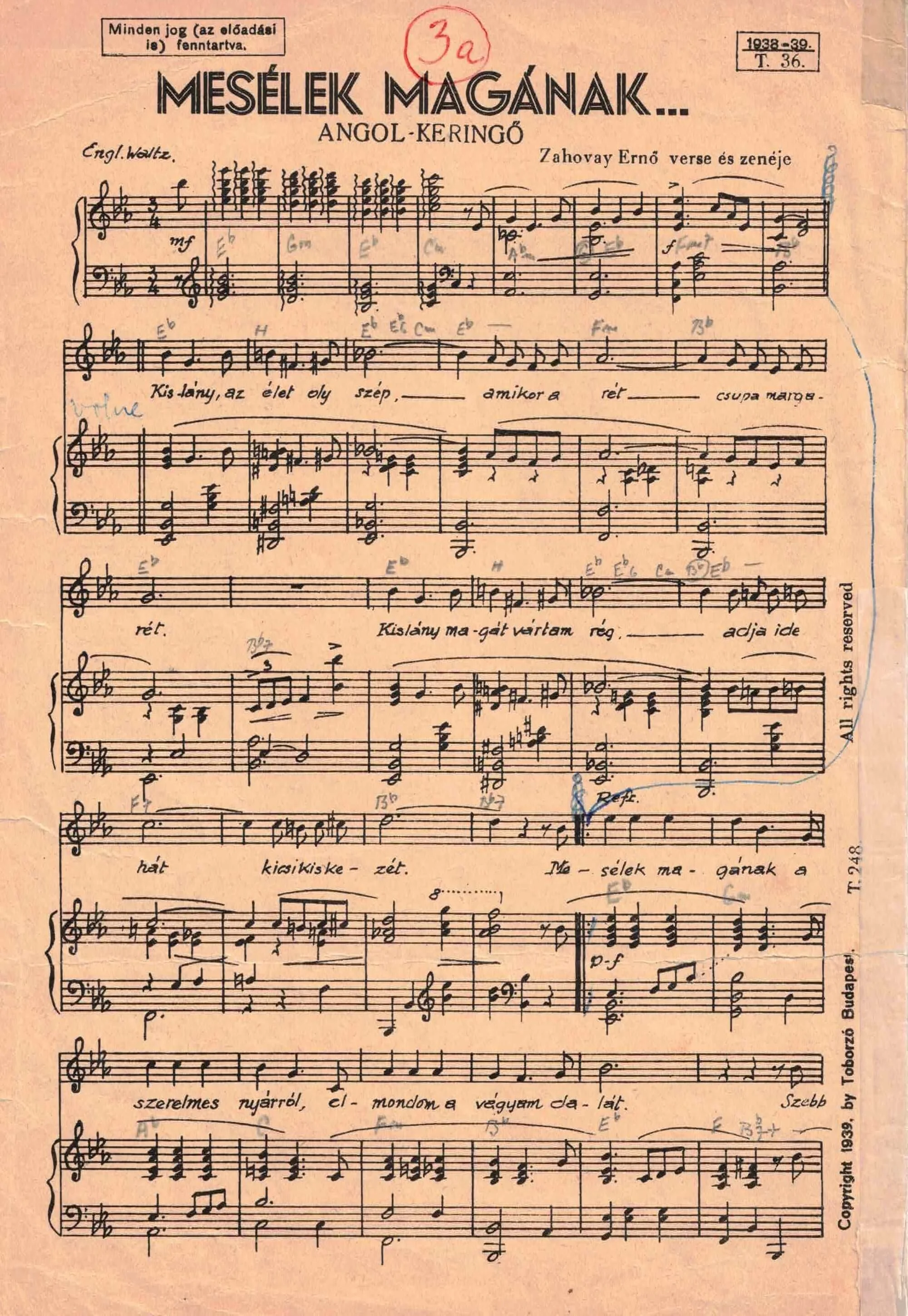
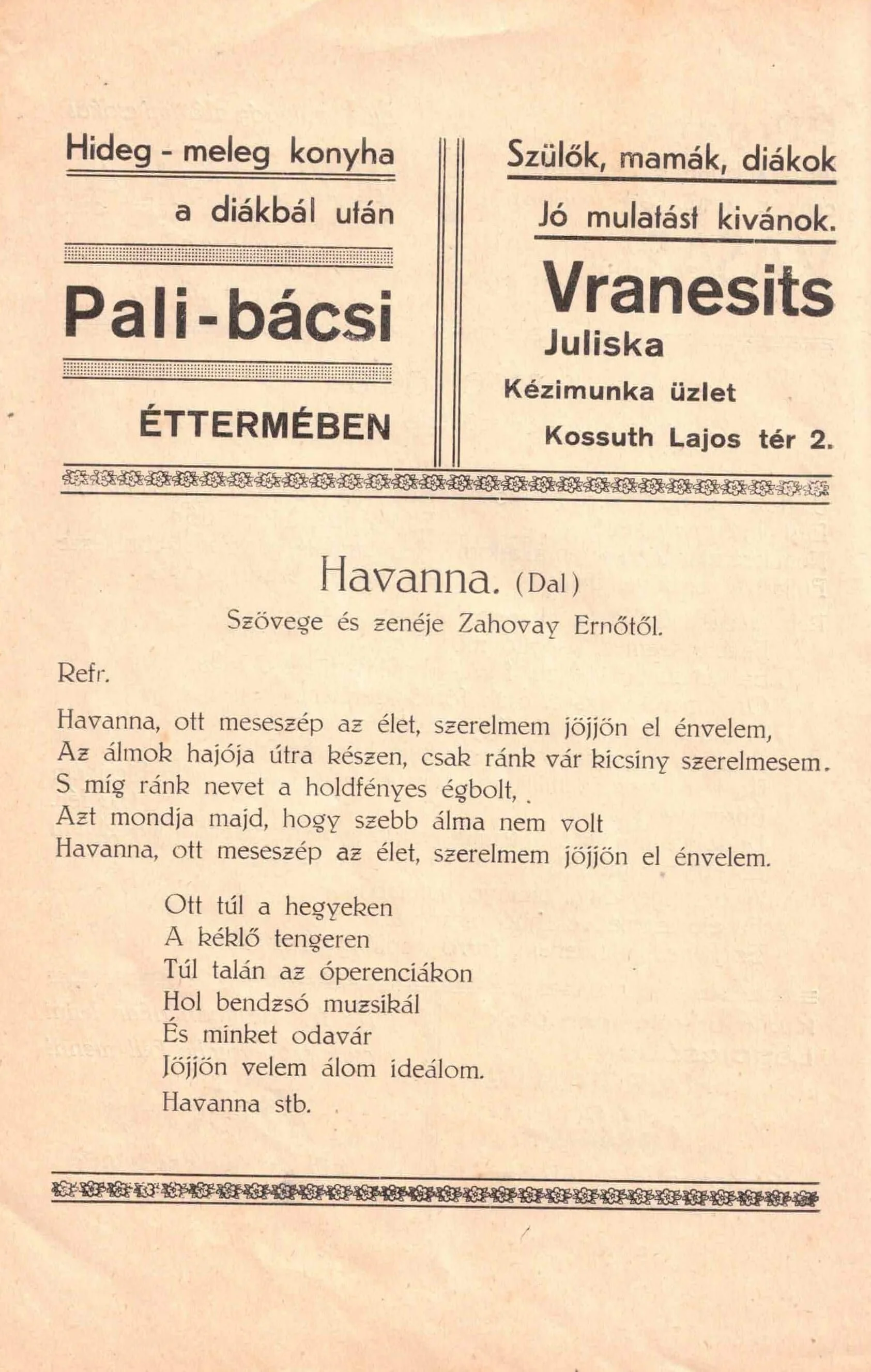
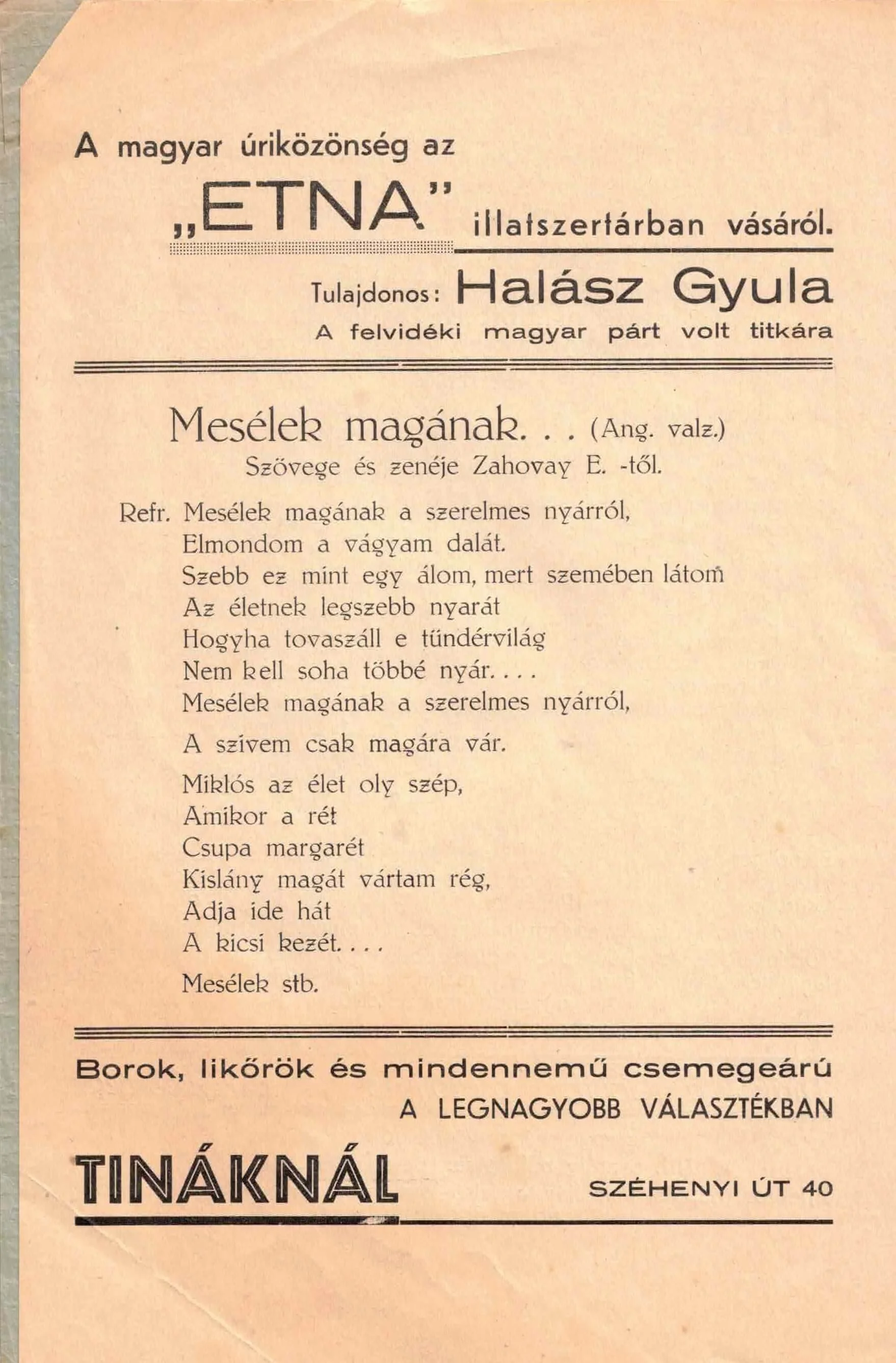
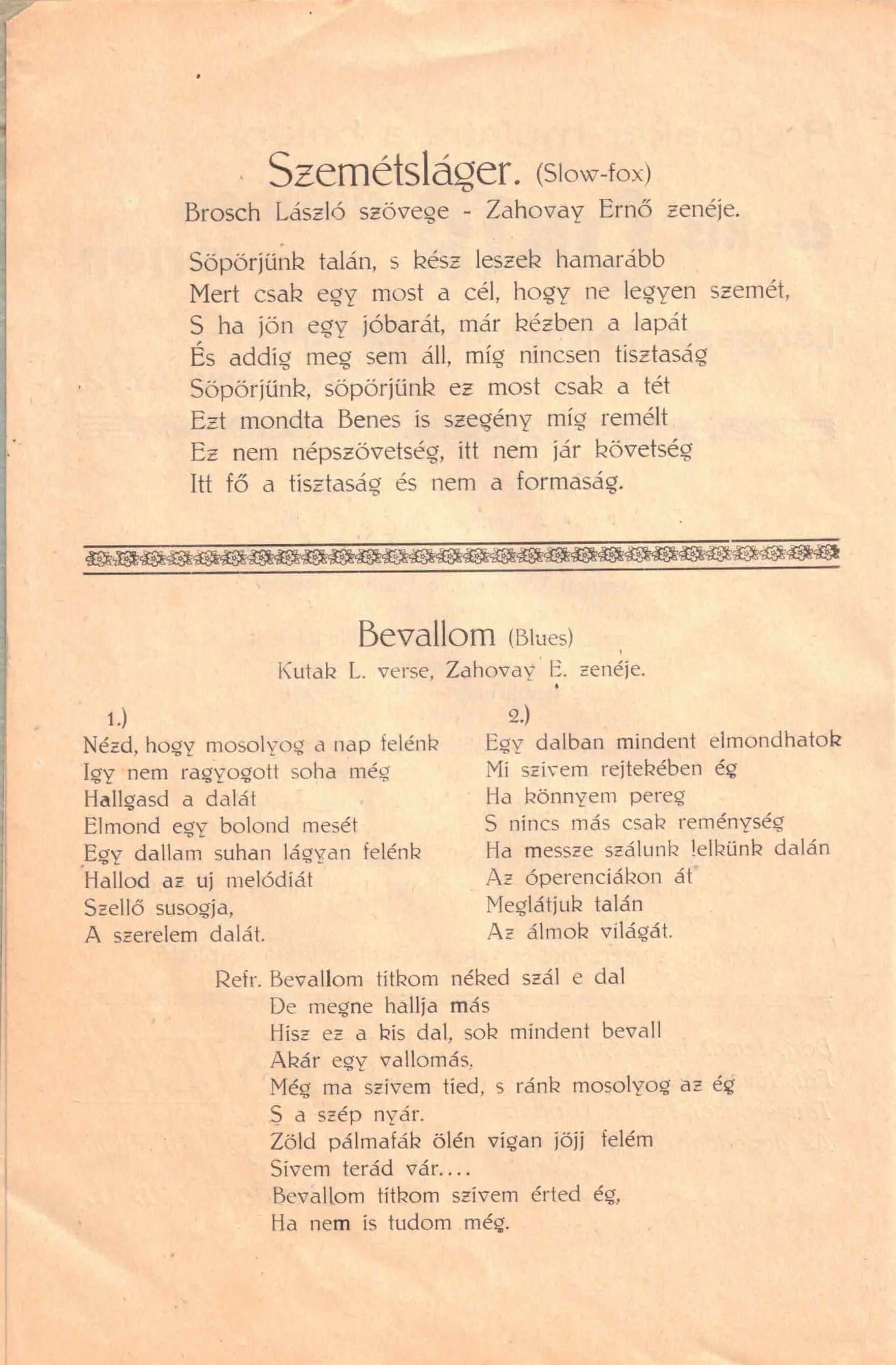
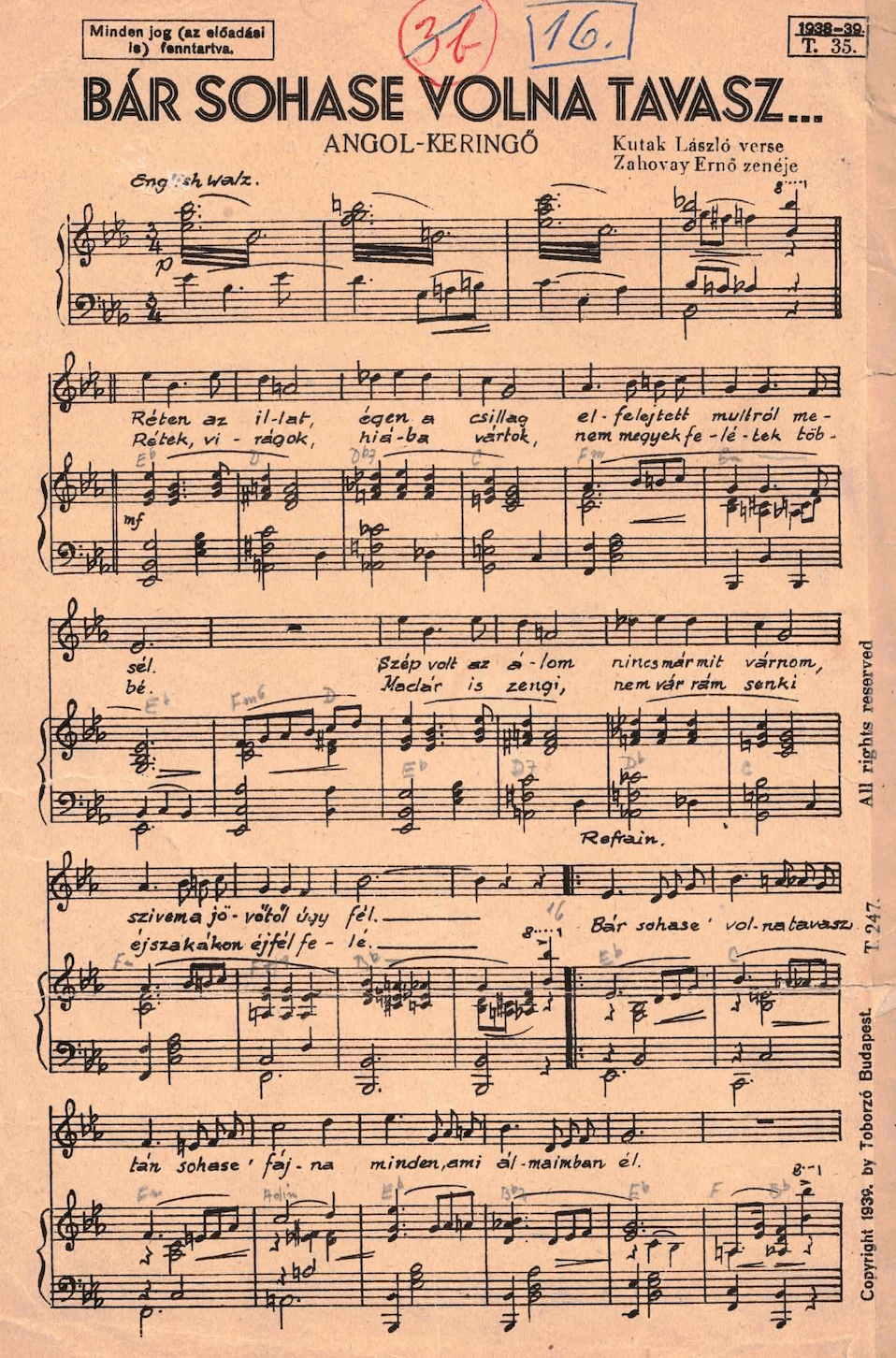
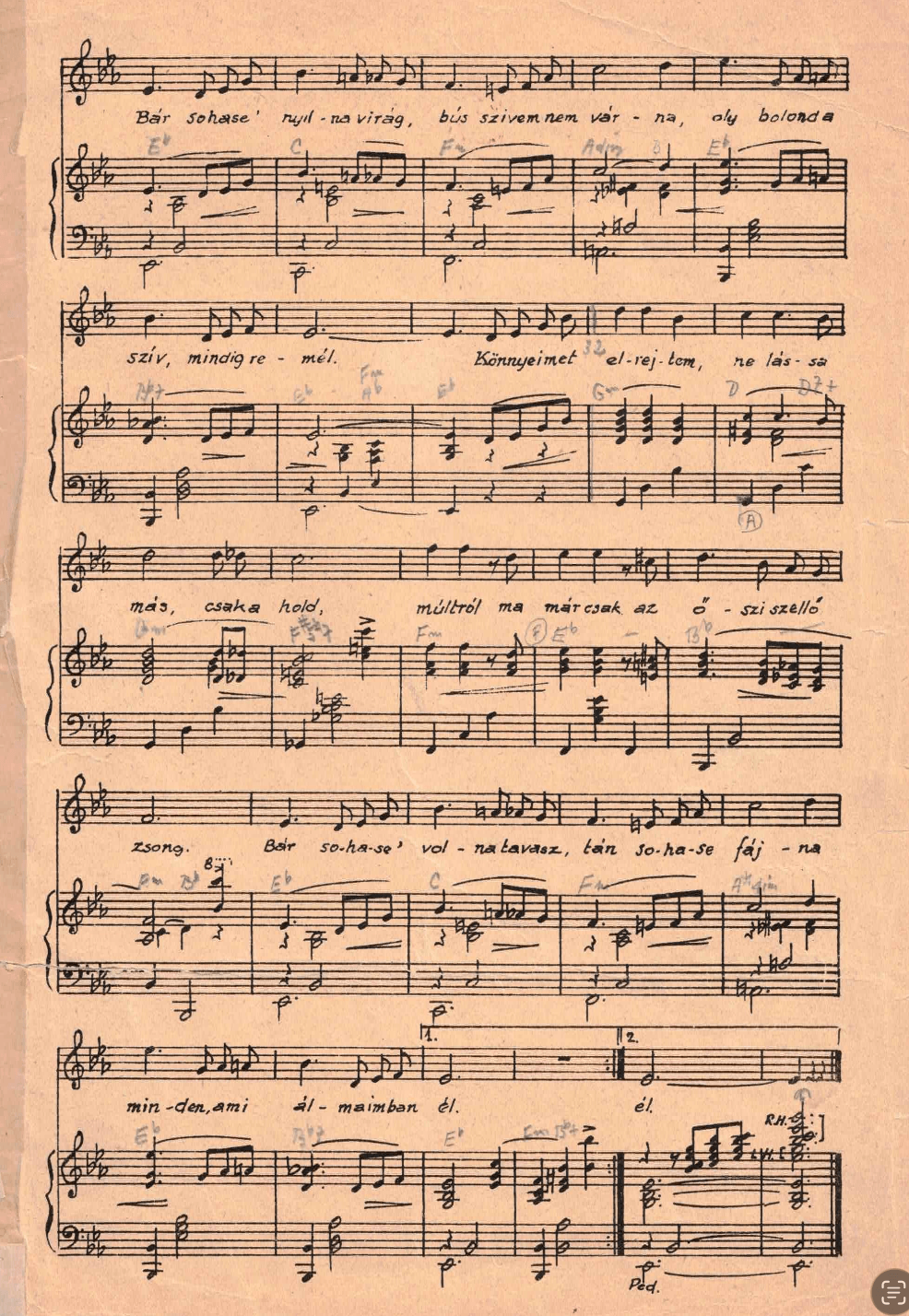
Medzi najznámejšie skladby Ernesta Zahovaya patrili Bár sohase volna tavasz a Mesélek magának, ktoré reprezentovali noblesný, kaviarenský a melancholický štýl mimoriadne obľúbený v medzivojnovom období. Ich notové vydania publikovalo renomované budapeštianske hudobné nakladateľstvo Toborzó, ktoré ich distribuovalo ako samostatné notové hárky. Zachované vydania sú dôkazom vysokej profesionálnej úrovne Zahovayovej tvorby i jej úspešného šírenia ešte pred vypuknutím druhej svetovej vojny.

A vintage Hungarian program or pamphlet with red printed text on cream paper and a decorative floral motif in the bottom right corner.

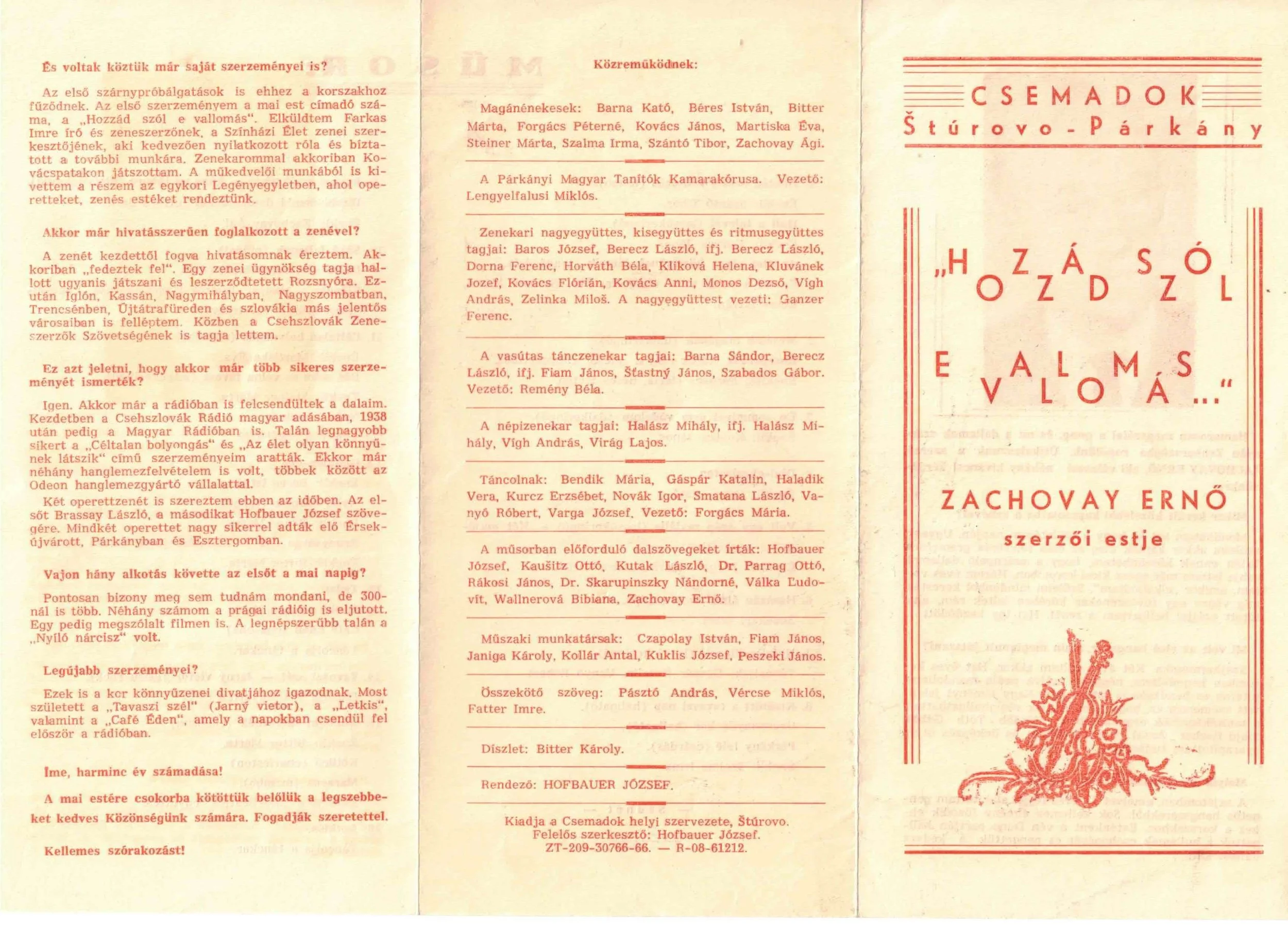
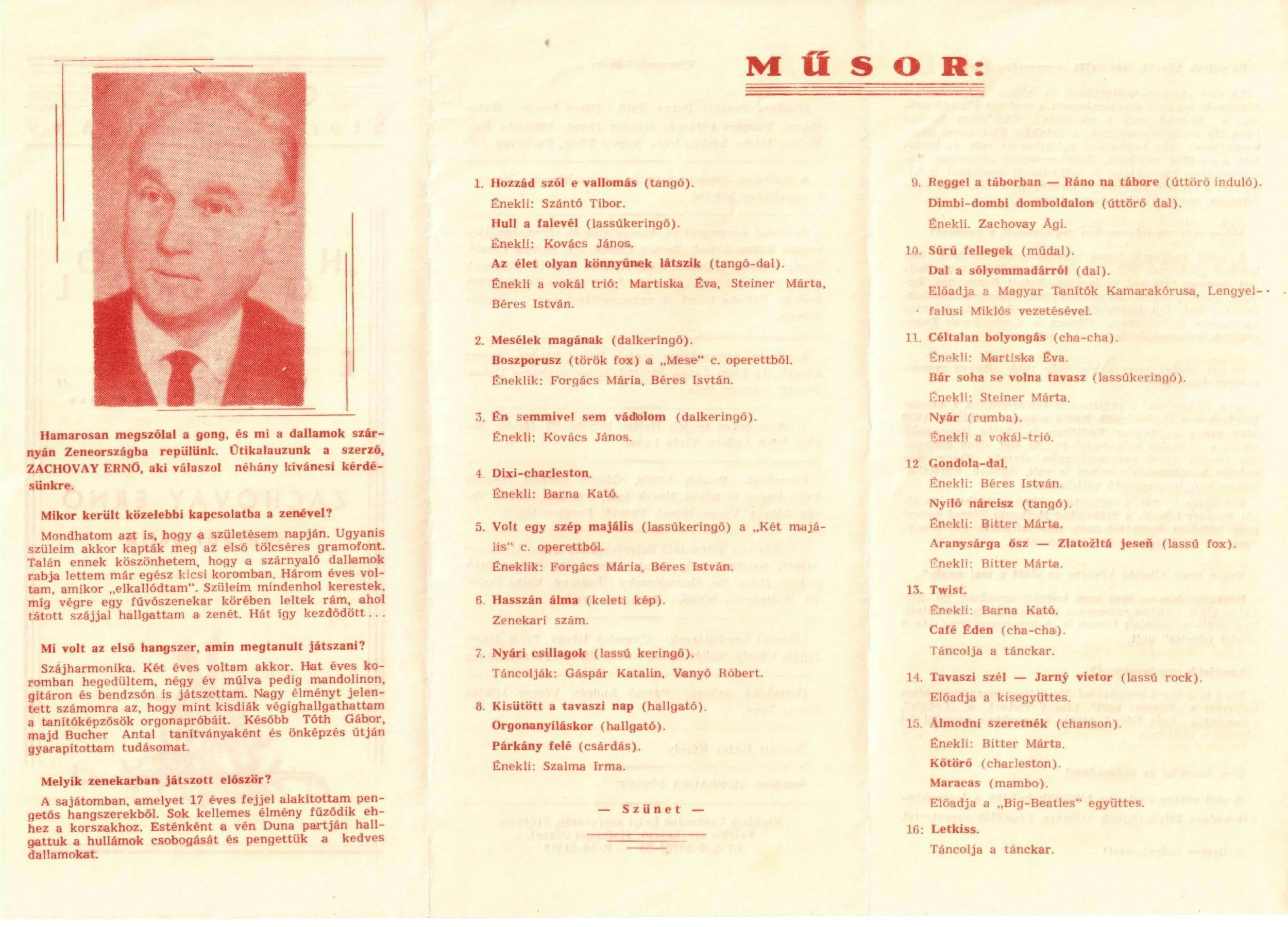
Originálny bulletin z autorského večera Ernesta Zahovaya, ktorý sa konal v Štúrove v roku 1966 pod záštitou Csemadoku. Dokument obsahuje dobové fotografie, úvodné slovo autora a kompletný program podujatia vrátane vystúpenia jeho dcéry Ági Zahovayovej so skladbou Reggel a táborban. Predstavuje cenné svedectvo o tvorbe Ernesta Zahovaya aj o pokračovaní hudobnej tradície v jeho rodine.

A vintage Hungarian publication listing books and publications with their authors and prices, featuring a simple black and white text layout on tan paper.
A vintage poster with large stylized letters reading 'Hú! a falevél!' and various handwritten notes in Hungarian about a music album and concert, including contact information and location details in Budapest.

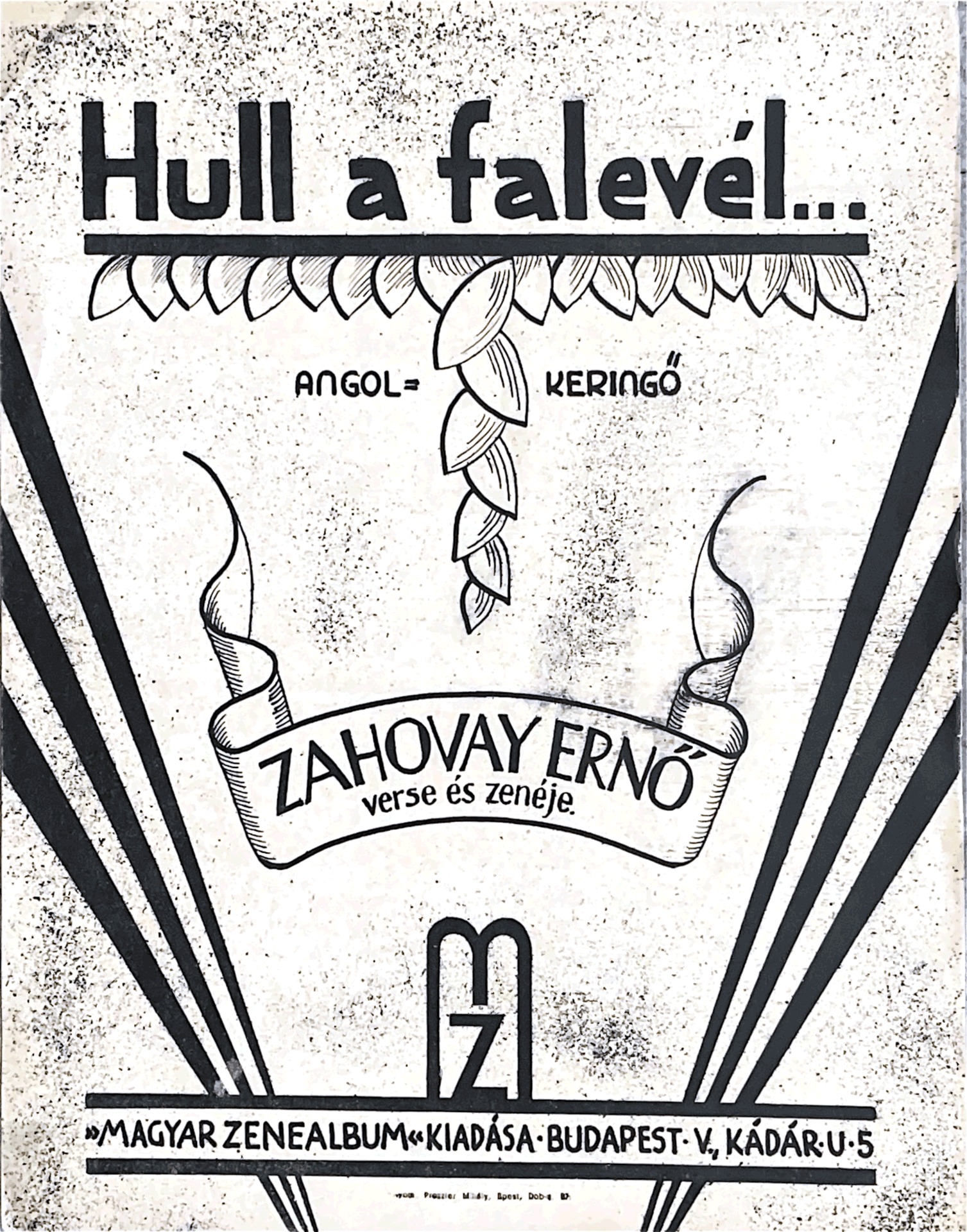
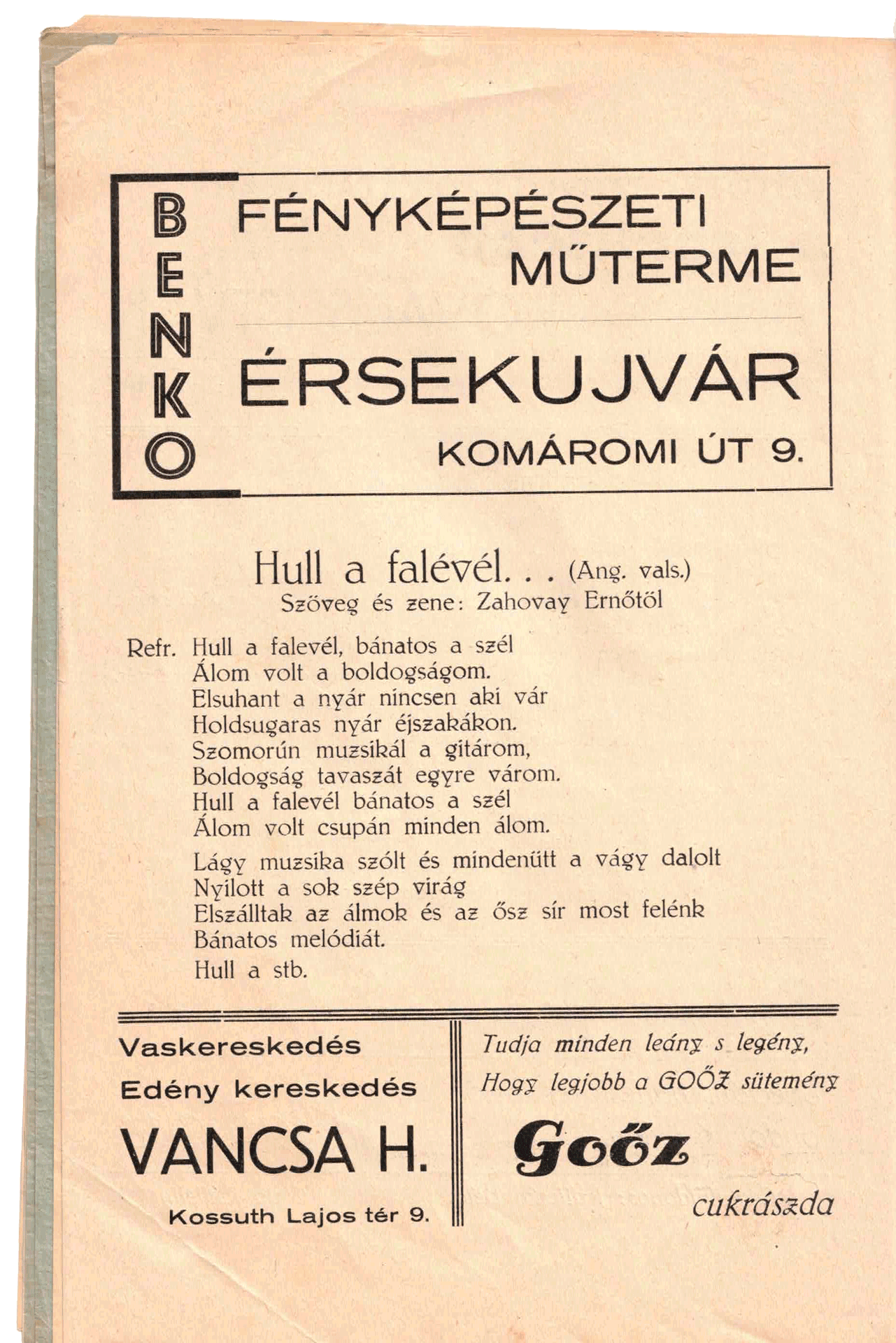
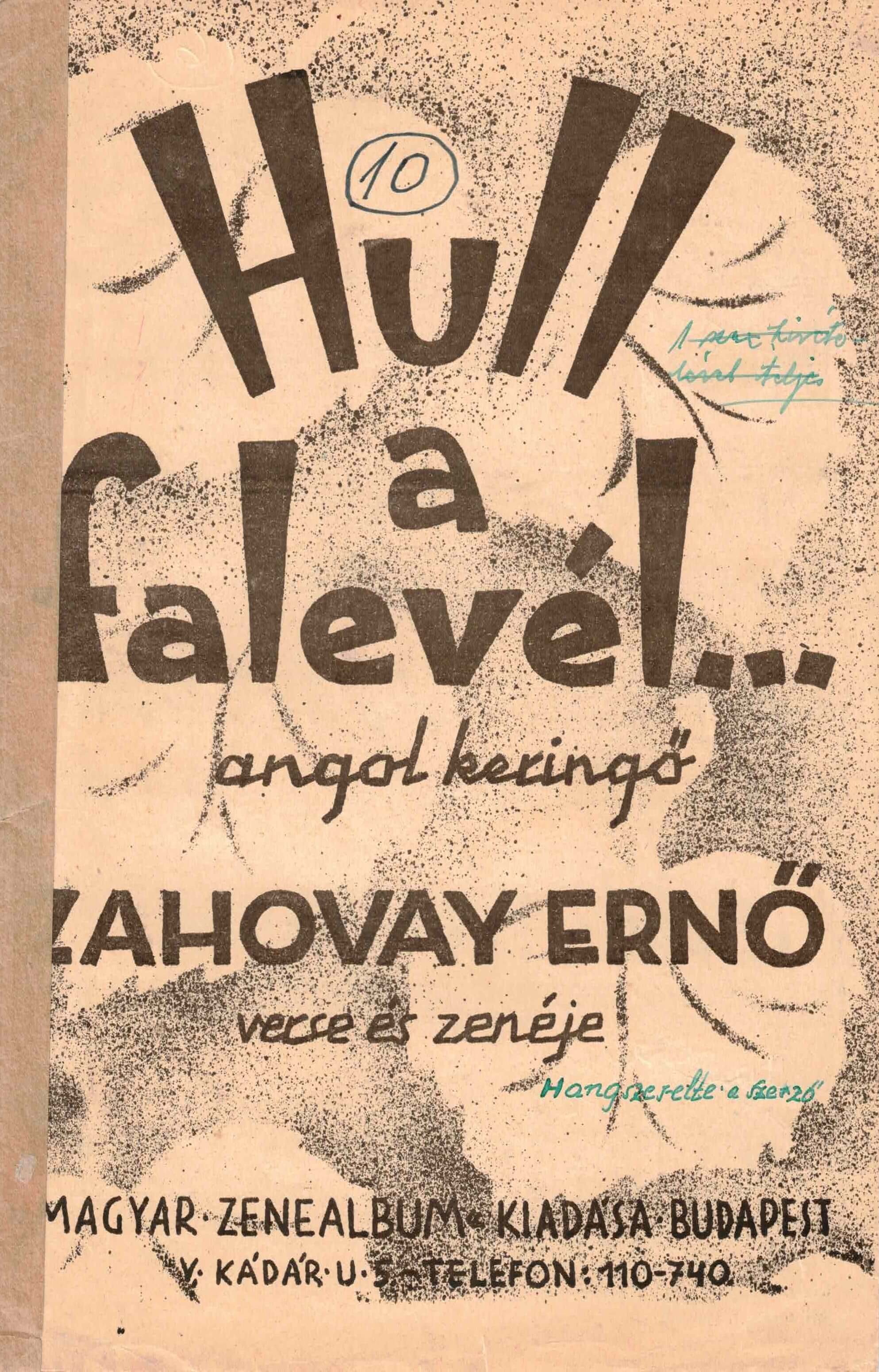
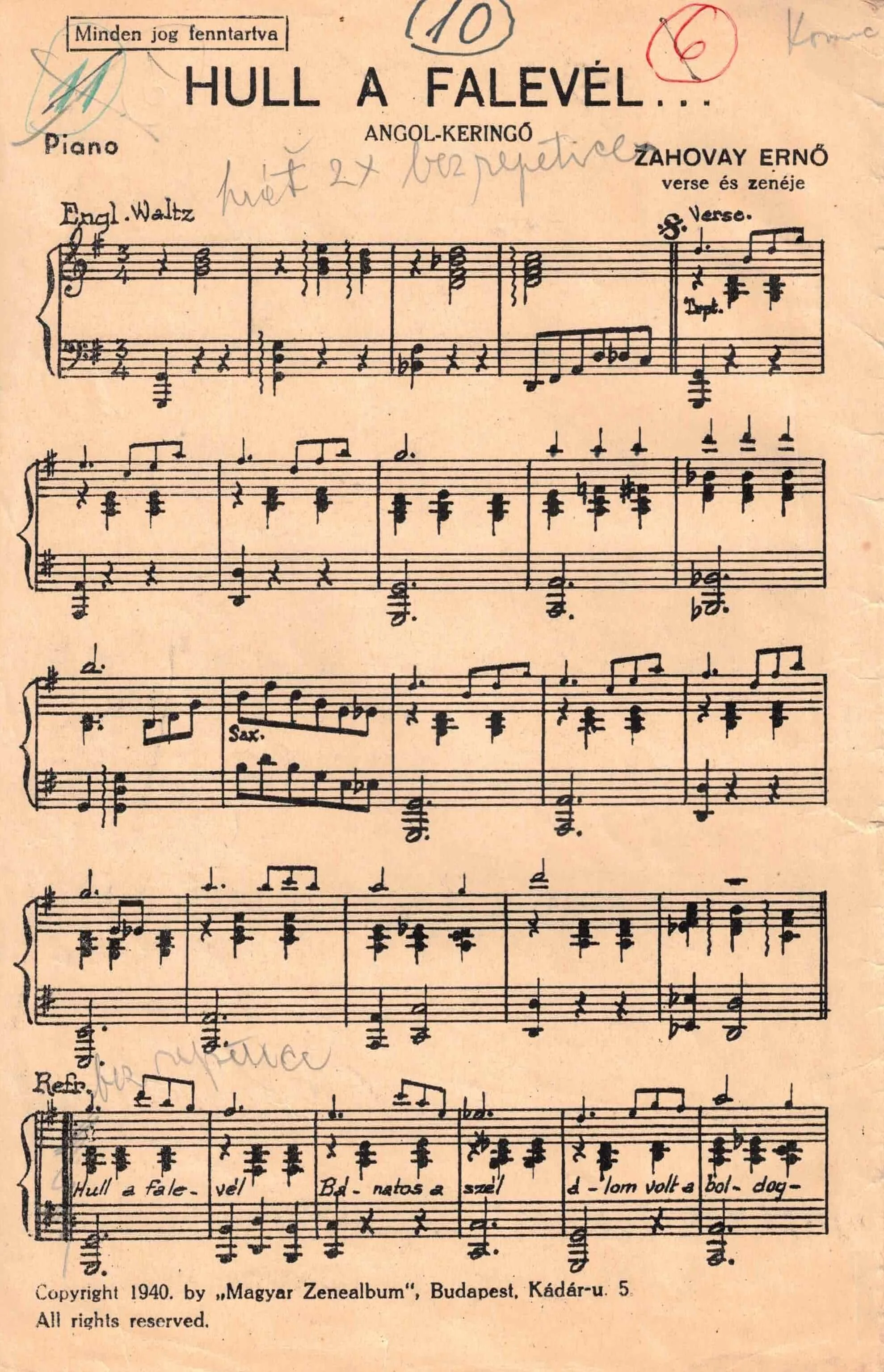
Po úspechu v Budapešti pokračovala skladateľská kariéra Ernesta Zahovaya aj v nasledujúcom roku. V roku 1940 vydavateľstvo Magyar Zenealbum vydalo jeho anglický valčík pre klavír Hull a falevél... (Padajúce lístie...). Zachované notové výtlačky nesú aj rukou písané poznámky k interpretácii, ktoré vznikali priamo počas živých kaviarenských vystúpení. Toto vydanie symbolicky uzatvára úspešné predvojnové obdobie, keď bol Ernest Zahovay rešpektovaným autorom tanečnej hudby v Bratislave aj Budapešti.

A comic-style illustration on a green background depicting a man and a woman in period clothing, with the woman holding a rolling pin. The text in the image is in Polish, with some words like "Valse" and names such as "Ernest Zachovy" and "Ondrej Marek." The illustration also features a banner with the words "Rumba" and "Tra" amid other stylized text.
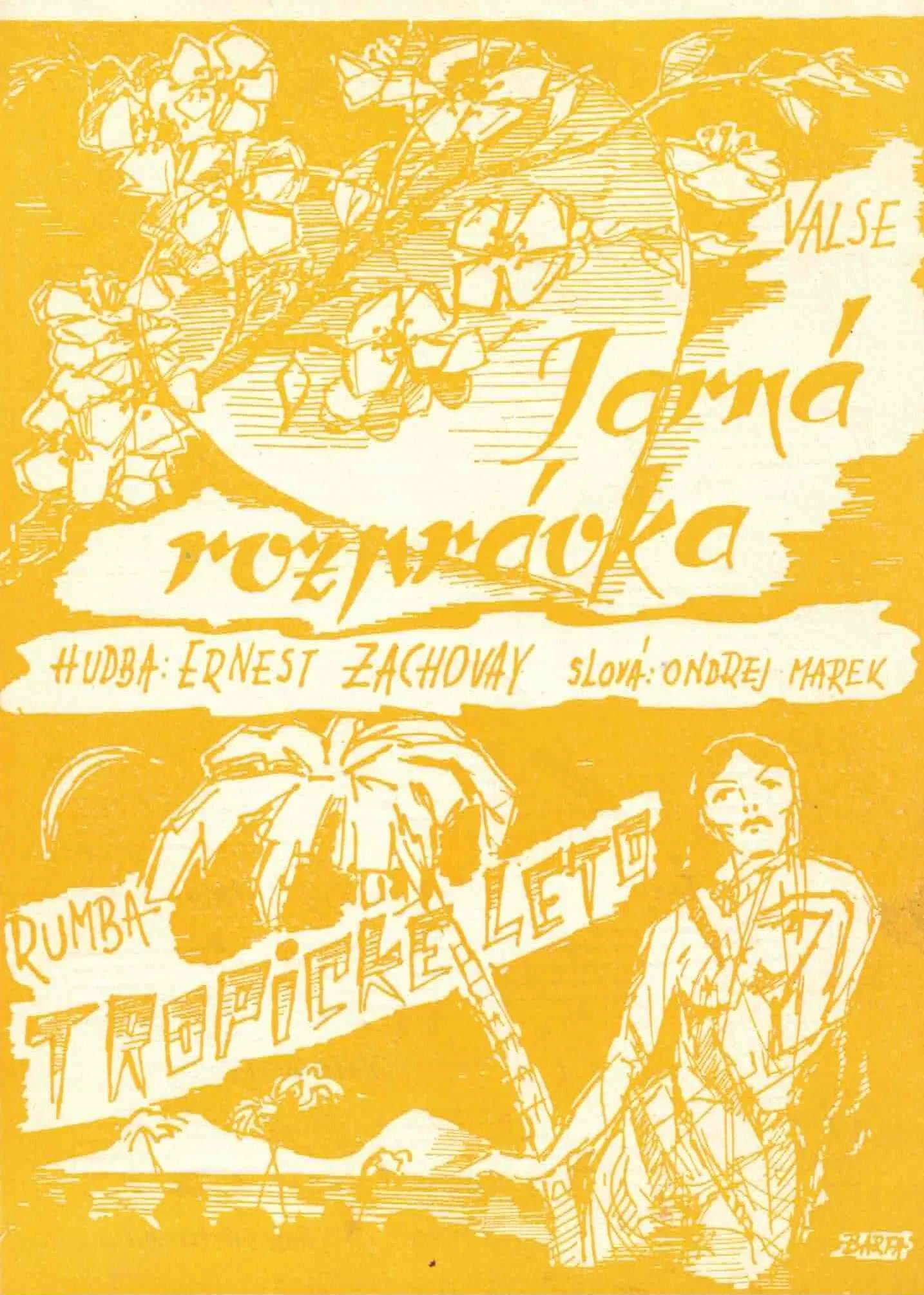
Stylized yellow and white poster with hand-drawn illustrations of people, flowers, and text promoting the Jarma Murcukka music event in Mumbai, India, featuring Hudba Ernst Zachovay and Ondrej Marek.
Close-up of a vintage Hungarian banknote featuring a graphic design with musical instruments, floral patterns, and Hungarian text. The text includes the names Kutak László and Zahovay Ernő.
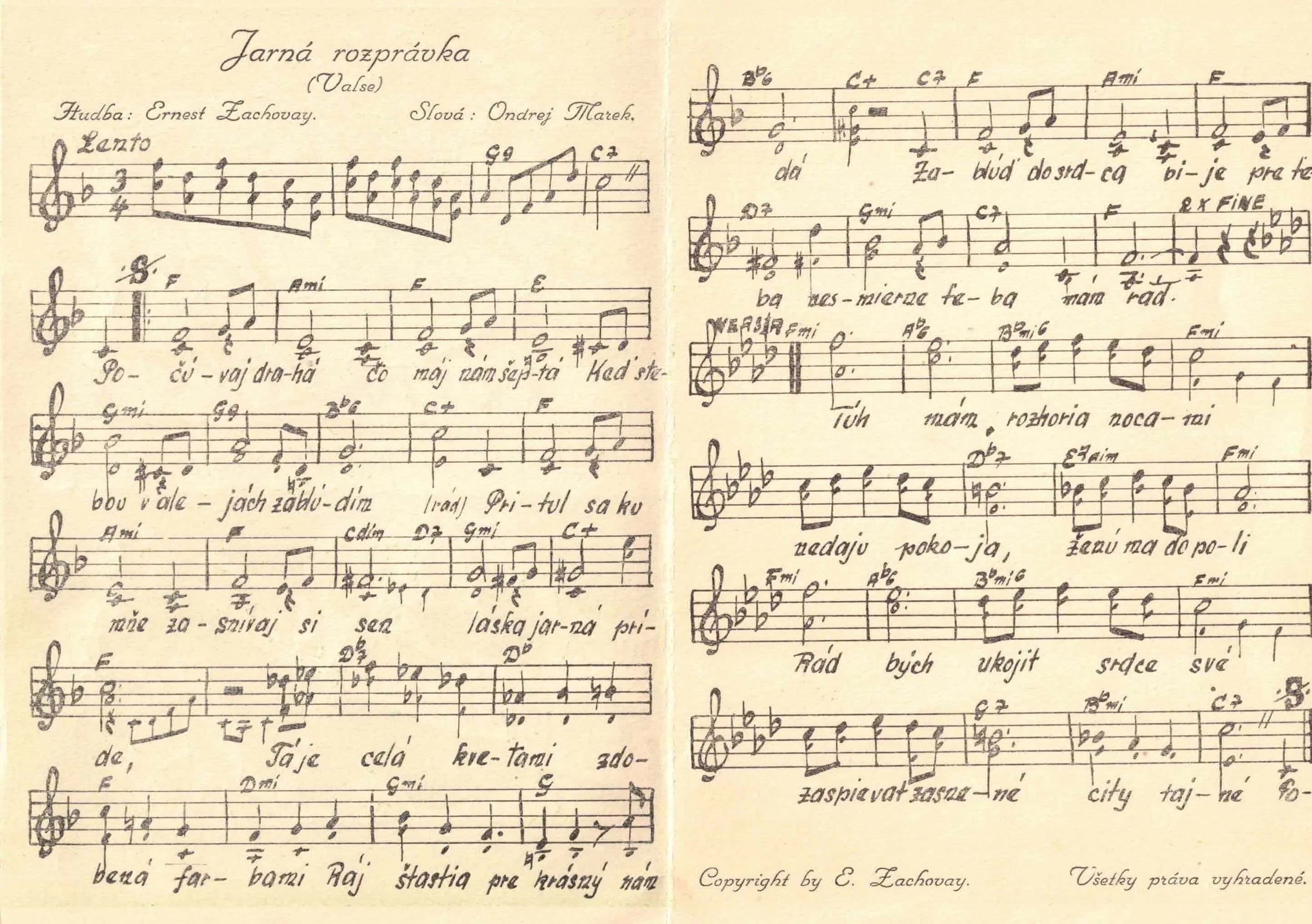
A vintage sheet of music and lyrics in a language other than English, titled "Jarná rozprávka (Valse)." The sheet includes handwritten musical notation, lyrics, and song credits, with copyright info at the bottom.
A vintage musical score titled "Hull a Falevel" with handwritten notes, annotations, and markings, including notes about the music, signatures, and copyright information from 1940.
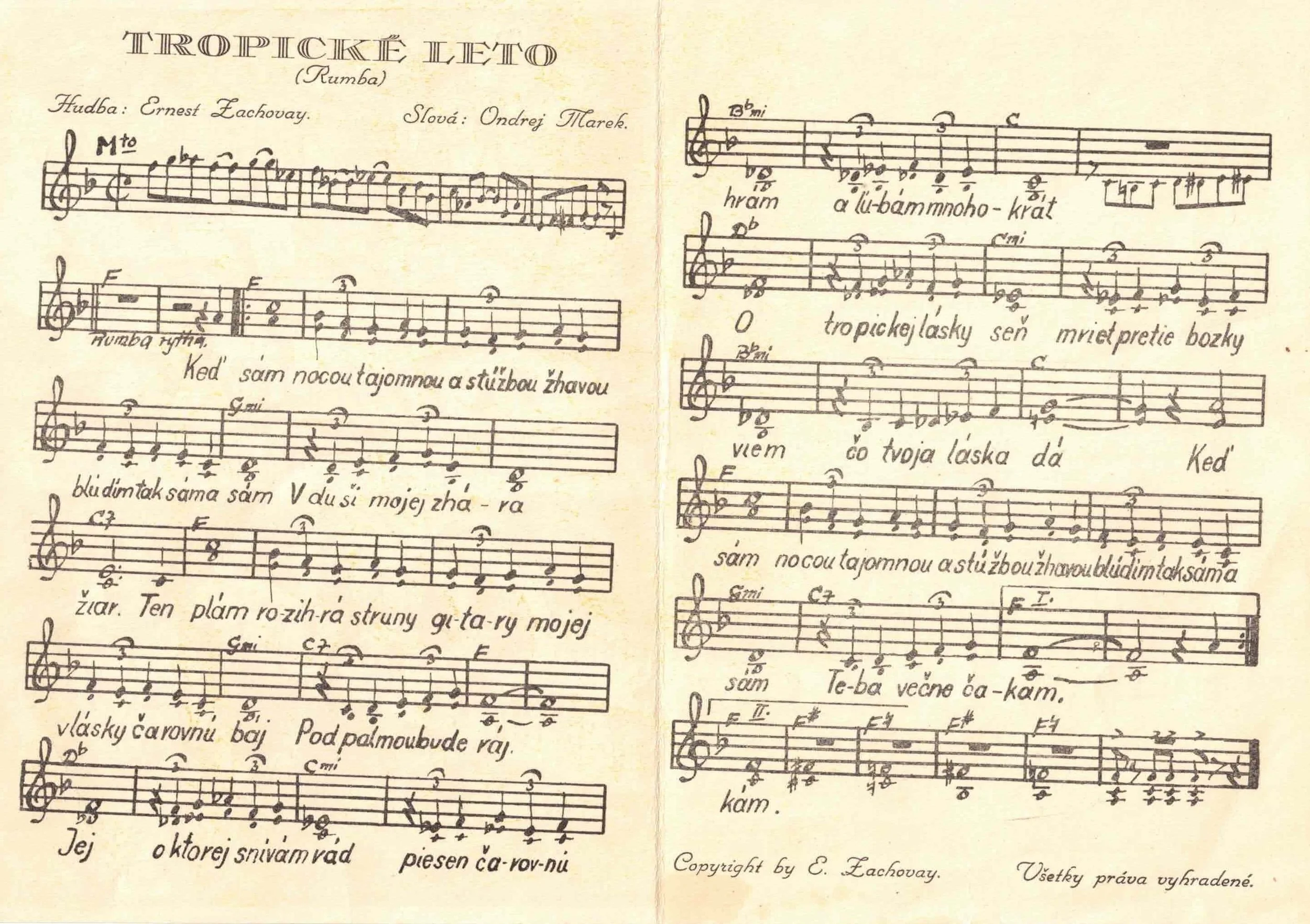
A scanned page of sheet music titled 'Tropické Leto (Rumba)' with musical notes, lyrics in Slovak, and copyright information at the bottom.

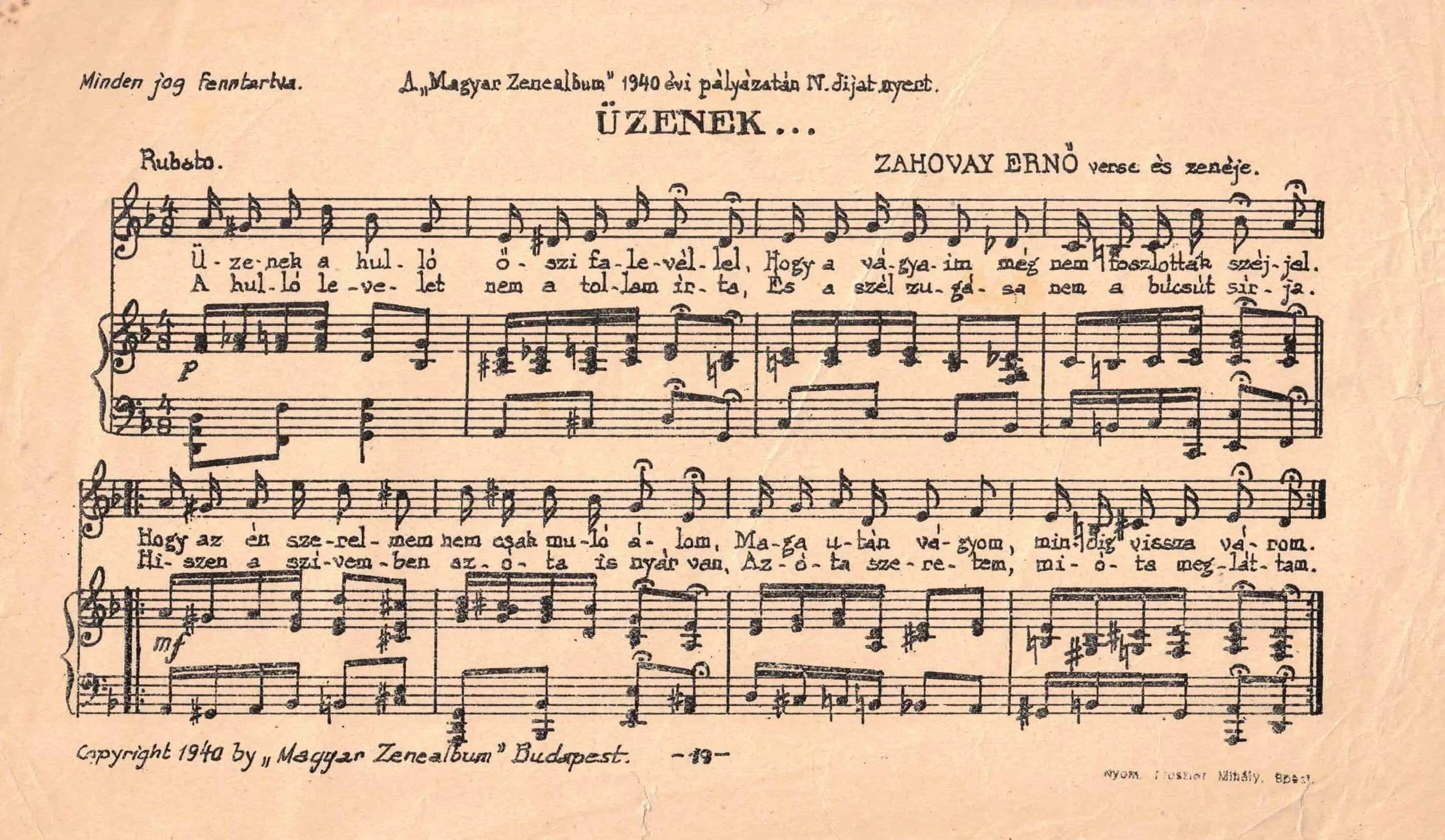
Originálny tlačený notový záznam piesne „Üzenek...“ z roku 1940 dokumentuje ďalší významný úspech Ernesta Zahovaya. Skladba, ku ktorej napísal hudbu aj text, získala prestížnu IV. cenu v celoštátnej skladateľskej súťaži Magyar Zenealbum v Budapešti. Ide o hmatateľný dôkaz jeho autorského uznania a tvorivého úspechu na samom prahu vojnového obdobia.

Sheet music for a song in Hungarian language, titled "Mesélek Magának..." with handwritten annotations and notes, marked with a red circle and the number "3a".
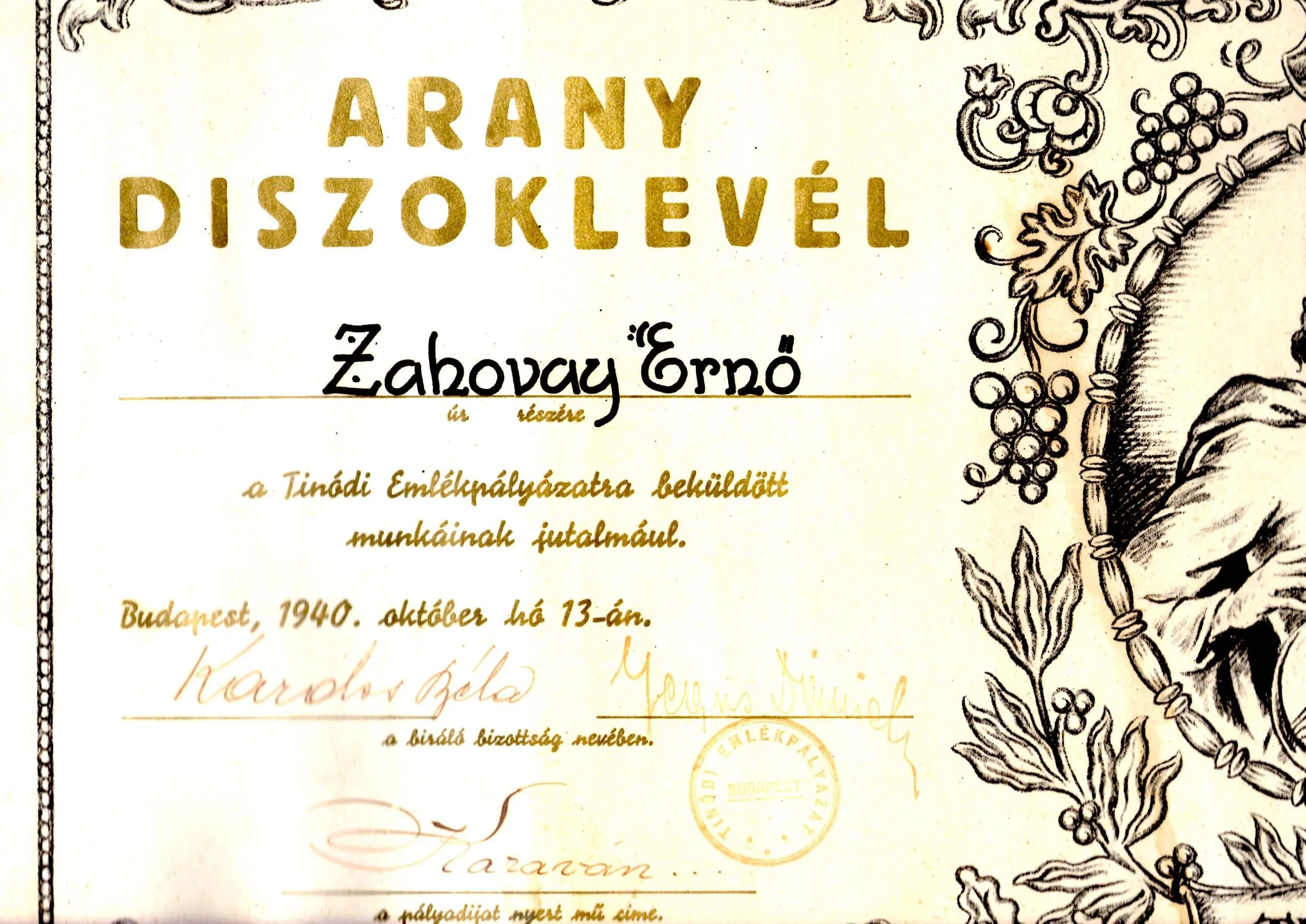
Historical Hungarian document with ornate border and decorative elements, featuring Hungarian text and a seal, dated October 13, 1940.

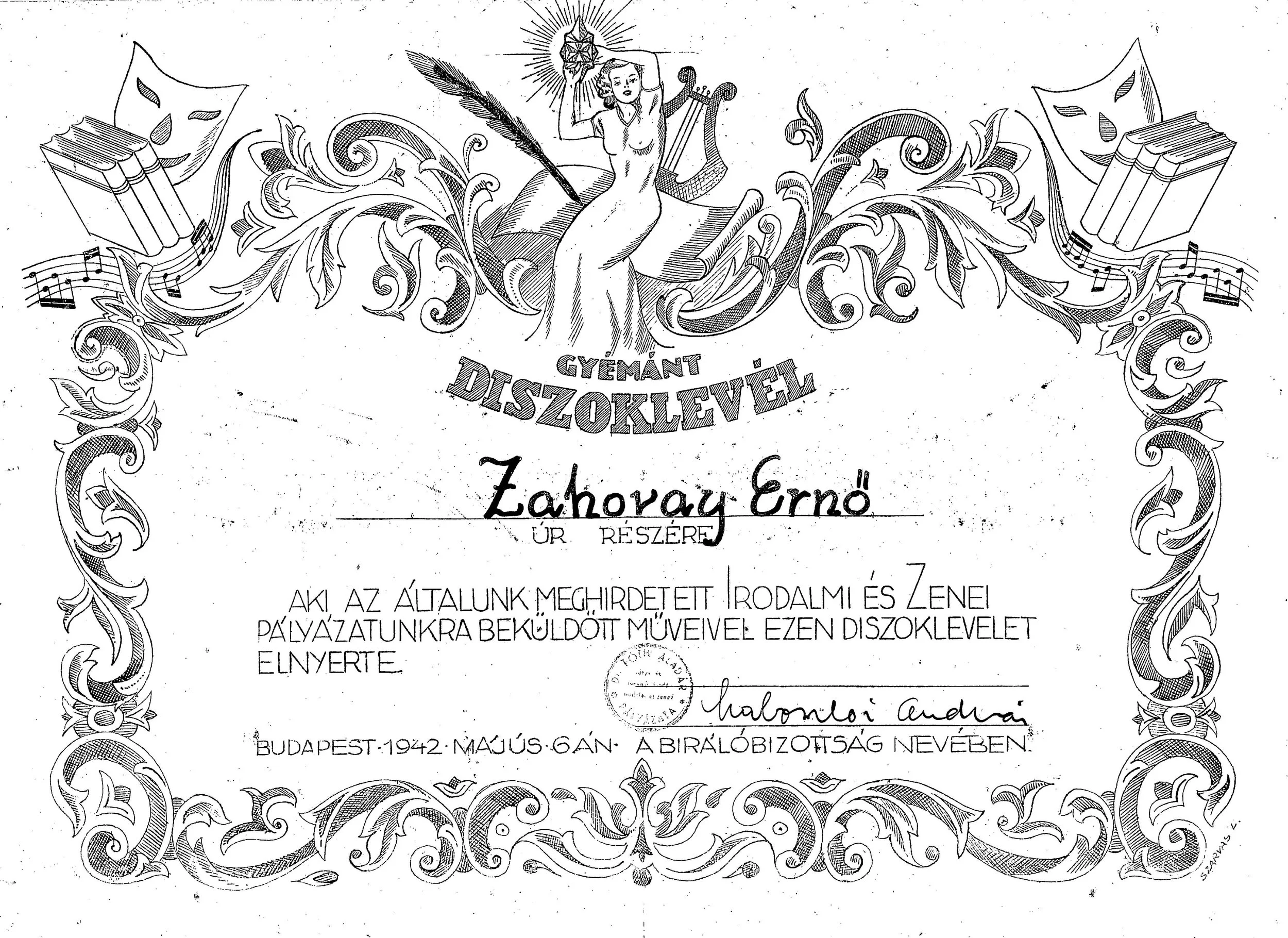
Zlatý čestný diplom z roku 1939 je vzácnym svedectvom mimoriadneho hudobného talentu Ernesta Zahovaya (1913 - 1998), významného skladateľa, klaviristu a zakladateľa tanečných orchestrov. Ocenenie získal na celoštátnej súťaži poézie a hudby v Budapešti za vynikajúce umelecké vystúpenie. V období veľkých spoločenských zmien a tesne pred vypuknutím druhej svetovej vojny predstavoval tento úspech významné uznanie jeho talentu, ktorý presahoval hranice regiónu.

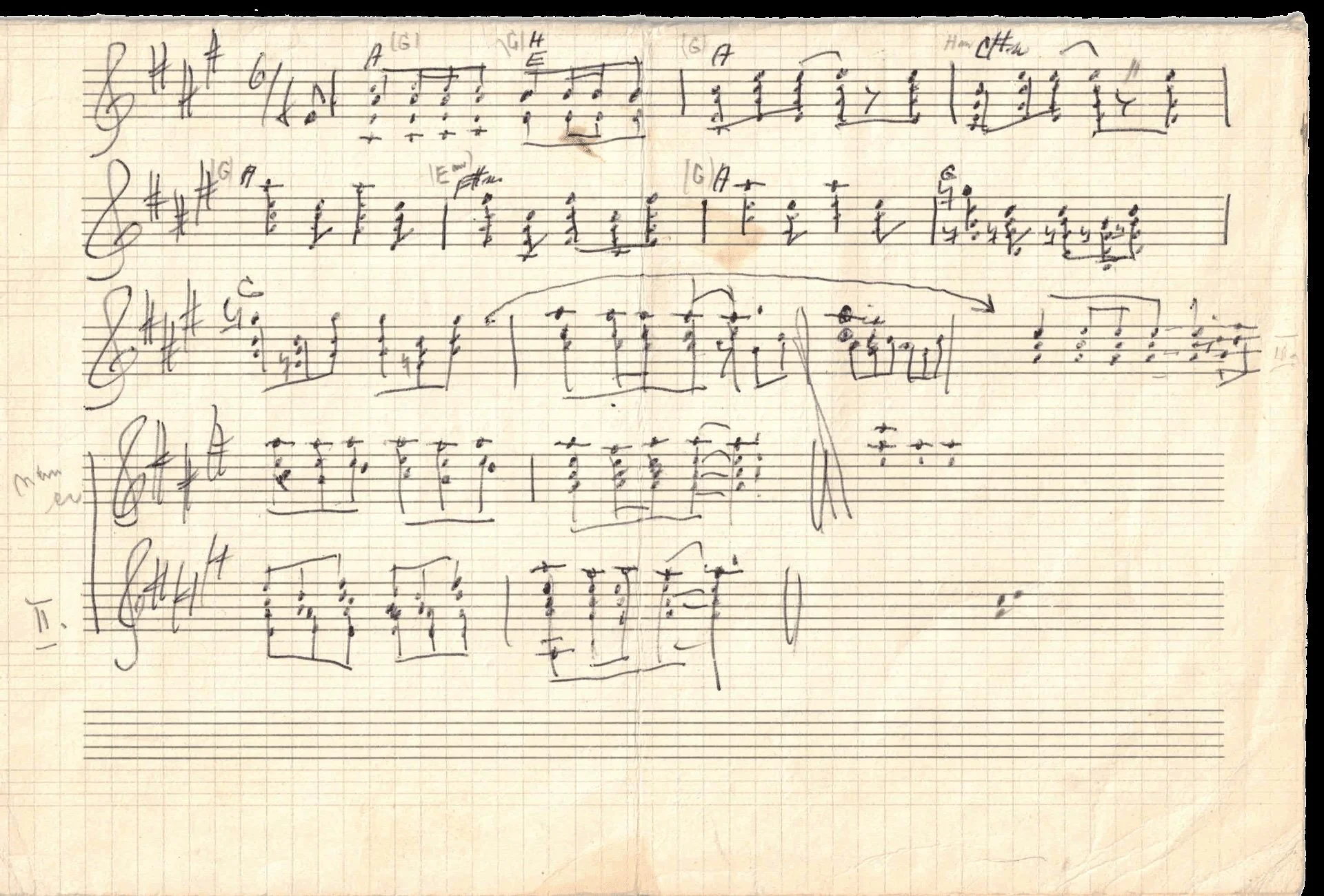
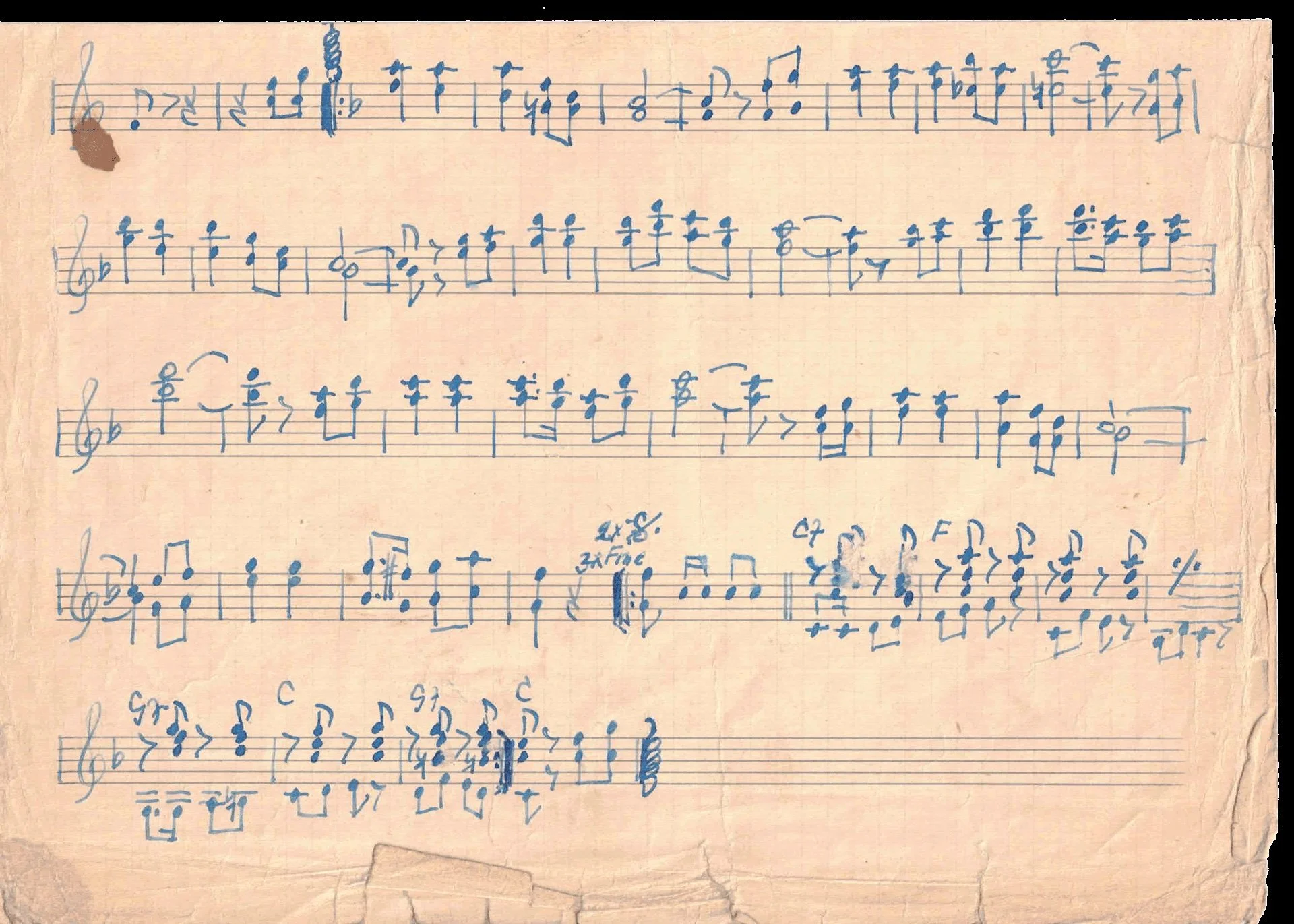
A hand-written sheet of music on graph paper with notes, chords, and markings written in blue ink.

Kladenie vencov pri pamatnej tabuli Ernesta Zahovayho

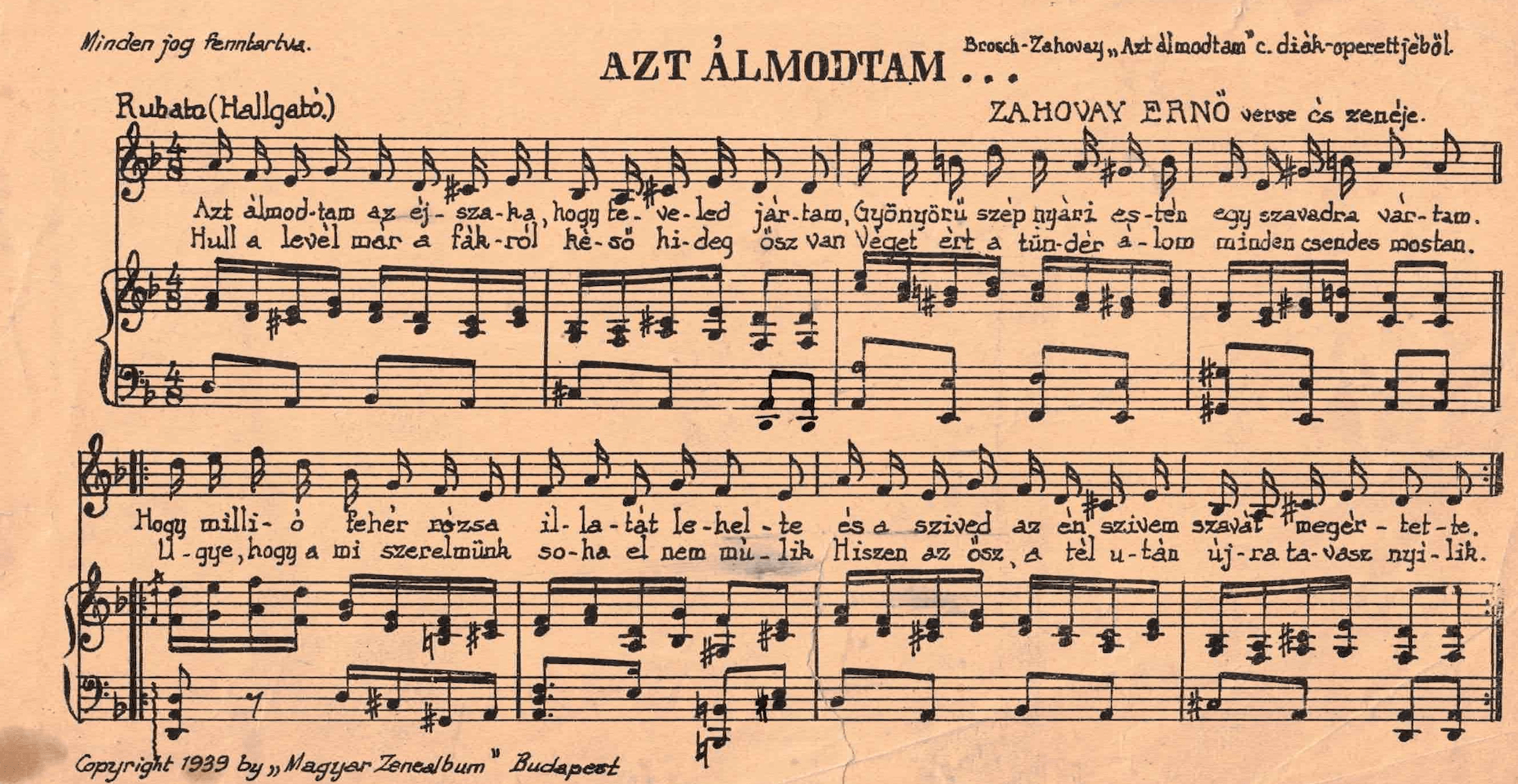
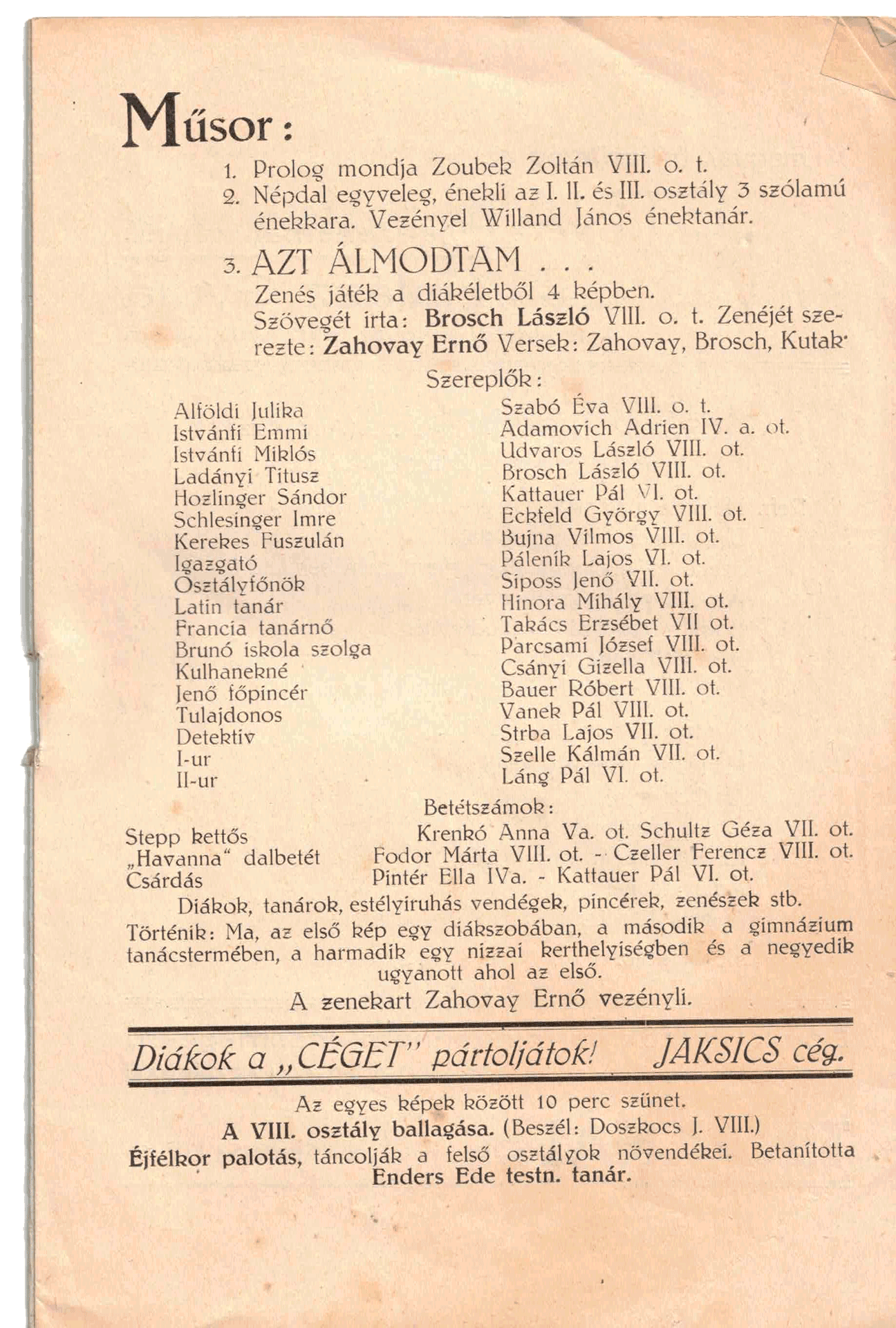
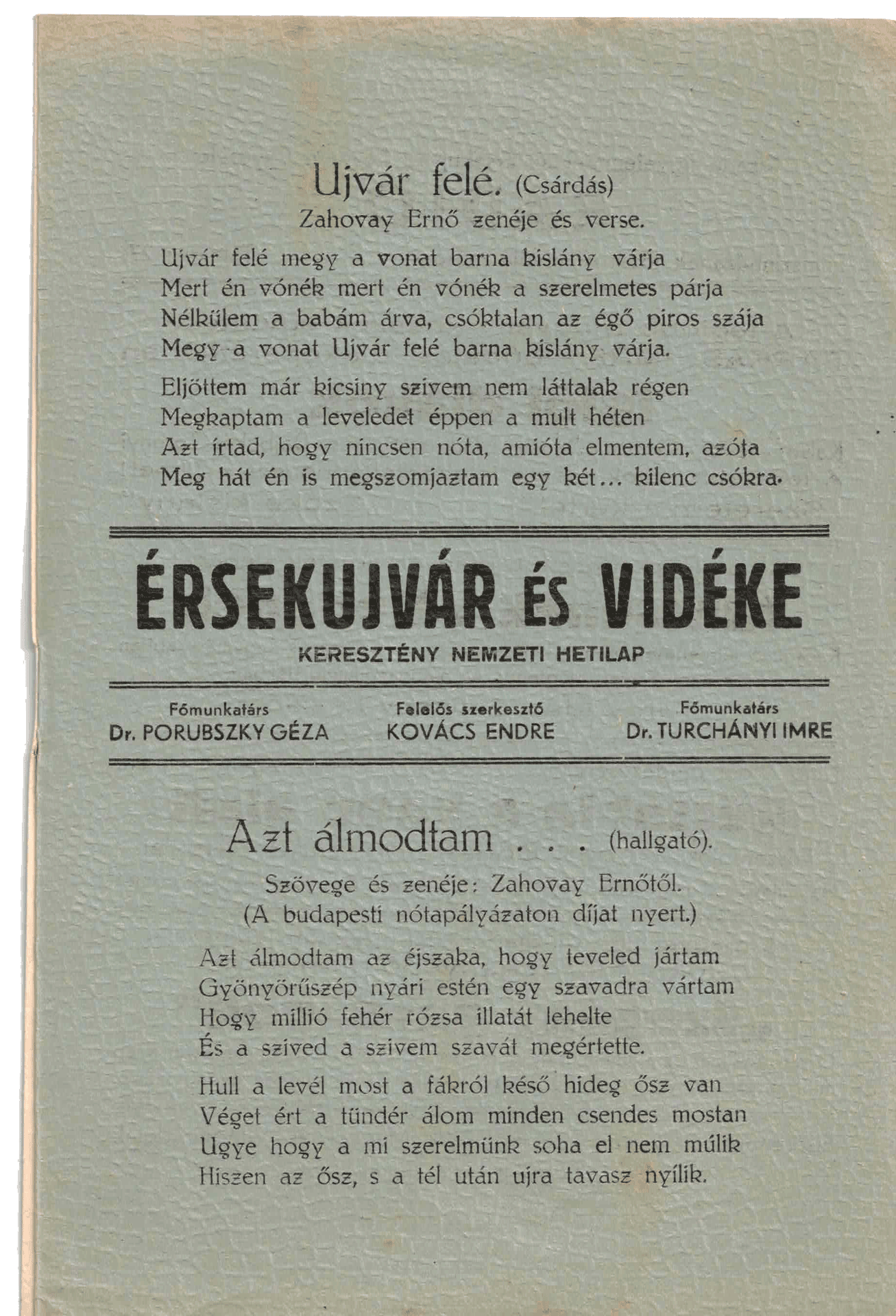
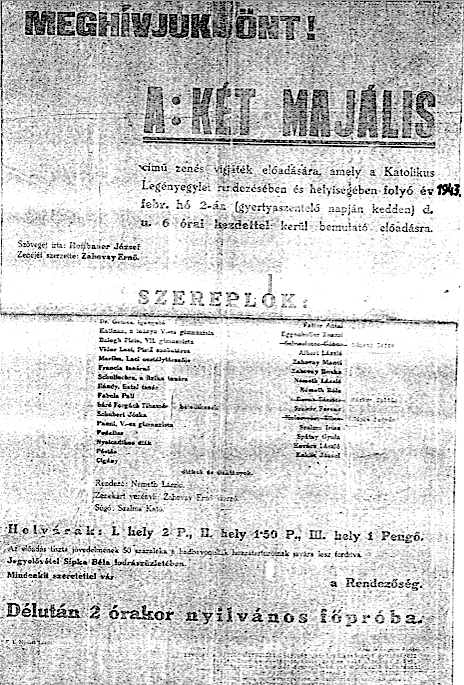
Prelomovým obdobím v ranej skladateľskej kariére Ernesta Zahovaya sa stal rok 1939. Spolu s priateľom Lászlóm Broschom vytvoril študentskú operetu Azt álmodtam... (Snívalo sa mi...), ktorá sa s veľkým úspechom uvádzala v Štúrove aj v Nových Zámkoch. Titulnú pieseň, ku ktorej skomponoval hudbu aj napísal text, prihlásil do prestížnej skladateľskej súťaže v Budapešti, kde získal Zlatý diplom. Tento úspech mu priniesol celoštátne uznanie a zároveň viedol k tomu, že renomované budapeštianske hudobné vydavateľstvo Magyar Zenealbum v roku 1939 oficiálne vydalo tlačené noty jeho skladby.
A vintage printed program or script in Hungarian, featuring a black-and-white portrait of a young man in the top left corner and a list of musical pieces and performances on the right side.
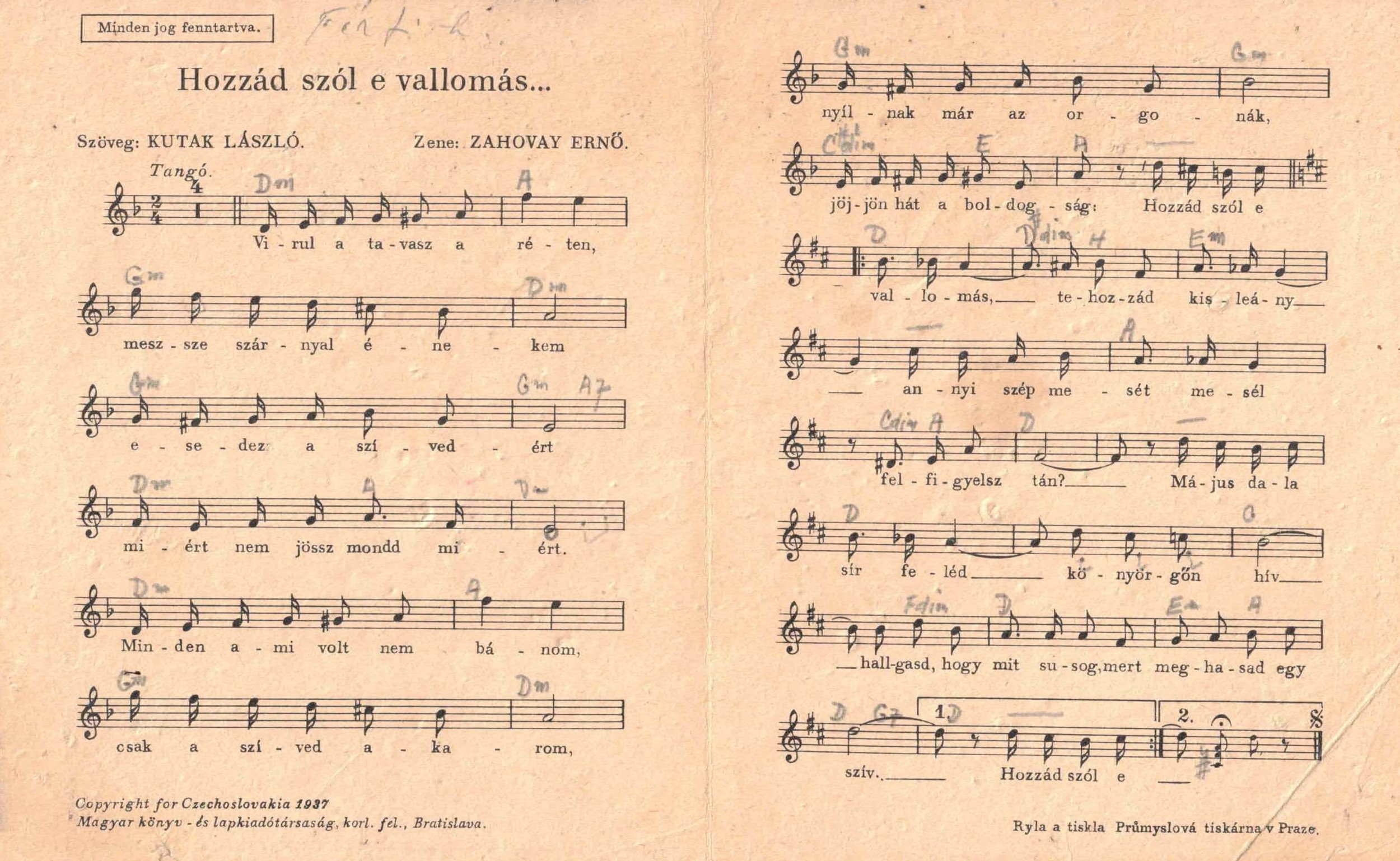
A vintage Hungarian sheet music page from 1937 with musical notation and lyrics in Hungarian, featuring handwritten annotations and signatures.

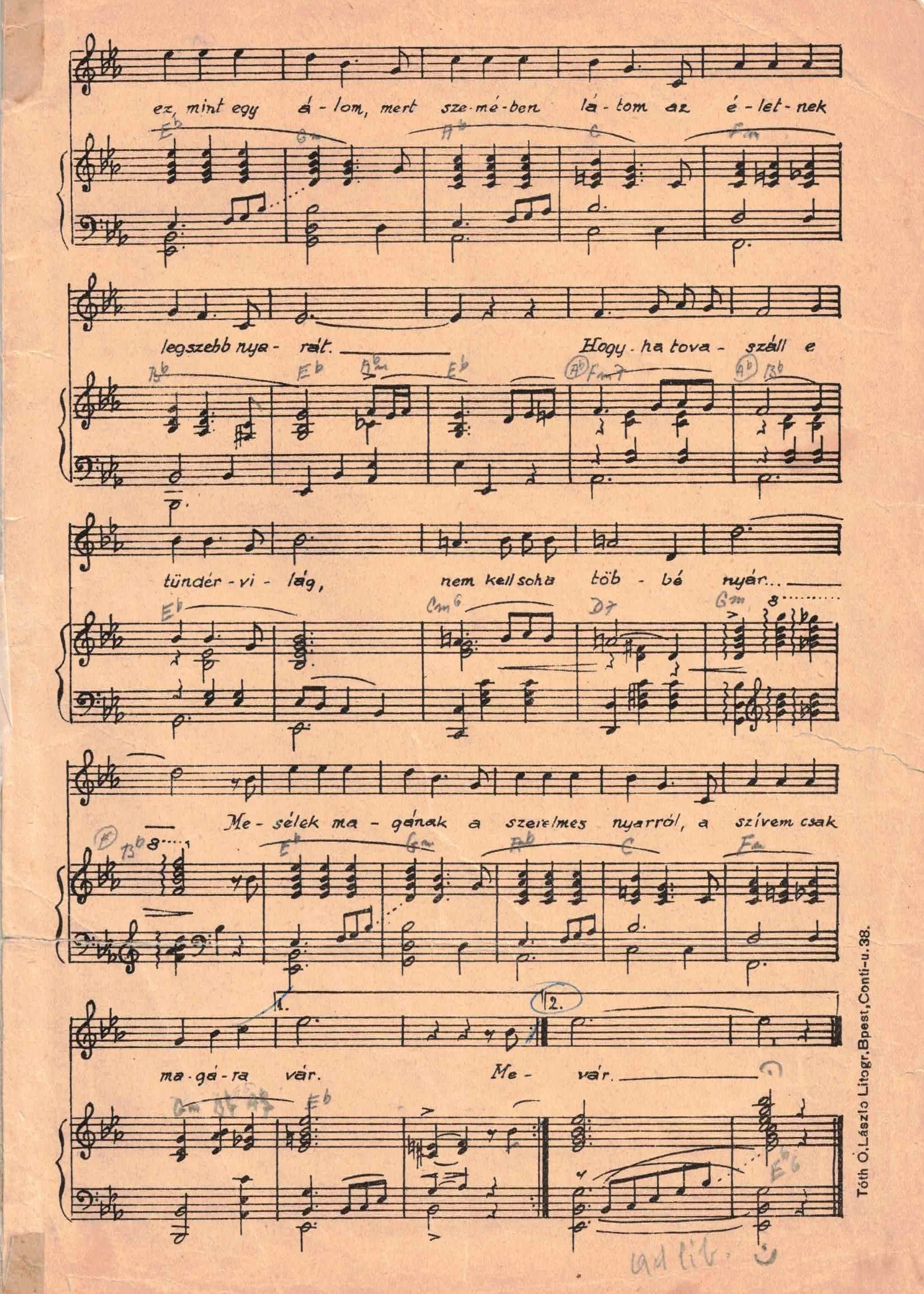
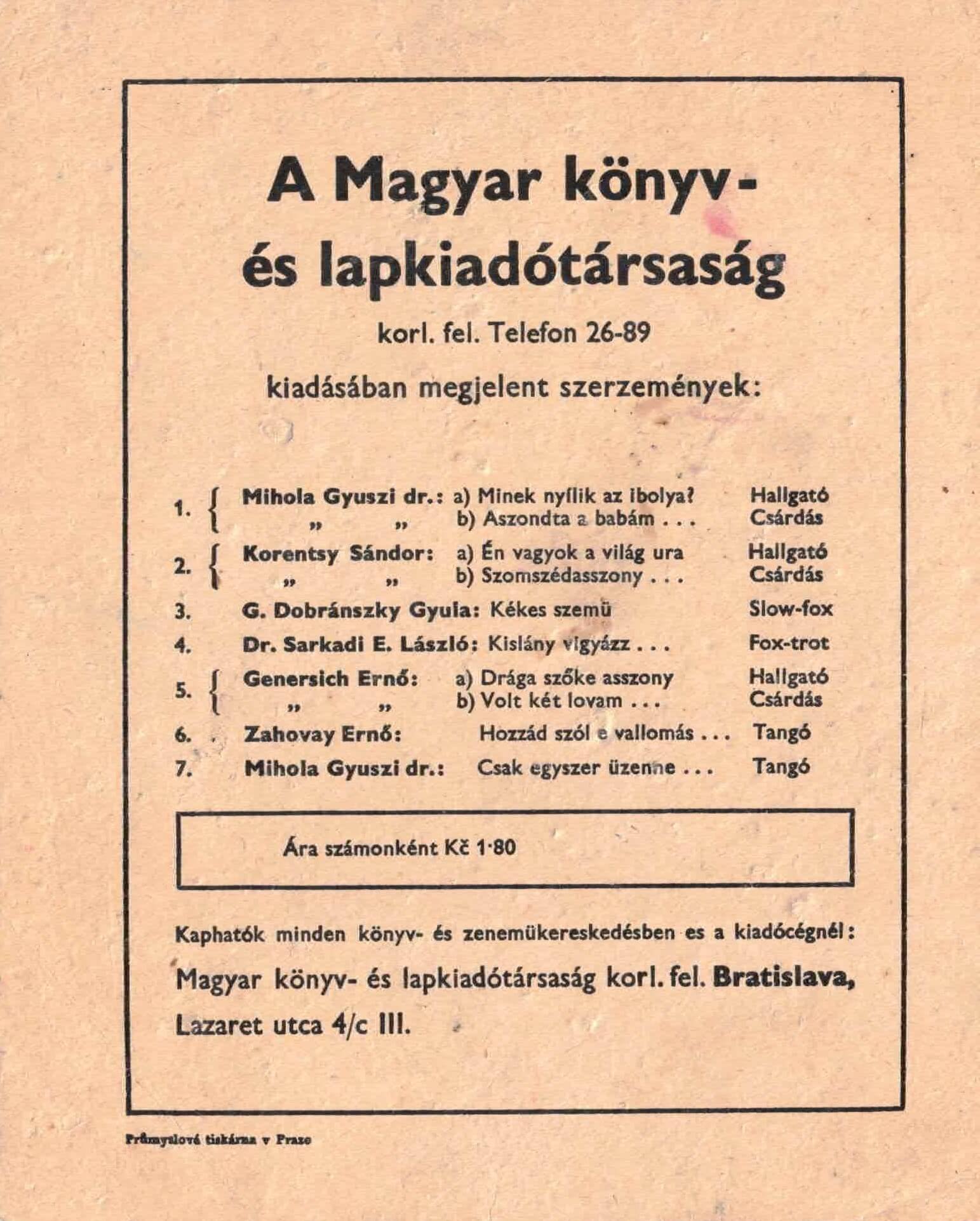
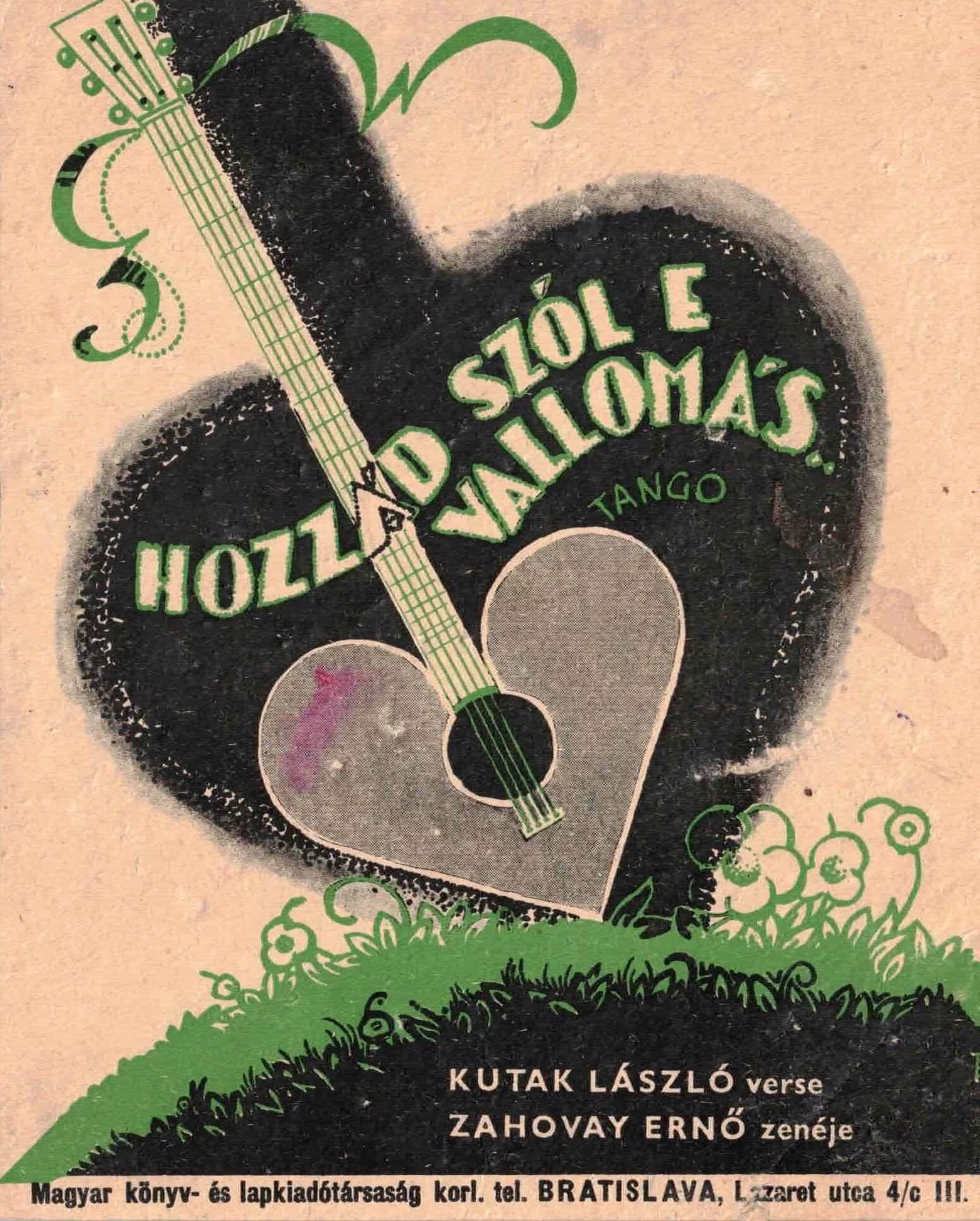
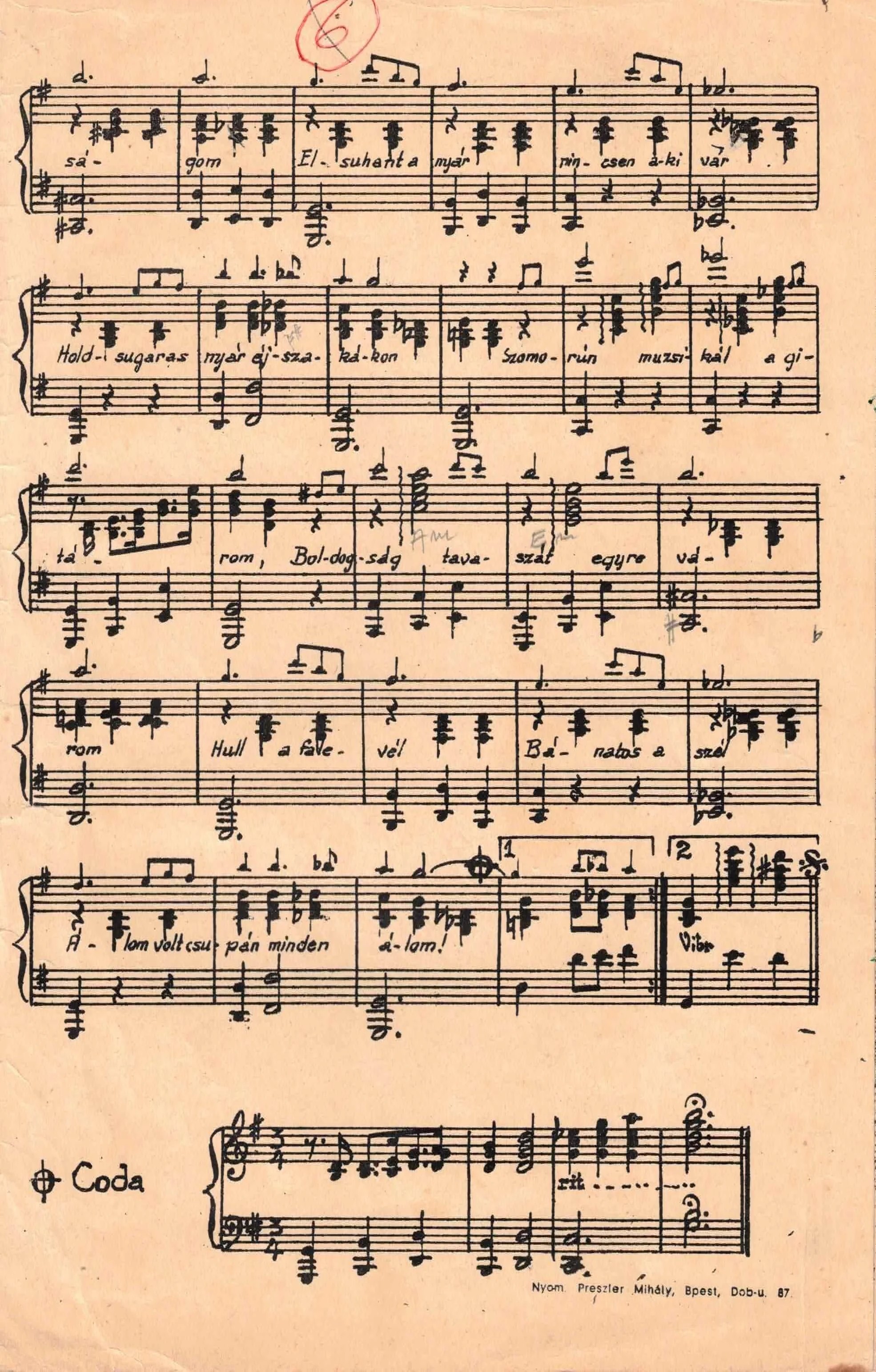
Notový hárok tanga Hozzád szól e vallomás patrí k najvzácnejším zachovaným dokumentom tvorby Ernesta Zahovaya. Tlač v Prahe a uvedenie meny Kč ho jednoznačne zaraďujú do obdobia pred jeseňou 1938, keď bolo Štúrovo súčasťou prvej Československej republiky. Na zadnej strane vydavateľstvo propaguje svoje najúspešnejšie šlágre, medzi ktorými je pod číslom 6 uvedený aj Ernest Zahovay po boku popredných slovensko-maďarských a budapeštianskych autorov tanečnej hudby.
A sheet of handwritten musical notation, with lyrics in Hungarian, featuring multiple staves, musical notes, and annotations, on aged paper.

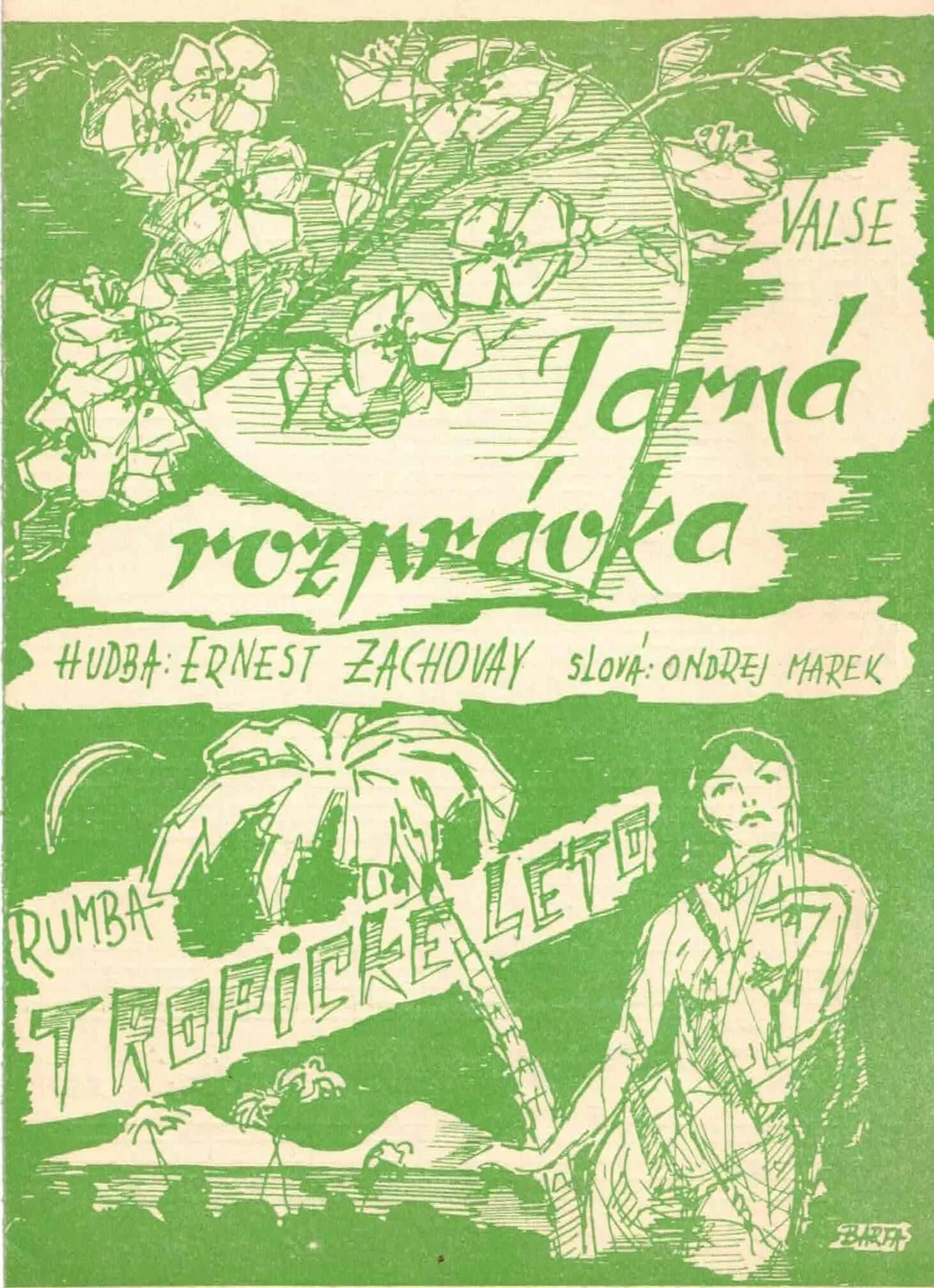
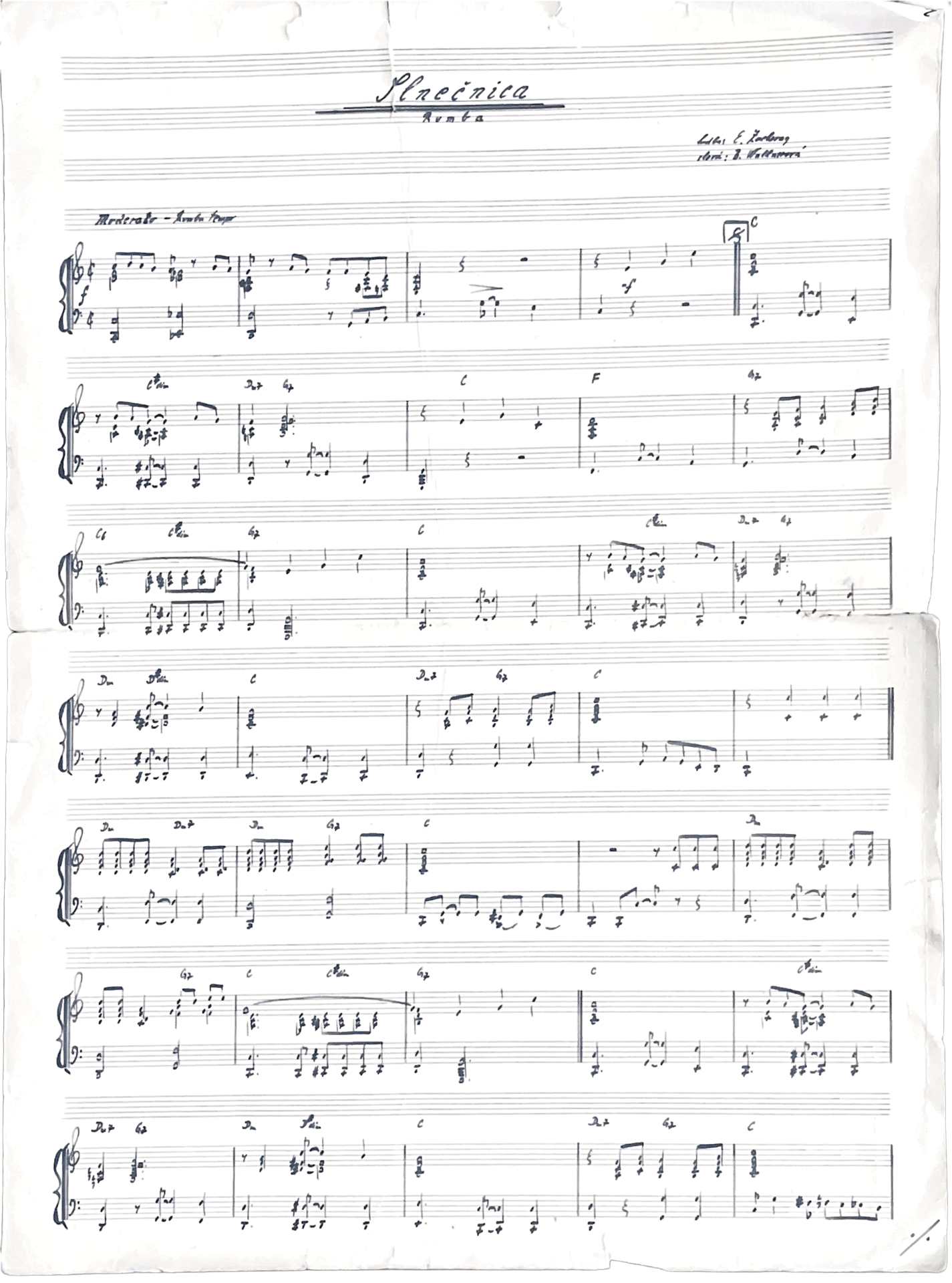
Notový zošit obsahuje skladby Jarná rozprávka (valčík) a Tropické leto (rumba), ktoré spájajú hudobnú tvorbu Ernesta Zahovaya s výtvarným spracovaním akademického maliara Júliusa Bartu, rodinného priateľa autora. Podpis „BARTA“ v pravom dolnom rohu obálky potvrdzuje autorstvo titulnej kresby a robí z tohto vydania jedinečný regionálny artefakt.

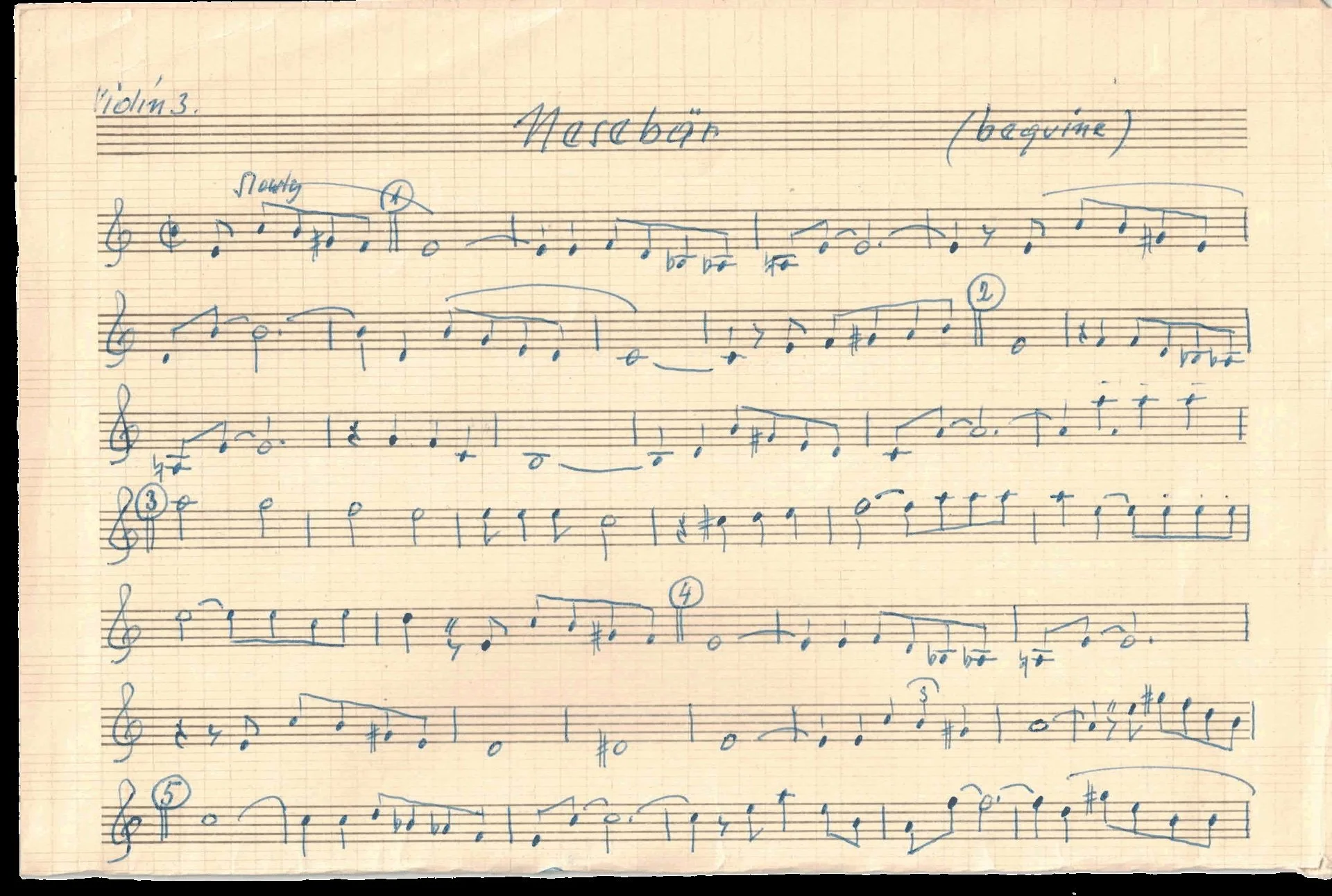
Na základe štýlu písma, formátu akordov a spôsobu zápisu nôt je zošit datovaný do povojnového obdobia približne rokov 1946 - 1949. Po vstupe do Autorského zväzu si Ernest Zahovay vlastnoručne precízne rozpísal notovú časť, ktorá bola následne rozmnožená malotlačou pre kapelové použitie.

Zaujímavým detailom je aj text na pravej strane valčíka „Rád bych ukojit srdce své“, ktorý odráža typický lyrický mix slovenčiny a noblesnej salónnej češtiny povojnovej kaviarenskej hudby a dodáva dielu výraznú dobovú atmosféru.
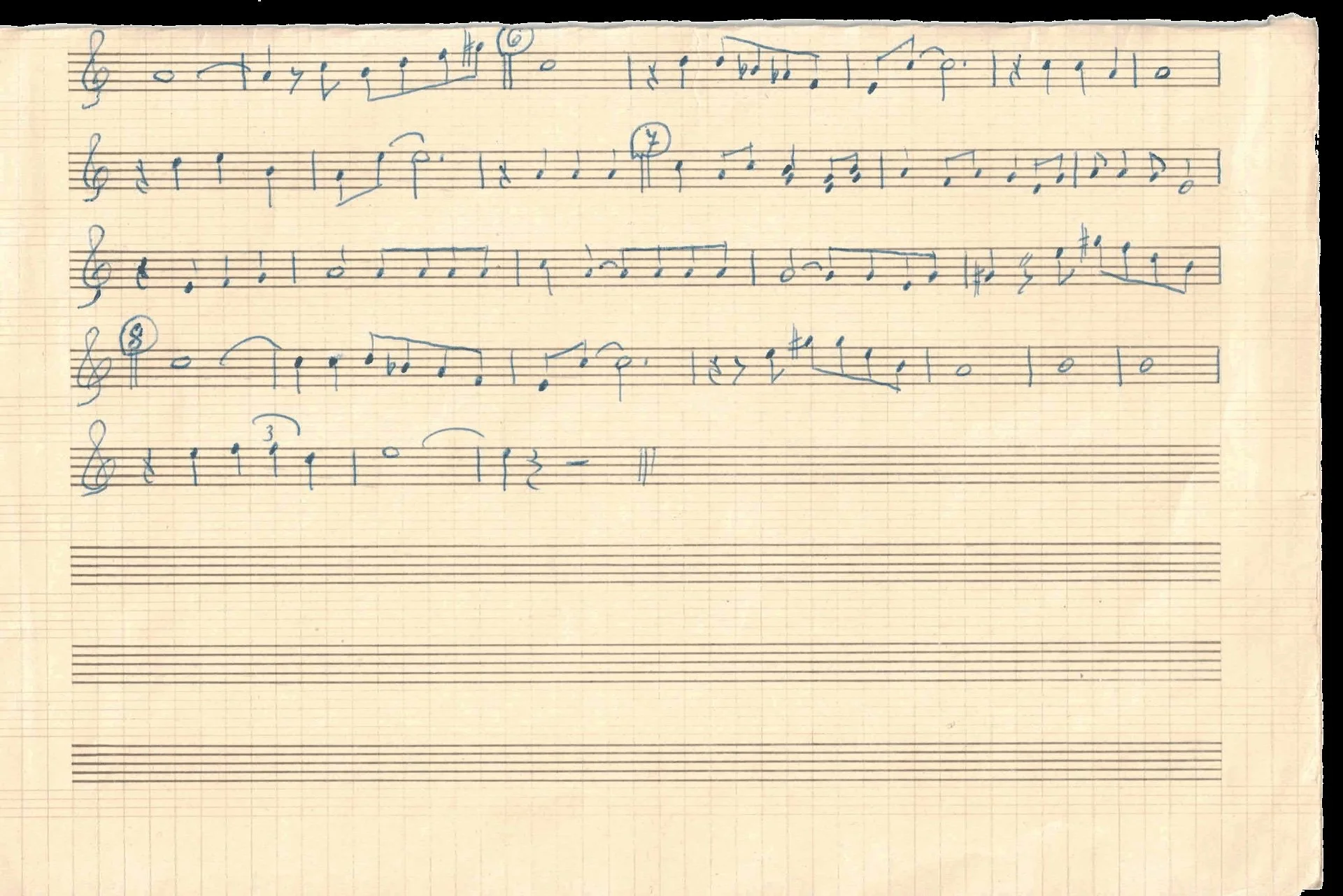
Handwritten sheet music for a piece titled "Nerebar" with musical notes and annotations on grid paper.
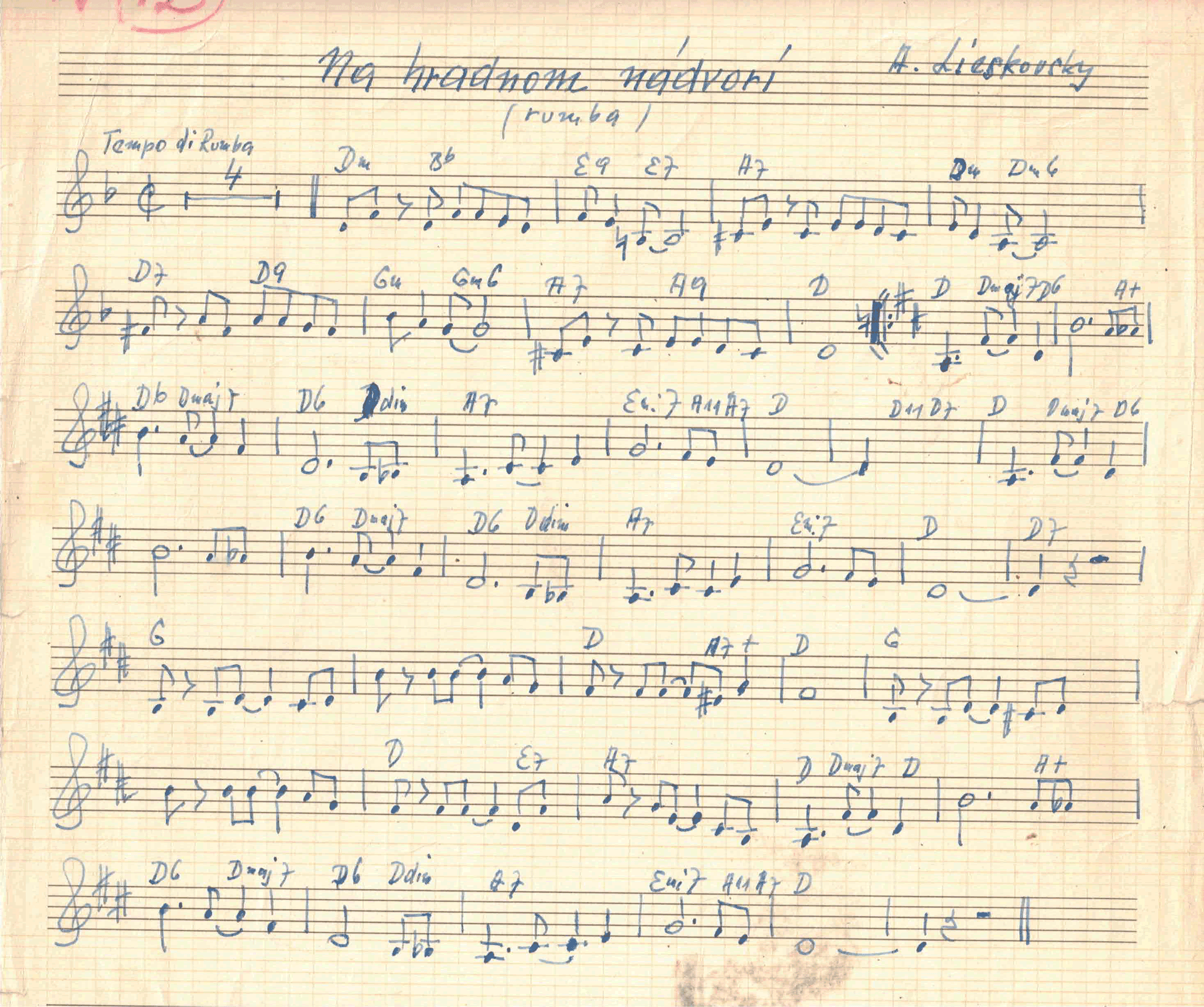
Handwritten musical score on graph paper, featuring musical notes, symbols, and annotations in blue ink.
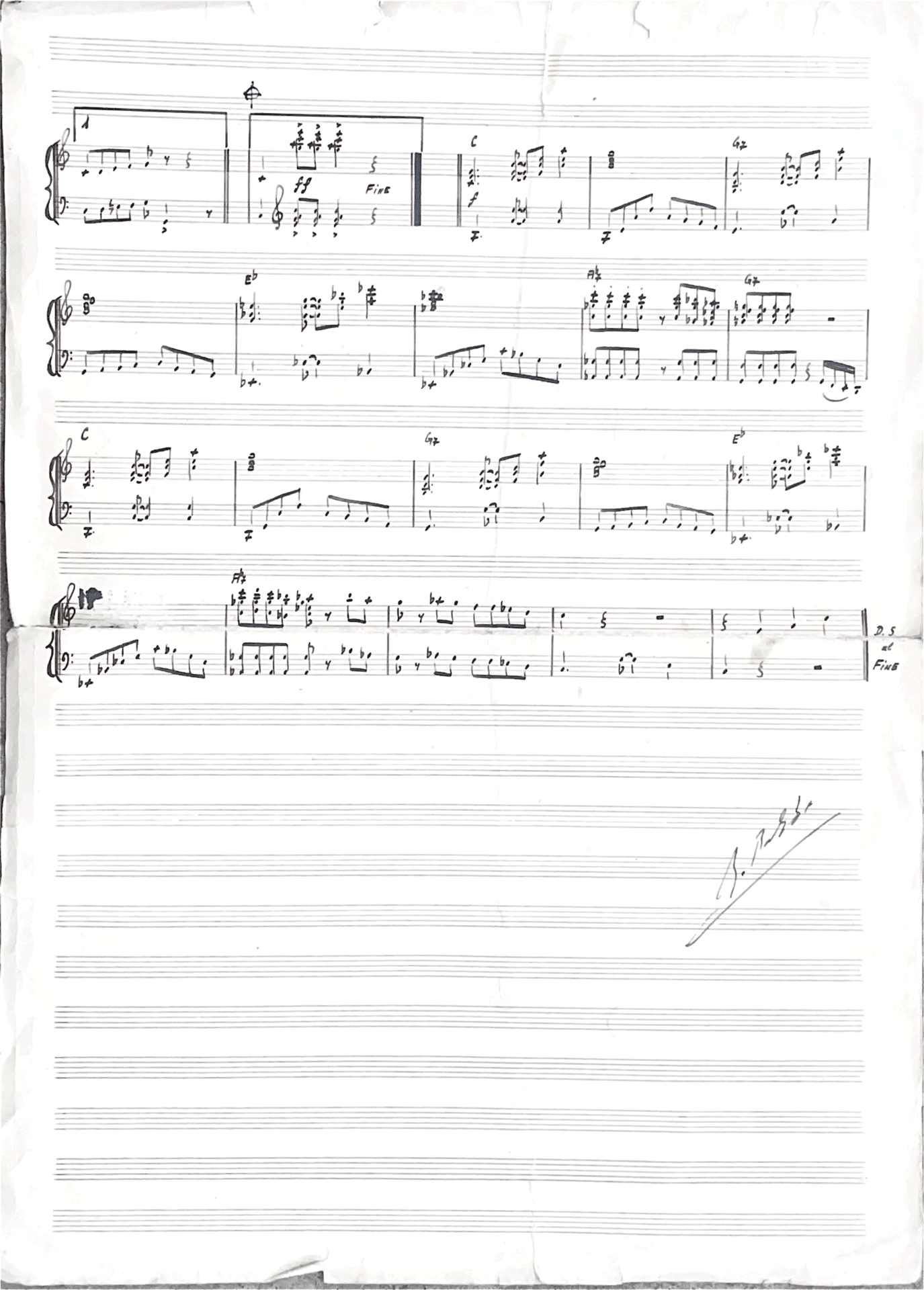
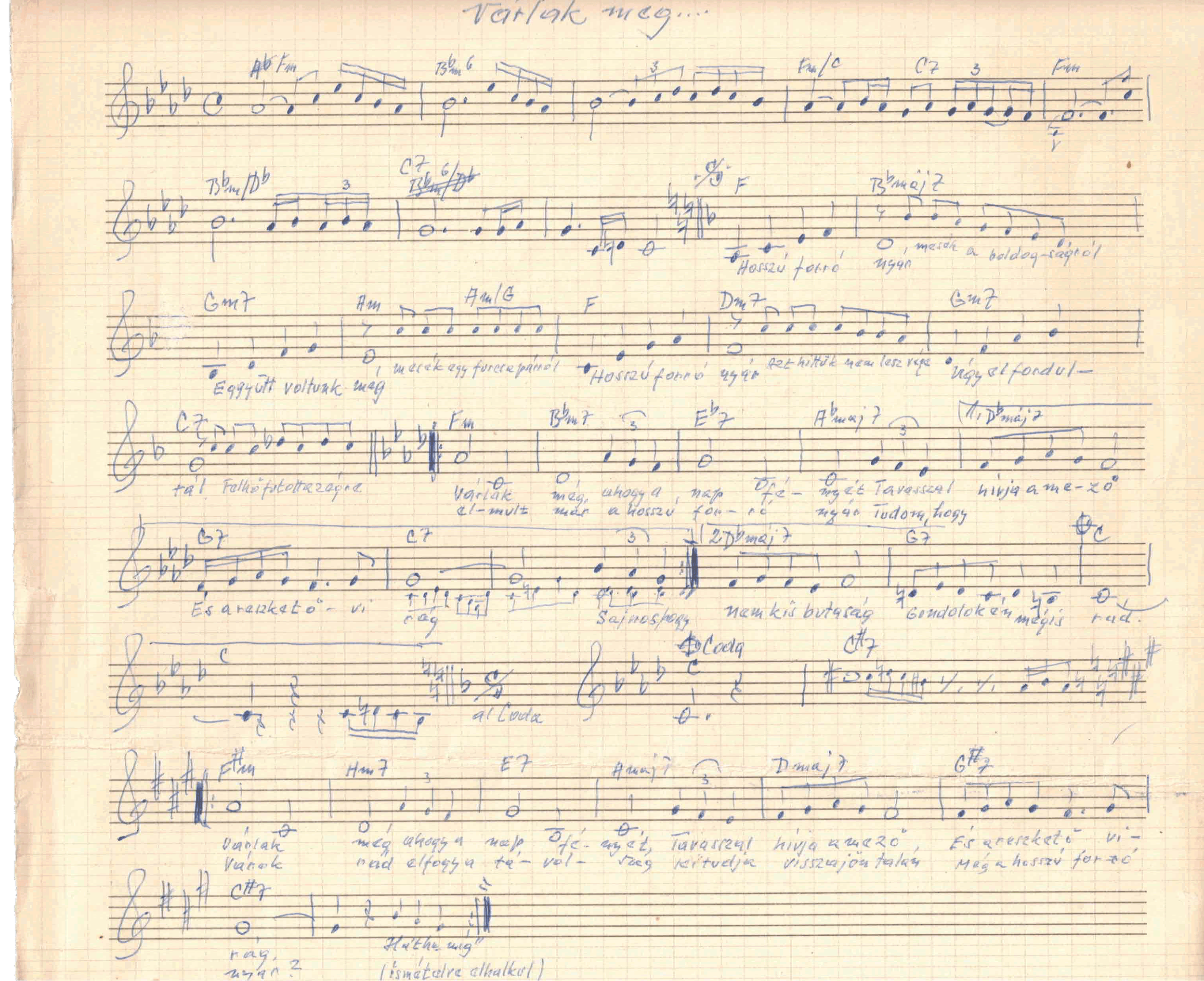
Handwritten sheet music with musical notes and chords, written on lined paper. The text is in Hungarian.
A handwritten sheet of musical notation with lyrics, annotations, and chords on a beige paper background.
A black and white illustration of a poster with the phrase 'Hull a falevél...' at the top. Below the phrase, there is a drawing of a plant with leaves labeled 'ANGOL' and 'KERINGŐ.' The poster contains additional text in Hungarian, mentioning 'ZAHOVAY ERNÖ,' and details about a music album released by Magyar Zenealbúm in Budapest.
Handwritten sheet music titled 'Sinfonica' with musical notes, chords, and annotations on lined staff paper.
Old sheet music with handwritten Hungarian lyrics and musical notation from 1940, titled "ÜZENEK..." by Zahovay Ernő.

Detailný pohľad na kompletnú titulnú obálku notového vydania úspešného anglického valčíka „Hull a falevél...“ z roku 1940 (vydavateľstvo Magyar Zenealbum, Budapešť). Grafika s motívom padajúceho jesenného lístia a elegantnou stuhou s menom autora Ernesta Zahovaya je vernou ukážkou špičkového dizajnu vtedajších budapeštianskych hudobných tlačovín.
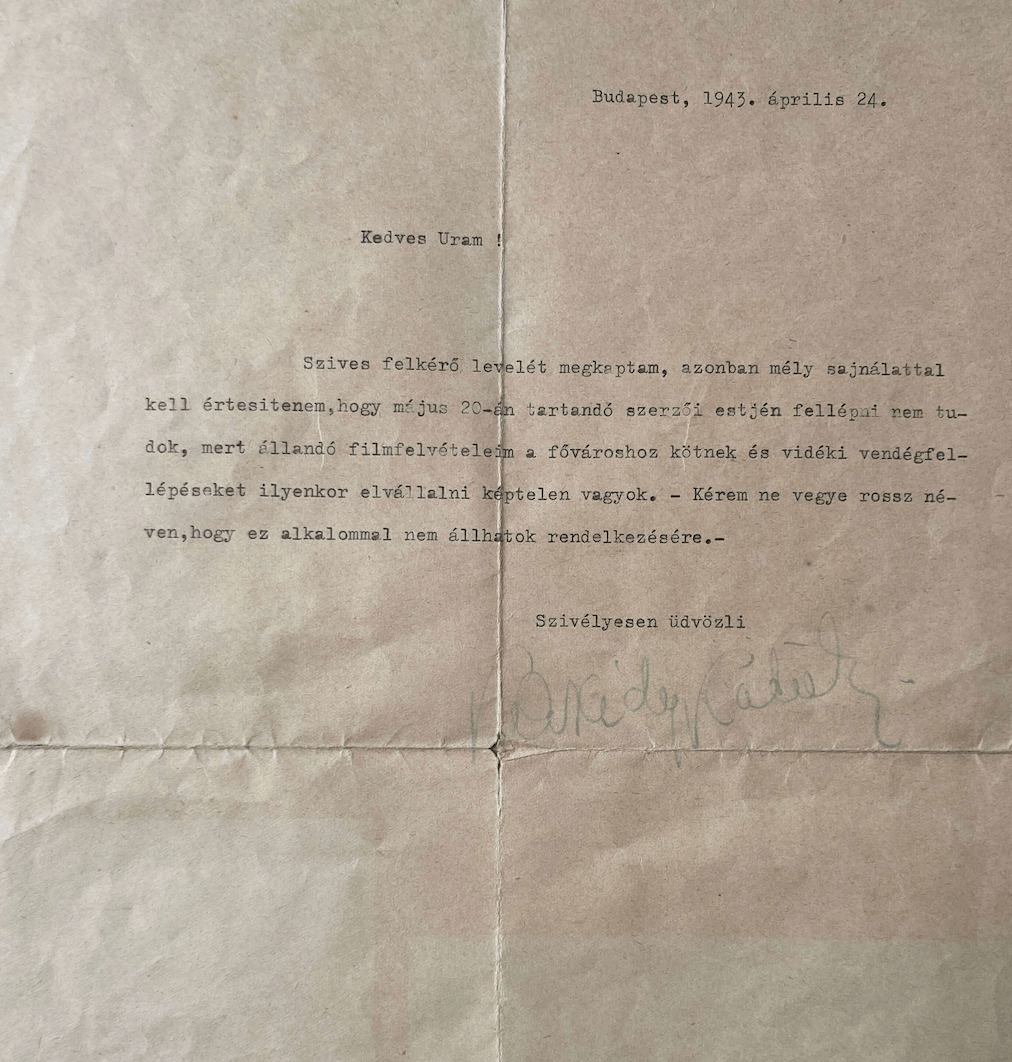
Karády Katalin (1910 -1990) bola jednou z najpopulárnejších maďarských herečiek a speváčok a výraznou ikonou filmového plátna v rokoch 1939 až 1945. Svojím hlbokým podmanivým hlasom, tajomným výrazom a emancipovaným vystupovaním (ako jedna z prvých žien vo filme nosila nohavice a objavovala sa s cigaretou) výrazne ovplyvnila dobový ideál ženskej krásy.

Tento list otcovi písala na vrchole svojej najväčšej slávy, no už o rok neskôr (1944) ju po príchode nemeckých vojsk zatklo Gestapo. Tri mesiace ju brutálne mučili, podozrievajúc ju zo špionáže. Napriek obrovskému riziku zachránila desiatky židovských detí a rodín pred smrťou (podplácala gardistov na brehu Dunaja vlastnými šperkami, skrývala ľudí vo svojom byte). Za tieto činy jej bol posmrtne udelený najvyšší izraelský titul Spravedlivý medzi národmi. Podobne ako Ernest, ani ona po vojne nenašla pochopenie u nového komunistického režimu, jej filmy zakázali a v roku 1951 emigrovala do USA. 
A handwritten sheet of music with notes, chords, and annotations on grid paper. The top of the sheet has some text written in cursive and the word 'Good' is visible.
Handwritten sheet music with musical notation, chords, and signatures, on lined paper.
Handwritten sheet music with musical notes, symbols, and annotations on aged paper.
Handwritten sheet of music notes and chords on graph paper, with annotations and markings in black ink.
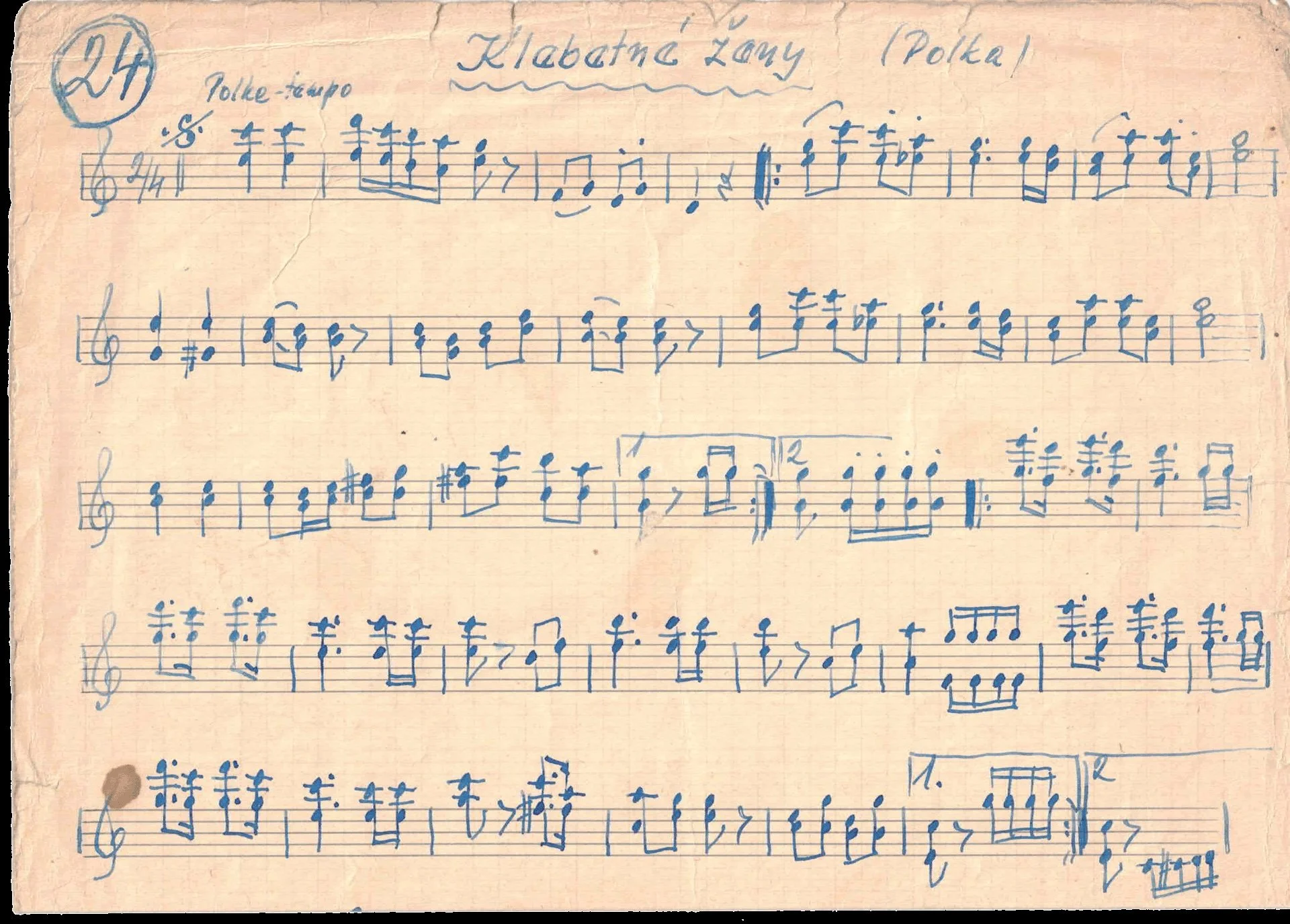
A handwritten sheet of music with musical notes and notation in blue ink on beige paper, titled "Klubanie Zamy".
A handwritten sheet of music notes on aged paper, with visible tears and stains.
A Hungarian diploma with decorative borders, featuring a woman holding a lamp in her right hand and a harp in her left, surrounded by musical notes, books, and floral designs.

Štúrovské Hudobné dni - Spomienkový galakoncert na Ernesta Zahovaya (kompletný koncert)