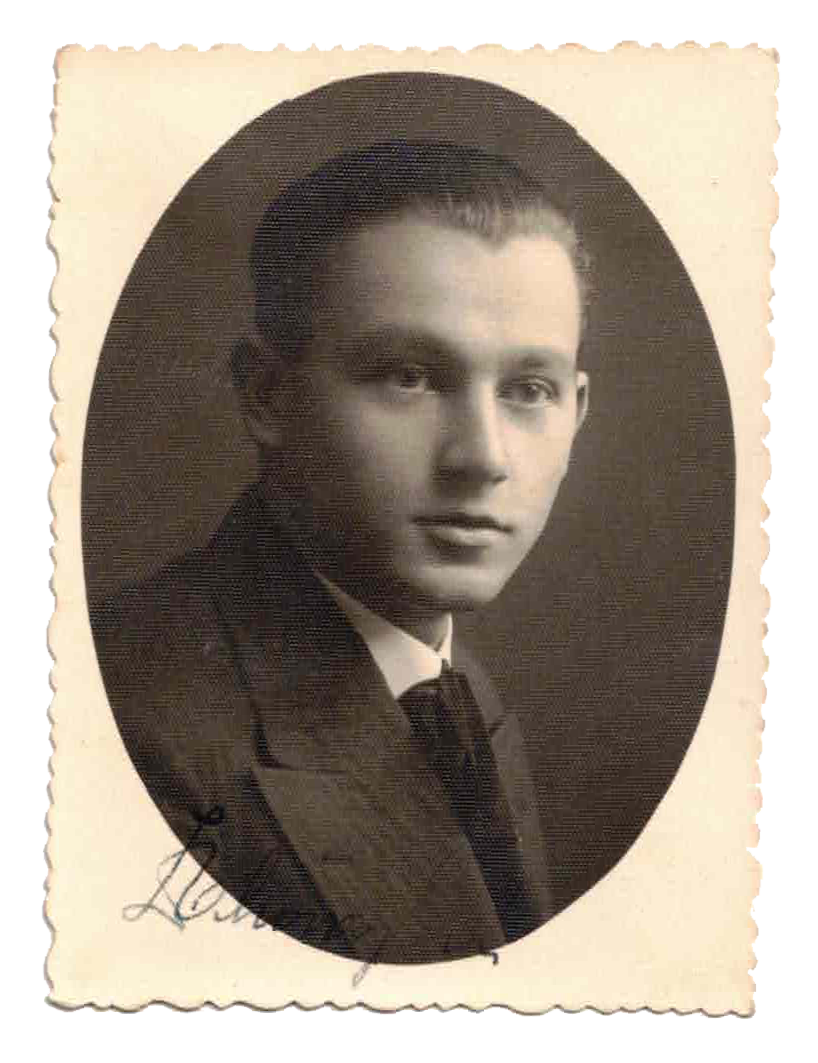
As a 17-year-old young man
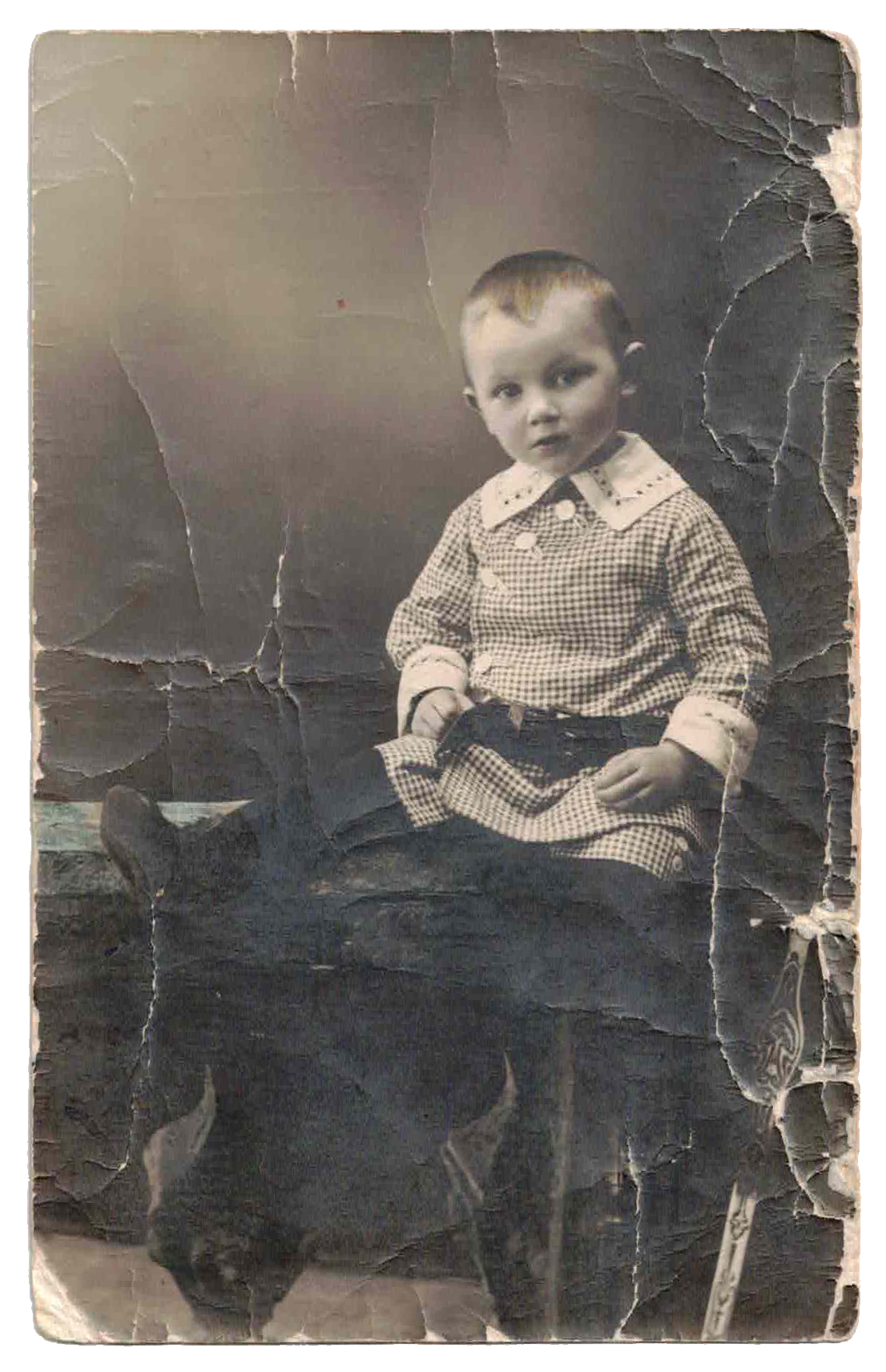
Autumn 1915
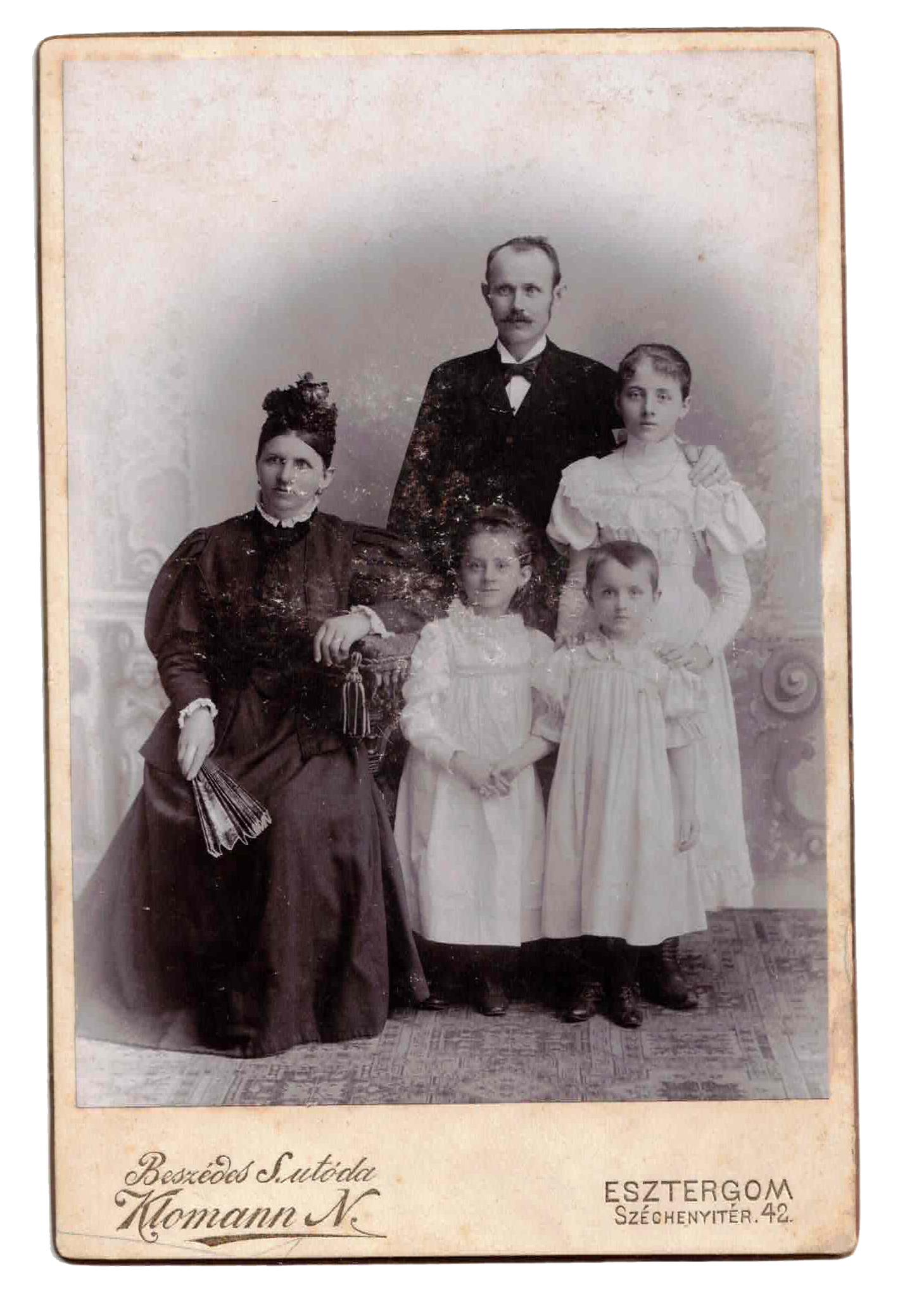
Ernö’s grandparents' family
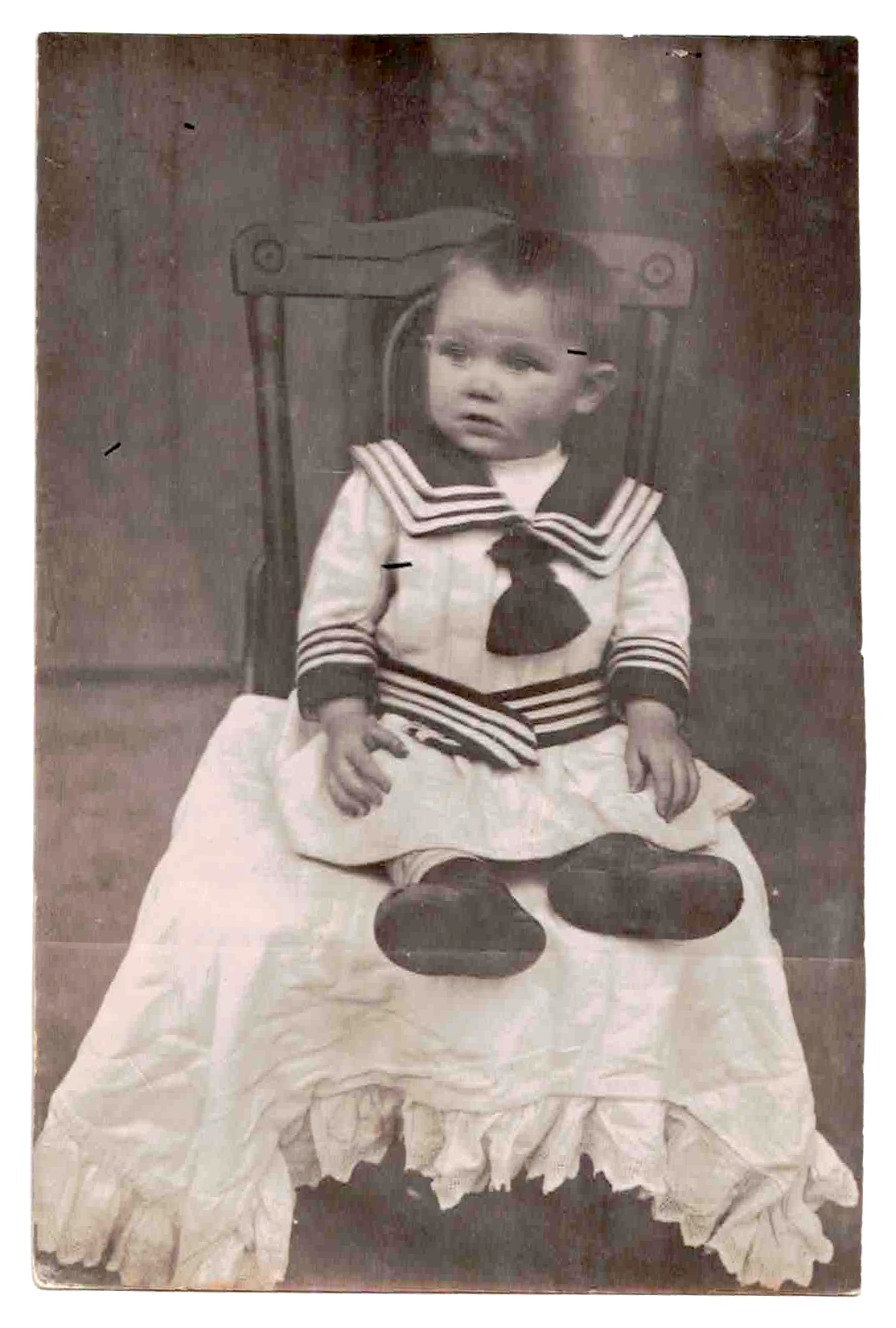
A child as sweet as candy.
About 1.5 years old
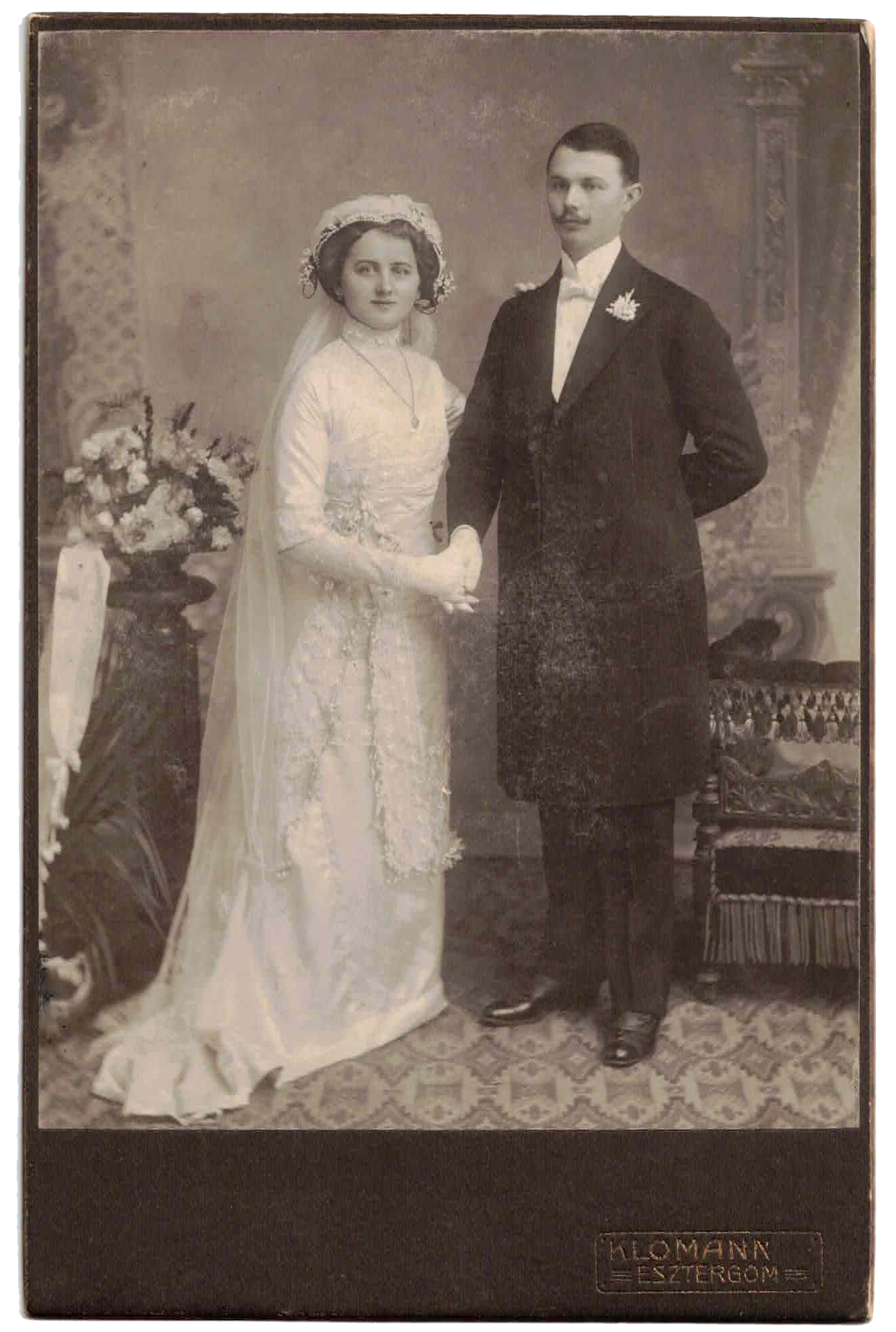
His parents
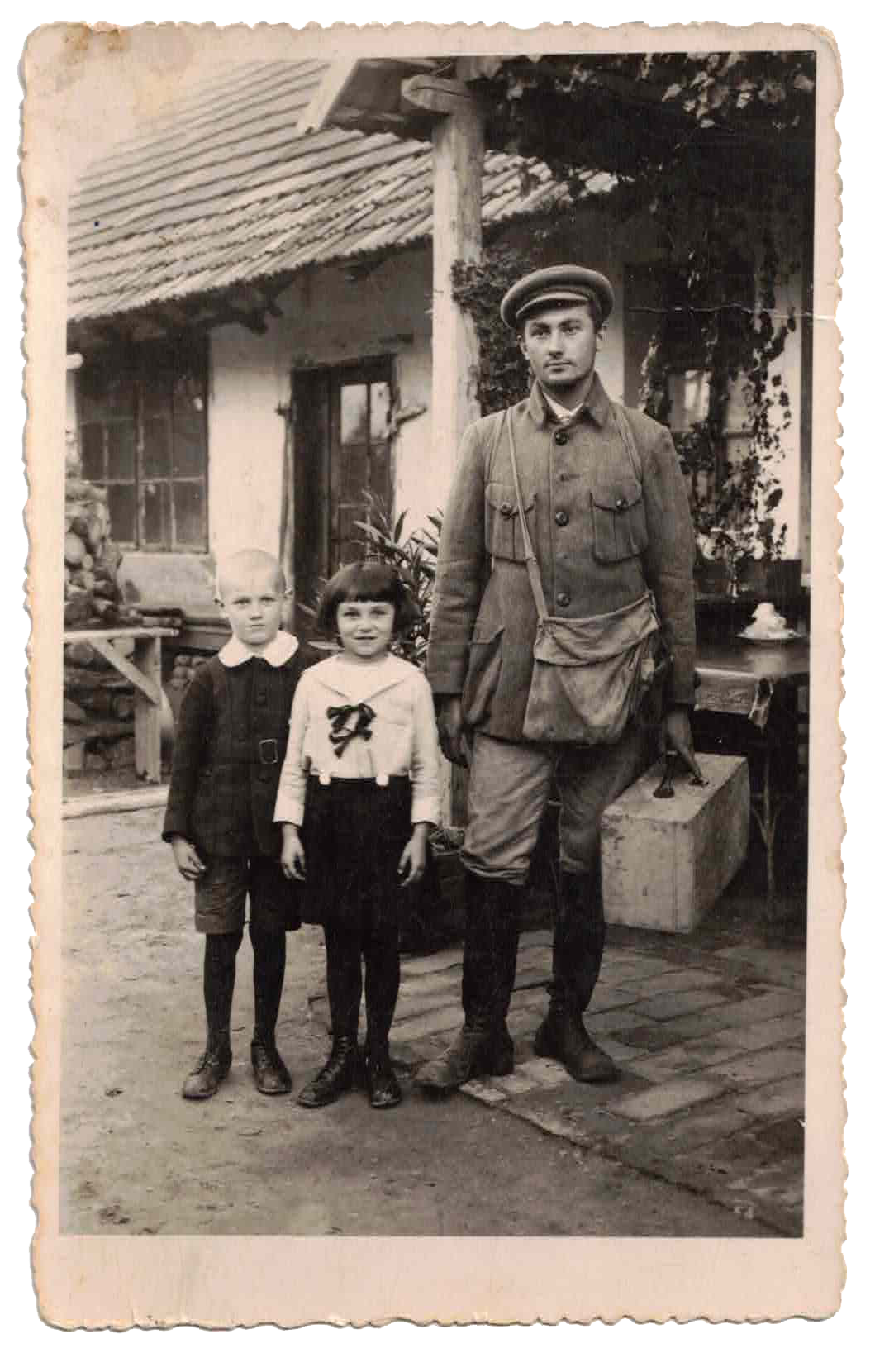
Uncle's return from World War 1 and little Ernö with his sister
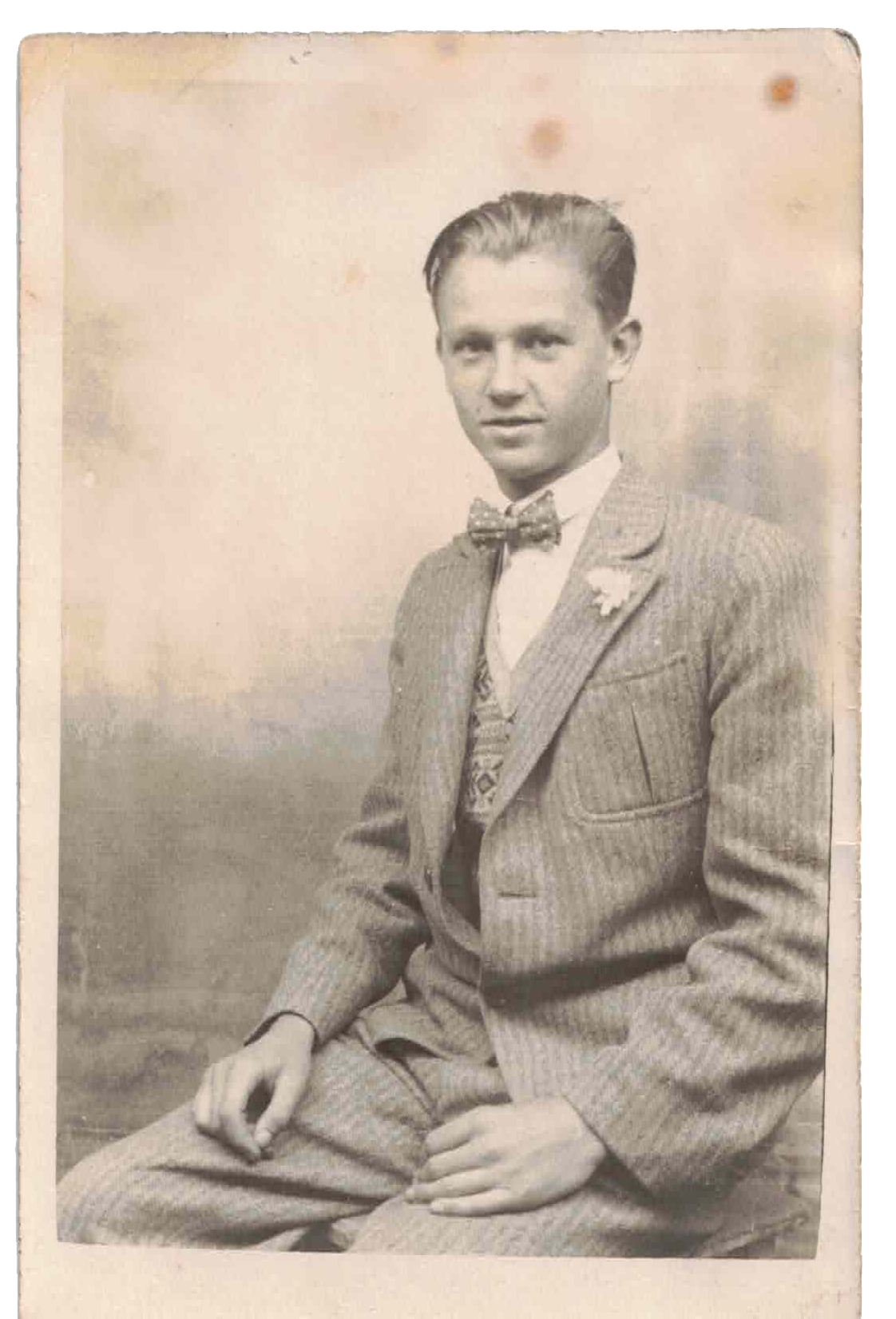
Ernö’s first suit
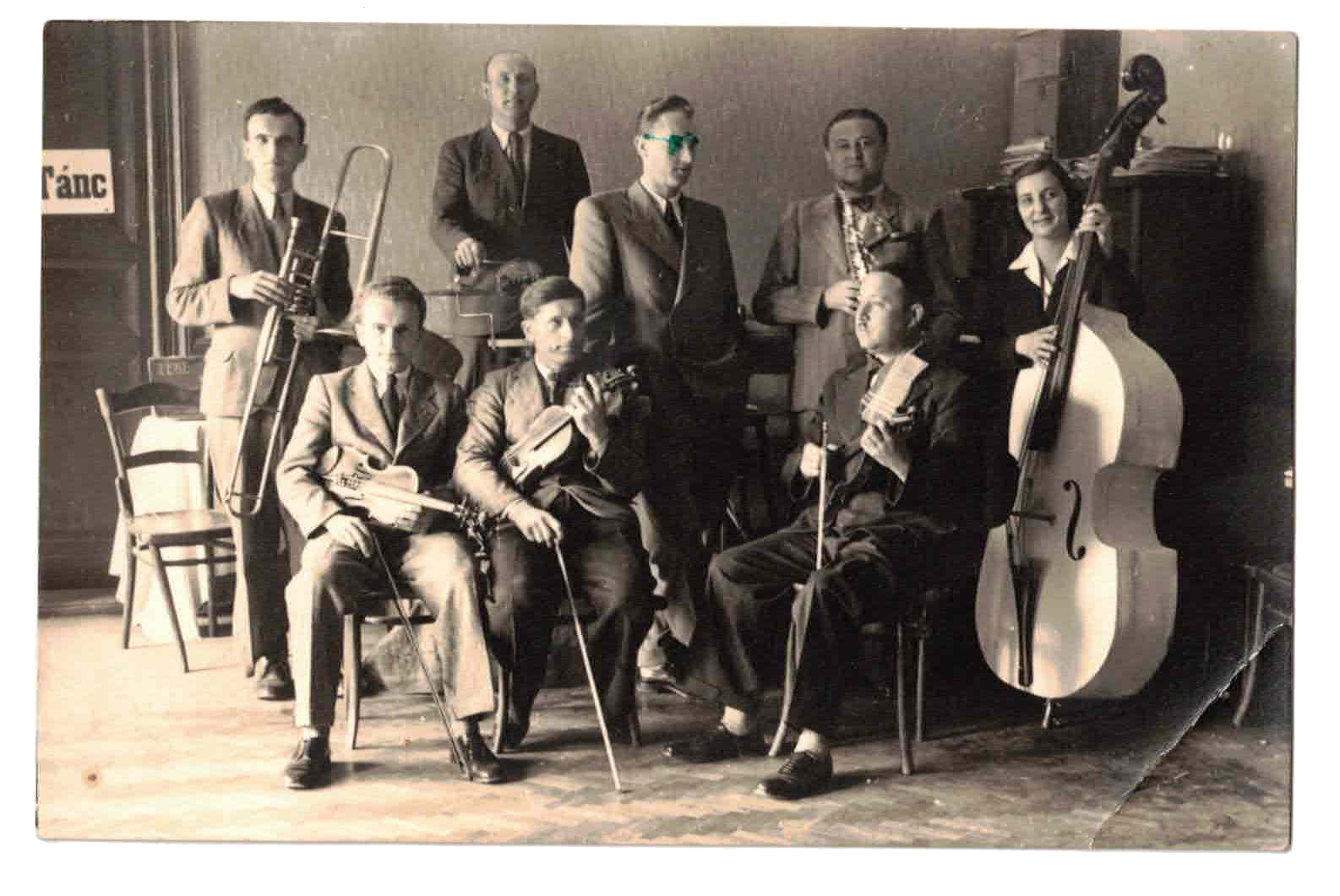
May 1933. The last music performance at the uncle's inn
Then it was time to go out into the world!
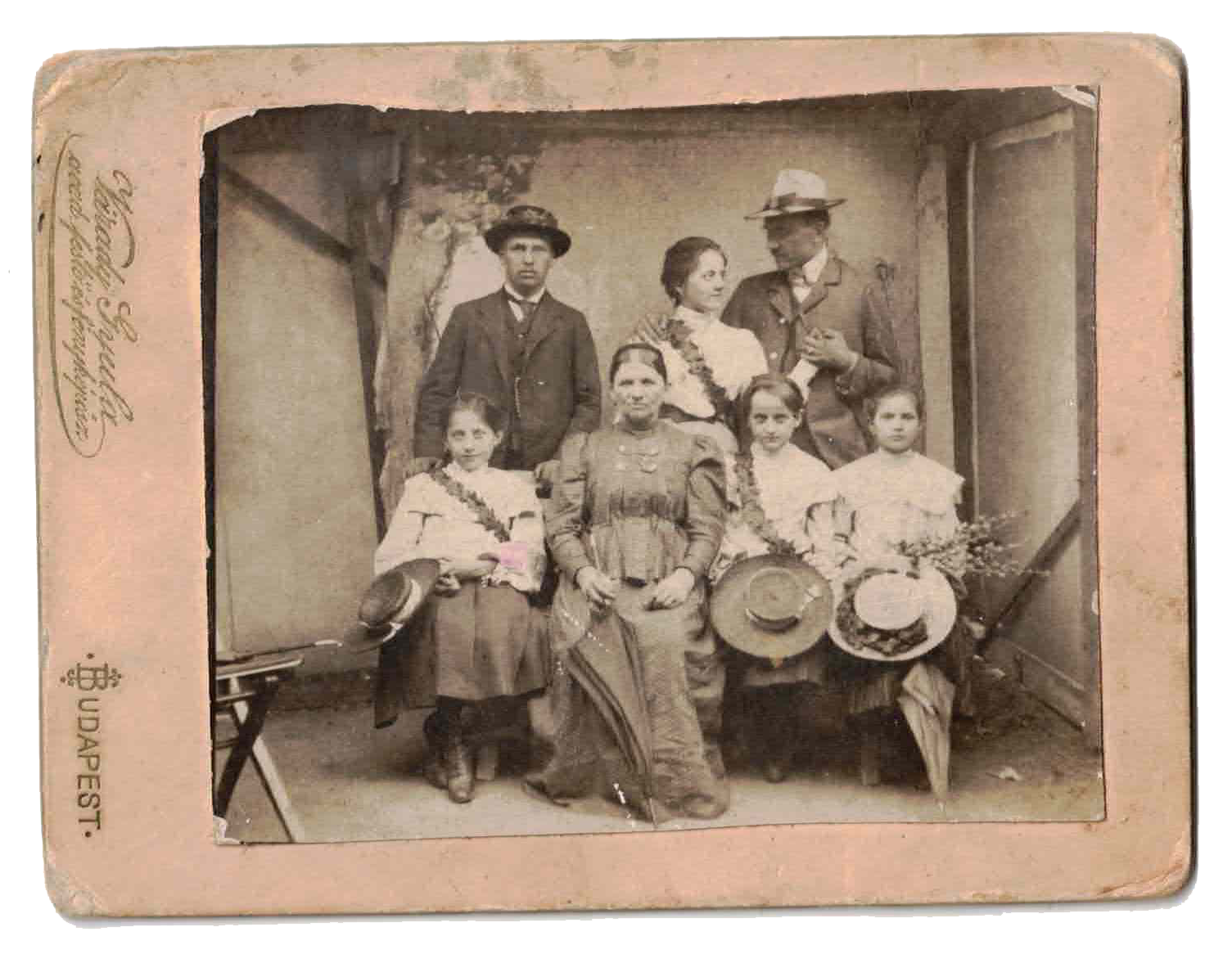
Ernö’s grandparents and their four daughters. Ernö’s mother is the first on the right
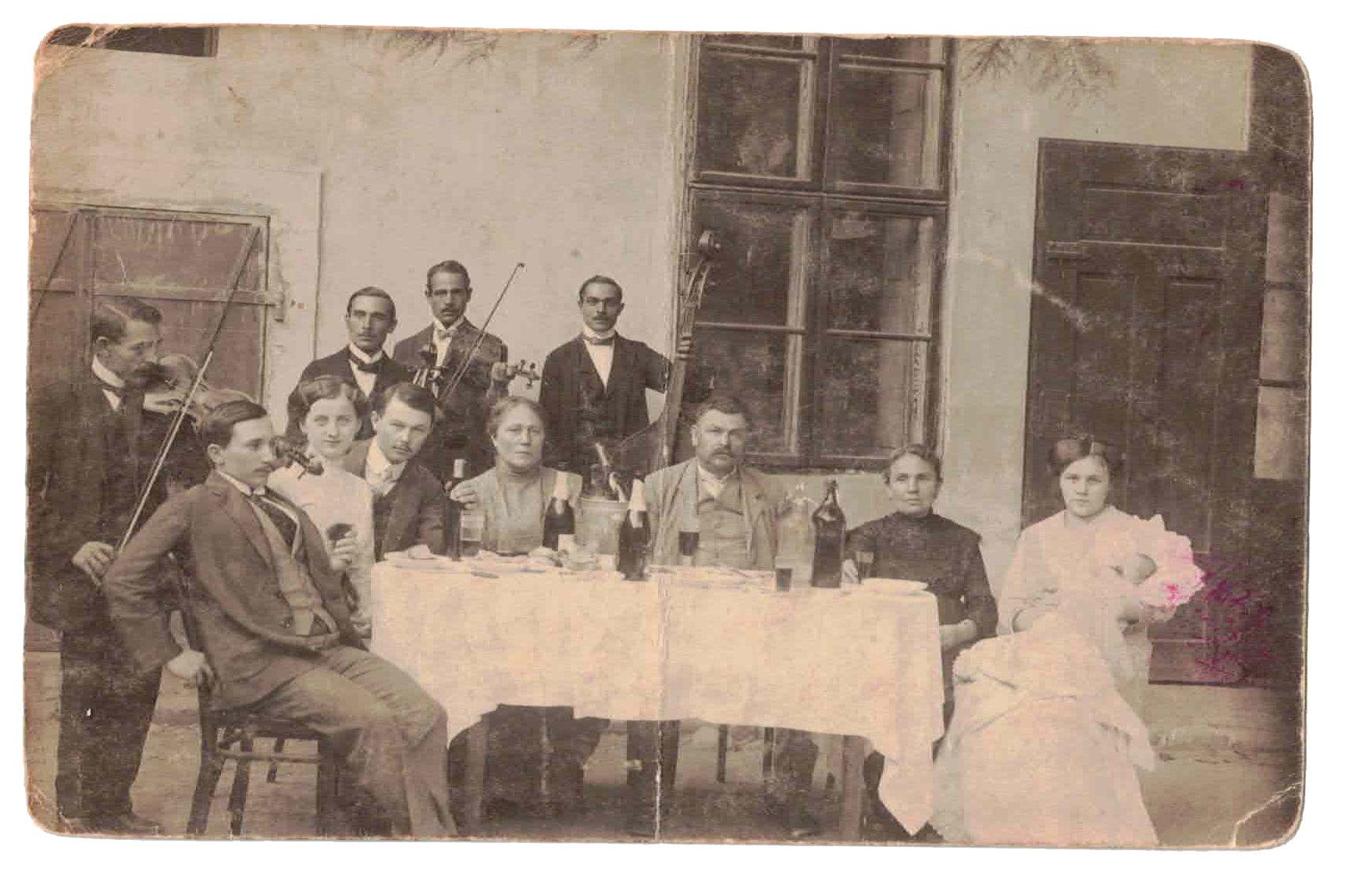
Ernö’s christening (1913), celebration with a Roma band
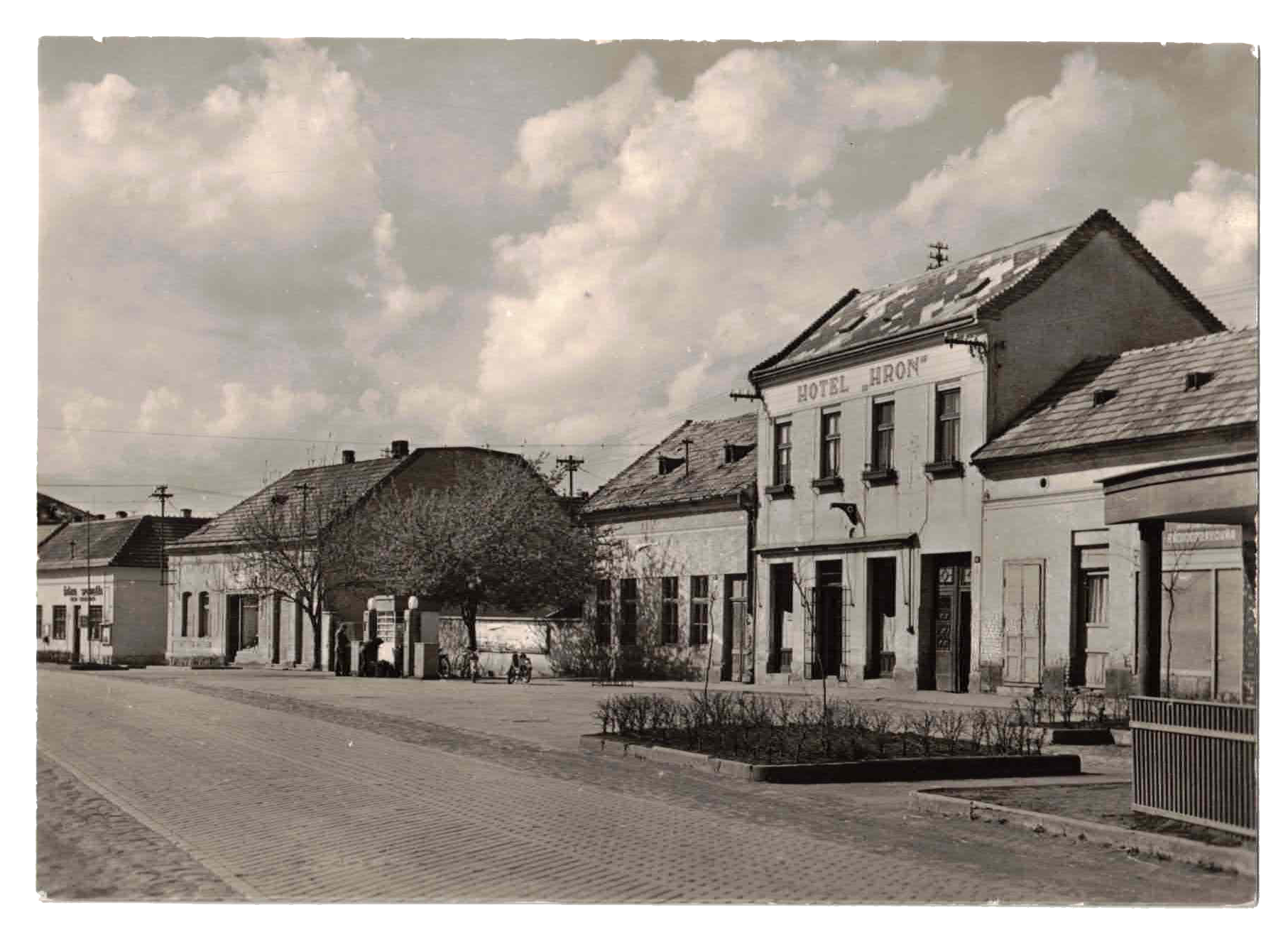
Parkany Inn, where Ernö used to play
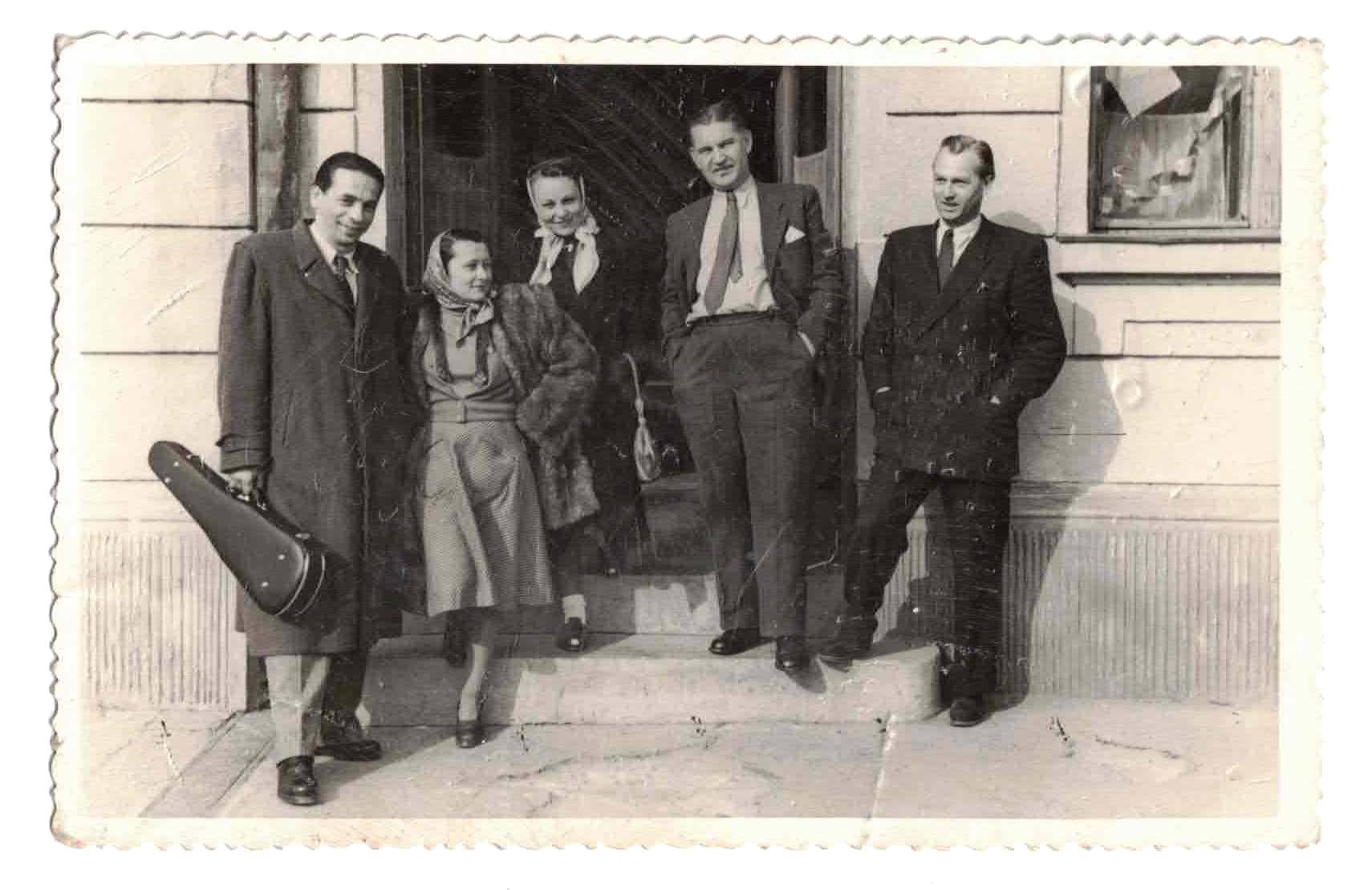
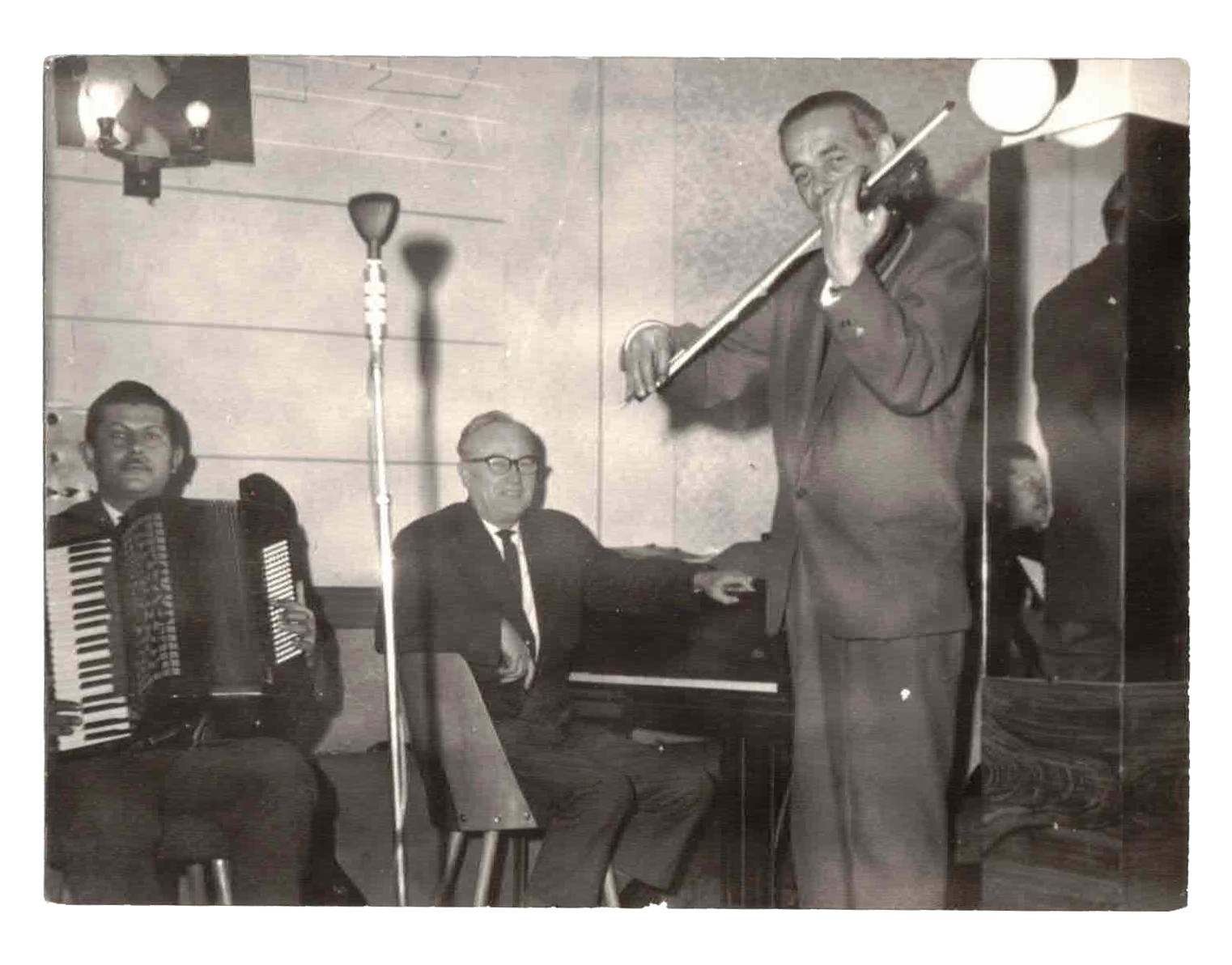
The band consisted of Adler Endre (violin), Halász Miska (accordion), and Ernö (piano). In summer, they played in the garden café of the Dunaj Hotel (the former Zahovay Hotel)
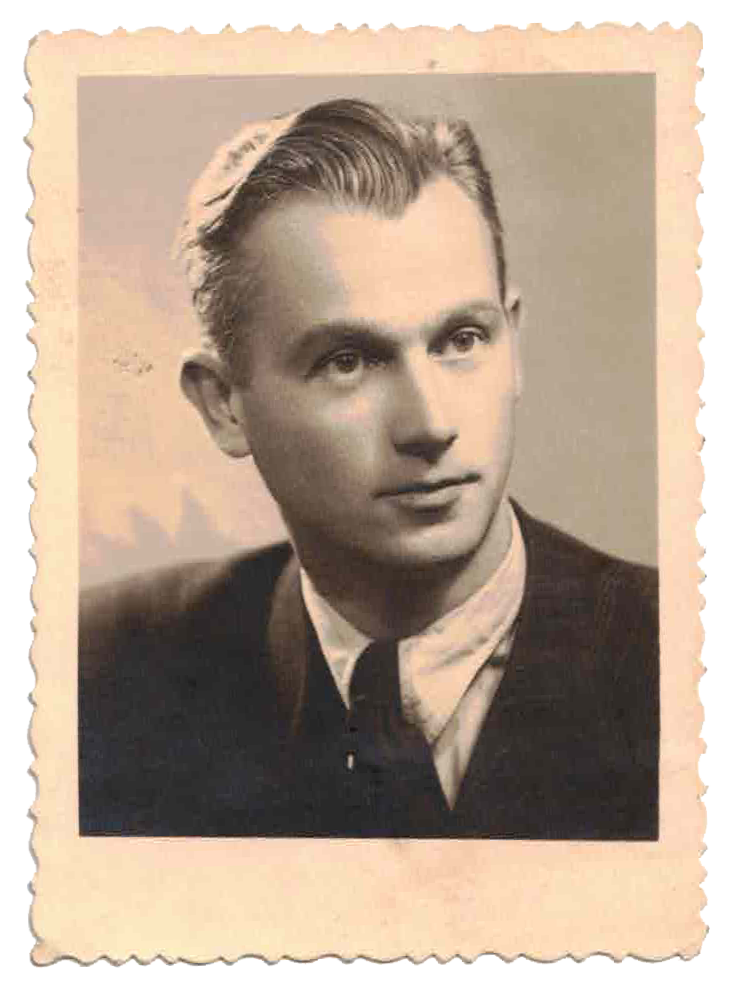
Ernö’s portrait, 1943
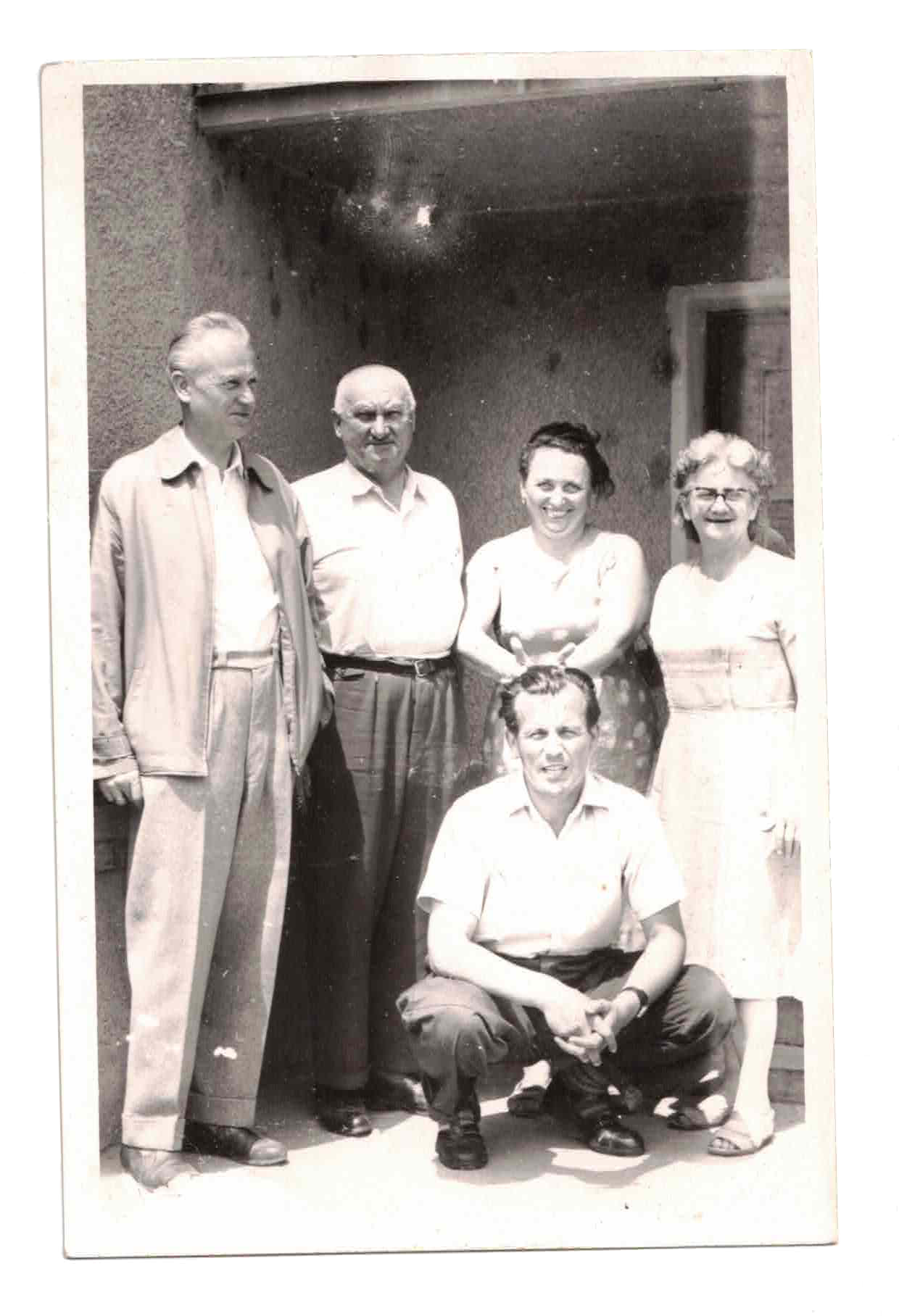
In front of the Zahovay Hotel with its owner, Uncle Fero
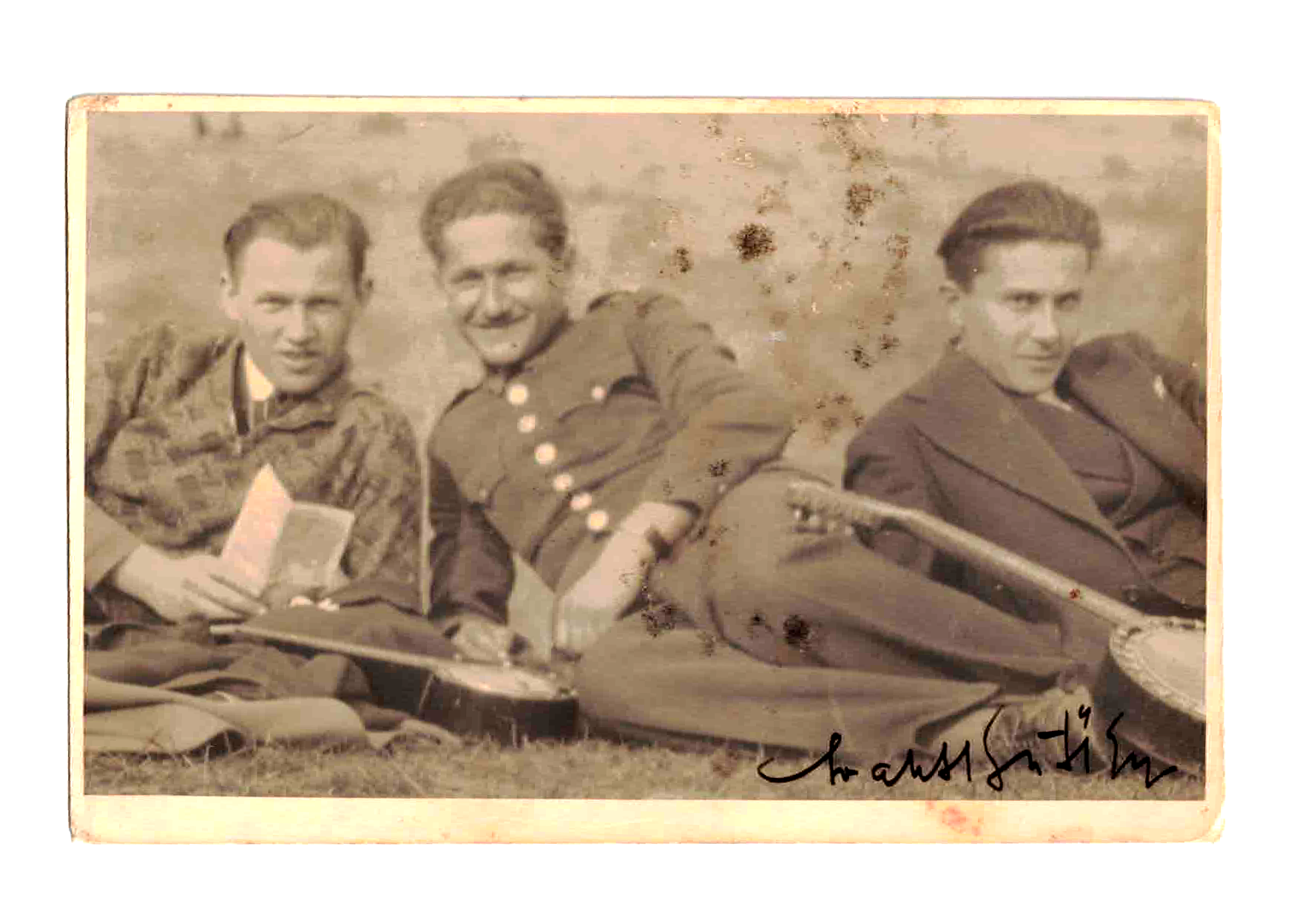
On the way to beloved Kovacspatak (1933)
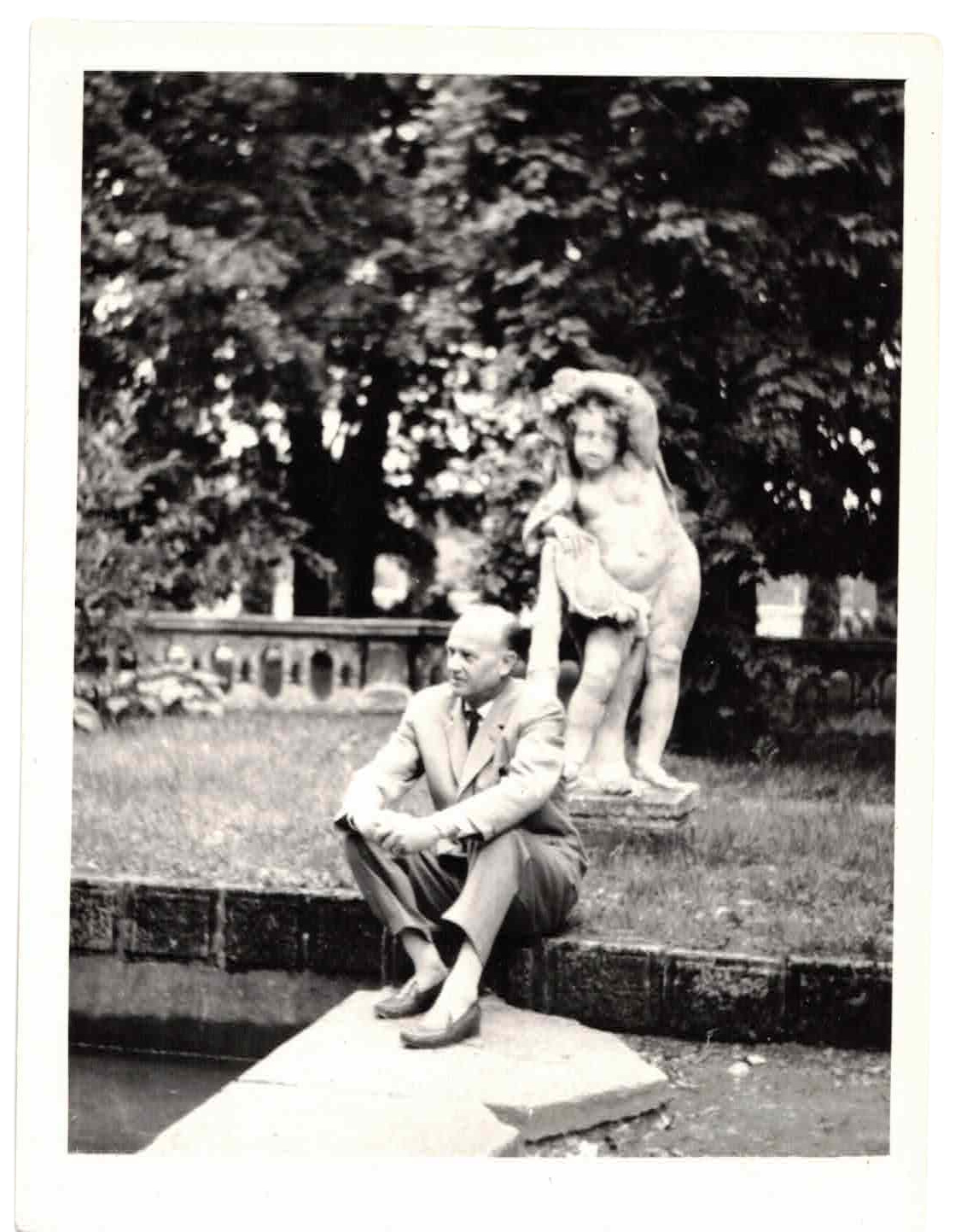
In Piešťany during their honeymoon. Cupid had already done his work
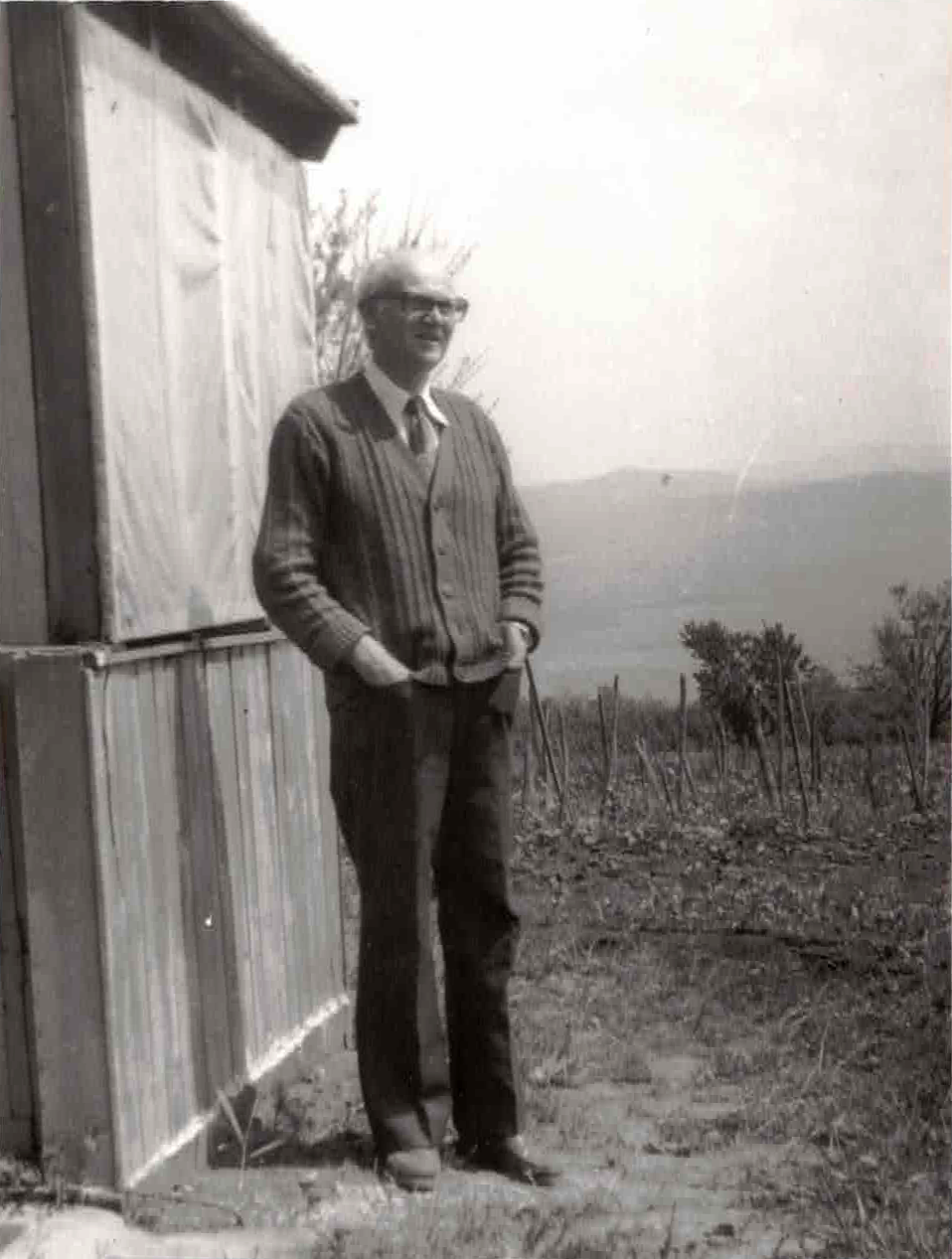
In the garden near Bajtava, a view that never gets old
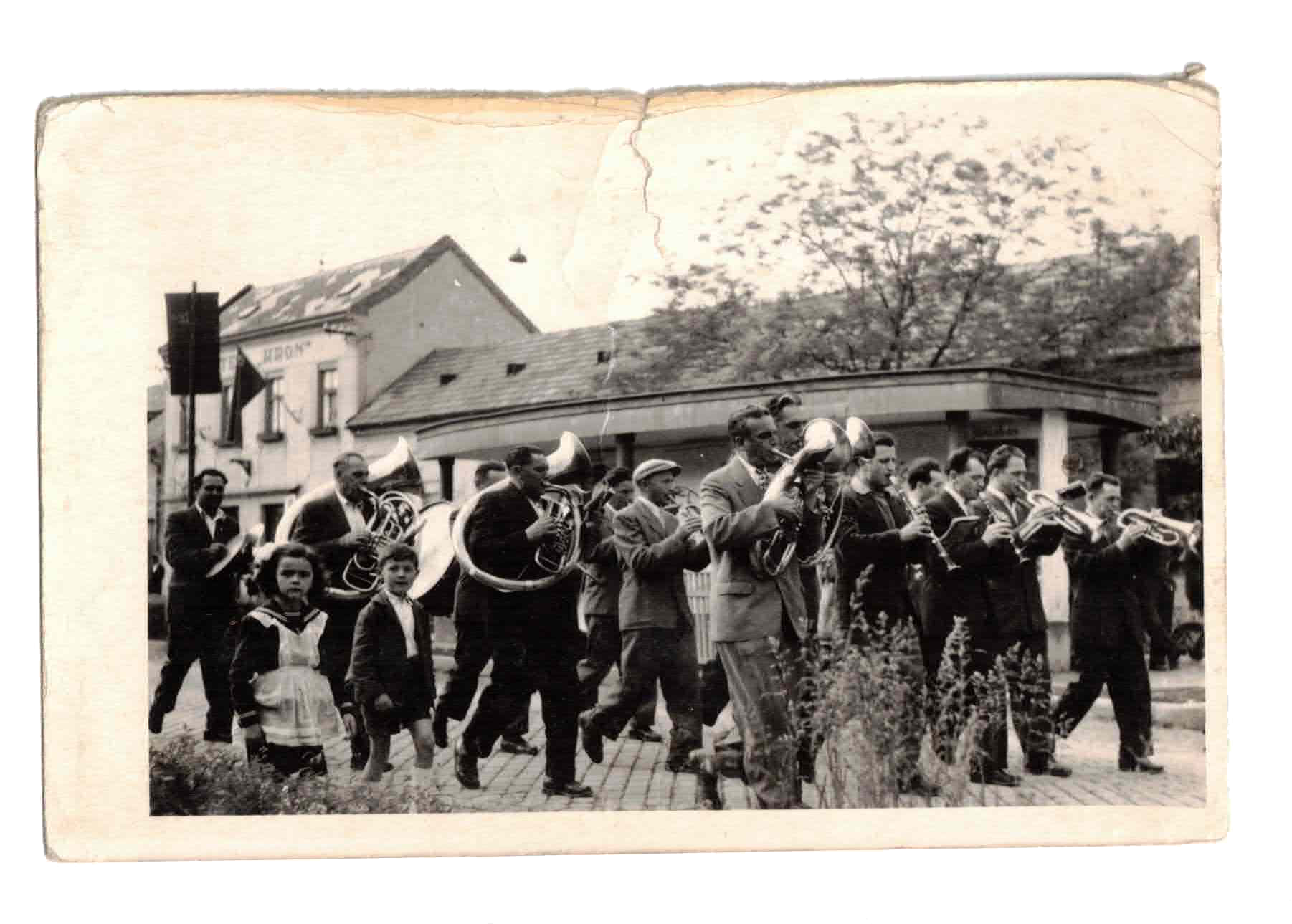
The band with shiny instruments that enchanted Ernö at the age of 4, when he wandered away from home
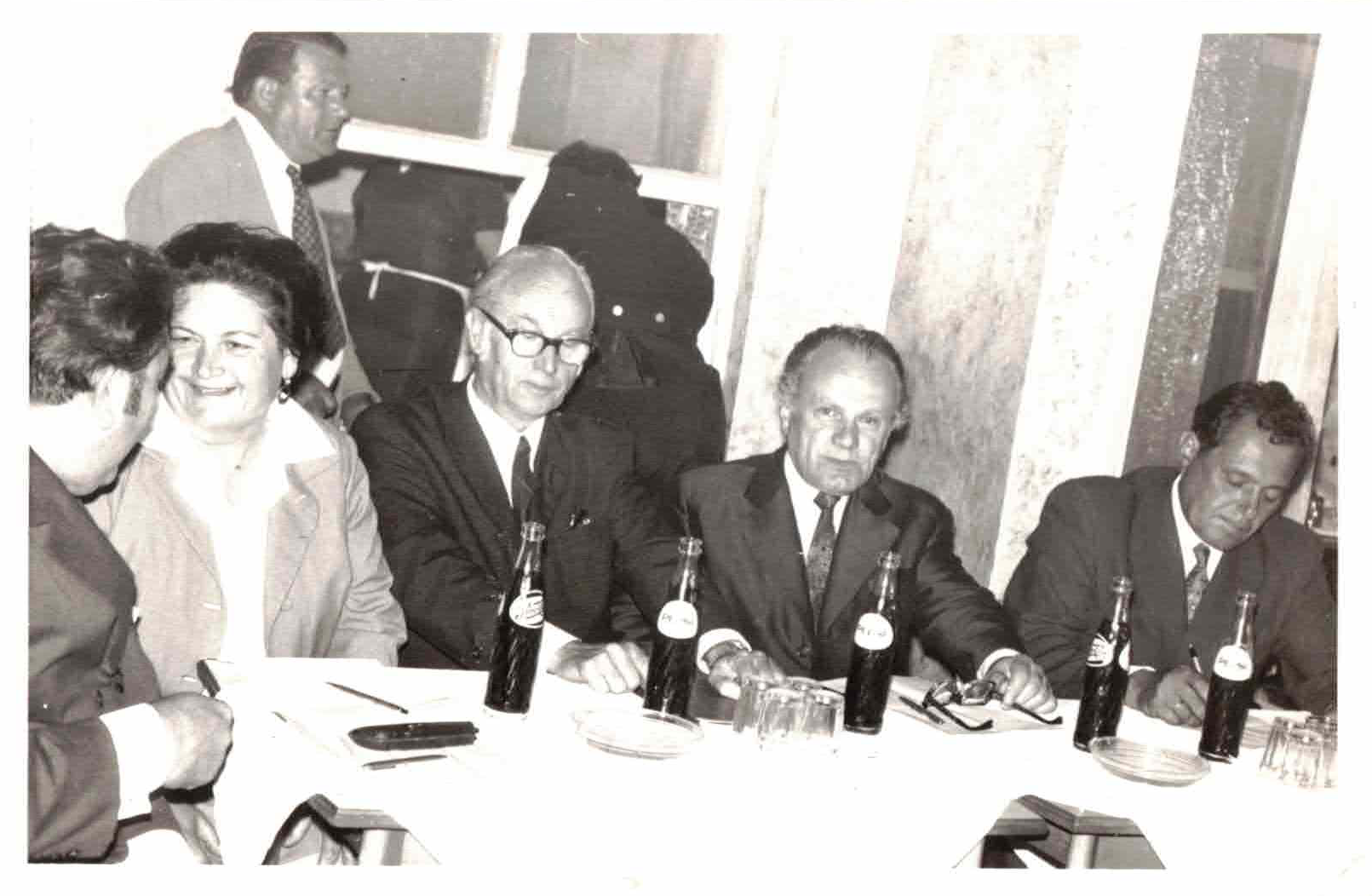
The after-party following Ernö’s author’s evening
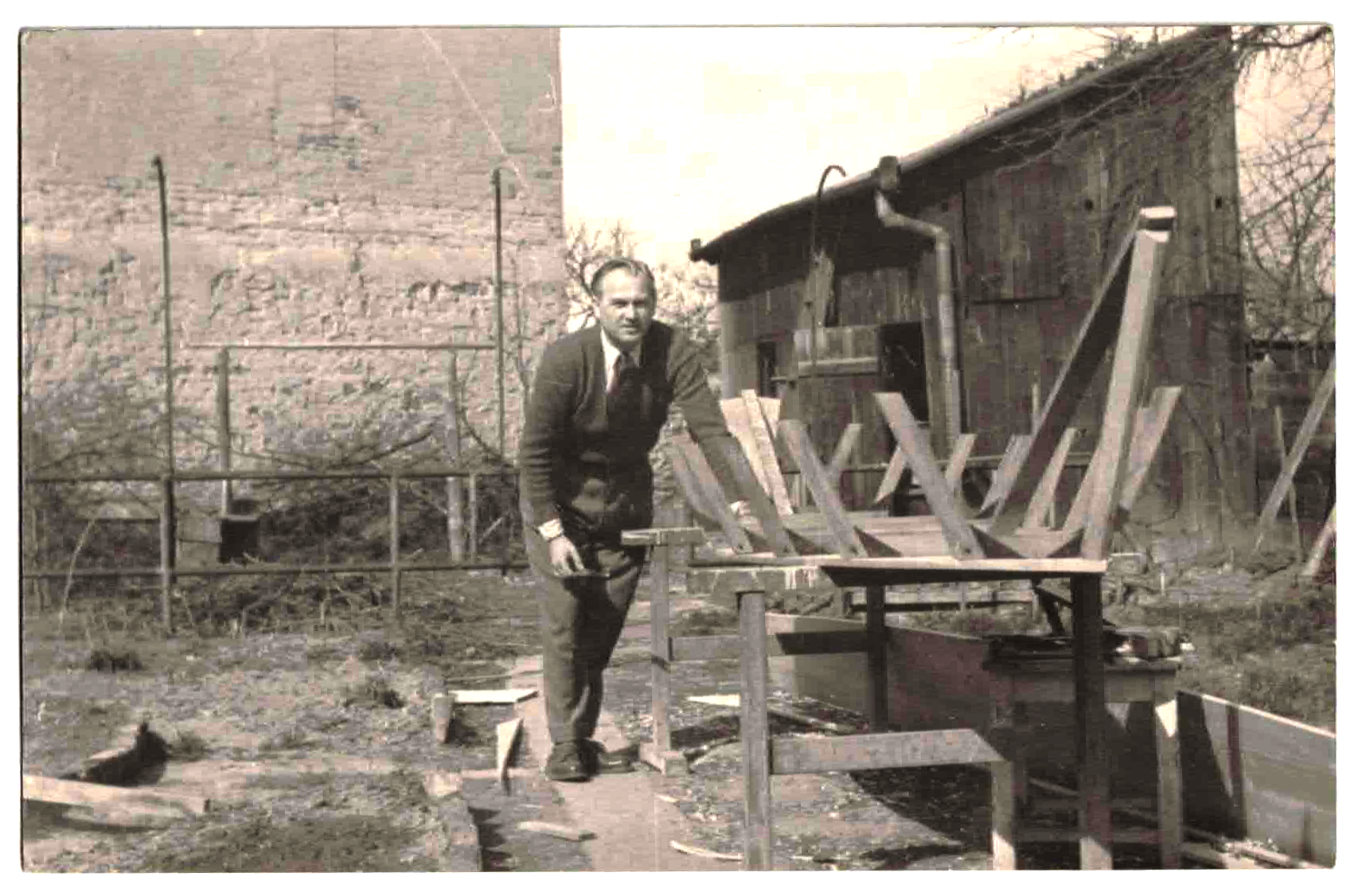
He always loved the Danube. He found the plans in the hobby magazine Ezermester, built a boat, bought a small Tümmler engine and sailed with his family along the Danube and its small islands, all the way to where the river turns toward Hungary
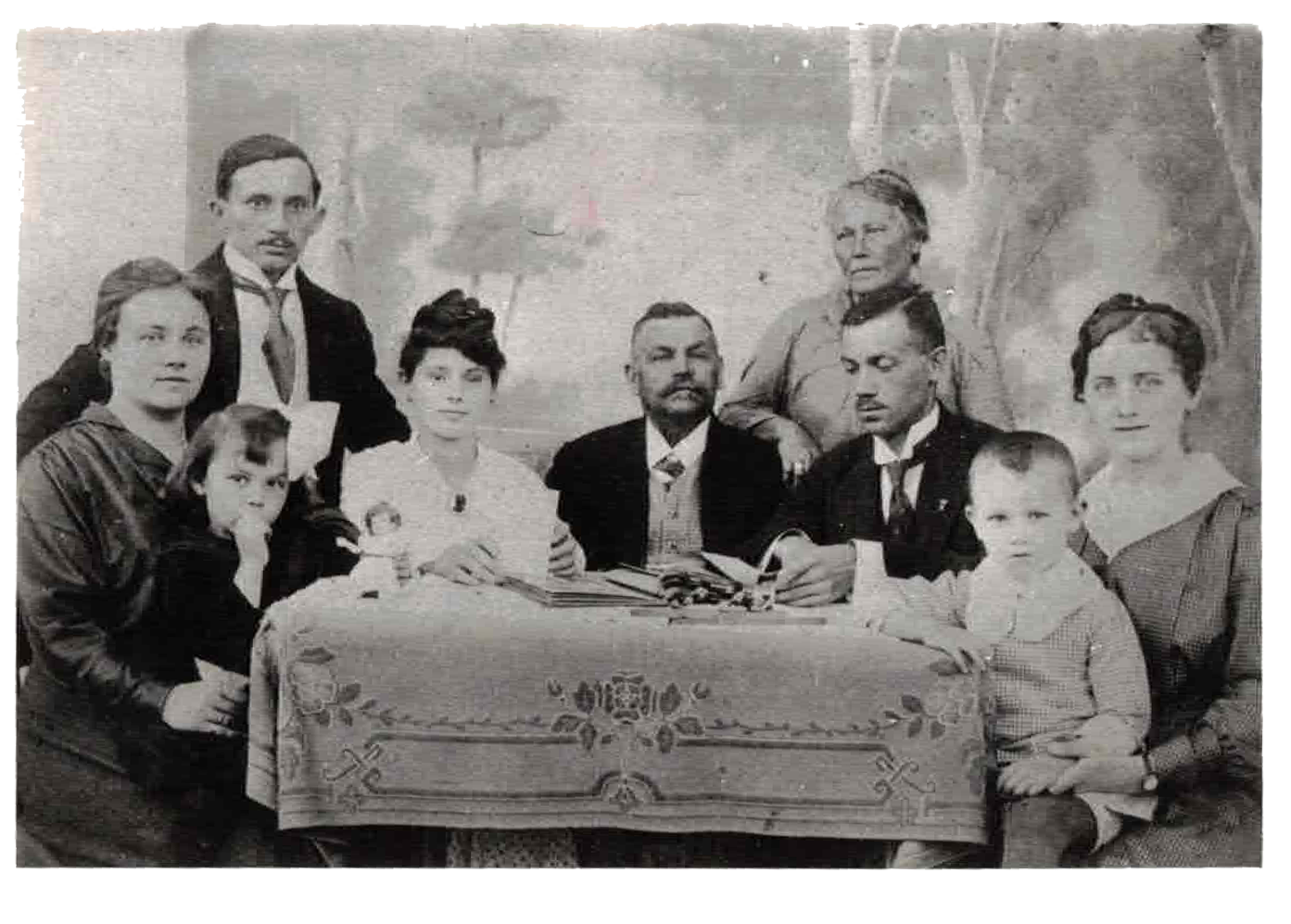
Family photo in a photographic studio, Ernö with his aunt on the right, mother with his sister on the left
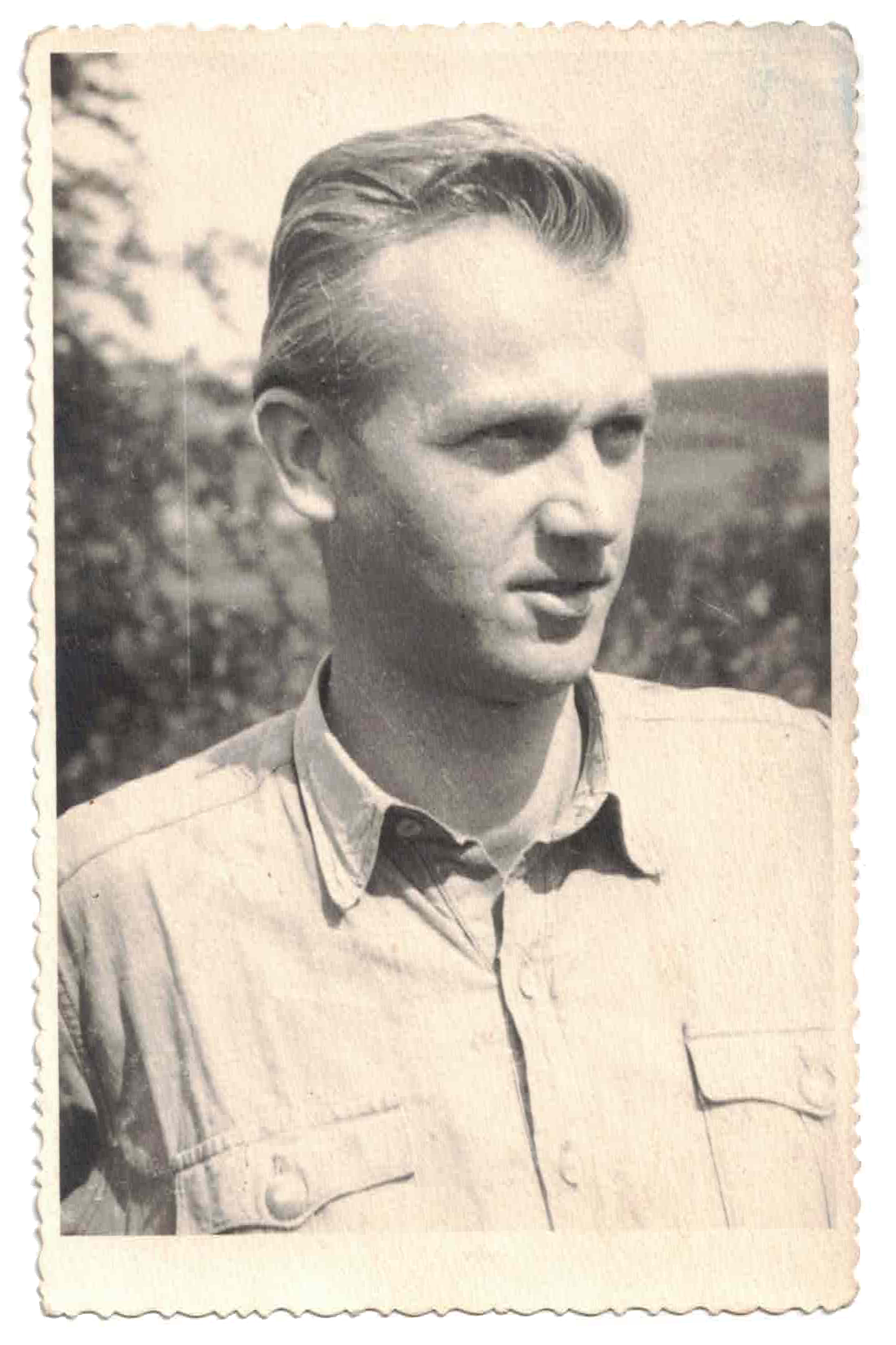
Ernö in Gieboldehausen, Germany, towards the end of the war. He was lucky that, as a pianist, he was a favourite among the officers
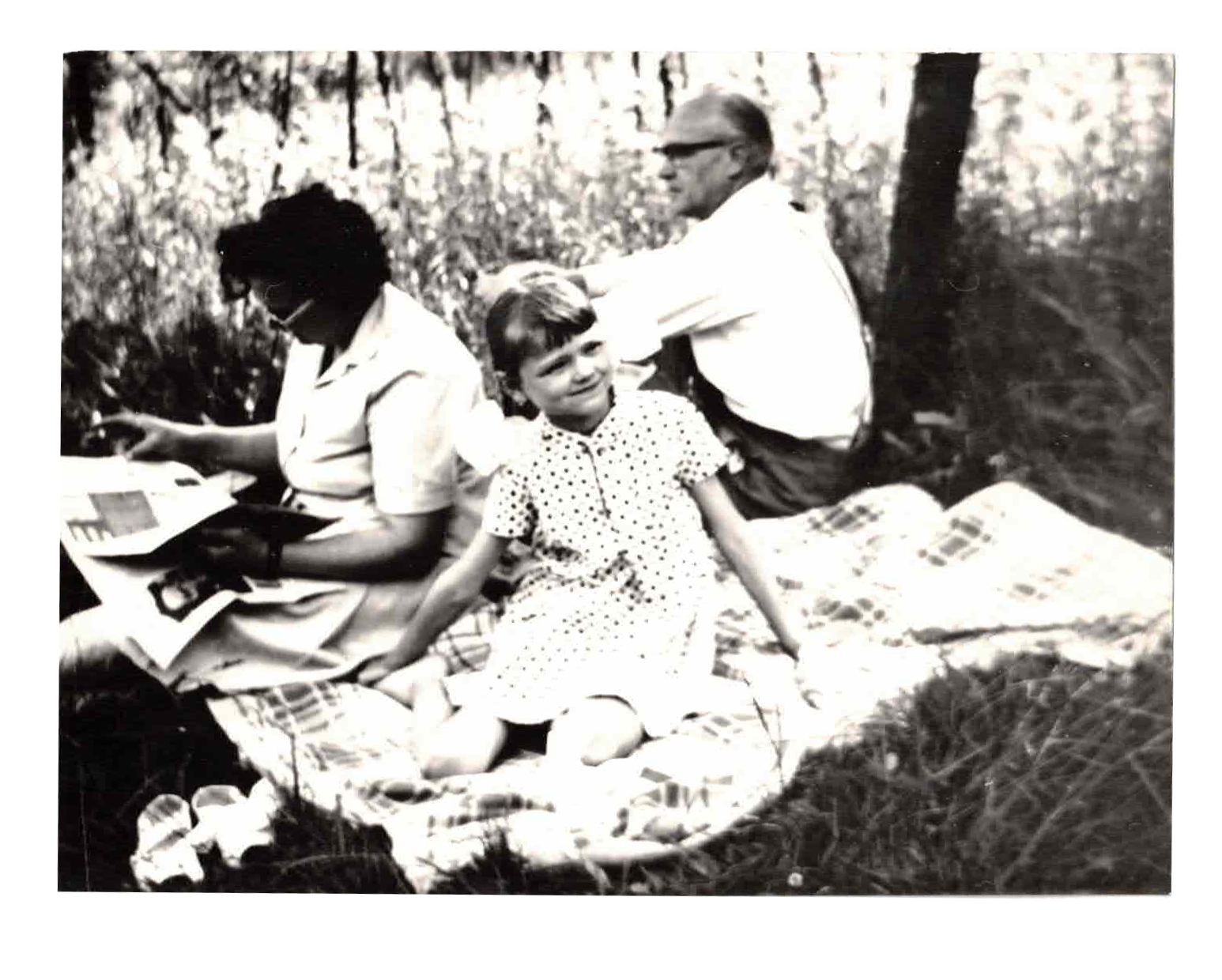
A trip photographed with a self-timer. Ernö loved technological innovations. He also owned a camera and a projector. On Sundays, the family would watch films together after lunch
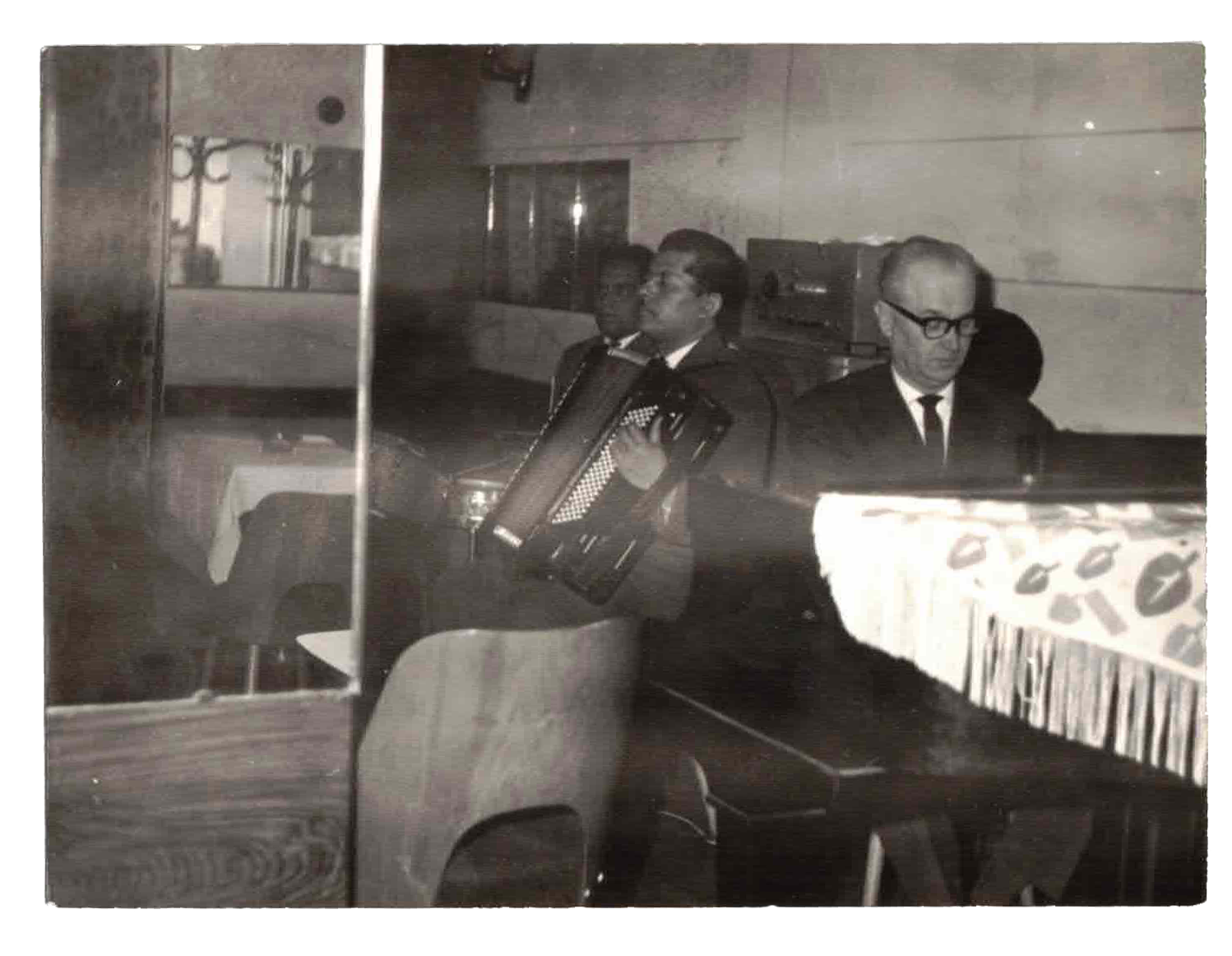
In the café of the Dunaj Hotel
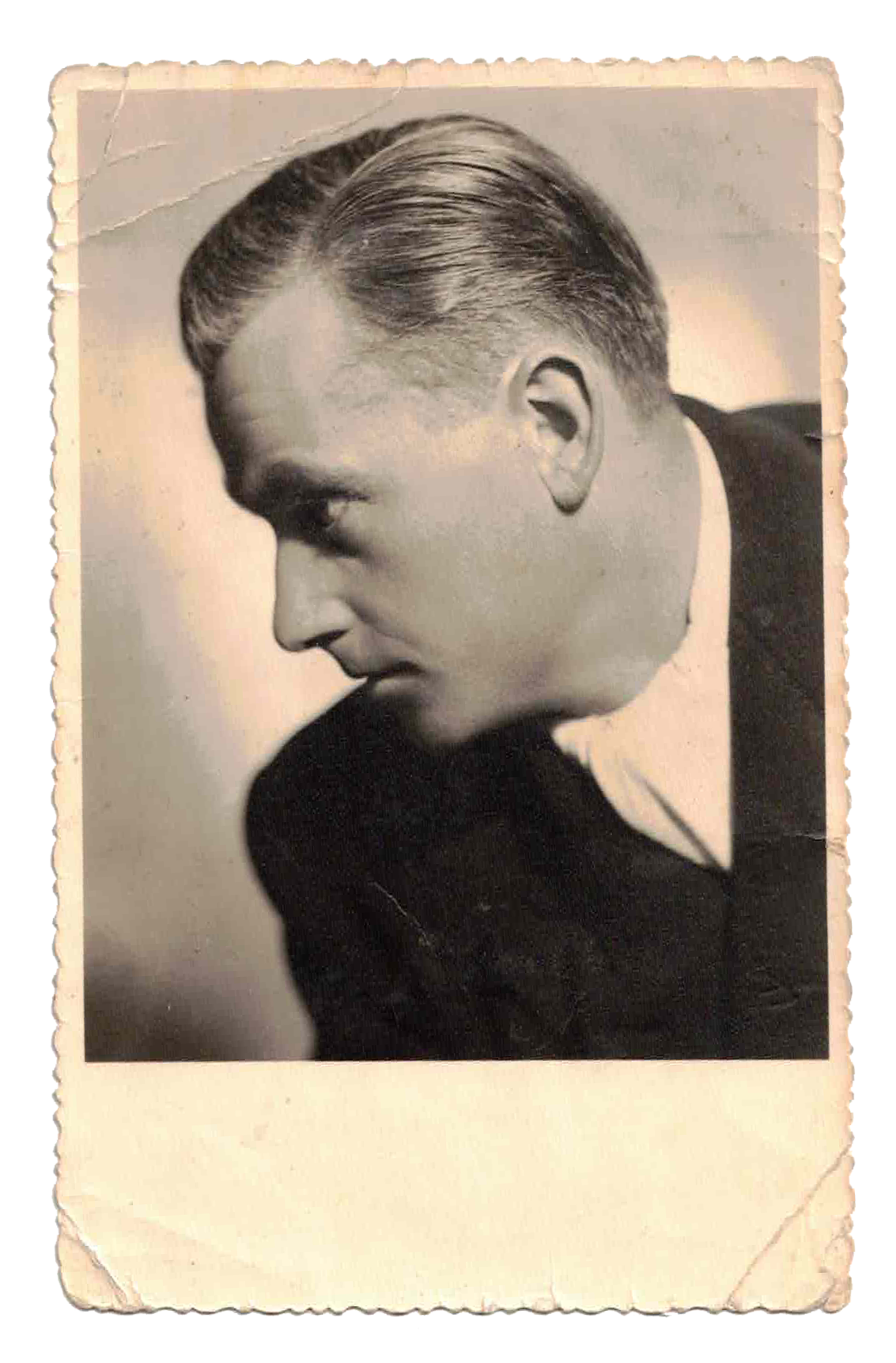
1943
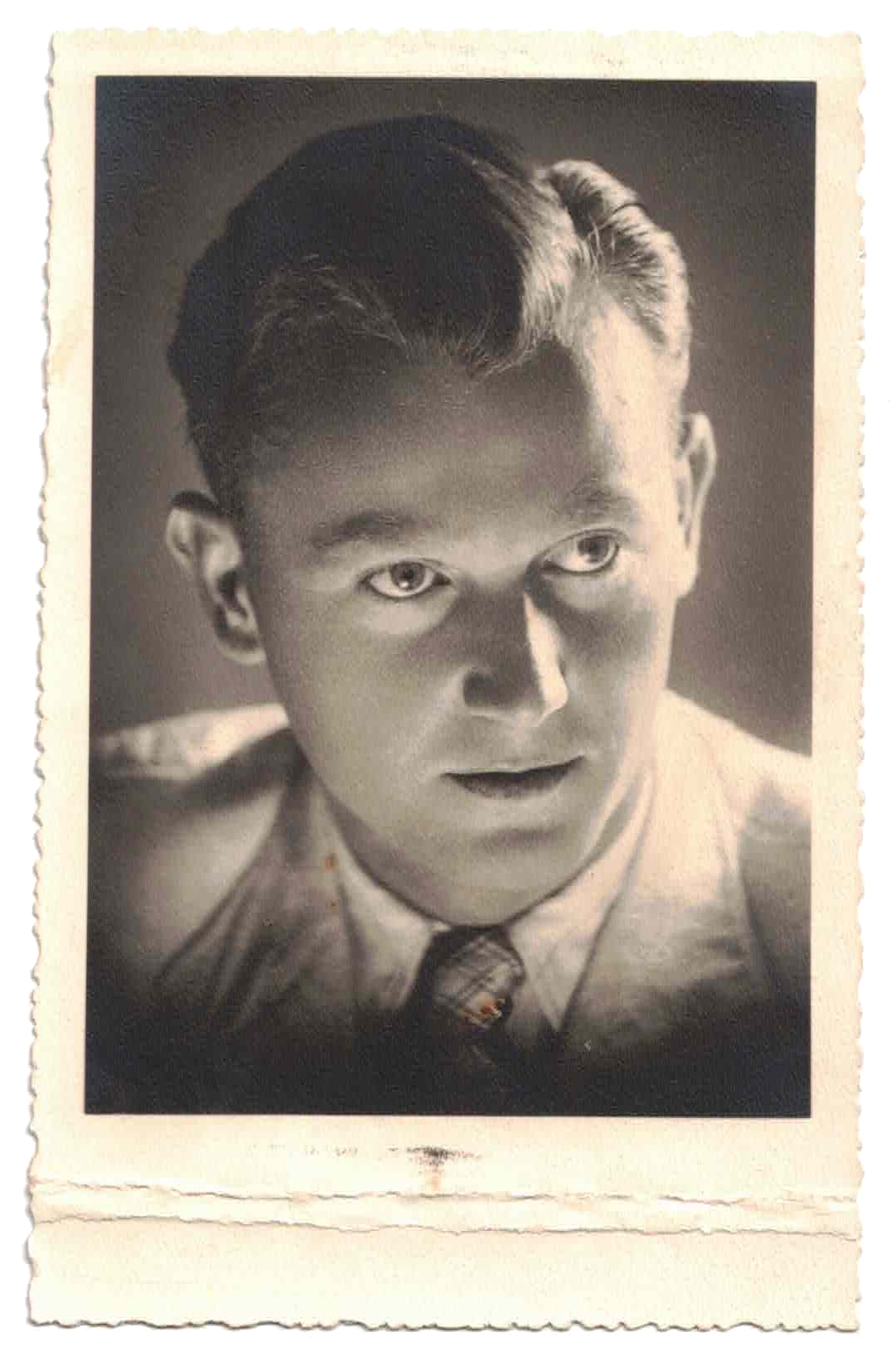
1938
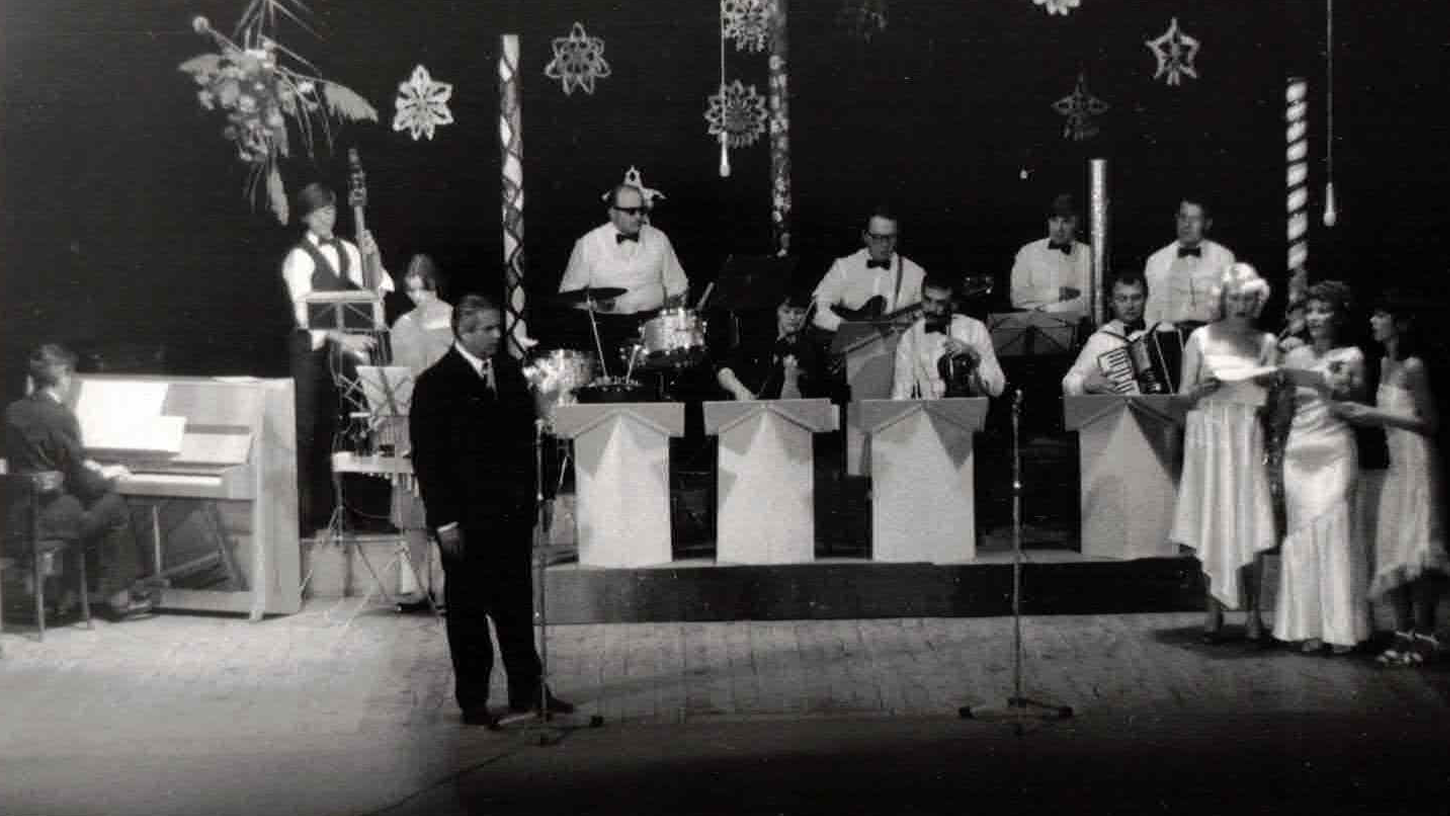
One of Ernö’s author evenings at the Štúrovo (Párkány) cultural centre (1974)
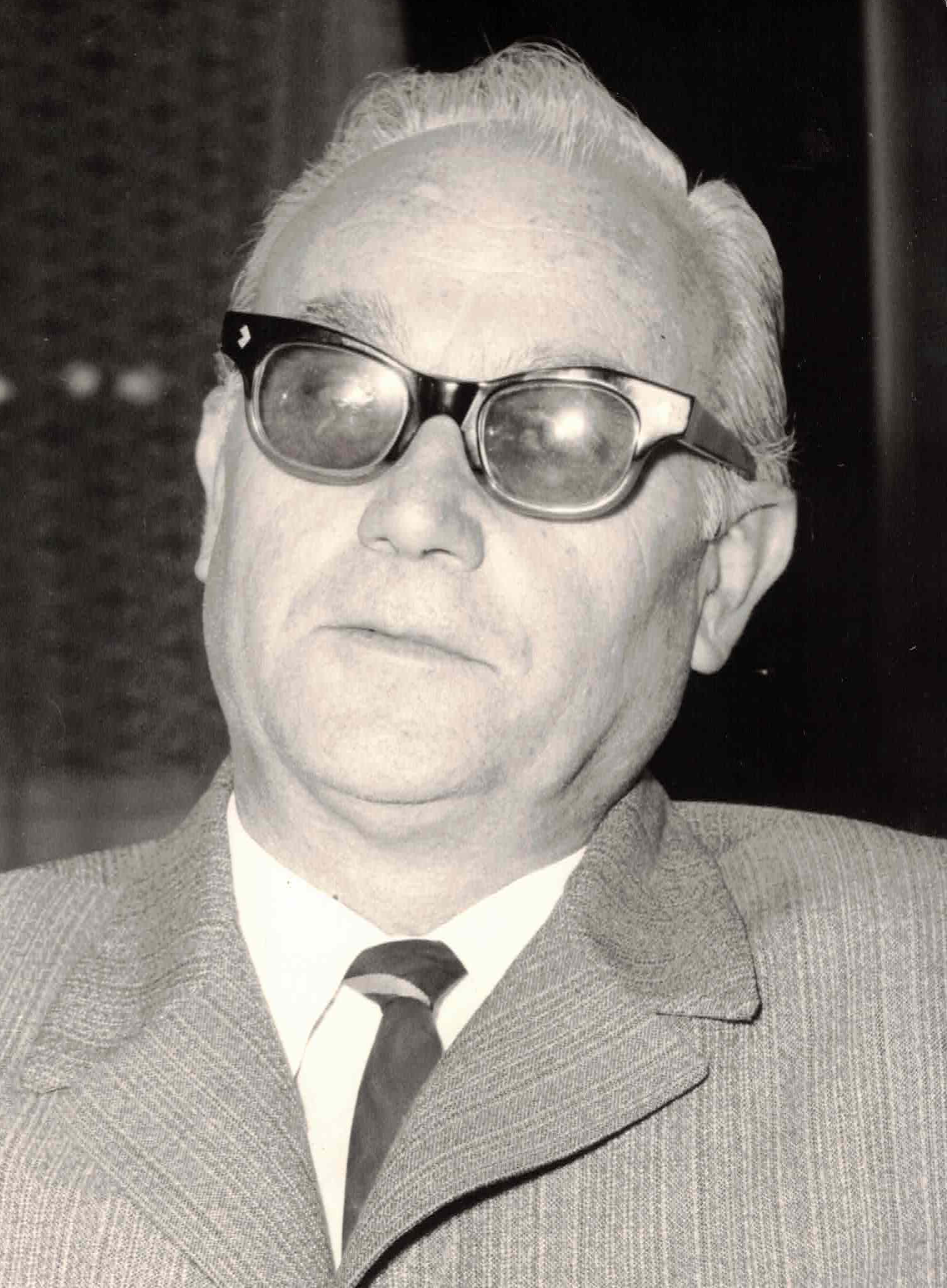
This is how I remember my father, his daughter Agi. This photo was taken by a journalist. Ernö is wearing a terylene suit and has just moved into an apartment block with his family (1974)
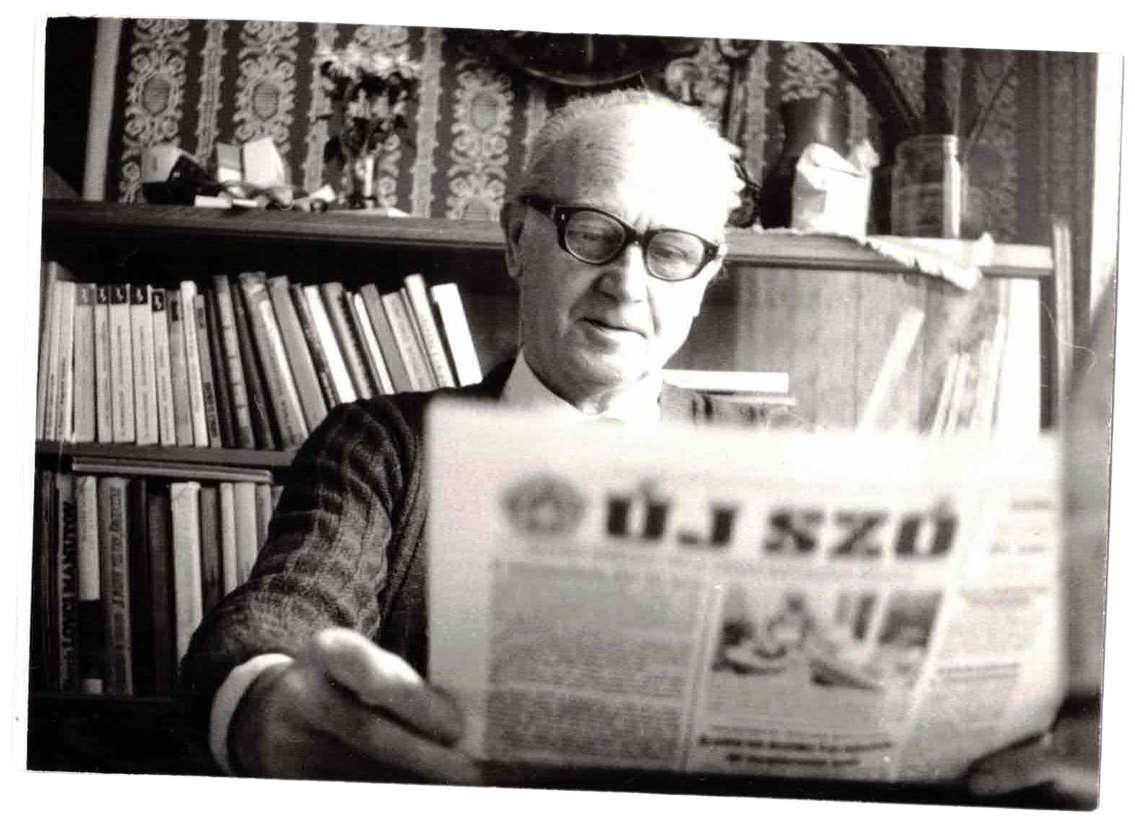
Ernö would rather have chosen the side of the Little Dog Party over the regime
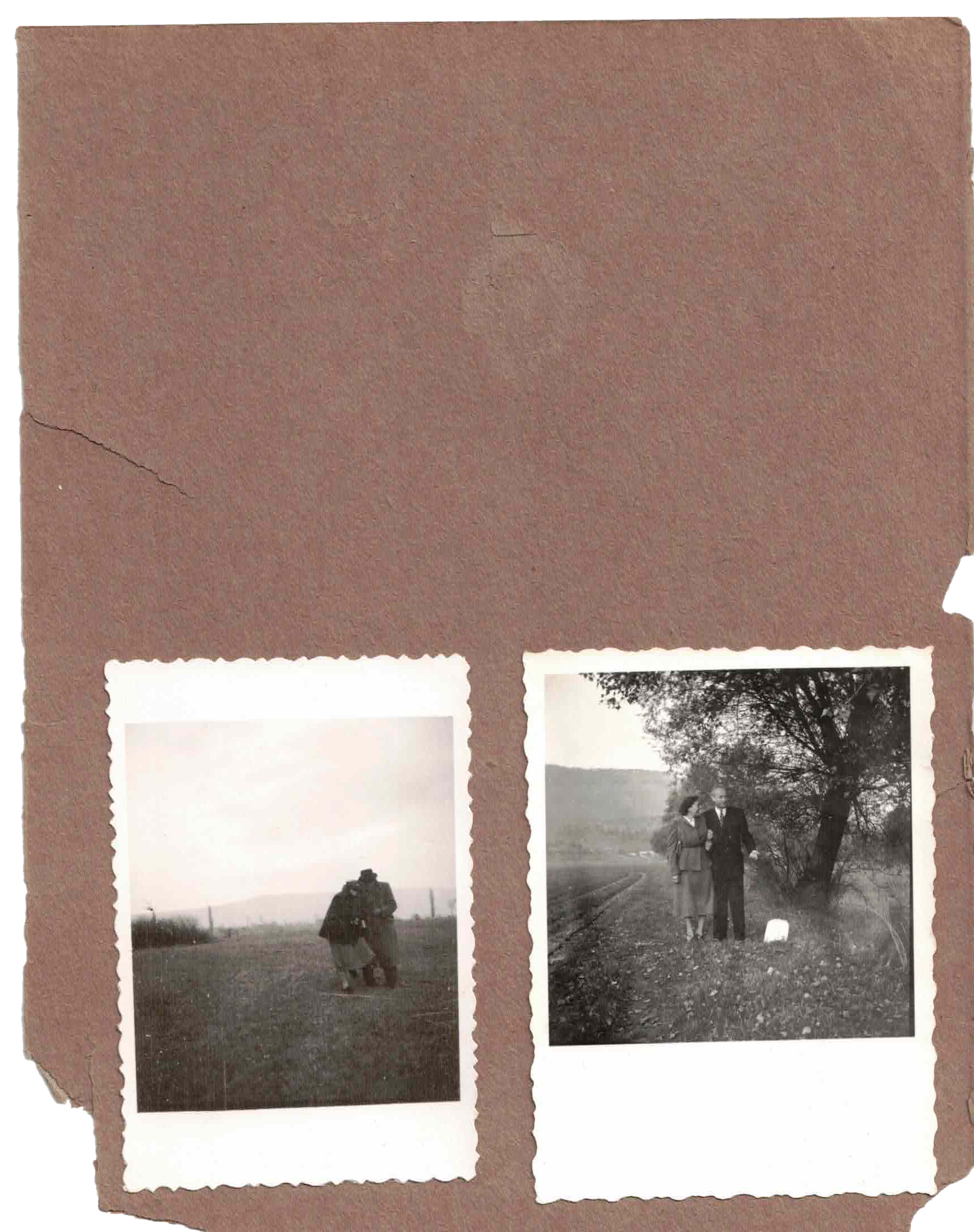
A date with his wife. A few years later their two children were born
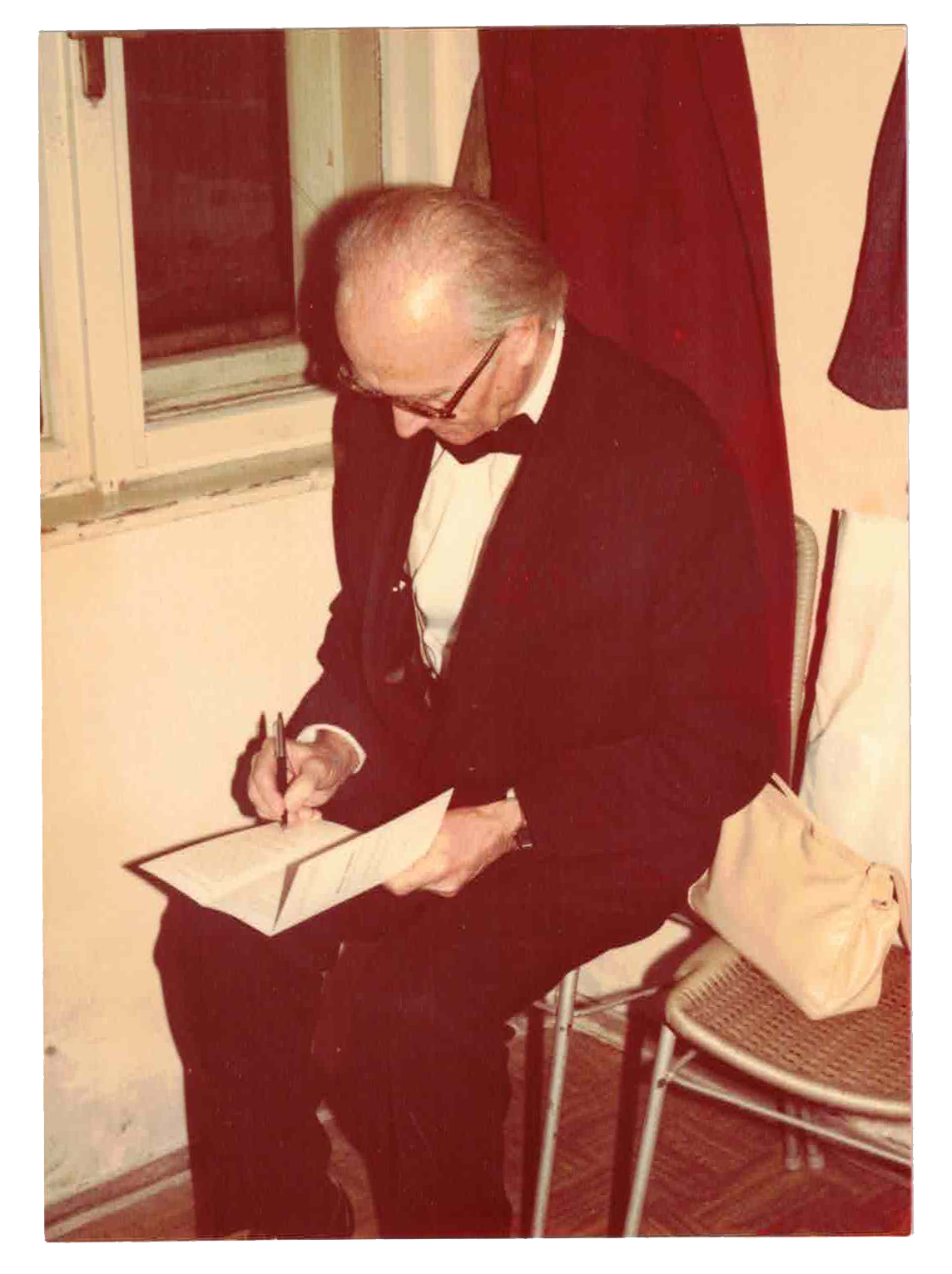
Ernö signing autographs after his author’s evening. It was the last one of his life (1990)
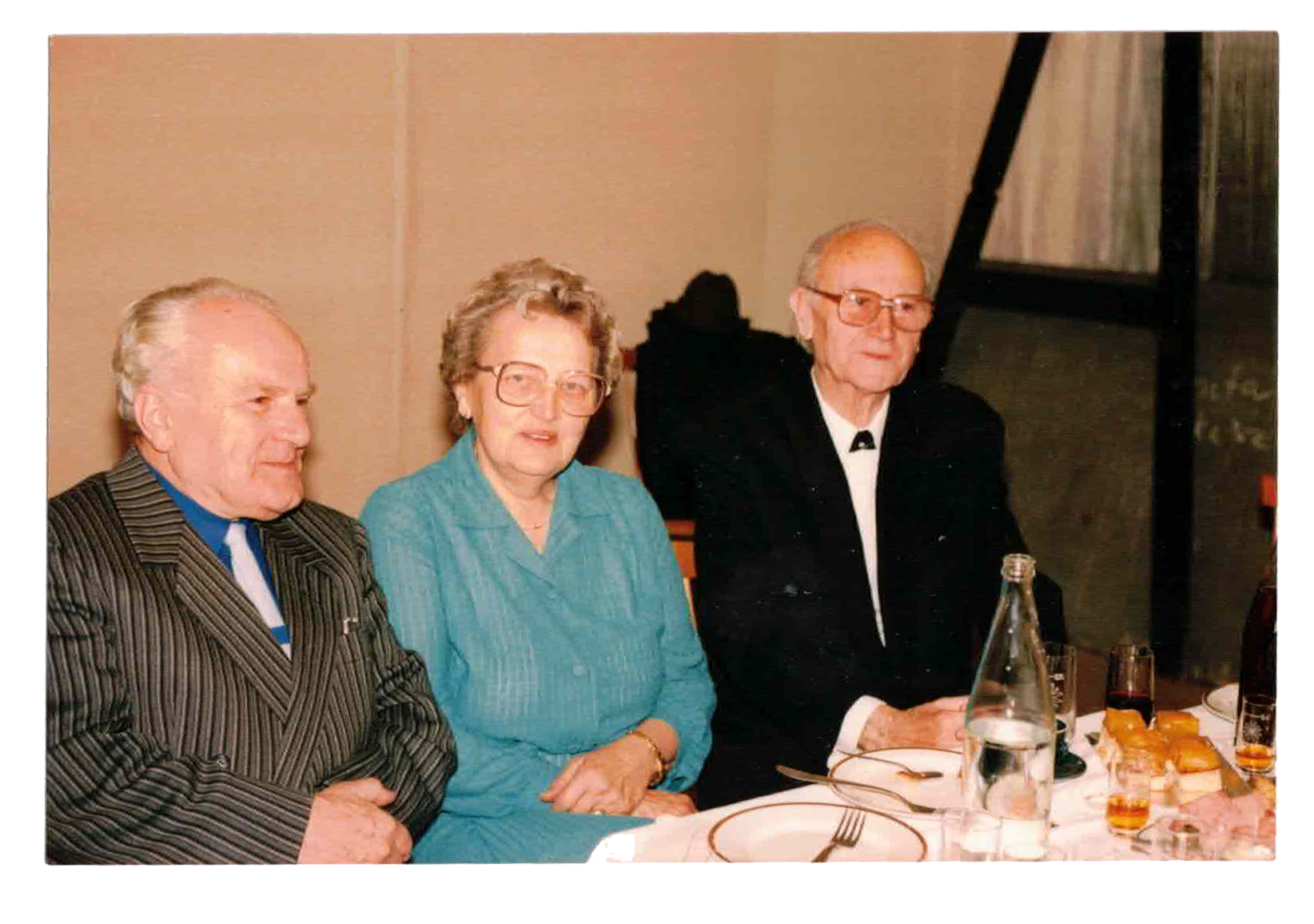
Reception hosted by the mayor at the Municipal Office in Štúrovo (Párkány) on the occasion of receiving the Pro Urbe Award (1984)
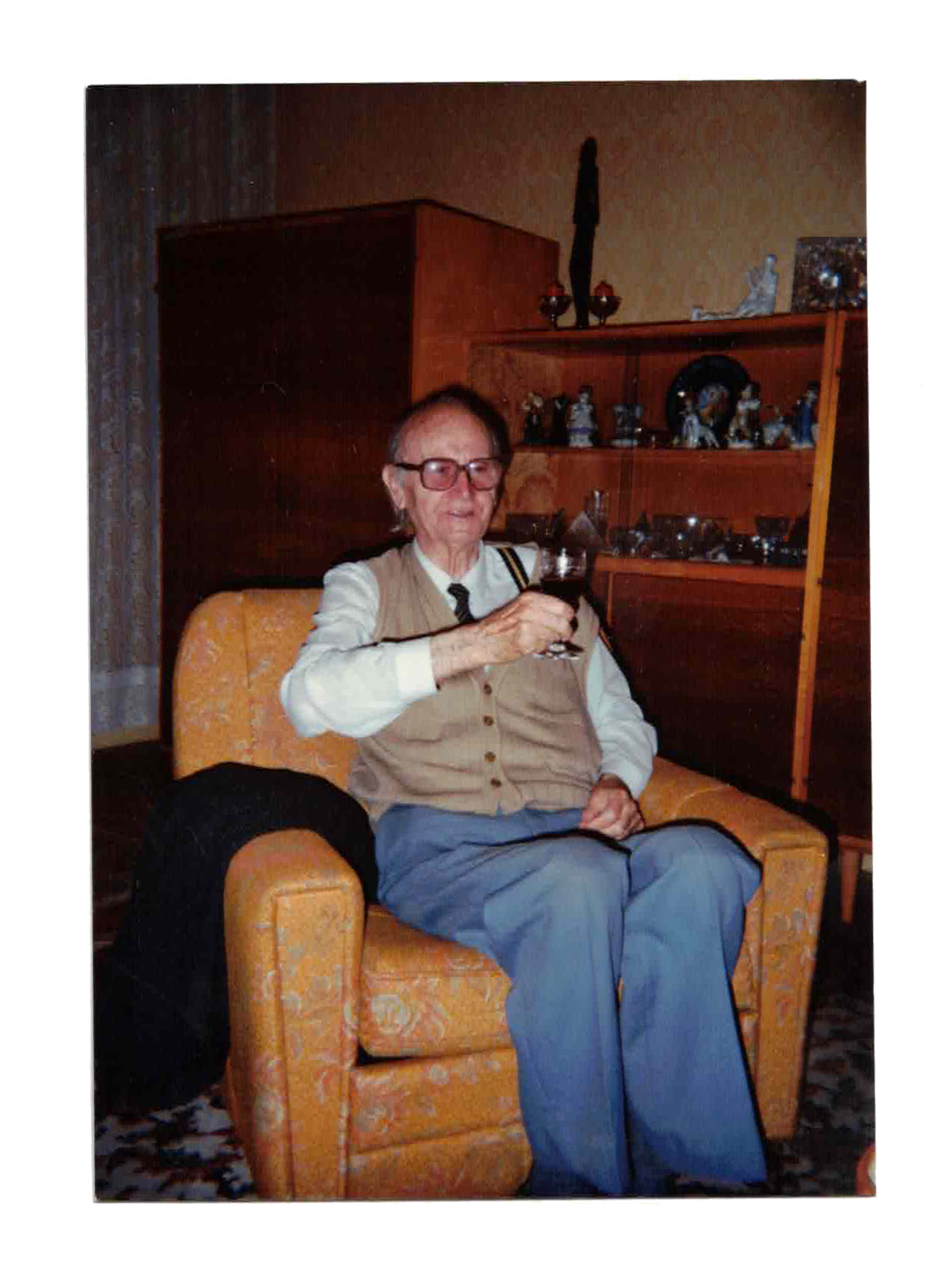
80th birthday, cheers!
After this celebration, we had five more years together
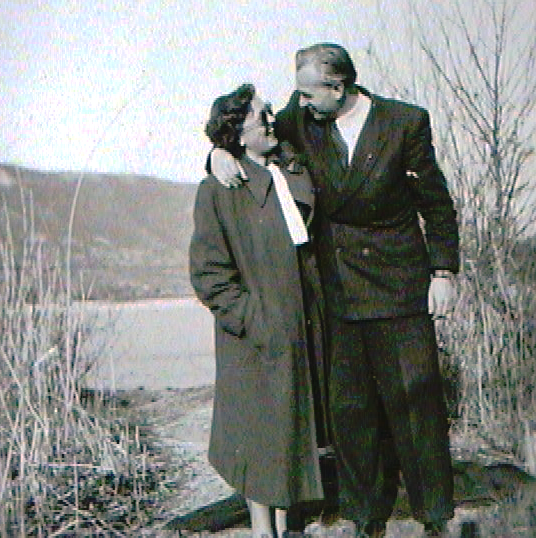
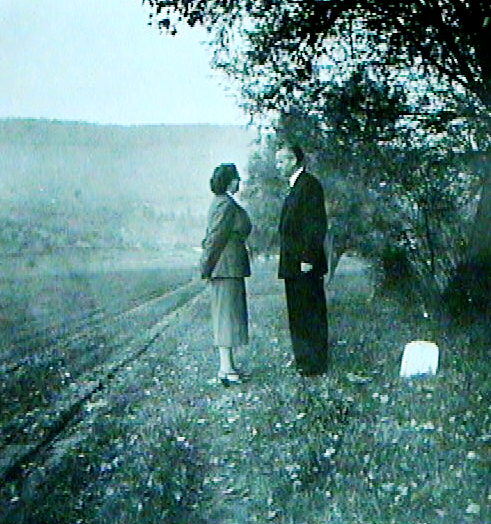
Photos taken with a self-timer. Ernö loved technological innovations and the new inventions of his time
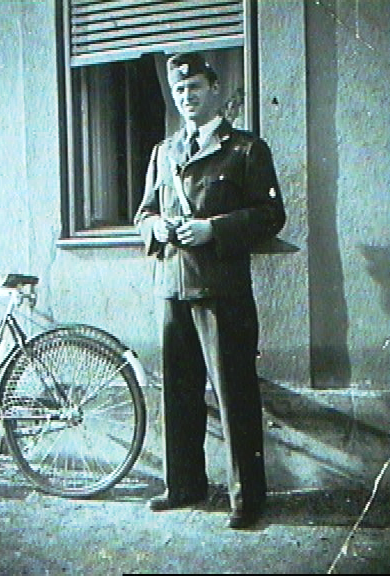
Hard times came. Ernö received his draft notice for the front
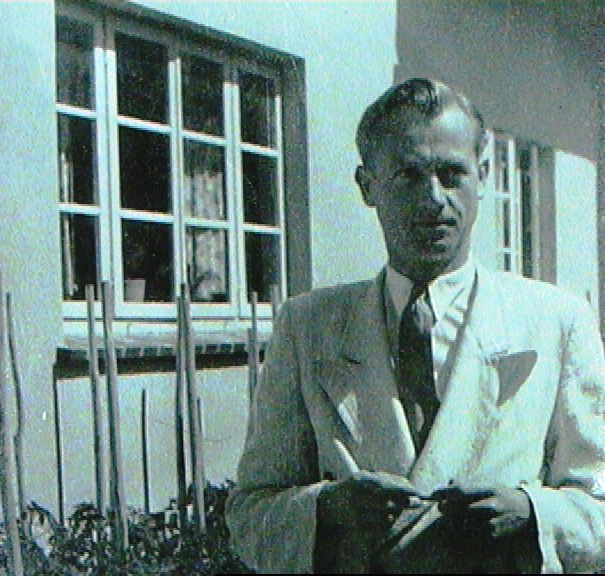
In captivity in Gieboldehausen, Germany. However, thanks to the fact that Ernö was a talented pianist, he was able to entertain the officers (his suit was made from a bed sheet)
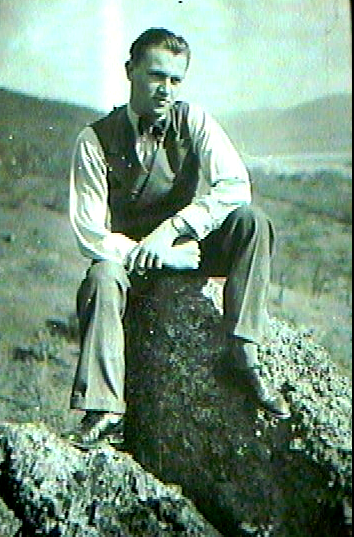
Ernö in Kovácspatak, where he loved to go
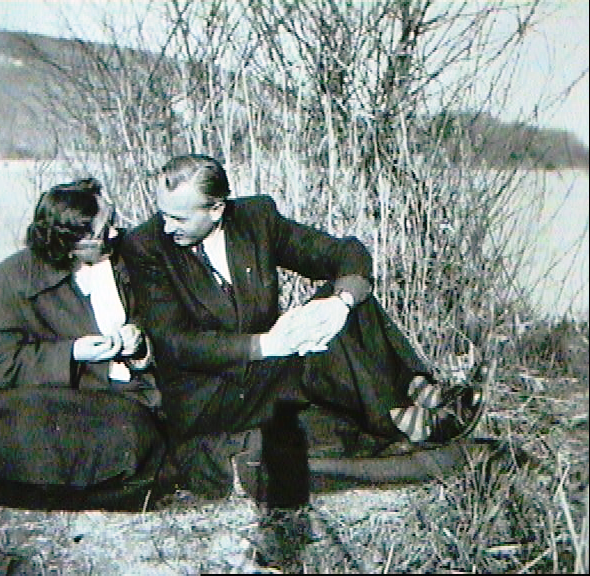
Favourite family trips. At first, just Ernö and his wife, later joined by their son and daughter, Agi
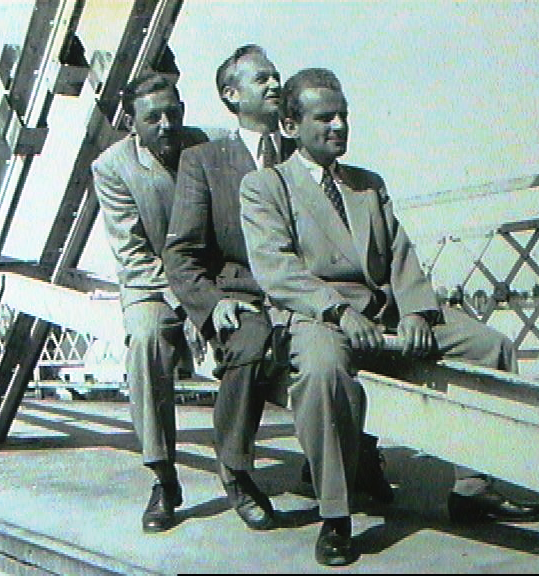
“Posers” on the bombed bridge between Párkány (Štúrovo) and Esztergom. The first is his friend, lyricist J. Hoffbauer, the second is Ernö, and the third is his excellent accordion player M. Halász
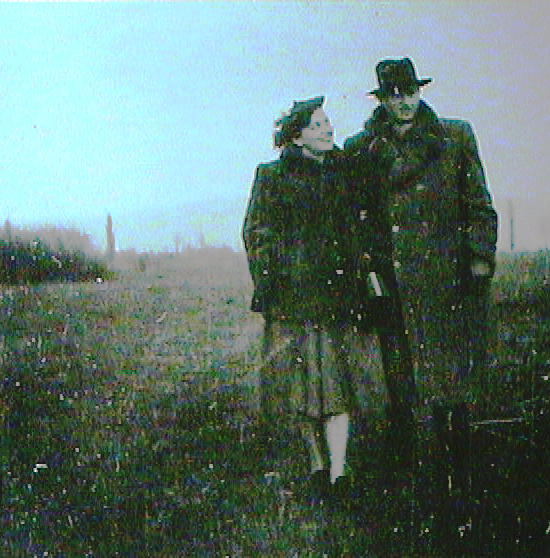
Winter idyll
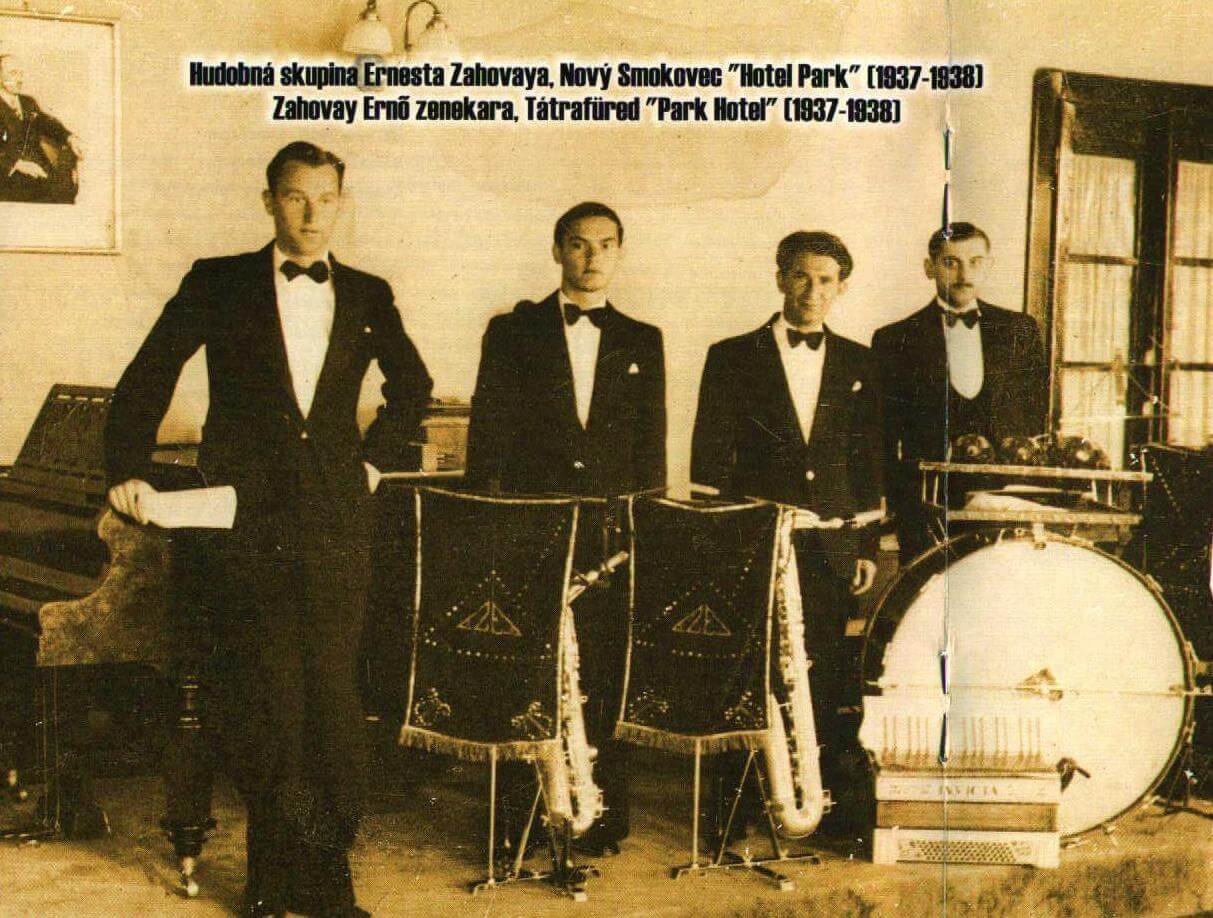
Zahovay’s Band, Nový Smokovec, “Hotel Park” (1937–1938)
Ernö (Ernest) Zahovay (1913 - 1998) was a Hungarian composer and pianist, living in Štúrovo (Párkány), Slovakia. He devoted himself to music from childhood, possessed an extraordinary musical ear, and at a young age was already able to play compositions on several instruments after hearing them only once. His professional career began in the 1930s, when he became one of the first professional popular music composers in the territory of present-day Slovakia and Hungary.
After an initial period with the mandolin, banjo, and guitar, he devoted himself fully to the piano, which became the instrument of his entire life. He was active in both Hungary and Czechoslovakia, and even during the war, despite the difficult circumstances, he continued his musical career and activities. Several of his pieces were recorded and broadcast by the radio stations in Bratislava (Pozsony) and Košice (Kassa).
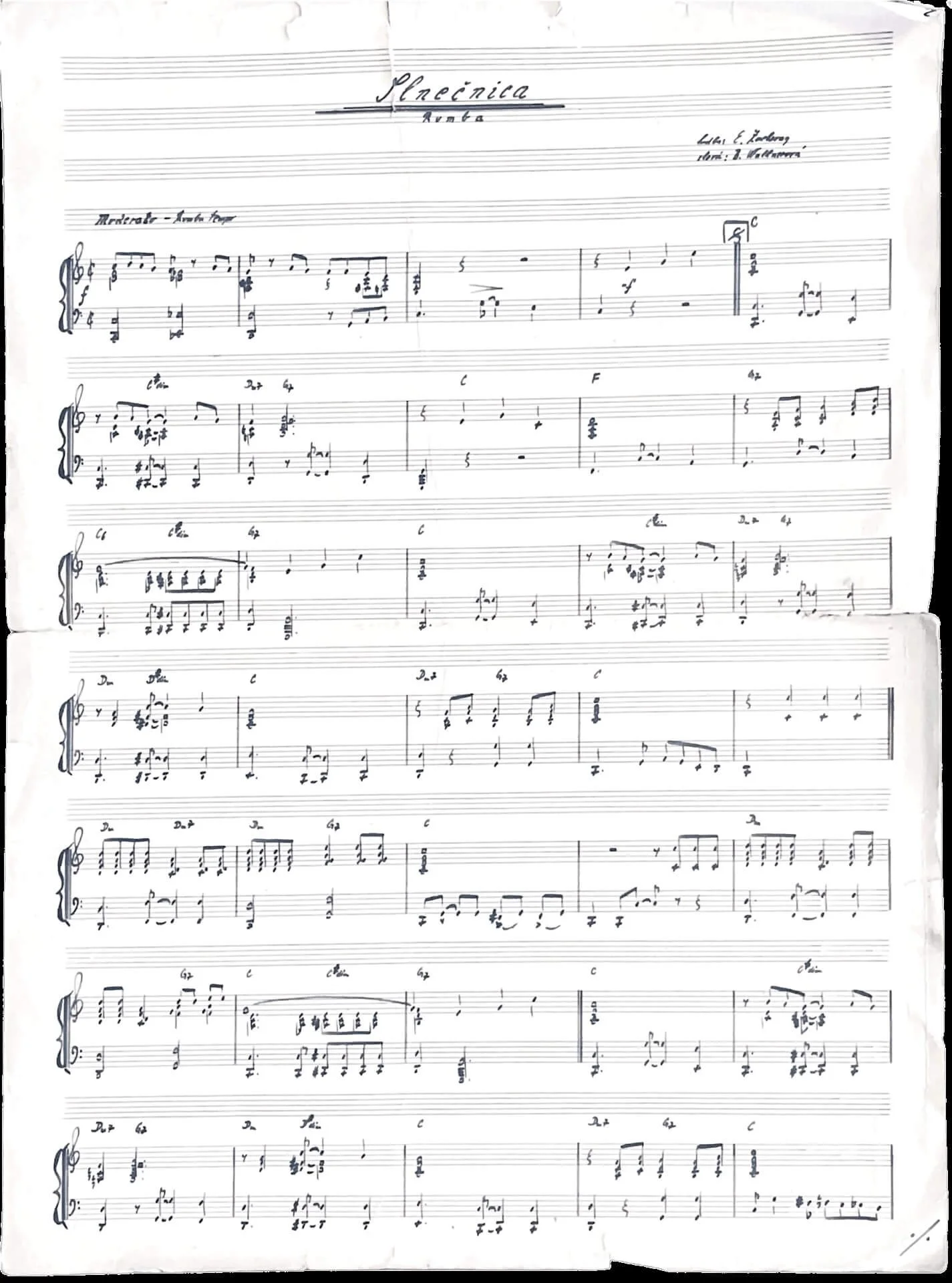
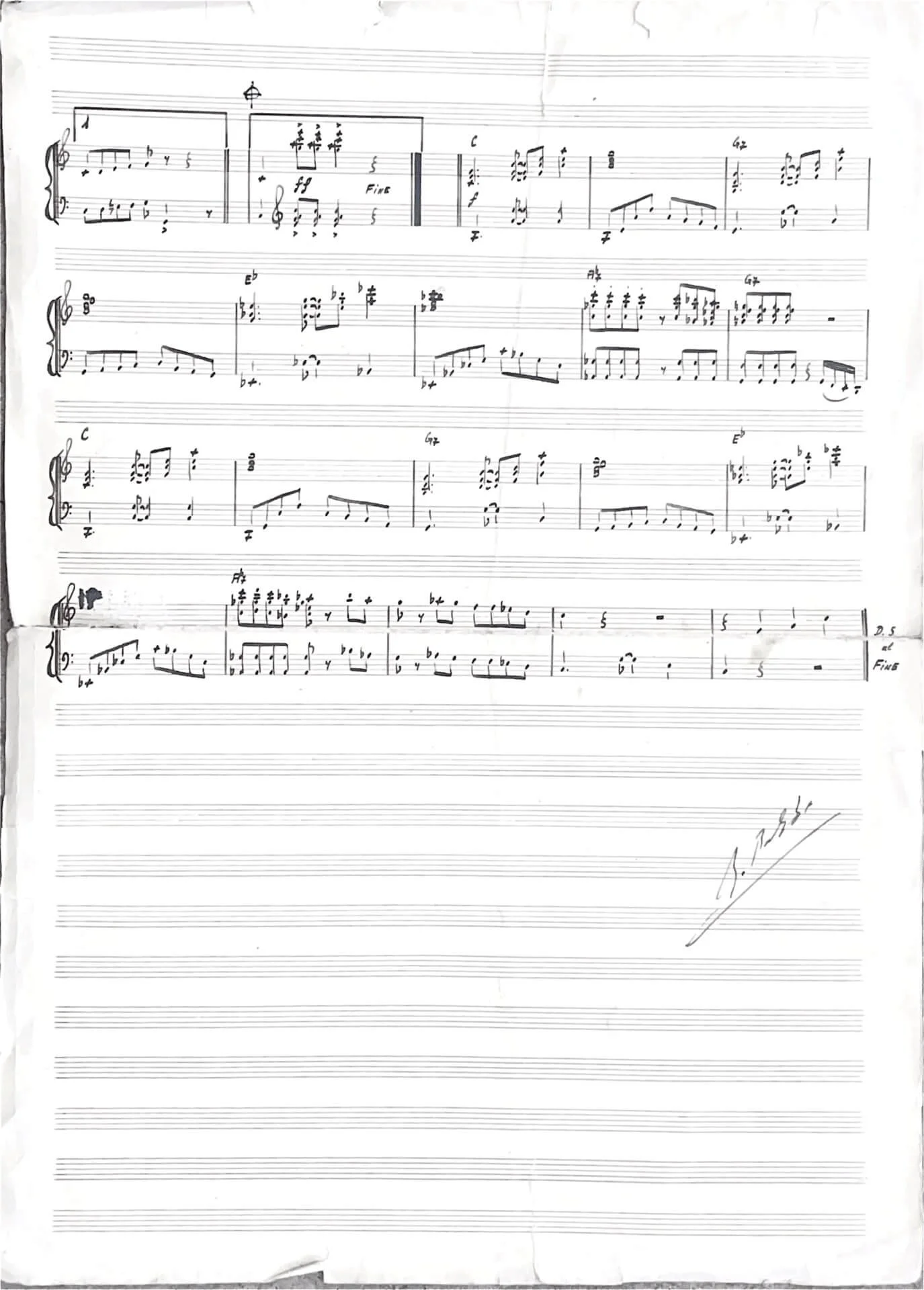
He left behind approximately 500 songs, some of which he wrote the lyrics from himself. His creative output mainly included tangos, English waltzes, marches, chansons, and swing as well as dance songs reflecting swing and Latin American musical influences. Thanks to his melodic inventiveness and his ability to respond to the musical trends of his time, he is considered one of the significant figures in the musical history of the region.
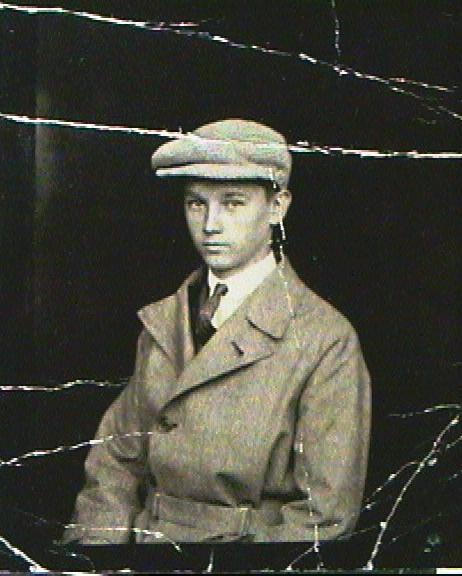
12-year-old Ernö
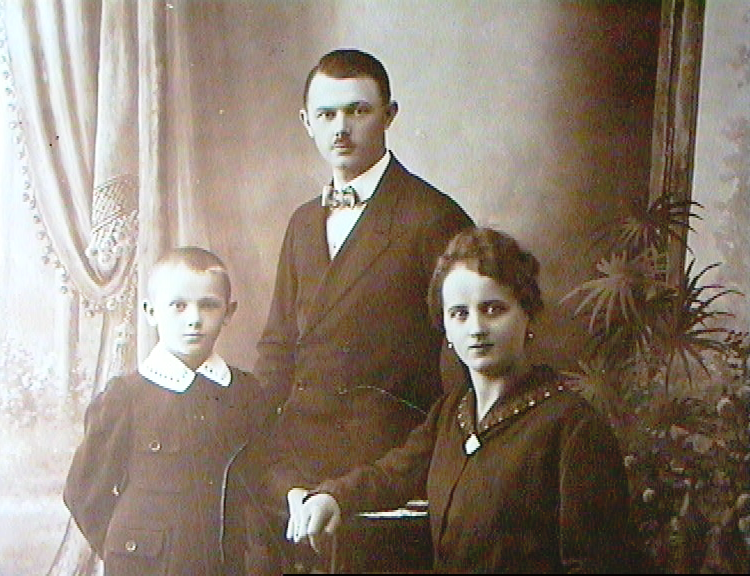
Little Ernö with his parents
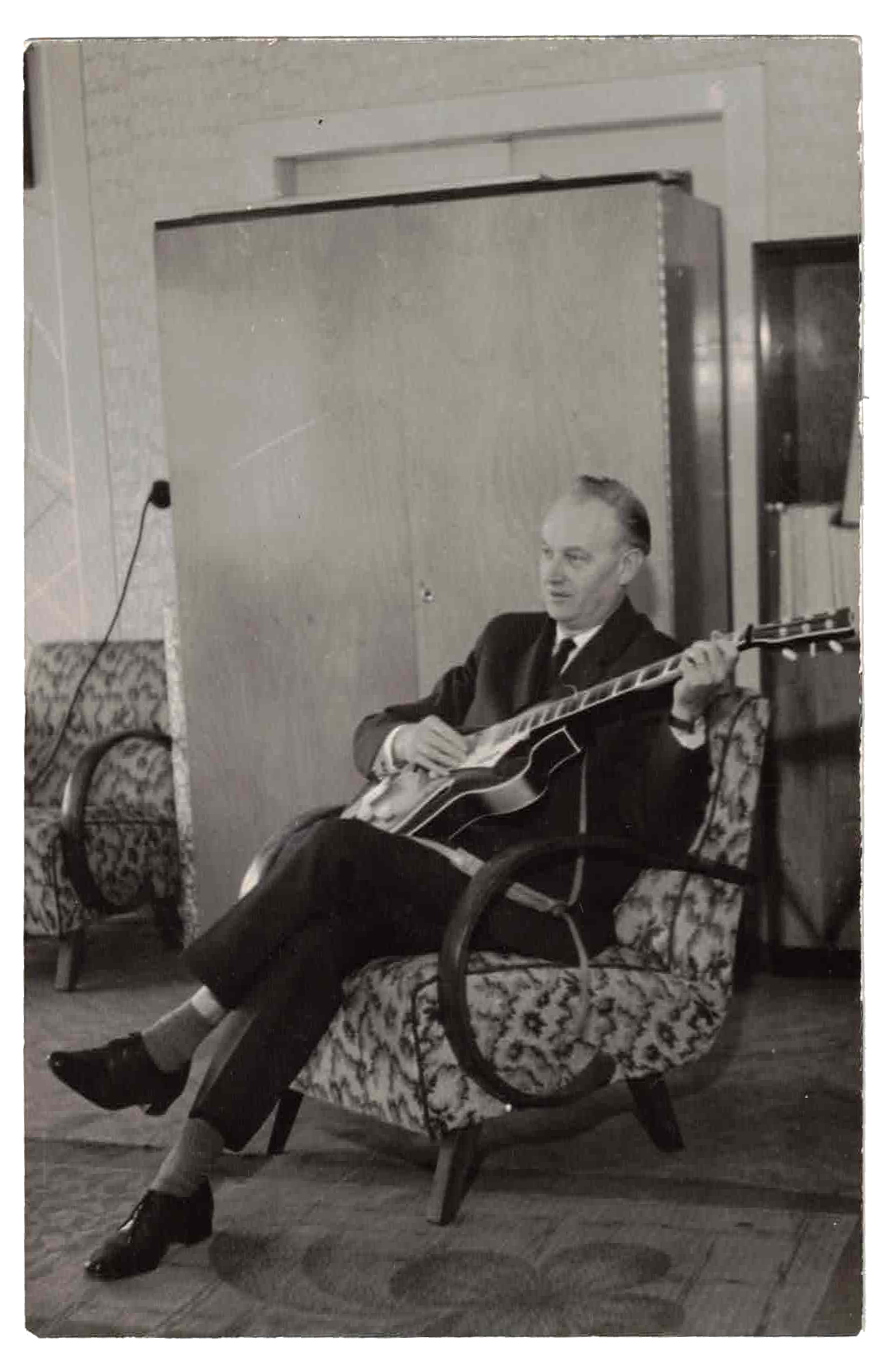
In the late 1960s, when things with his family became more serious, Ernö ended his “wandering life as a musician” and began teaching music
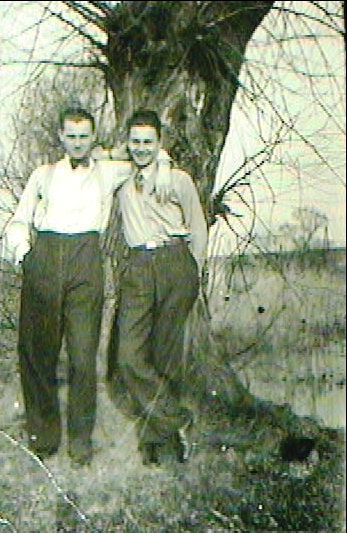
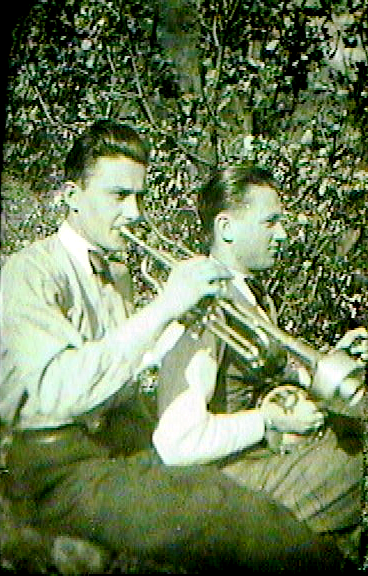
The 1930s marked the period of the first successes of his own band
significant periods
1930
At the age of seventeen, he visited a music publishing house in Budapest, where he presented one of his own compositions to professional publishers for the first time. This courageous step marked the beginning of his career as a composer.
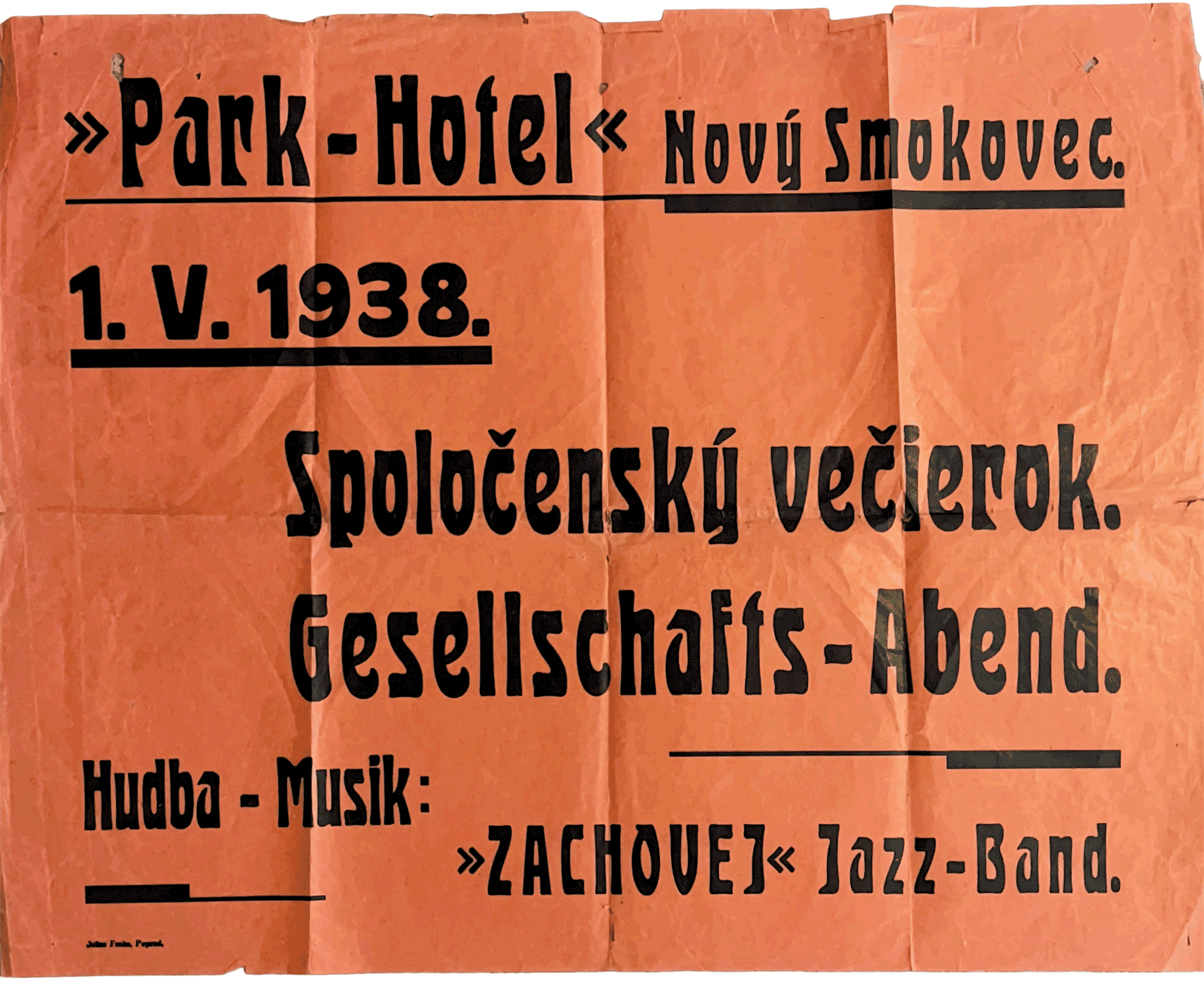
1938 - 1943
With his compositions, he regularly won awards in Hungarian nationwide music competitions and became one of the most successful popular music composers of his time. In 1938, Zahovay became the local representative of the Association of Hungarian Authors and soon after also a member of the Prague Authors’ Copyright Protection Association.
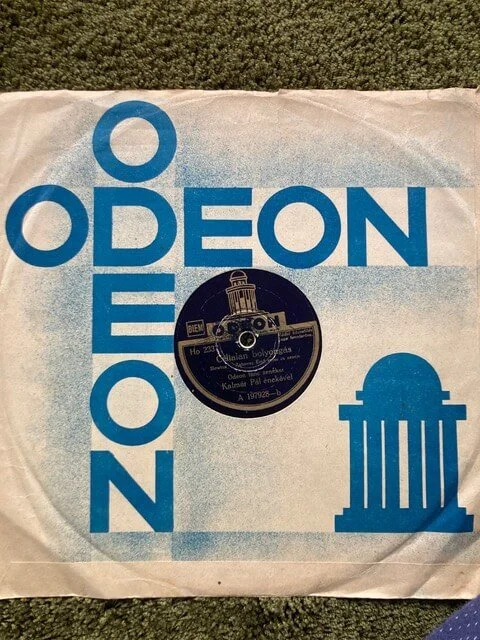
1950s
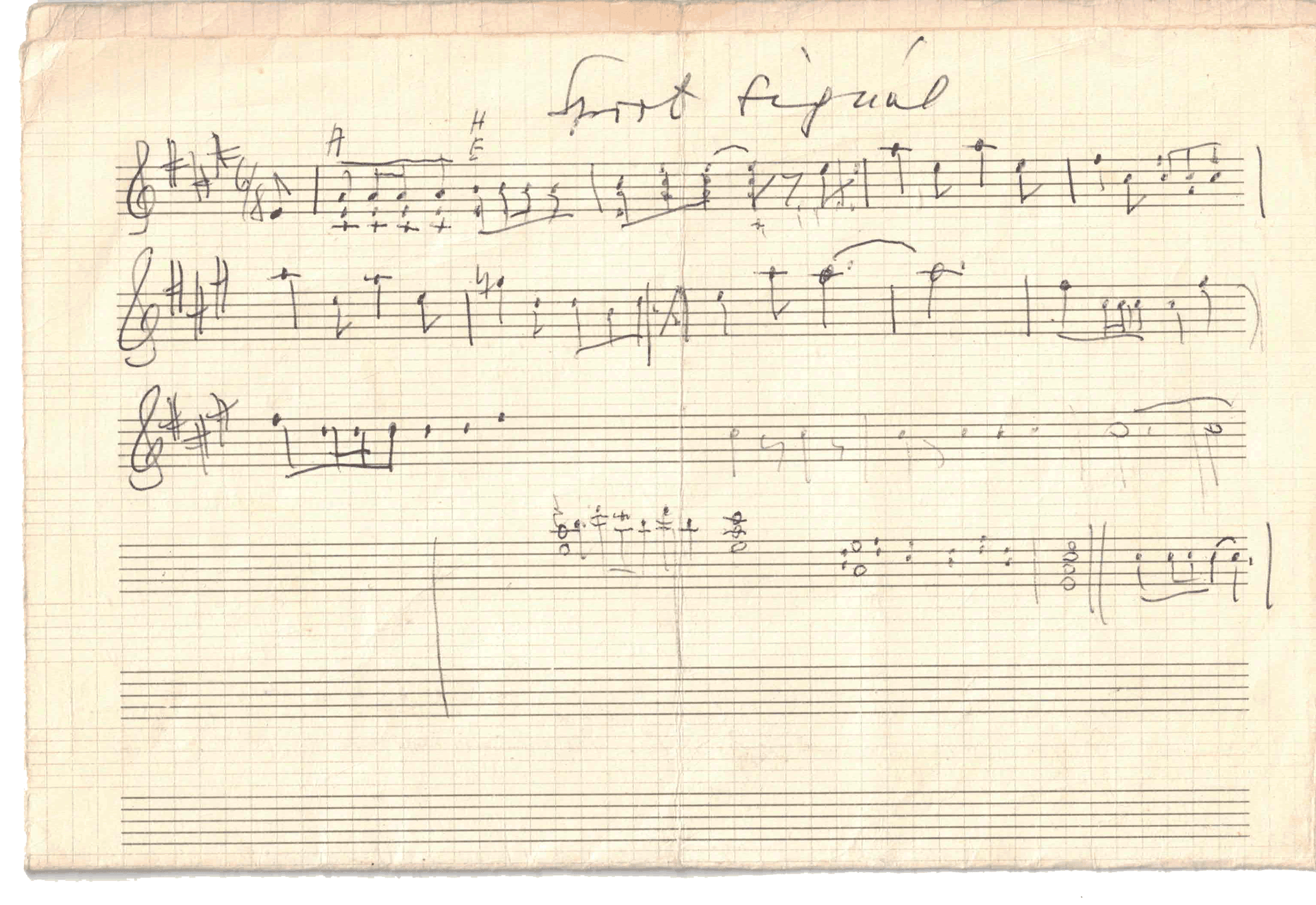
He composed a sports theme that was used for several years on Czechoslovak Television as the opening theme for sports broadcasts and became widely known to the general public.
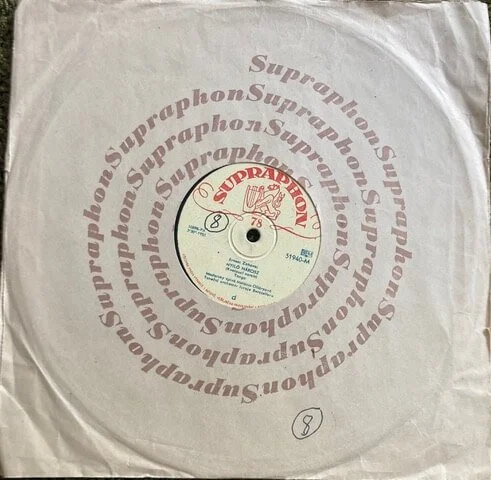
1970s
Czechoslovak Radio preserved more than 30 of his compositions in its archive, ensuring that his musical legacy would remain accessible to future generations of listeners.
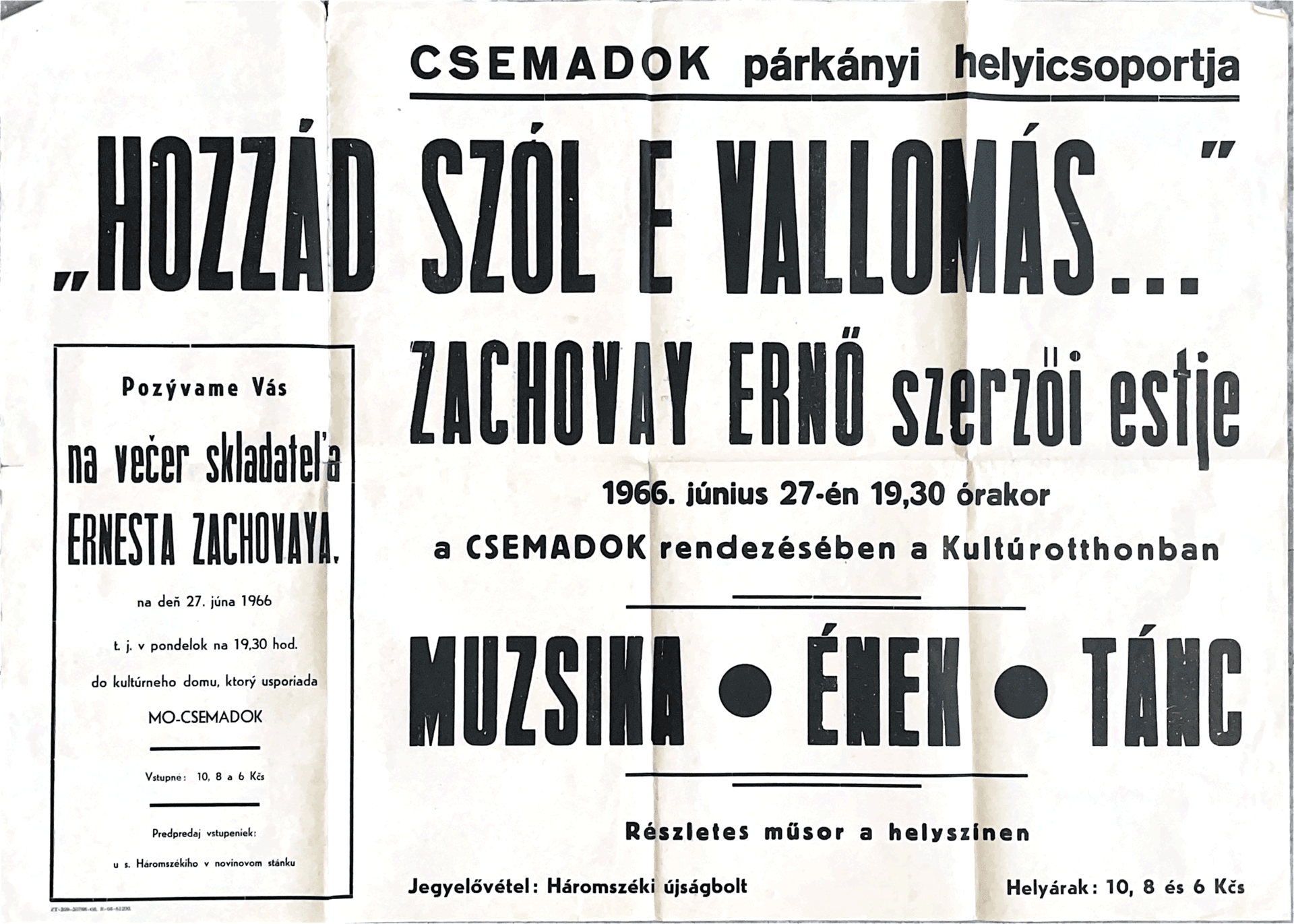
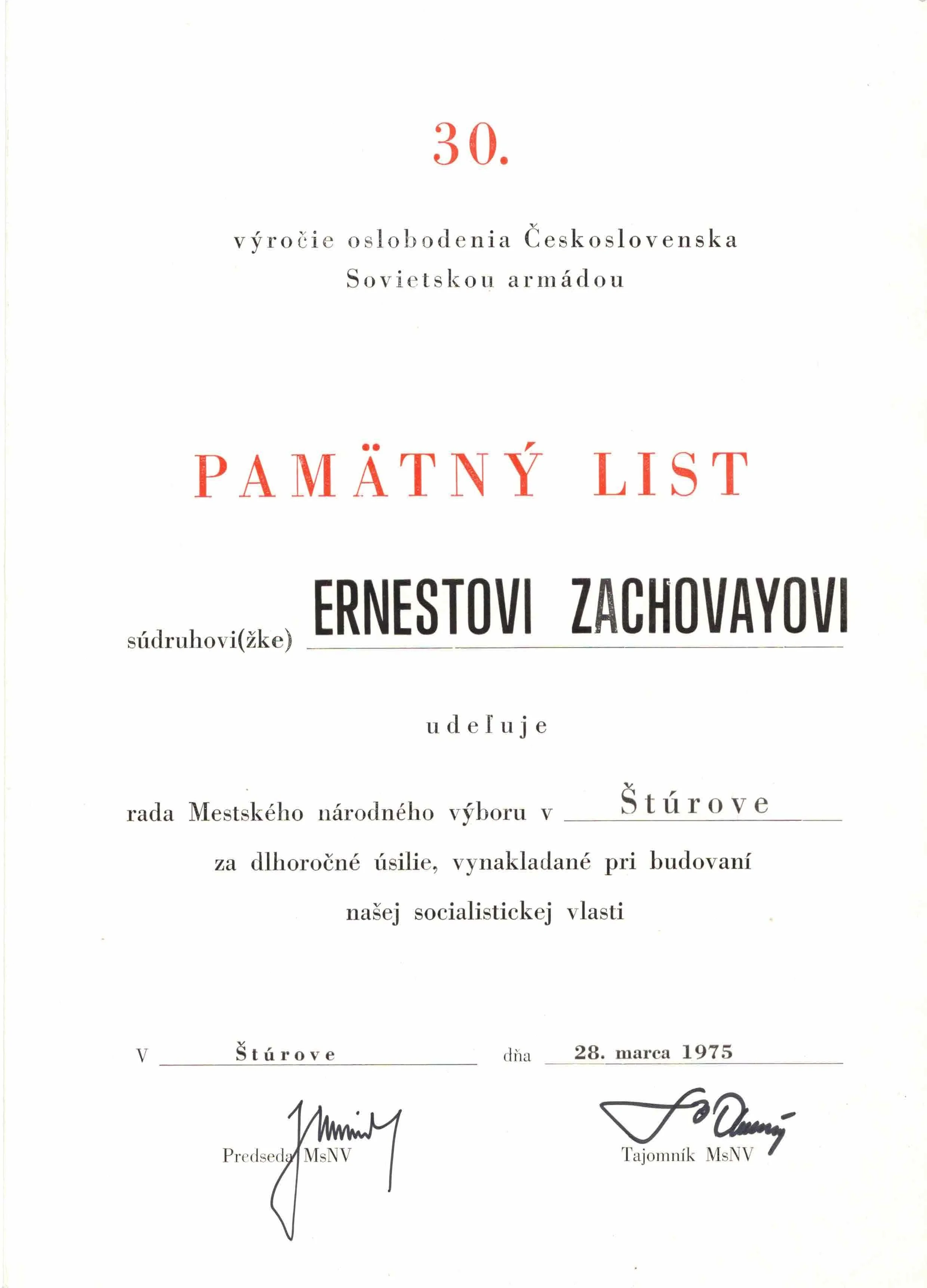
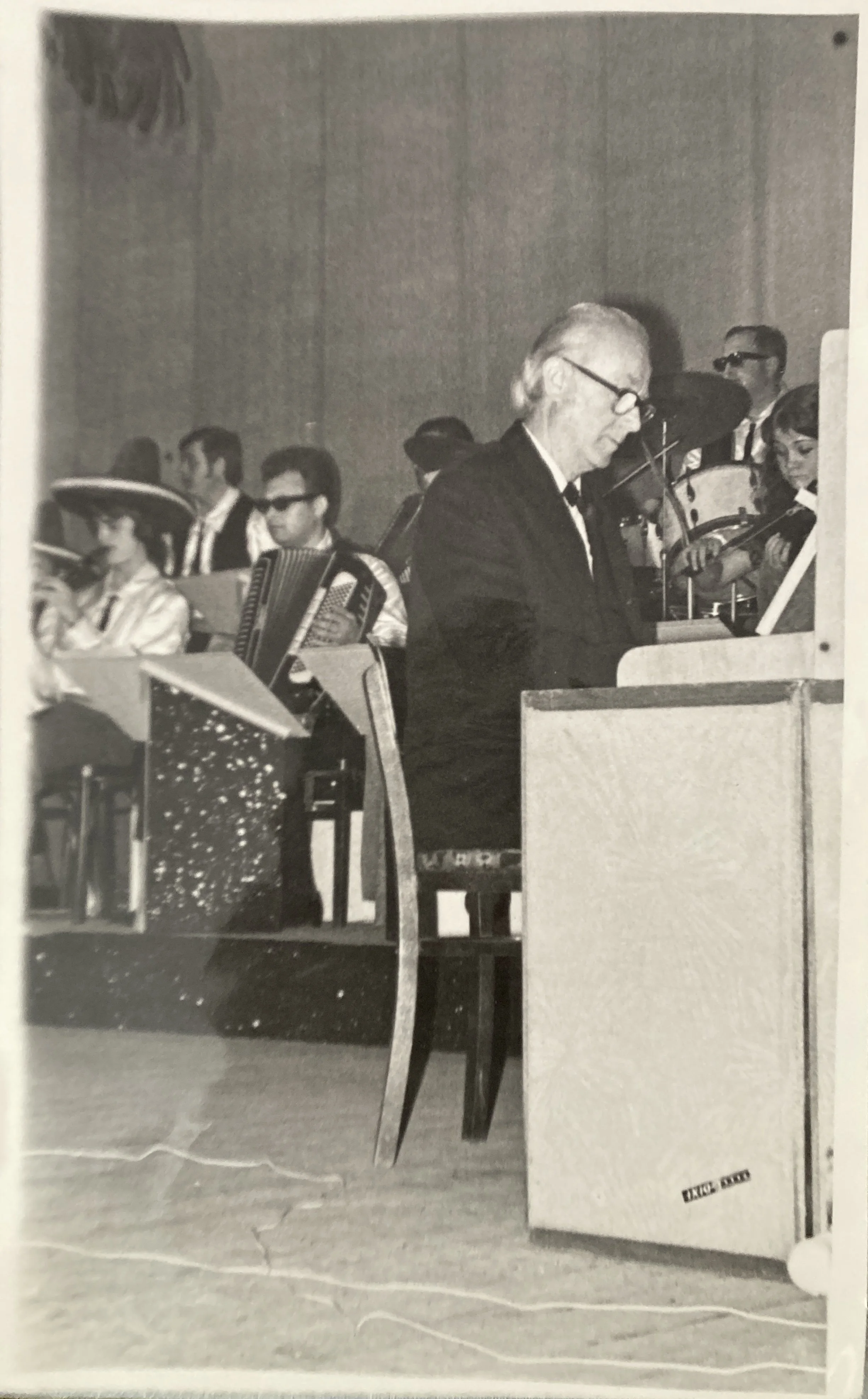
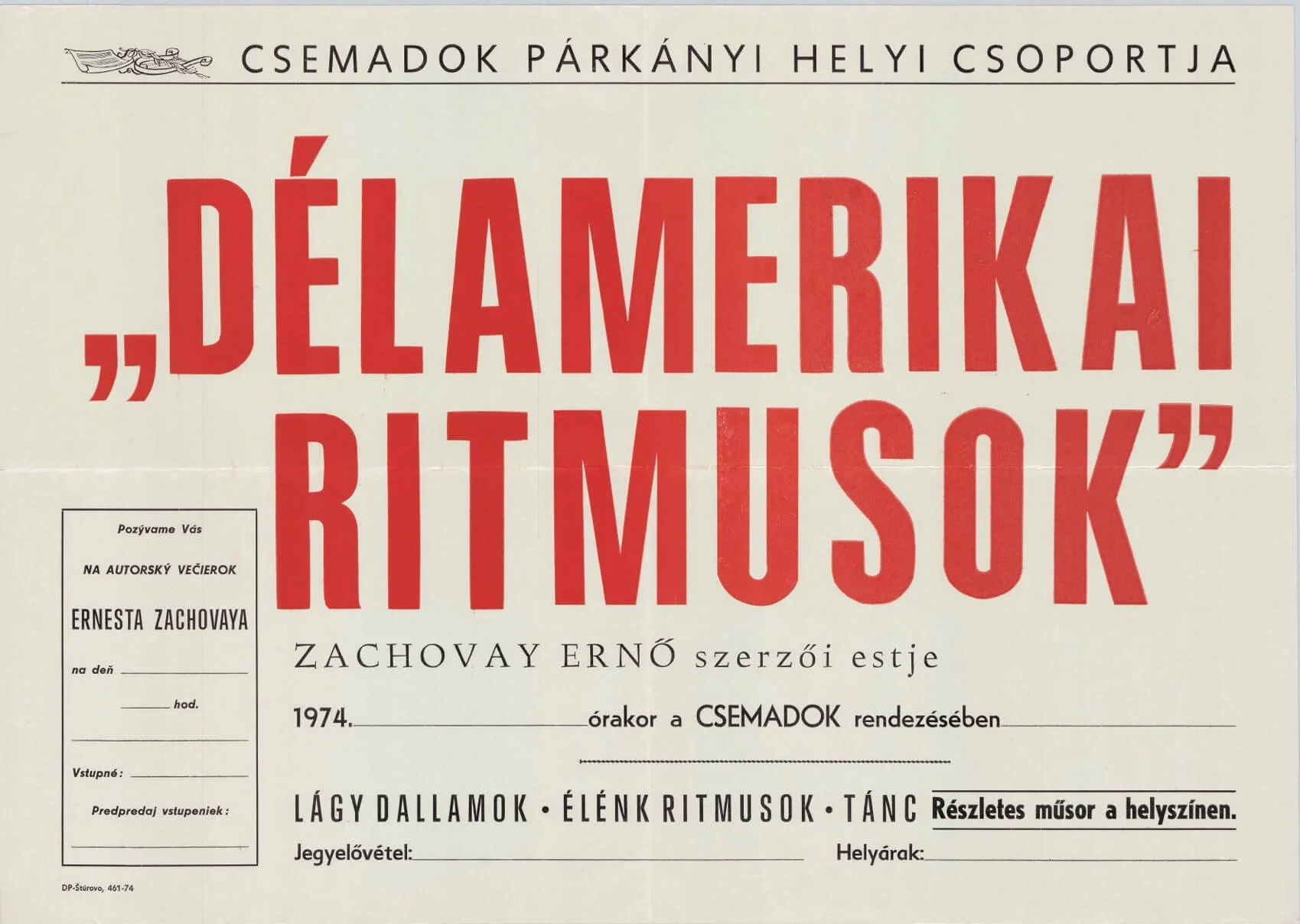
1986
Throughout his life, he composed more than 500 songs, some with his own lyrics, as well as several operettas and other works. In recognition of his lifelong contribution to the city’s cultural and social life, he received the Pro Urbe Award, presented by the mayor in honor of exceptional achievements.
archive
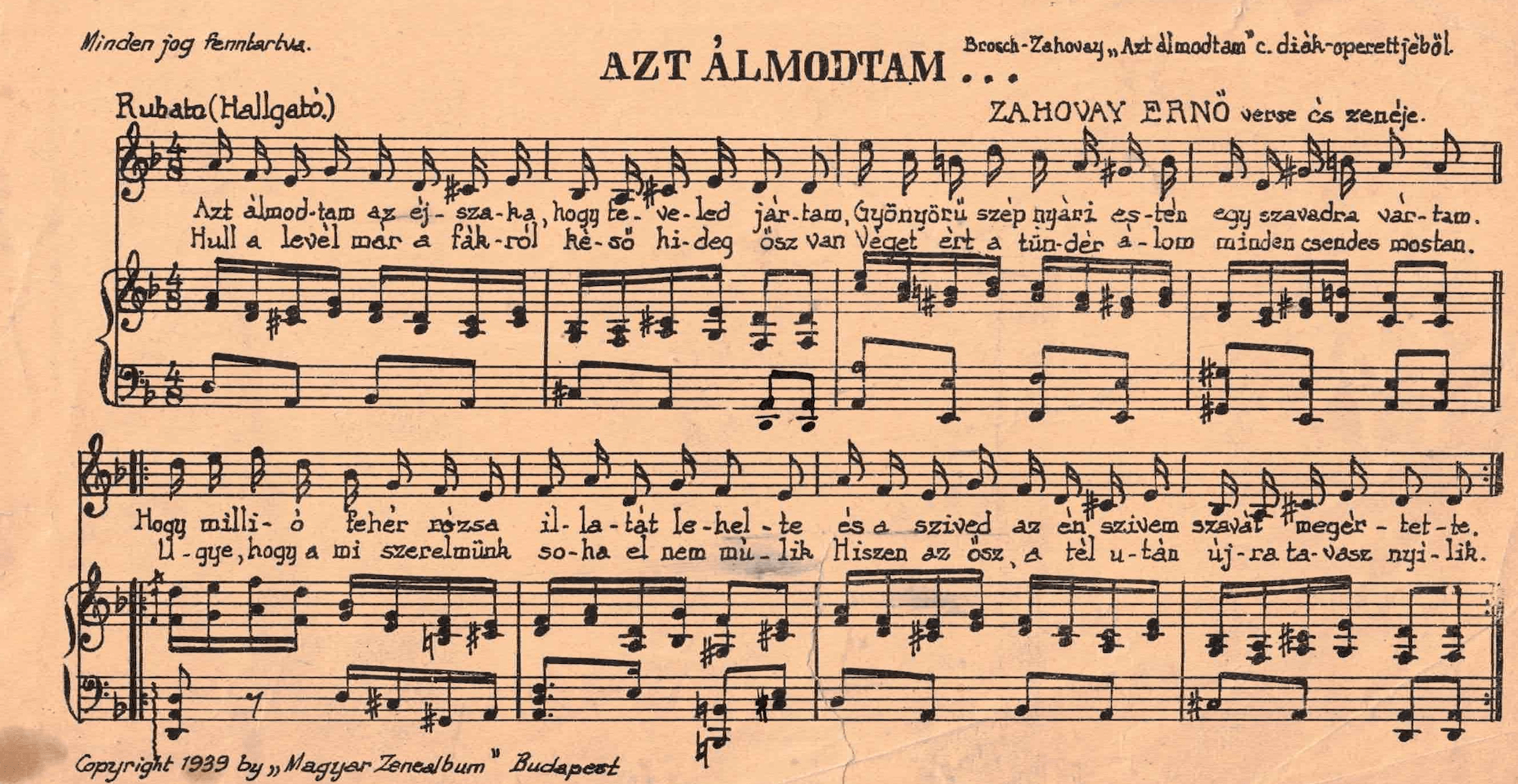
A turning point in Ernö Zahovay’s early composing career came in 1939. Together with his friend László Brosch, he created the student operetta Azt álmodtam... (I Dreamed...), which was performed with great success in Štúrovo and Nové Zámky. Zahovay submitted the title song, for which he wrote both the music and lyrics, to a prestigious composition competition in Budapest, where it was awarded a Gold Diploma. This achievement brought him nationwide recognition and prompted the renowned Budapest music publishing house Magyar Zenealbum to officially publish the printed sheet music of the composition that same year.
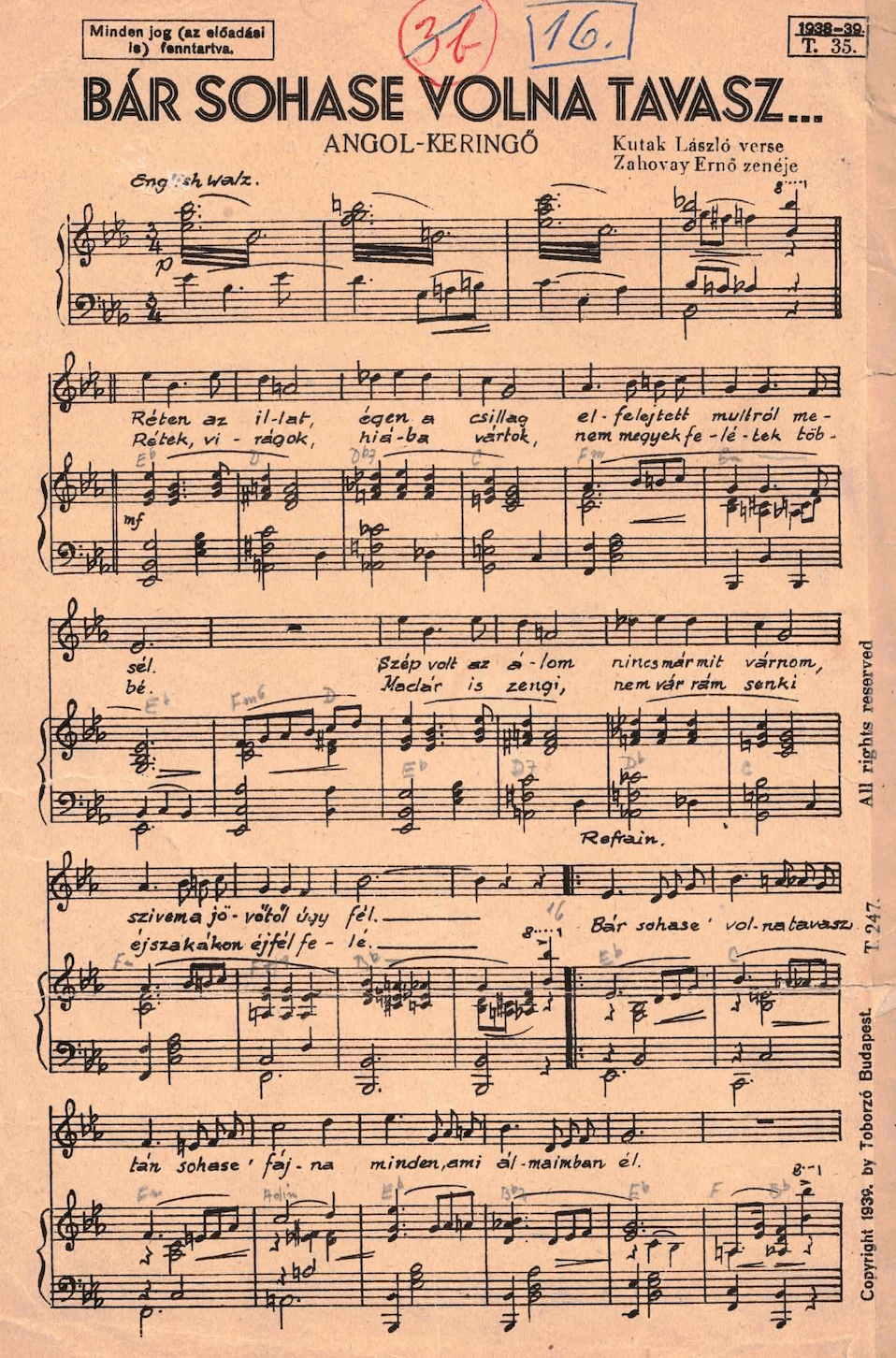
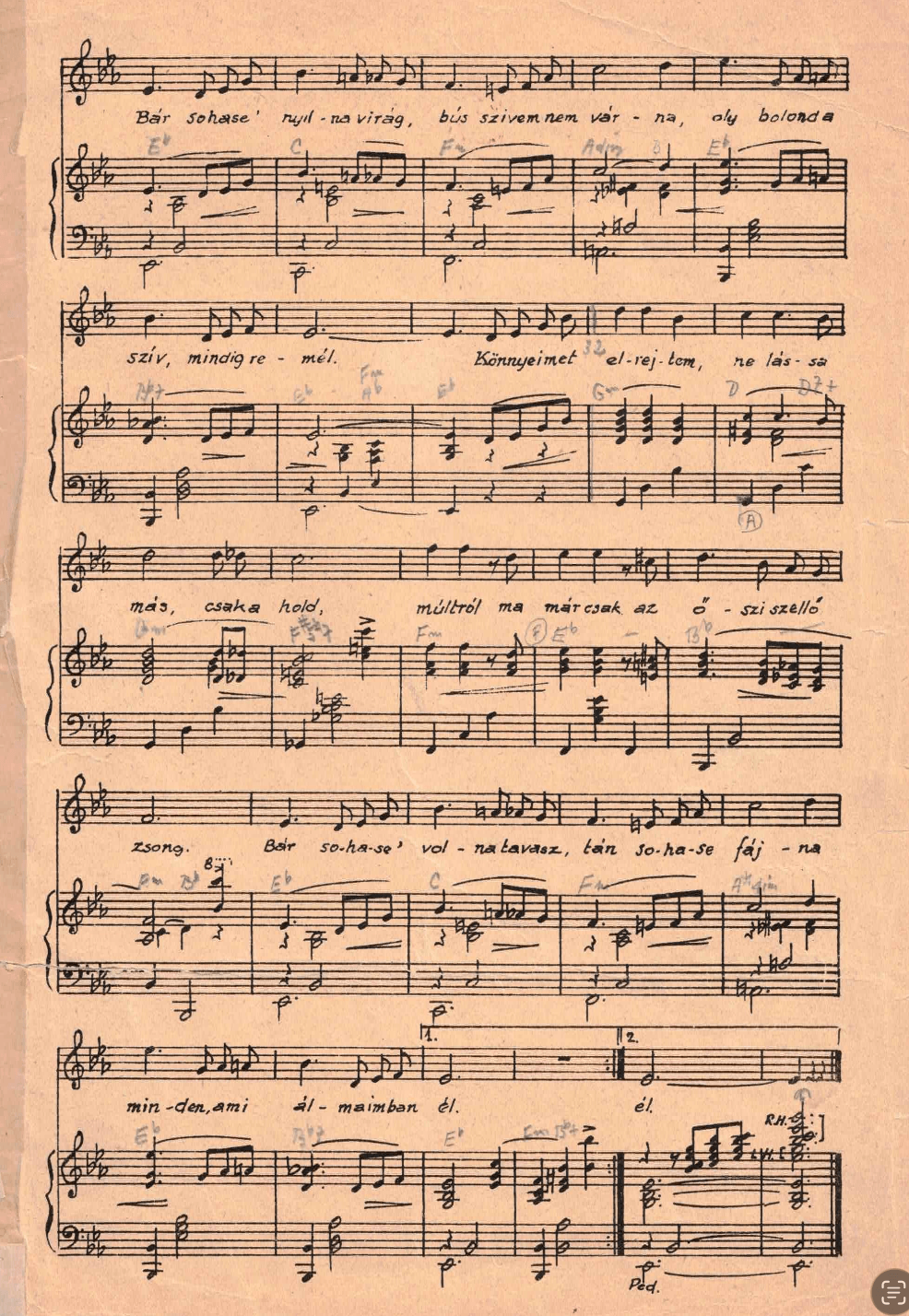
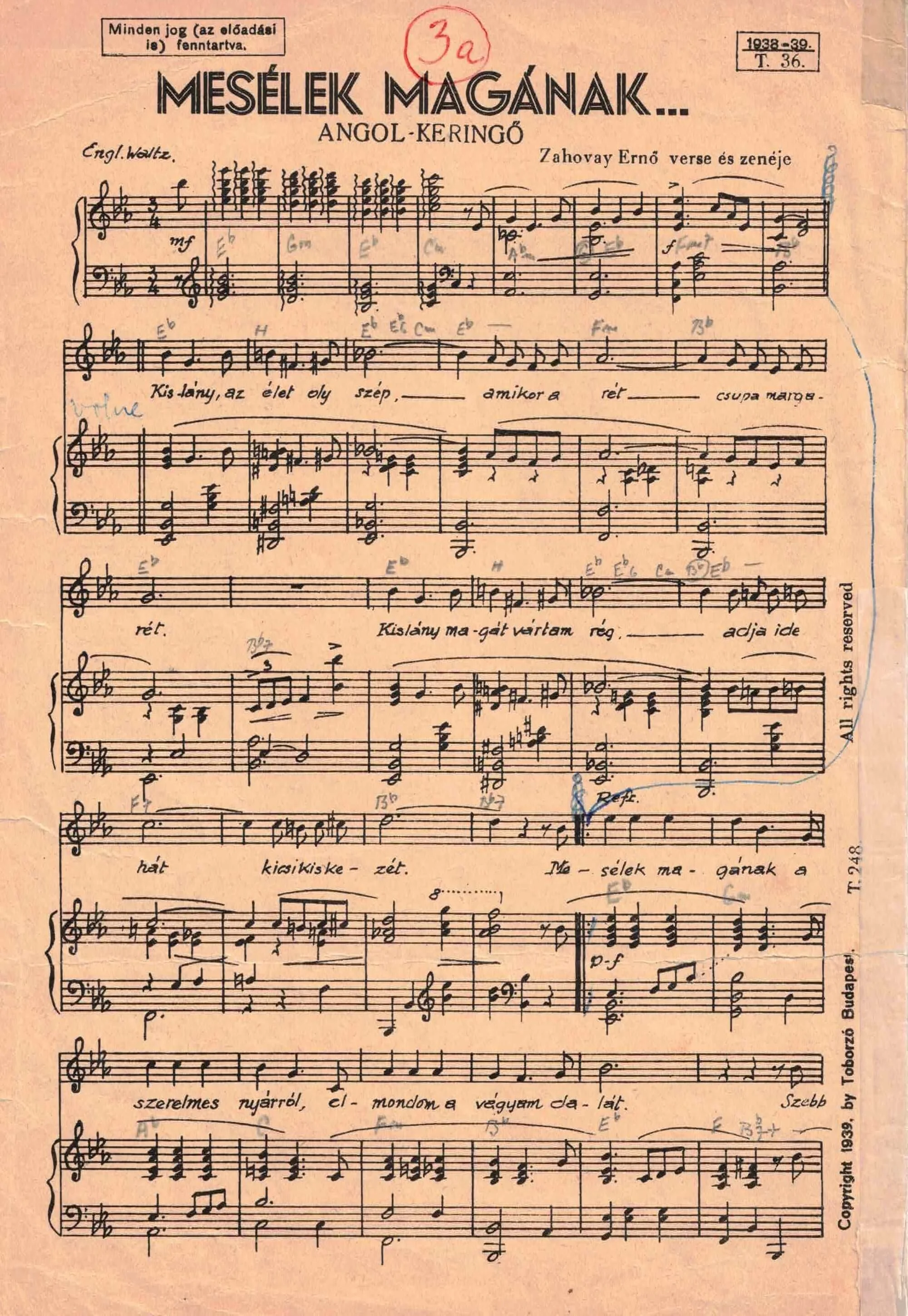
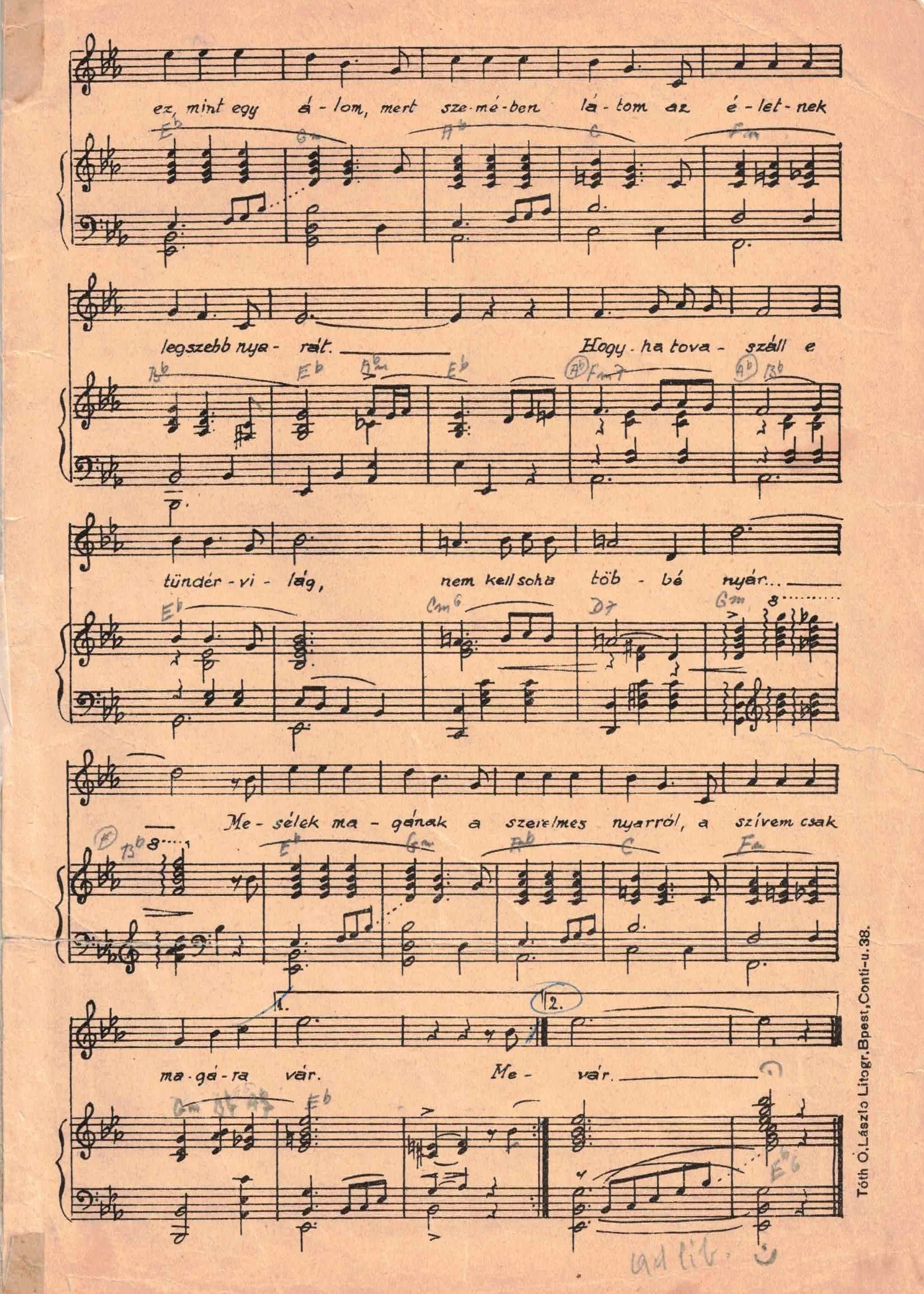
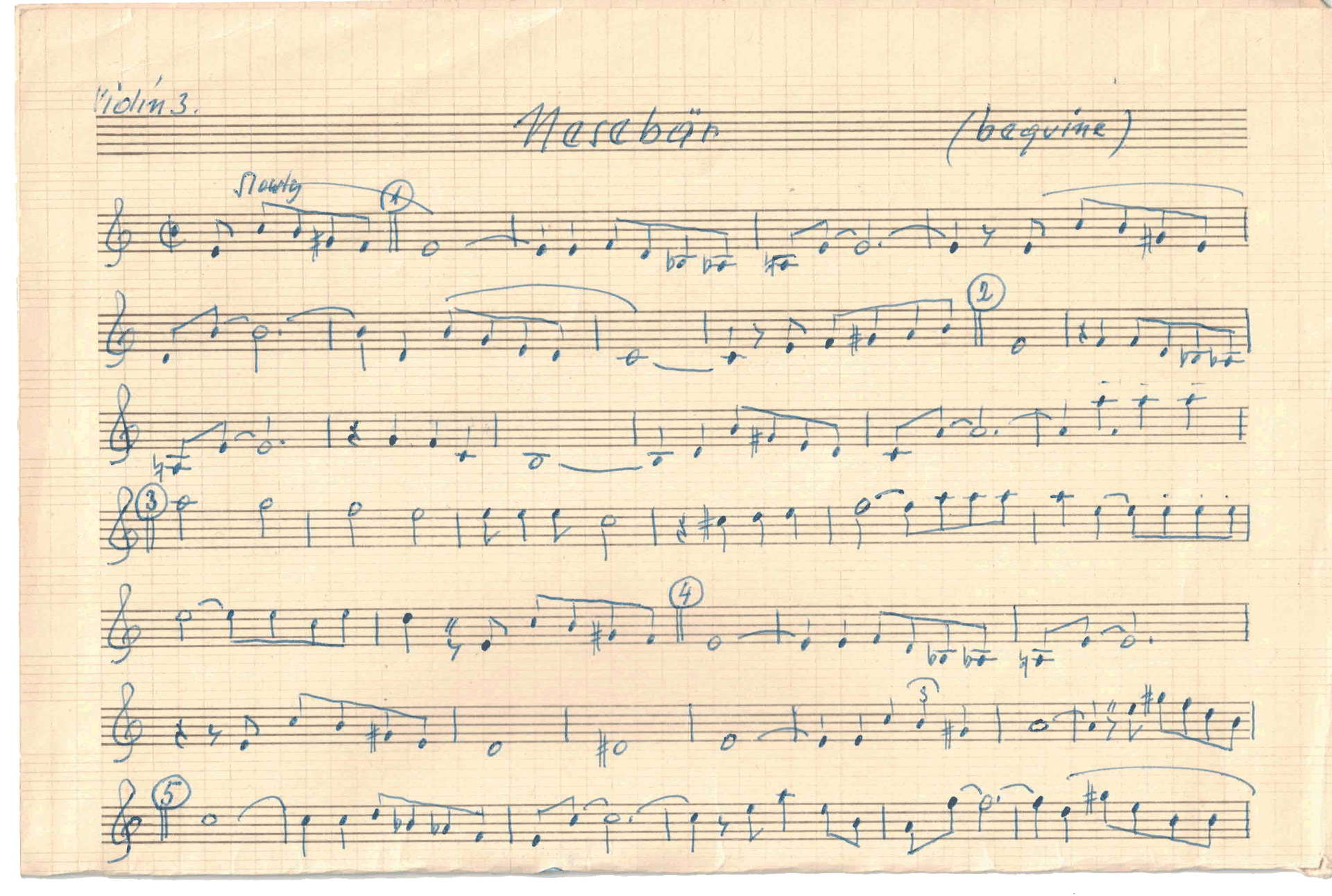
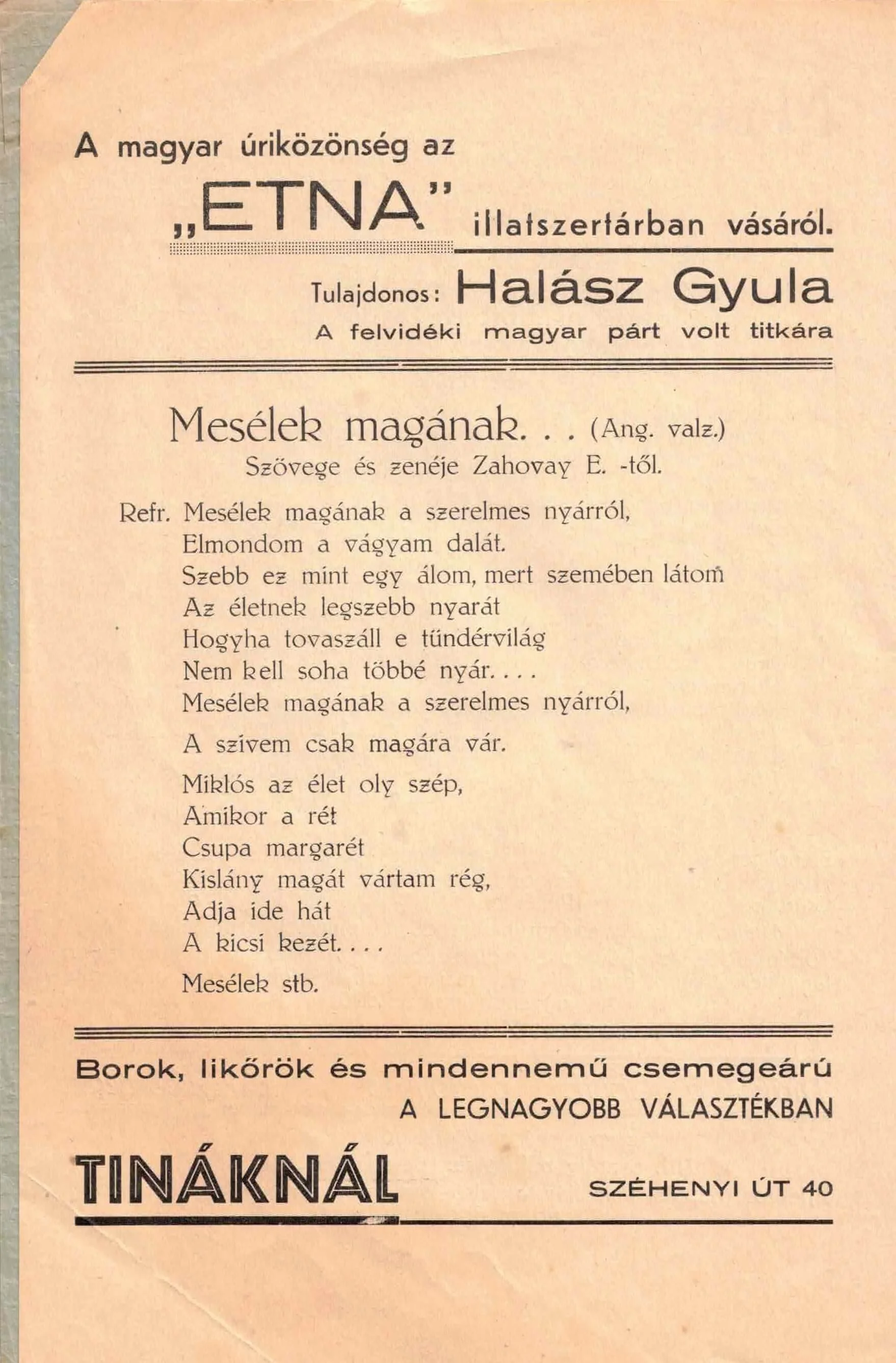
Among Ernö Zahovay’s most celebrated compositions were Bár sohase volna tavasz and Mesélek magának, works that embodied the elegant, café-inspired, and melancholic musical style that flourished during the interwar period. The sheet music for these pieces was published by the distinguished Budapest publishing house Toborzó and distributed as individual editions. The preserved copies testify to the exceptional professional quality of Zahovay’s compositions and their successful reach among audiences before the outbreak of the Second World War.
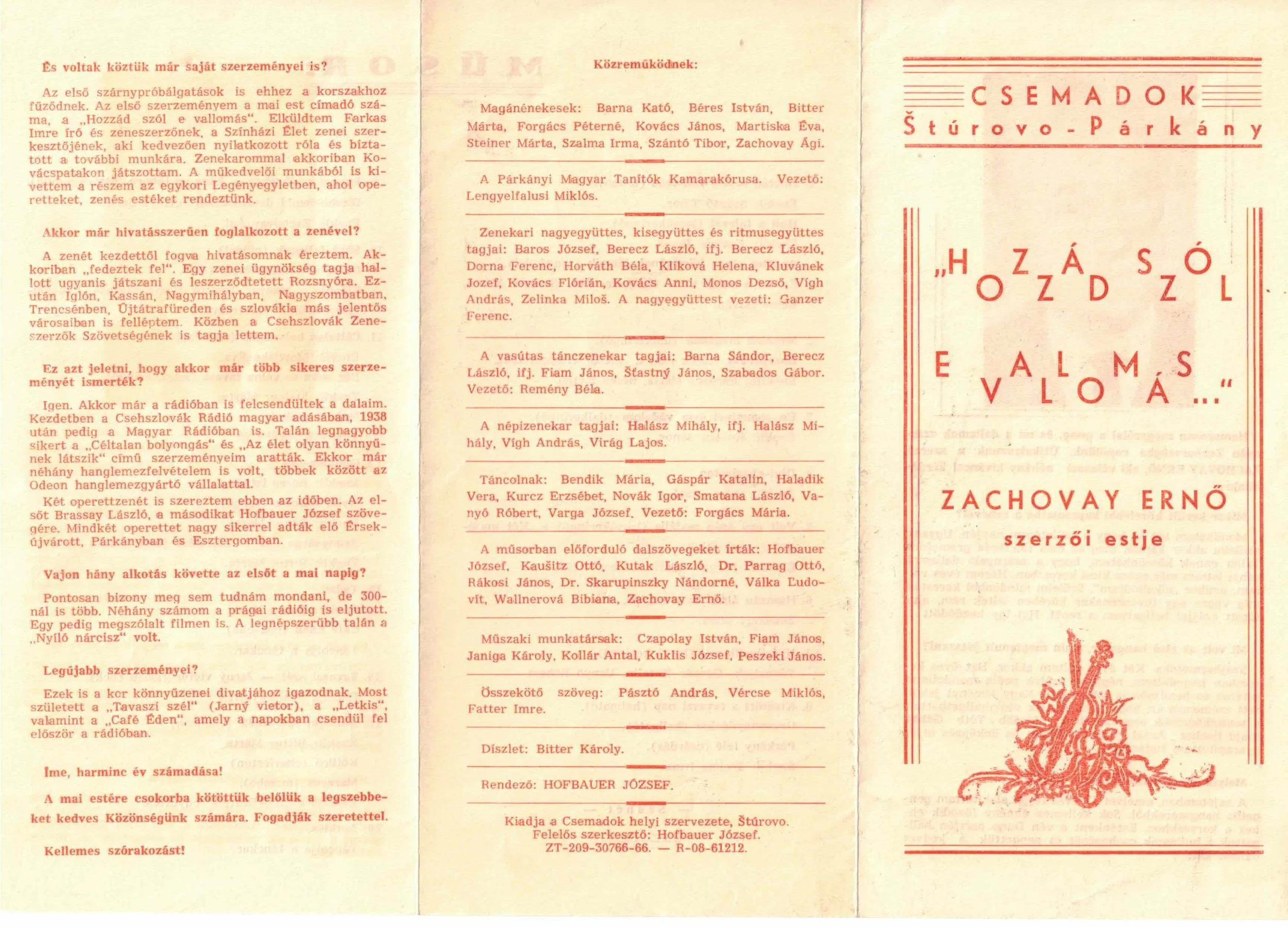
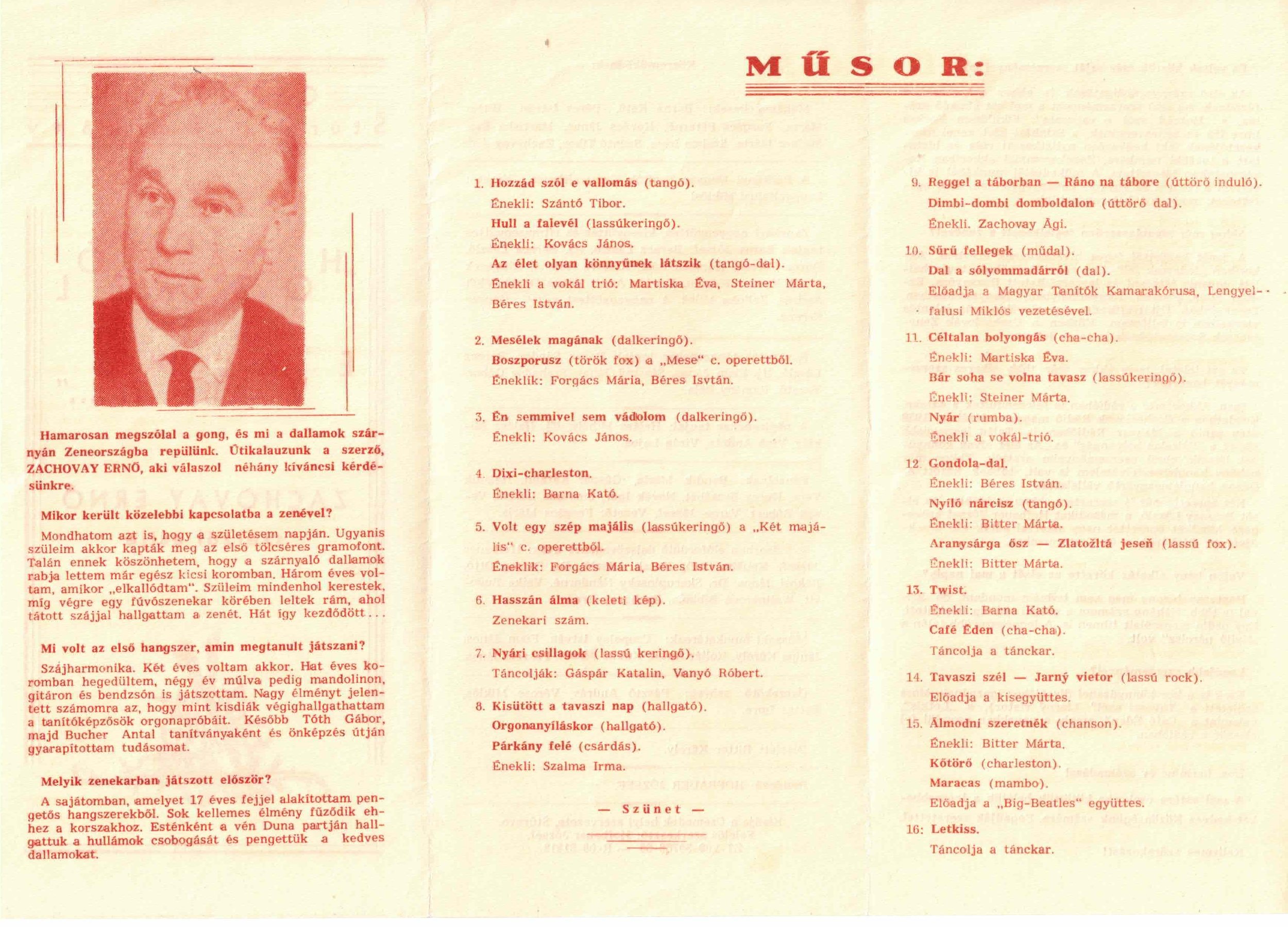
The original programme booklet from Ernö Zahovay’s Author Evening, held in Štúrovo in 1966 under the auspices of Csemadok, contains a portrait photograph of the composer, his introduction, and the complete programme of the event. The programme included a performance by his daughter, Ági Zahovayová, who presented his composition Reggel a táborban. The booklet represents a valuable testimony to Ernö Zahovay’s artistic work and the continuation of the musical tradition within his family.
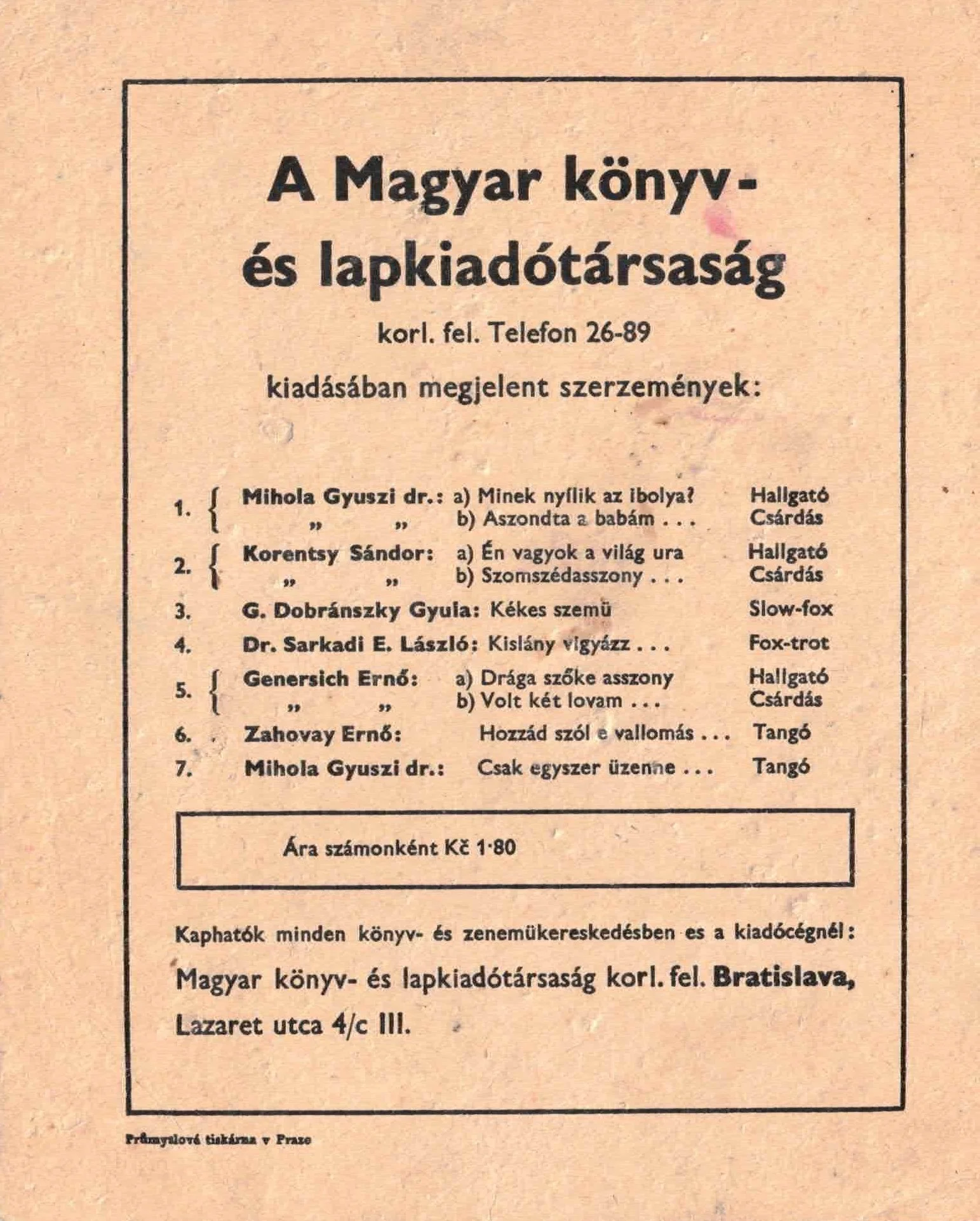
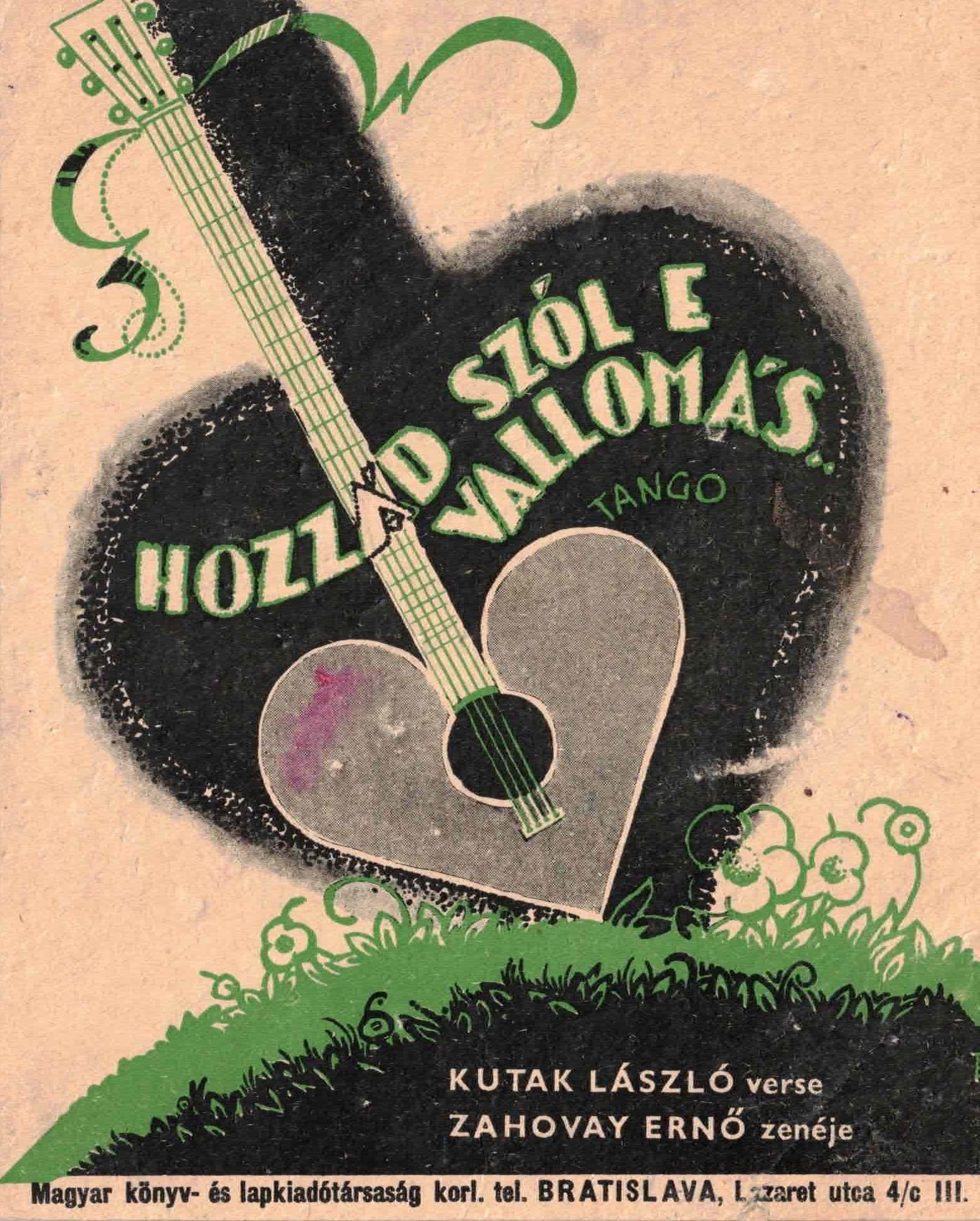
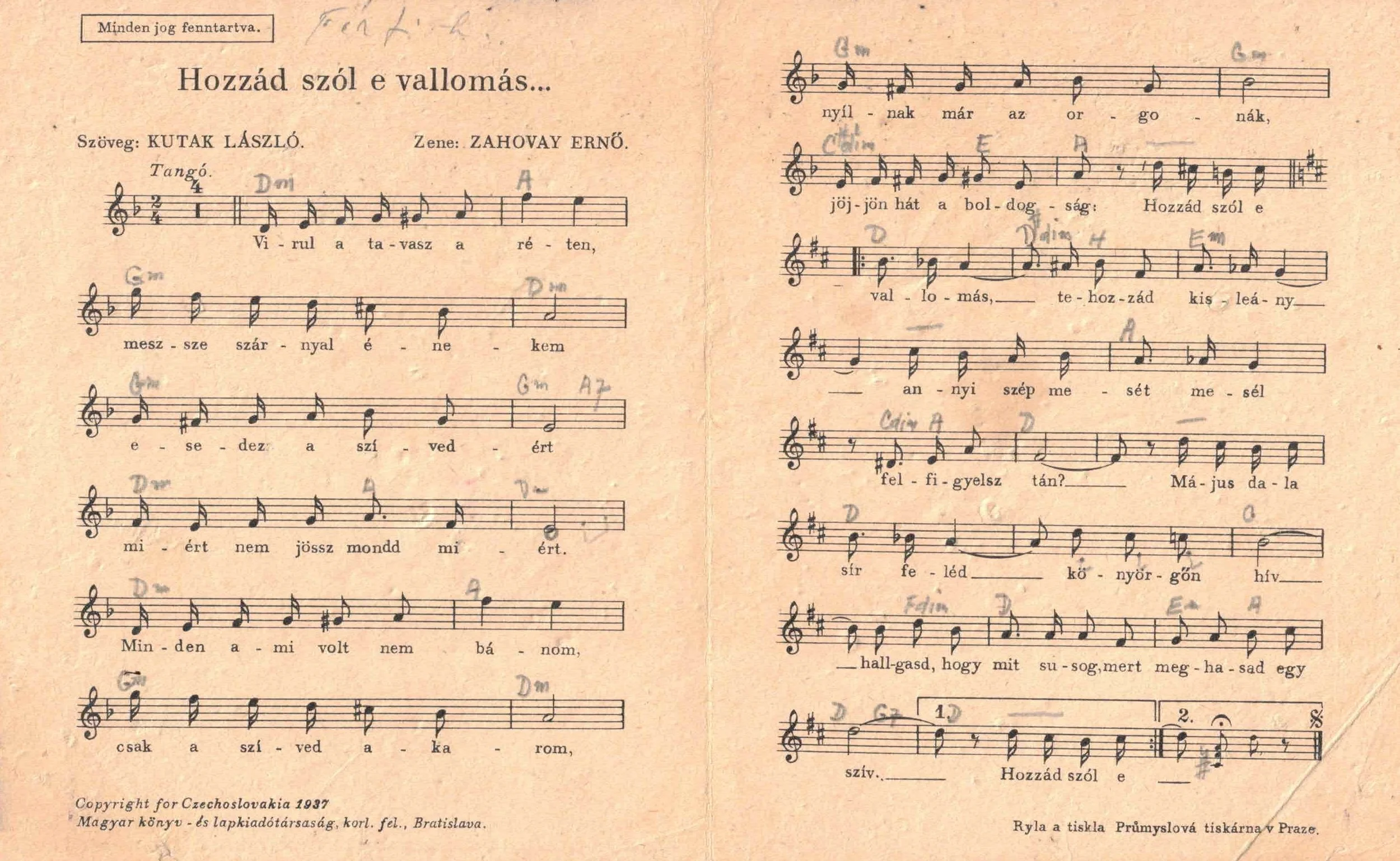
The sheet music for the tango Hozzád szól e vallomás is among the most valuable surviving documents of Ernö Zahovay’s work. Its printing in Prague and the use of the Kč currency clearly date it to the period before autumn 1938, when Štúrovo was still part of the First Czechoslovak Republic. On the reverse side, the publisher promotes its most successful hits, listing Ernö as number 6 among prominent Slovak-Hungarian and Budapest composers of popular music.
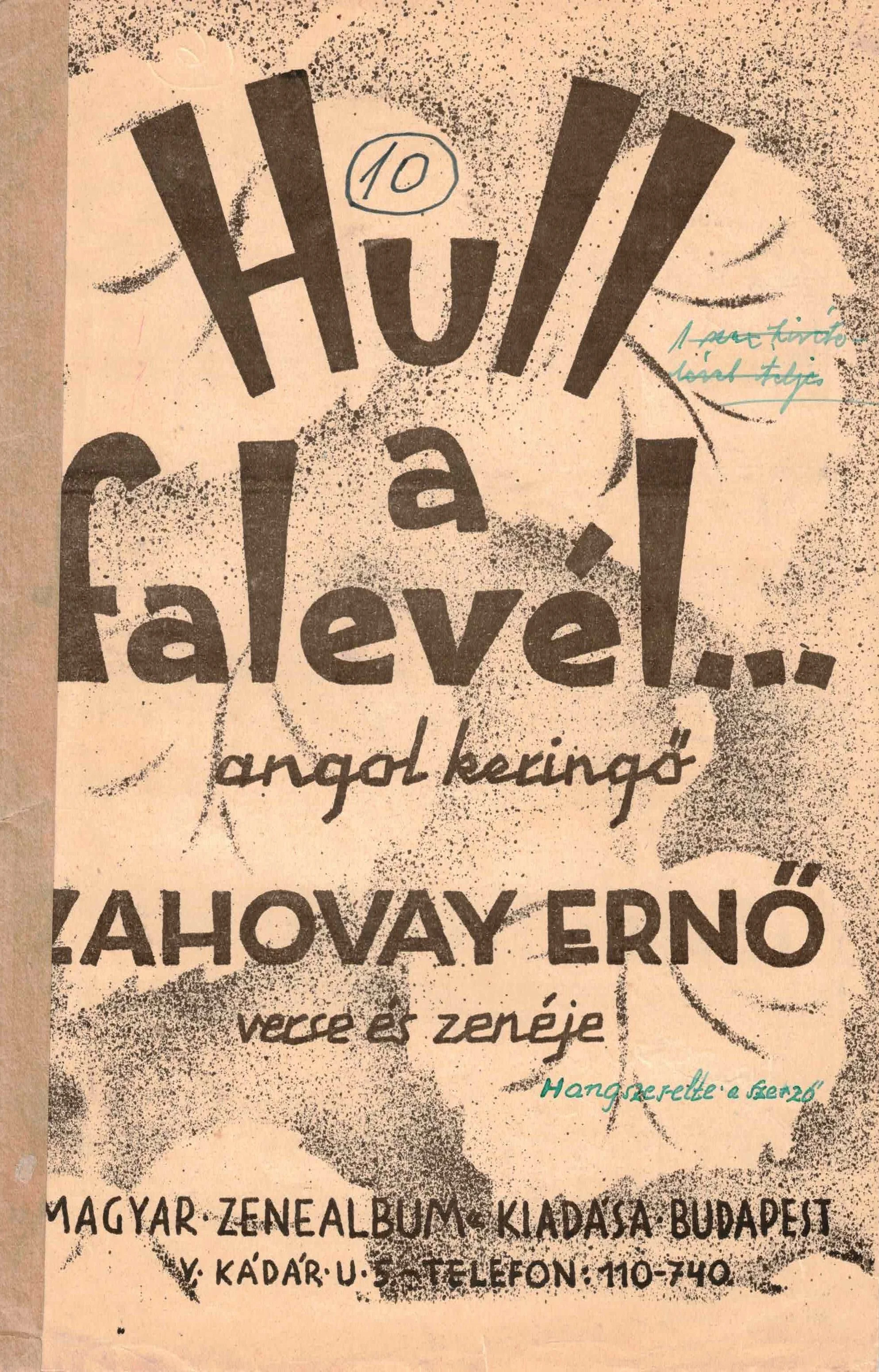
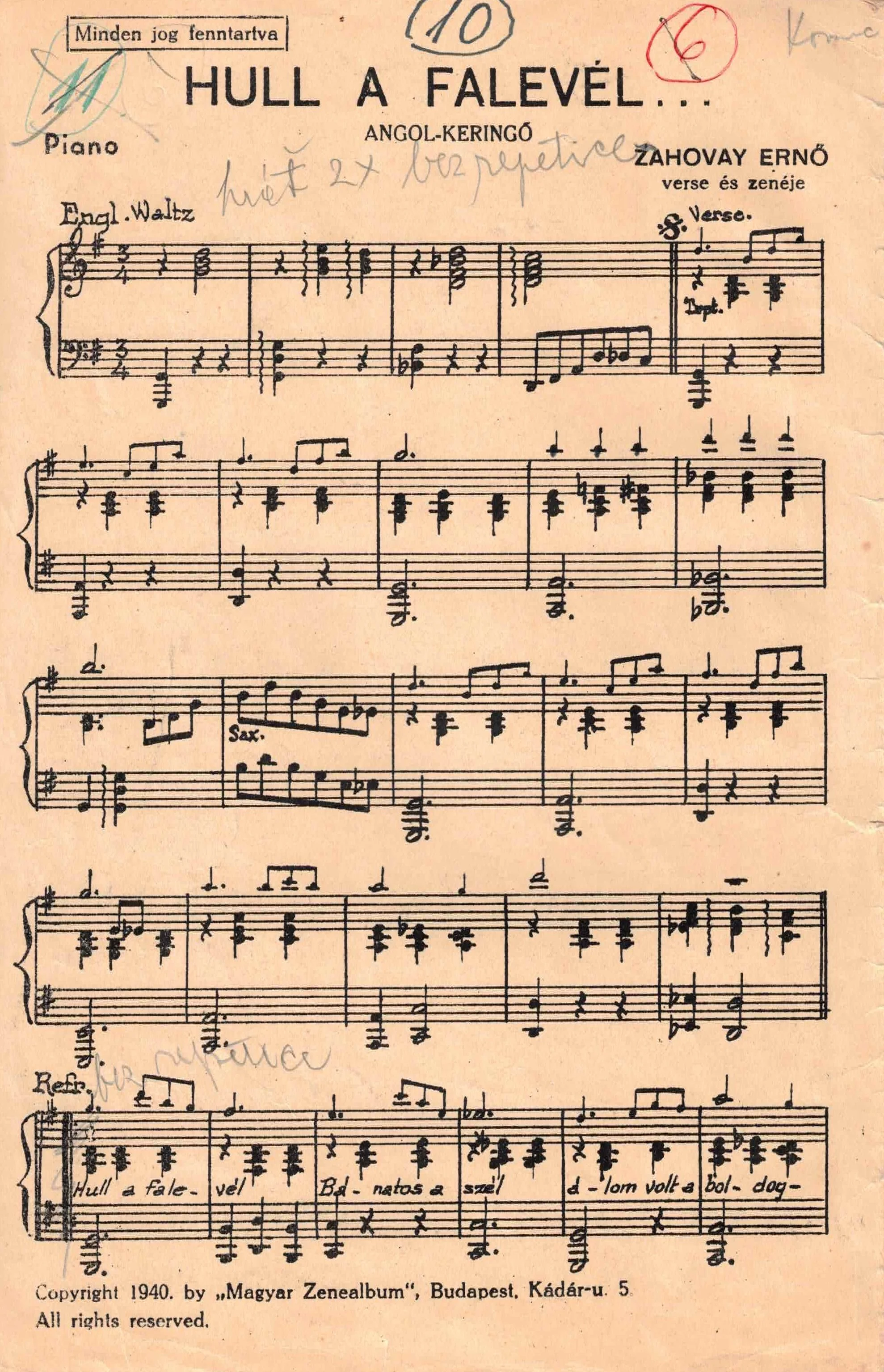
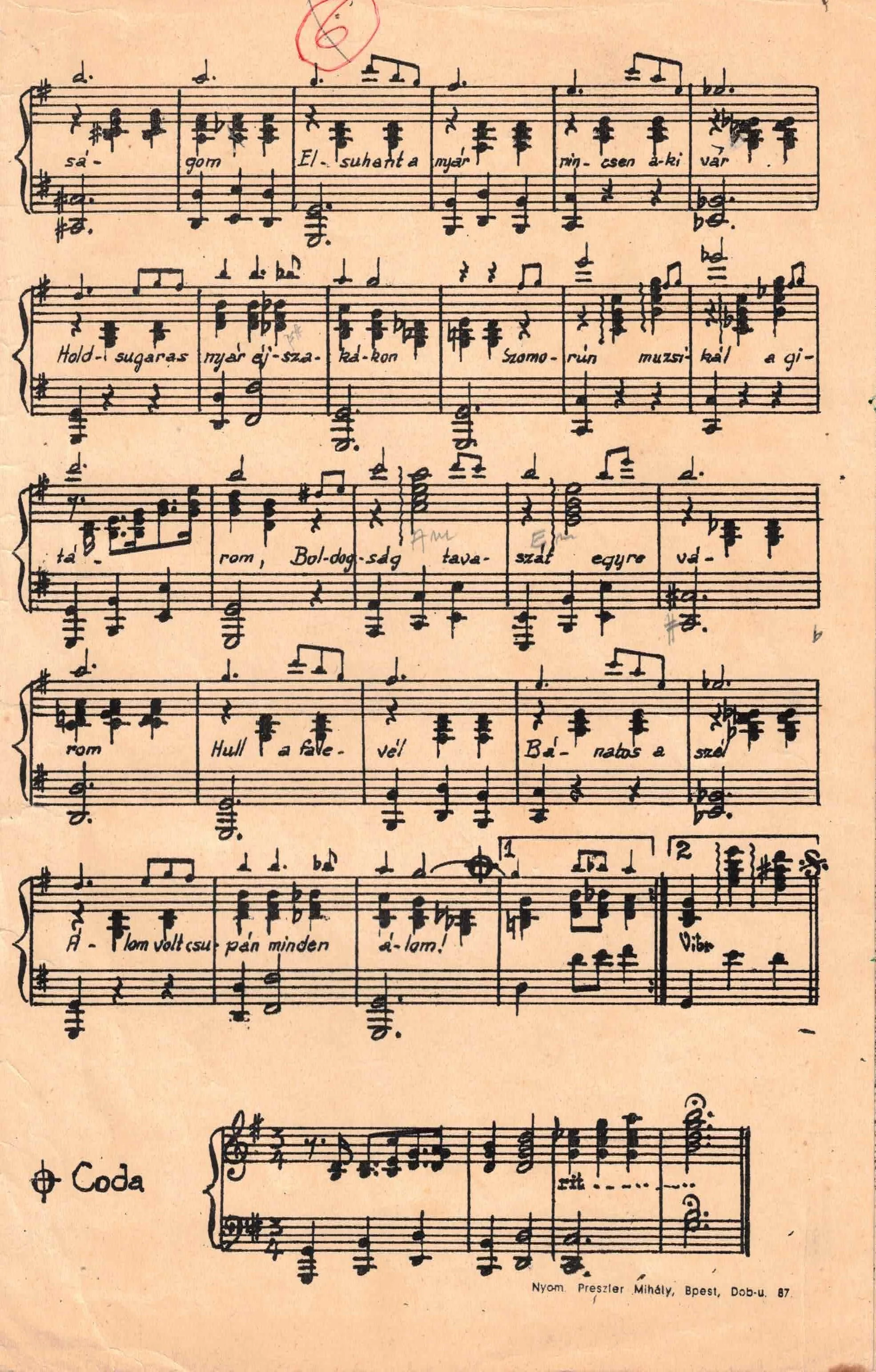
After his success in Budapest, Ernö Zahovay’s composing career continued to flourish in the following year. In 1940, the publishing house Magyar Zenealbum released his English waltz for piano Hull a falevél... (Falling Leaves...). The surviving copies of the sheet music also contain handwritten performance notes made during live café performances. This edition marks a symbolic conclusion to Zahovay’s successful pre-war period, when he was recognized as a respected composer of popular music in both Bratislava and Budapest.
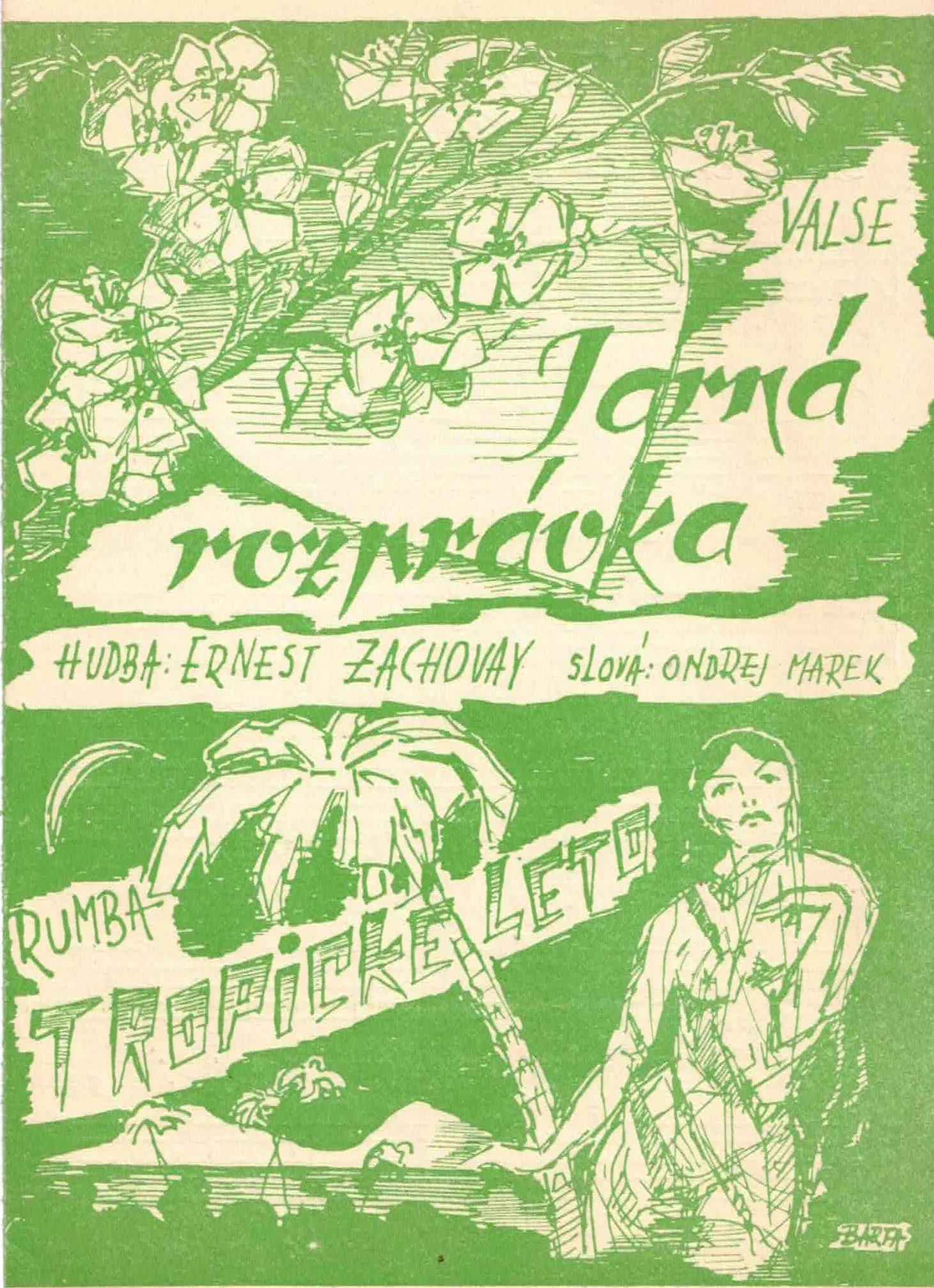
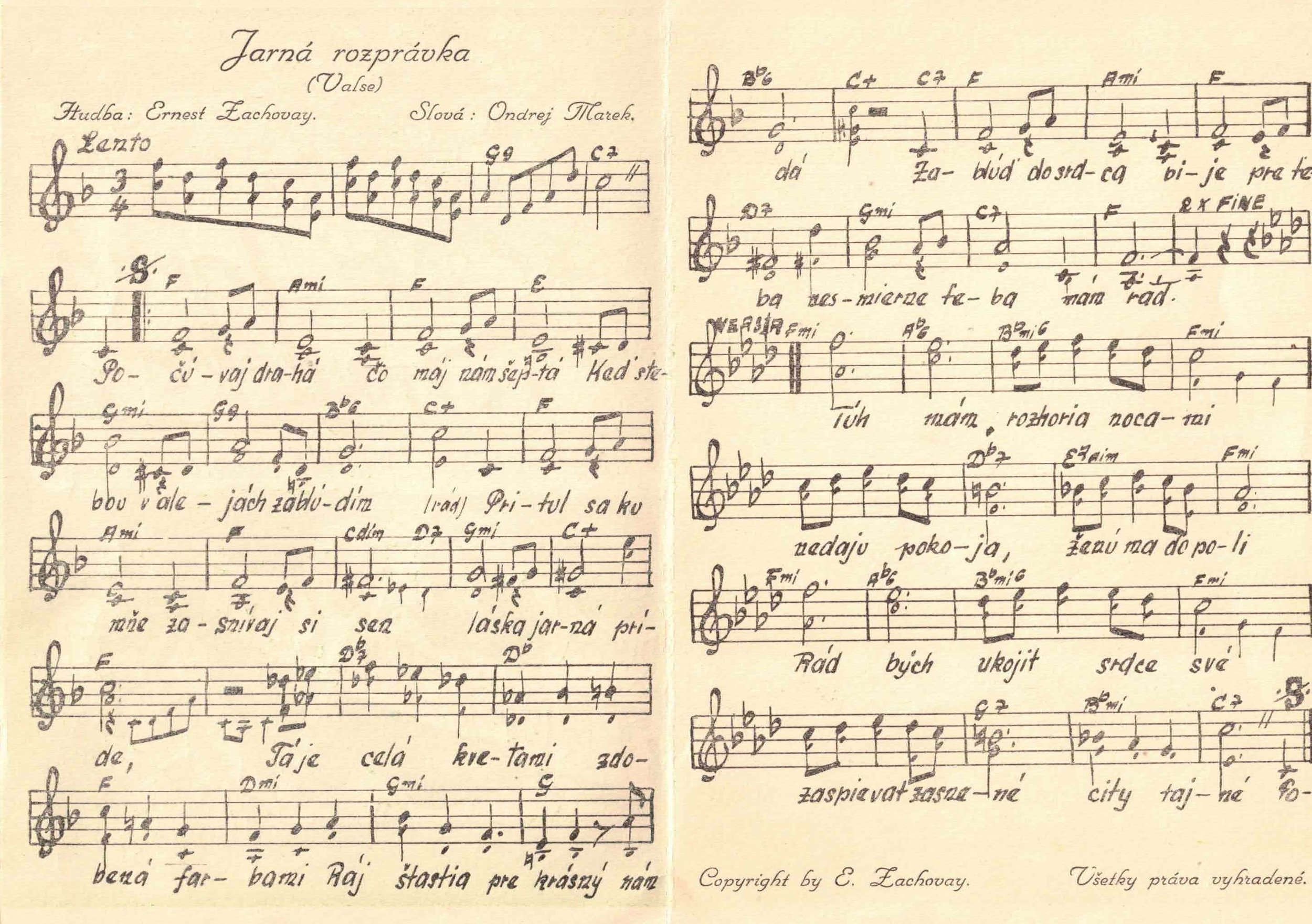
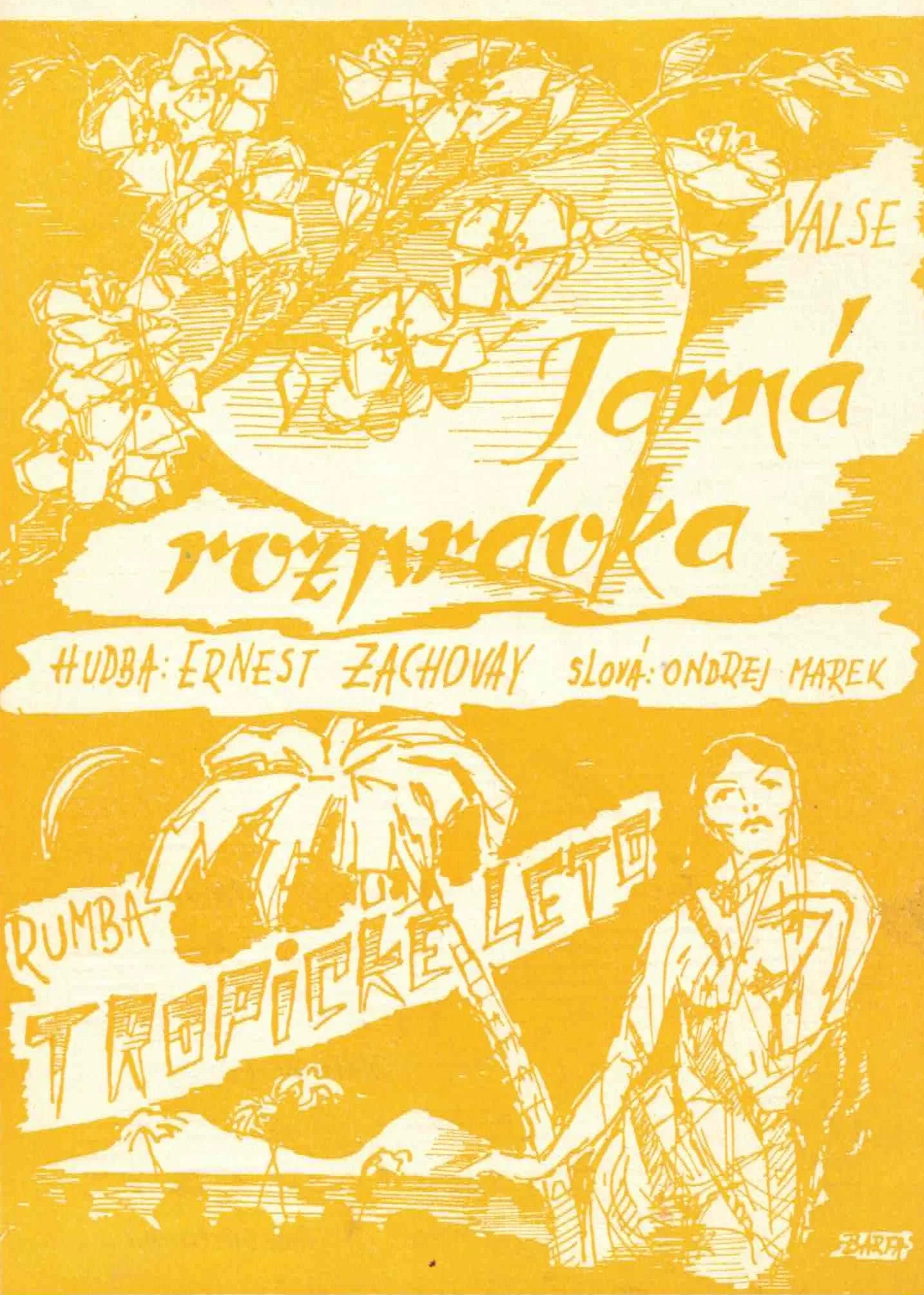
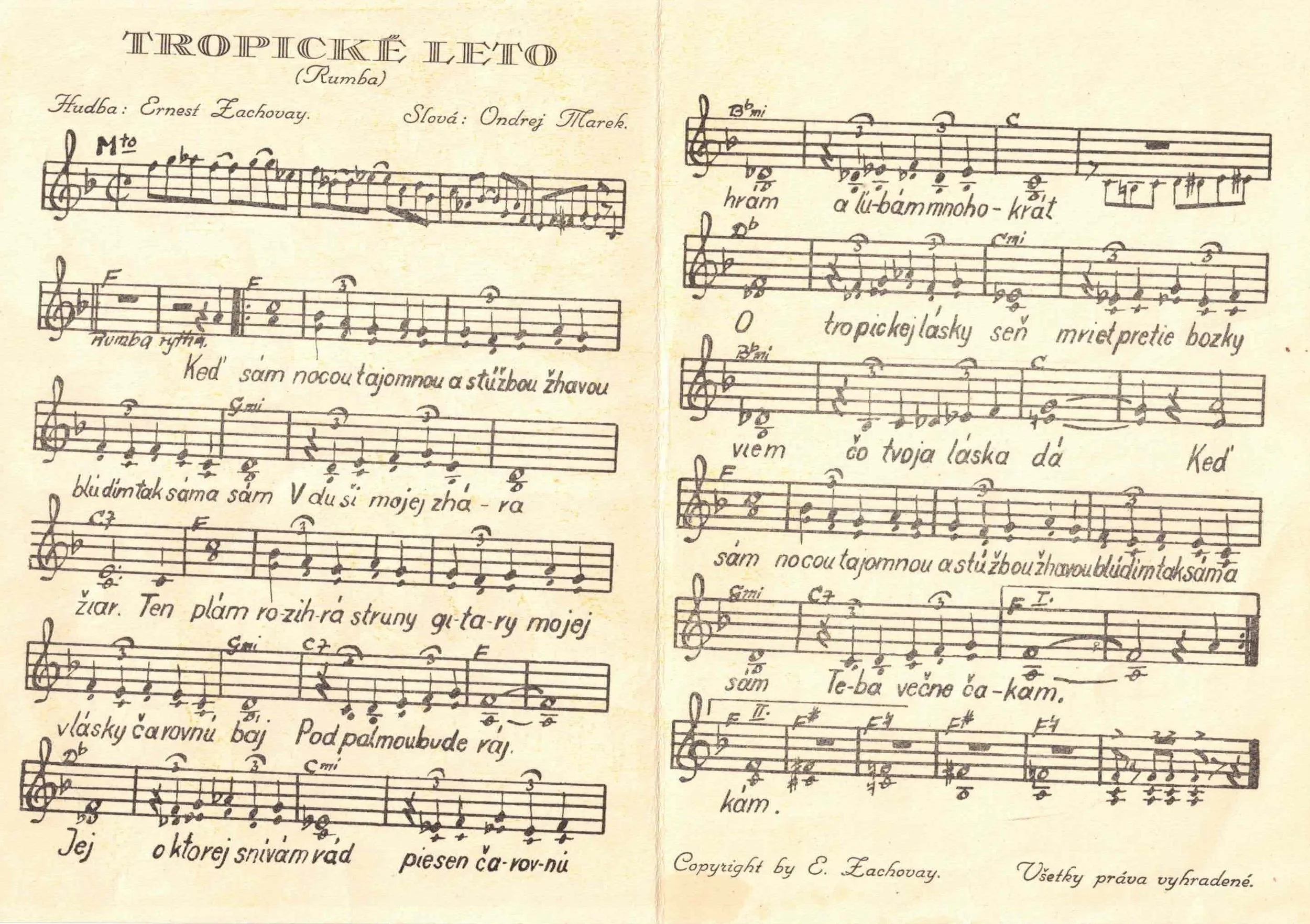
The sheet music booklet contains the compositions Jarná rozprávka (waltz) and Tropické leto (rumba), linking Ernö Zahovay’s musical work with the visual art of academic painter Július Barta, a family friend of the composer. The signature “BARTA” in the lower right corner of the cover confirms the authorship of the title illustration, making this edition a unique regional artefact.
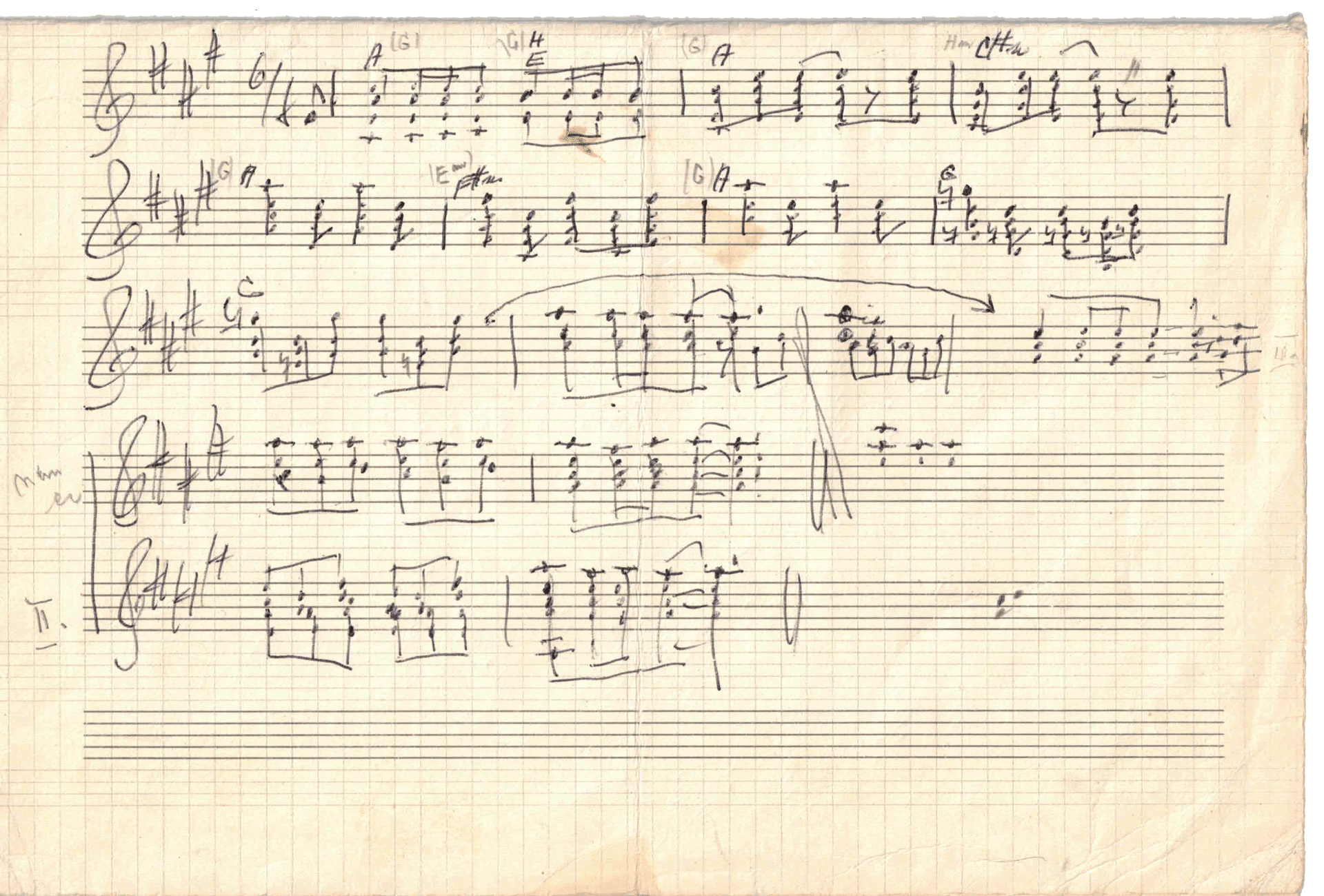
Based on the style of the handwriting, chord notation, and musical script, the booklet can be dated to the post-war period, approximately between 1946 and 1949. After joining the Slovak Authors Association, Ernö Zahovay carefully prepared the musical parts by hand, which were then reproduced through small-scale duplication for use by his ensemble.
An additional noteworthy detail is the text accompanying the waltz Rád bych ukojit srdce své, which reflects the characteristic lyrics blend Slovak and Czech Together with the elegant salon-style arrangement they capture the typical post-war café music. This combination contributes to the piece’s distinctive atmosphere and captures the spirit of post war café the music.
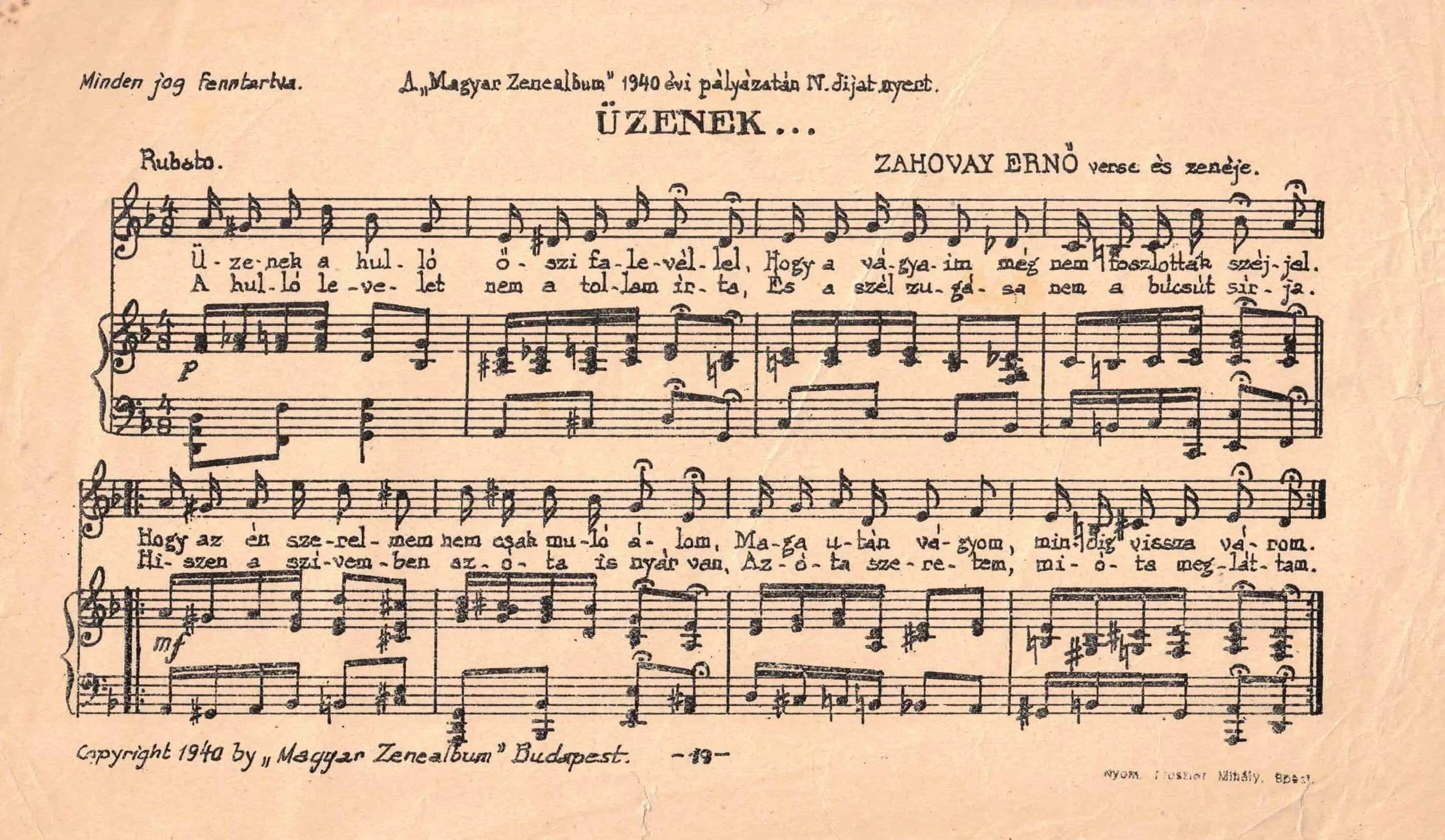
The original 1940 printed sheet music for the song Üzenek… documents another major milestone in Zahovay’s career. For this song, he wrote both the music and the lyrics, which won the prestigious fourth prize in a nationwide composition competition organized by Magyar Zenealbum in Budapest. The piece provides tangible evidence of his recognition as a composer and lyricist, as well as his creative success on the eve of World War II.
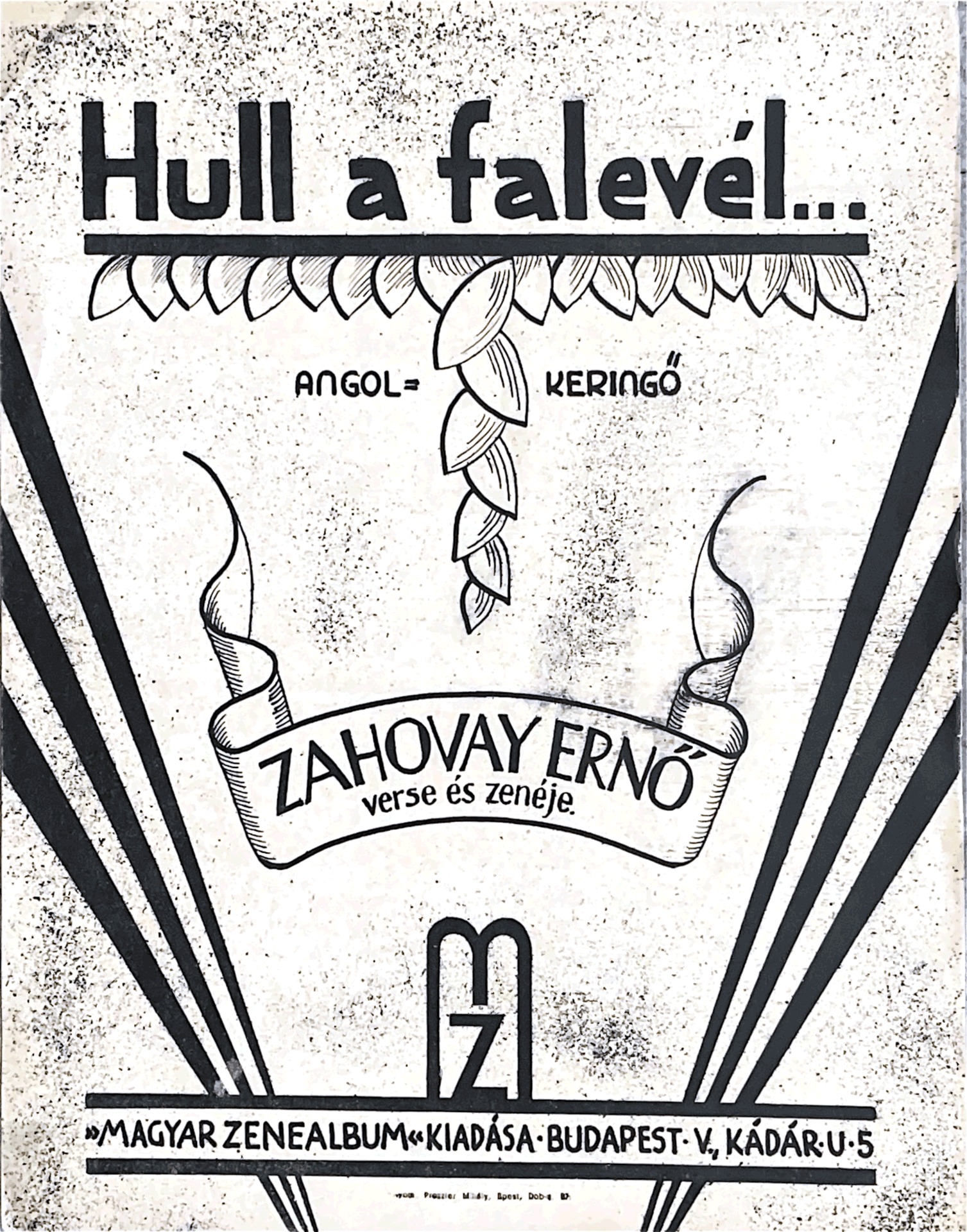
This detailed view of the complete title cover of the 1940 sheet music edition of the successful English waltz Hull a falevél from 1940, published by Magyar Zenealbum in Budapest, presents a complete Look at the artwork. The design, featuring falling autumn leaves and an elegant ribbon bearing the composer’s name, Ernö Zahovay, is a faithful example of the high-quality visual style characteristic of Budapest music publications of that period.
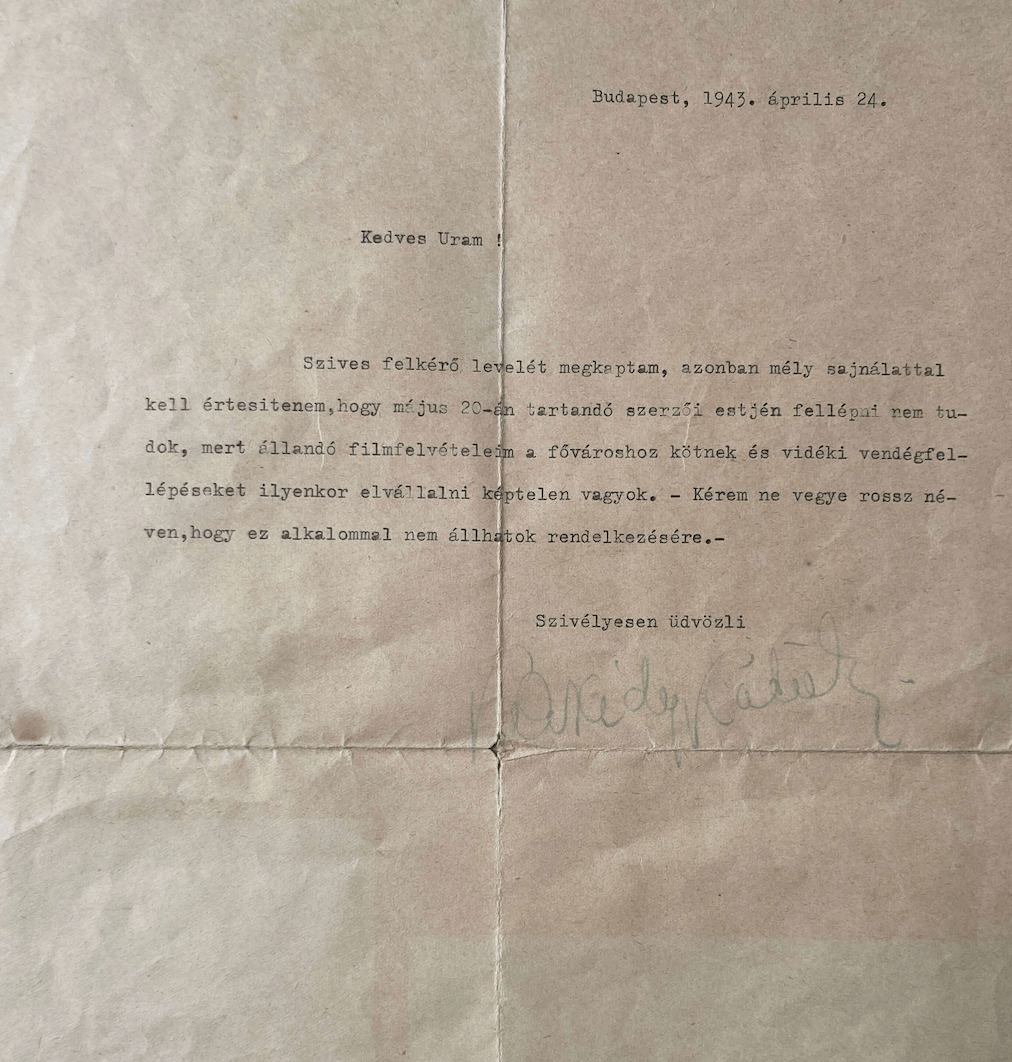
Katalin Karády (1910–1990) was one of Hungary’s most popular actresses and singers as well as a defining icon of the silver screen between 1939 and 1945. With her deep, captivating voice, enigmatic presence, and emancipated style—she was among the first Hungarian film actresses to wear trousers and appear on screen smoking a cigarette—she had a profound influence on the era’s image of feminine beauty.
She wrote this letter to Ernö at the height of her fame. However, only one year later, in 1944, following the arrival of German troops in Hungary, she was arrested by the Gestapo on suspicion of espionage and subjected to three months of brutal torture. Despite the extreme danger, she helped save dozens of Jewish children and families from persecution and death, reportedly bribing guards on the banks of the Danube with her own jewellery and providing refuge for people in her apartment. In recognition of these courageous acts, she was posthumously awarded Israel’s highest honour, the title of Righteous Among the Nations. Like Zahovay, Karády also found little acceptance from the new communist regime after the war. Her films were banned, and in 1951 she emigrated to the United States.
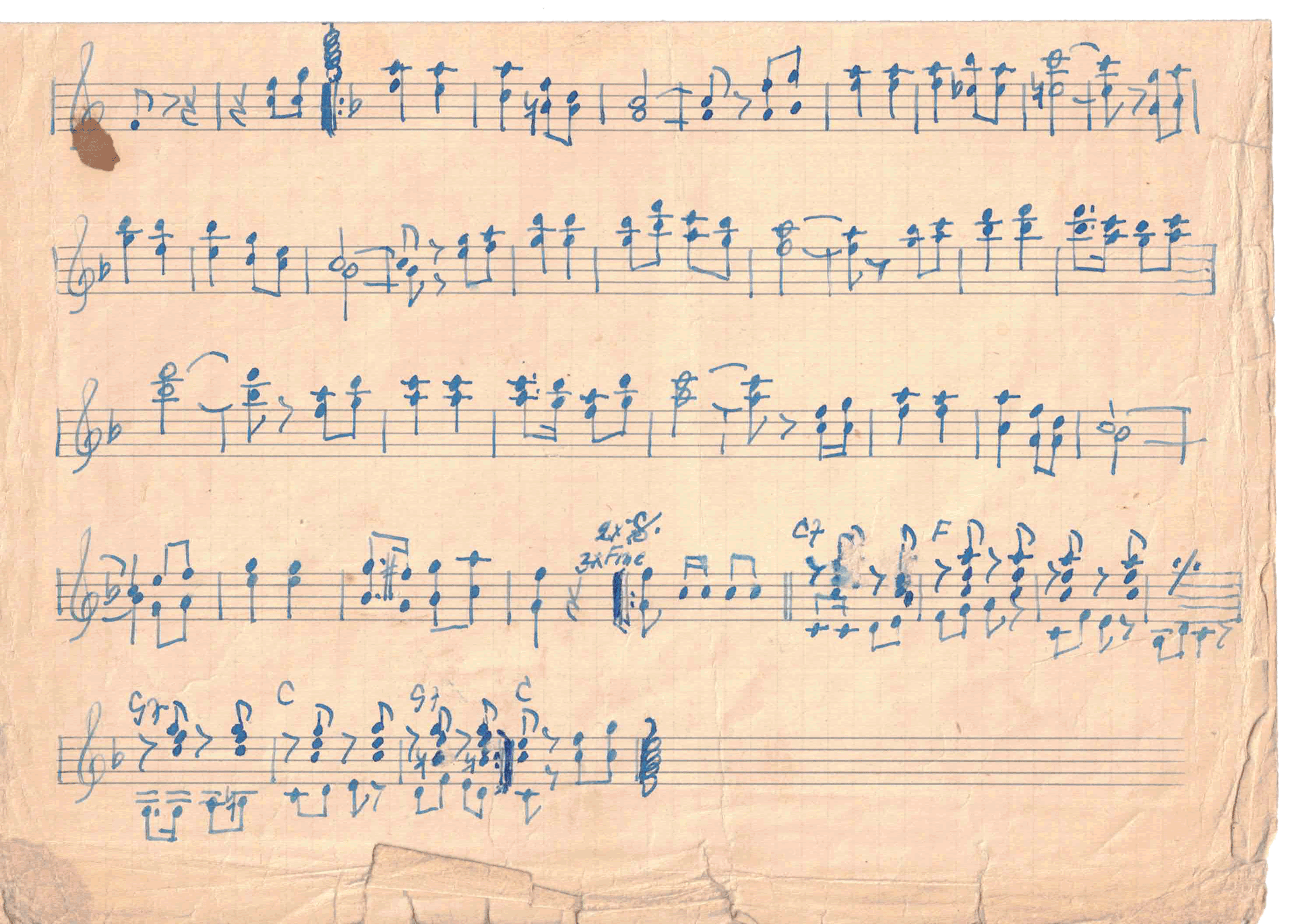
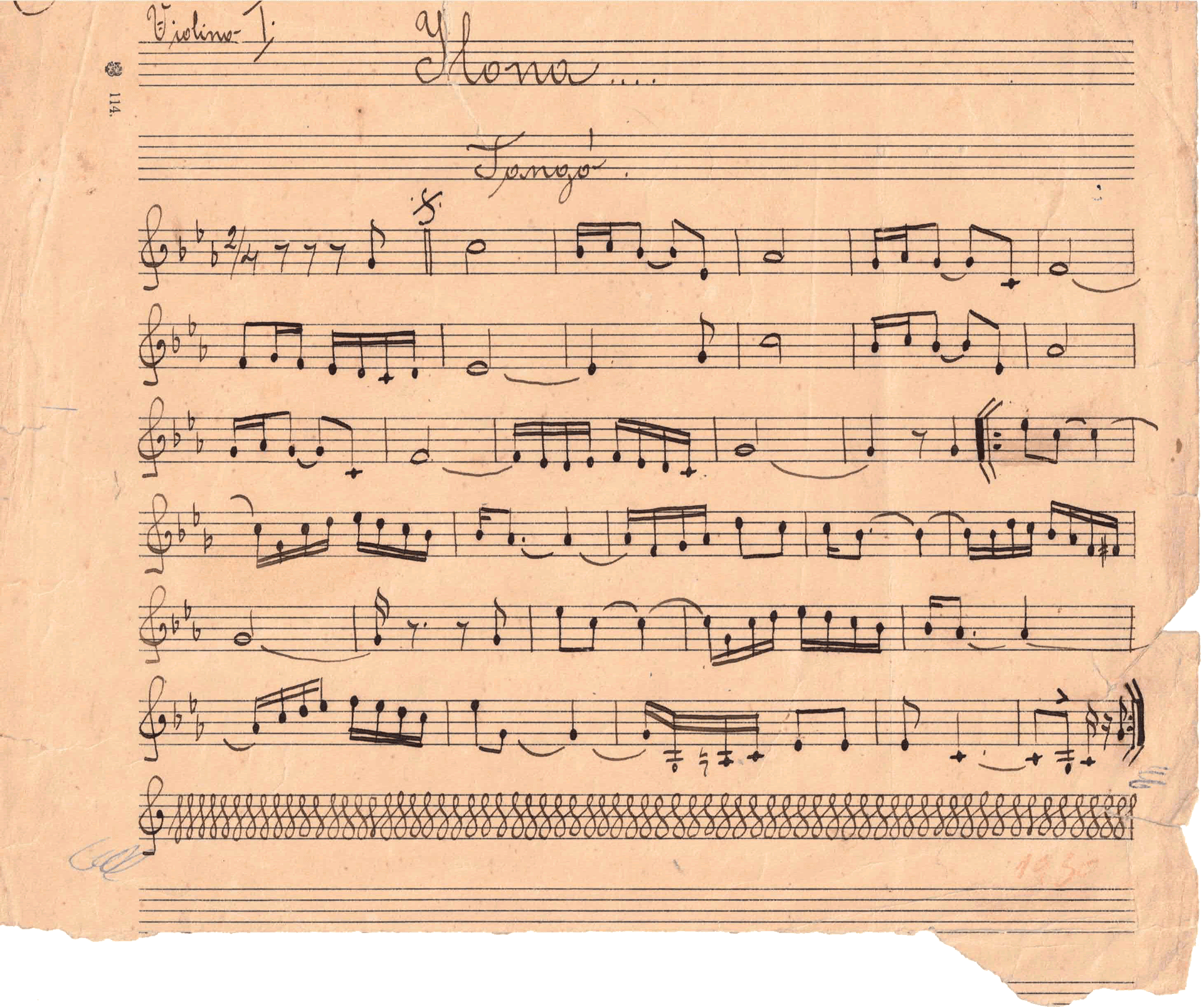
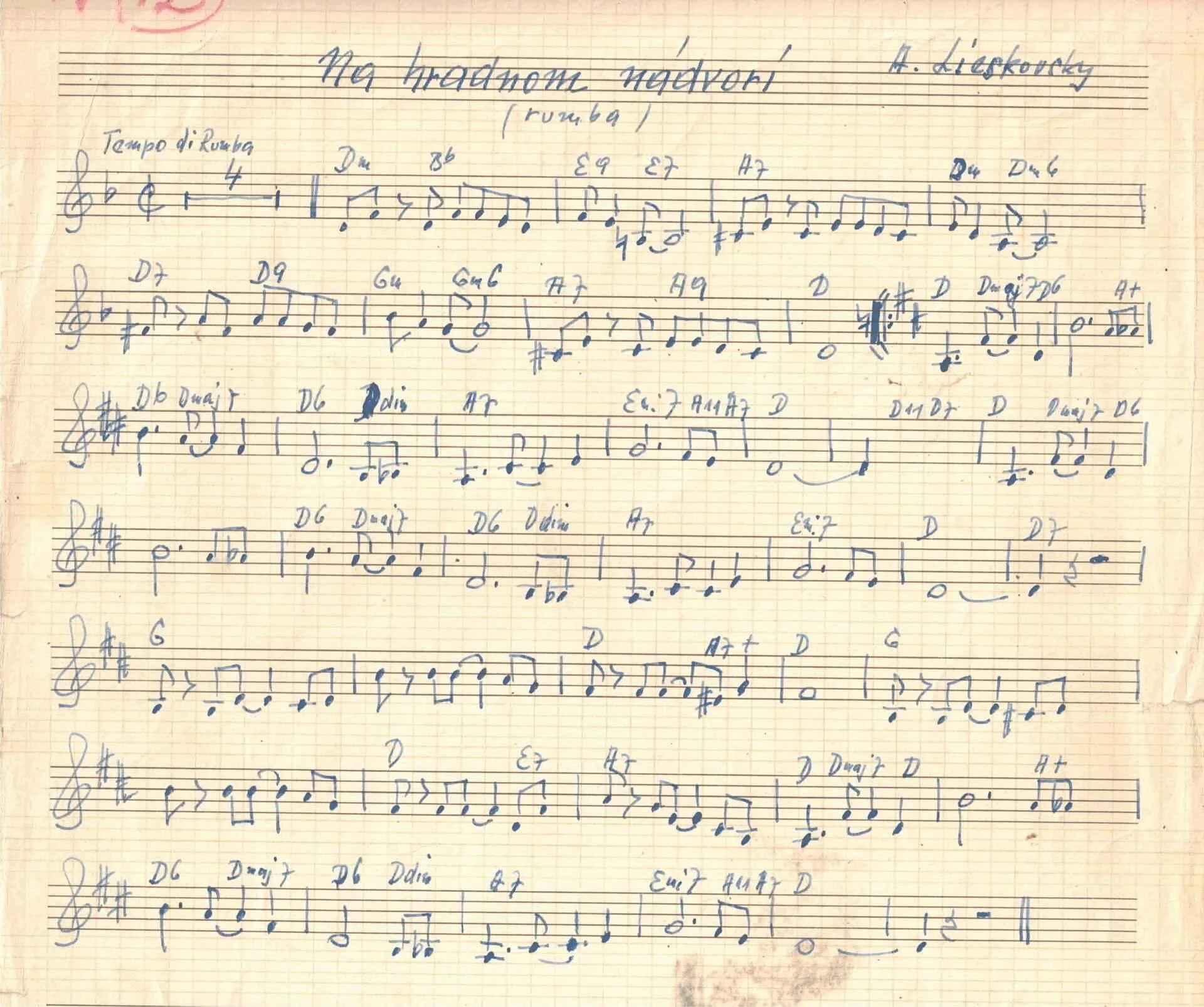
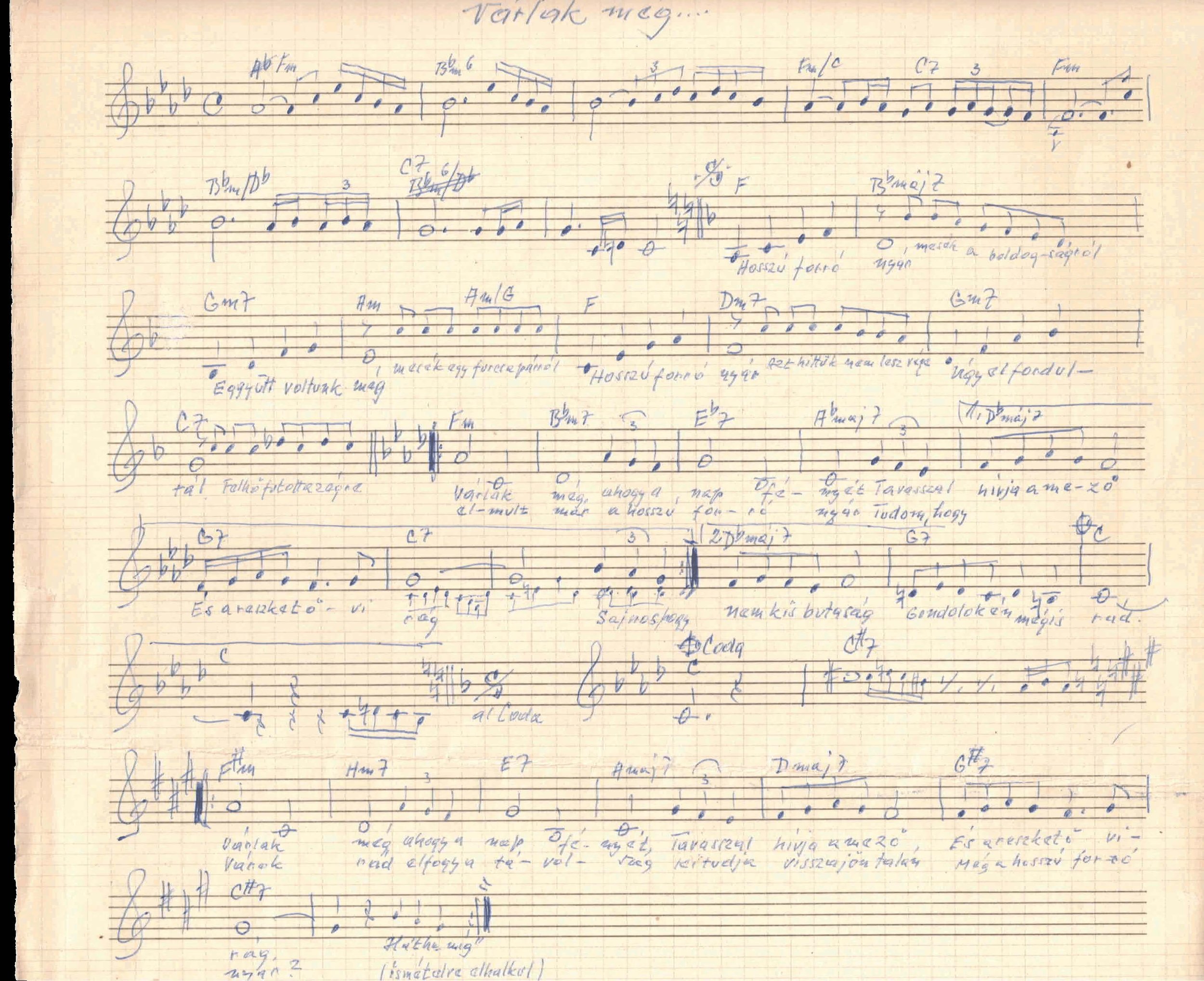
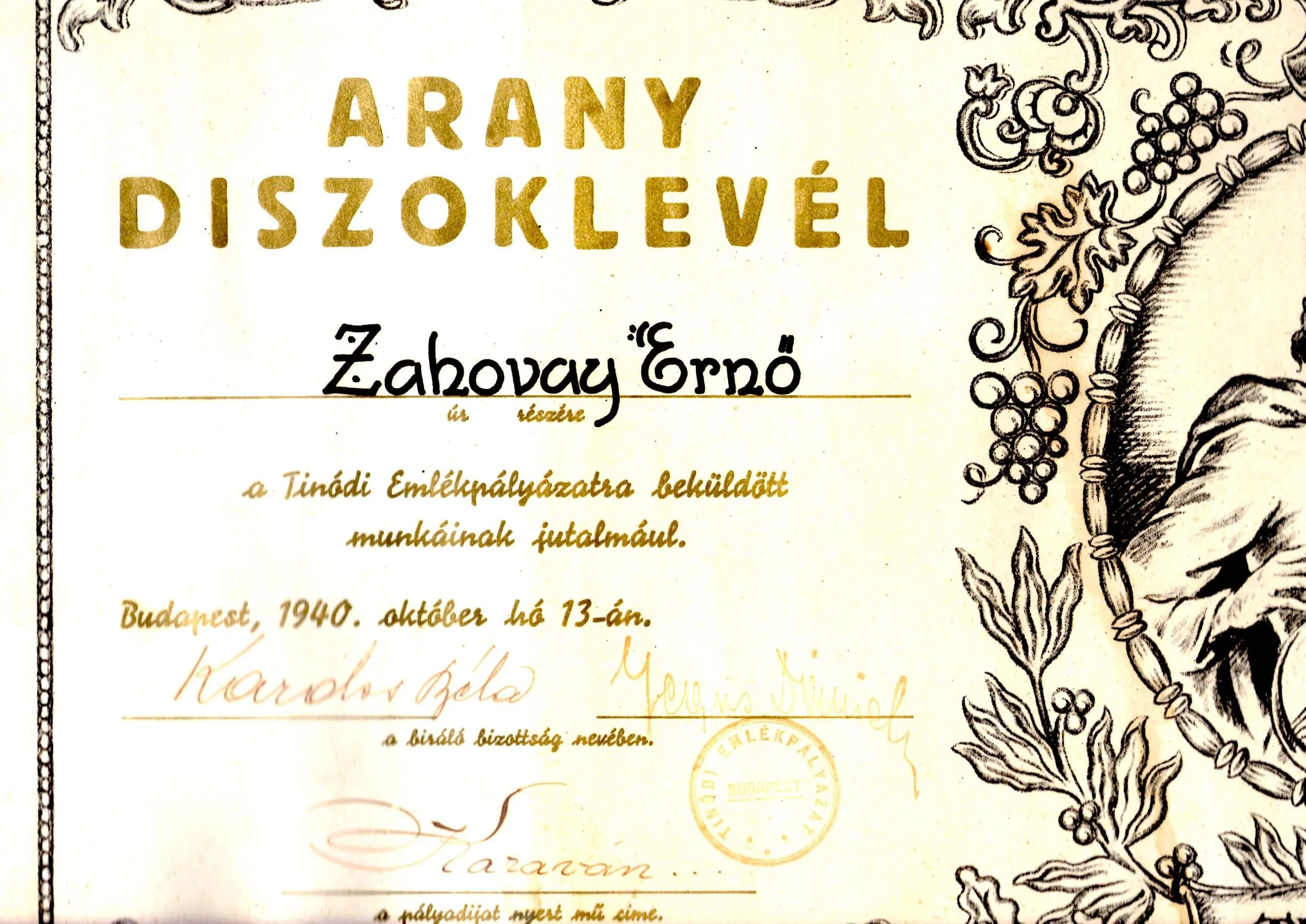
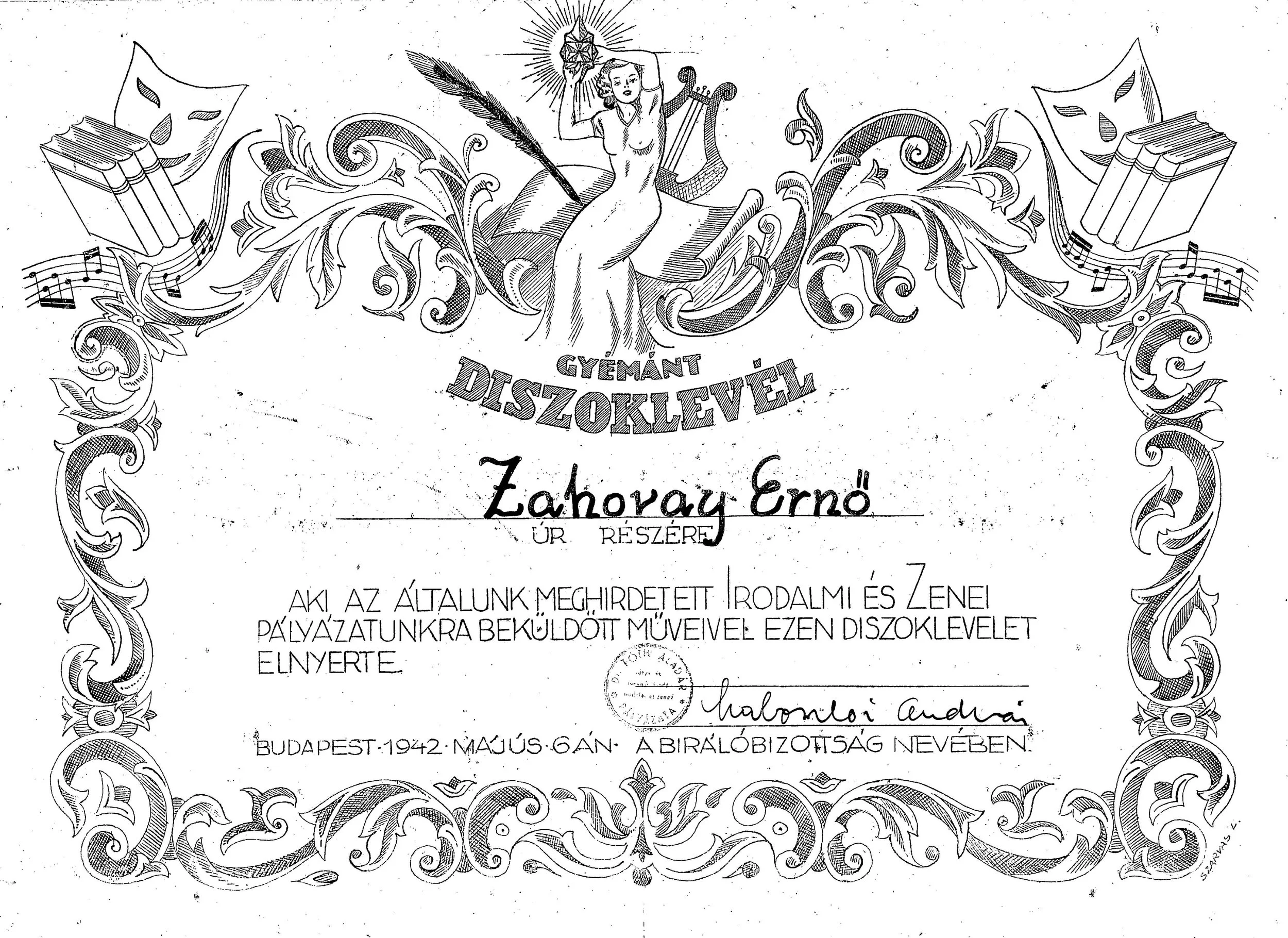
The Golden and Diamond diploma from 1940 and 1942 is a rare testament to the extraordinary musical talent of Ernö Zahovay (1913 - 1998), a distinguished composer, pianist, and founder of is dance band. He received this awards at a nationwide poetry and music competition in Budapest in recognition of his outstanding artistic achievement. Taking place during a period of profound social change and shortly before the outbreak of the Second World War, this distinction represented significant acknowledgment of his talent, which had already earned recognition far beyond his home region.
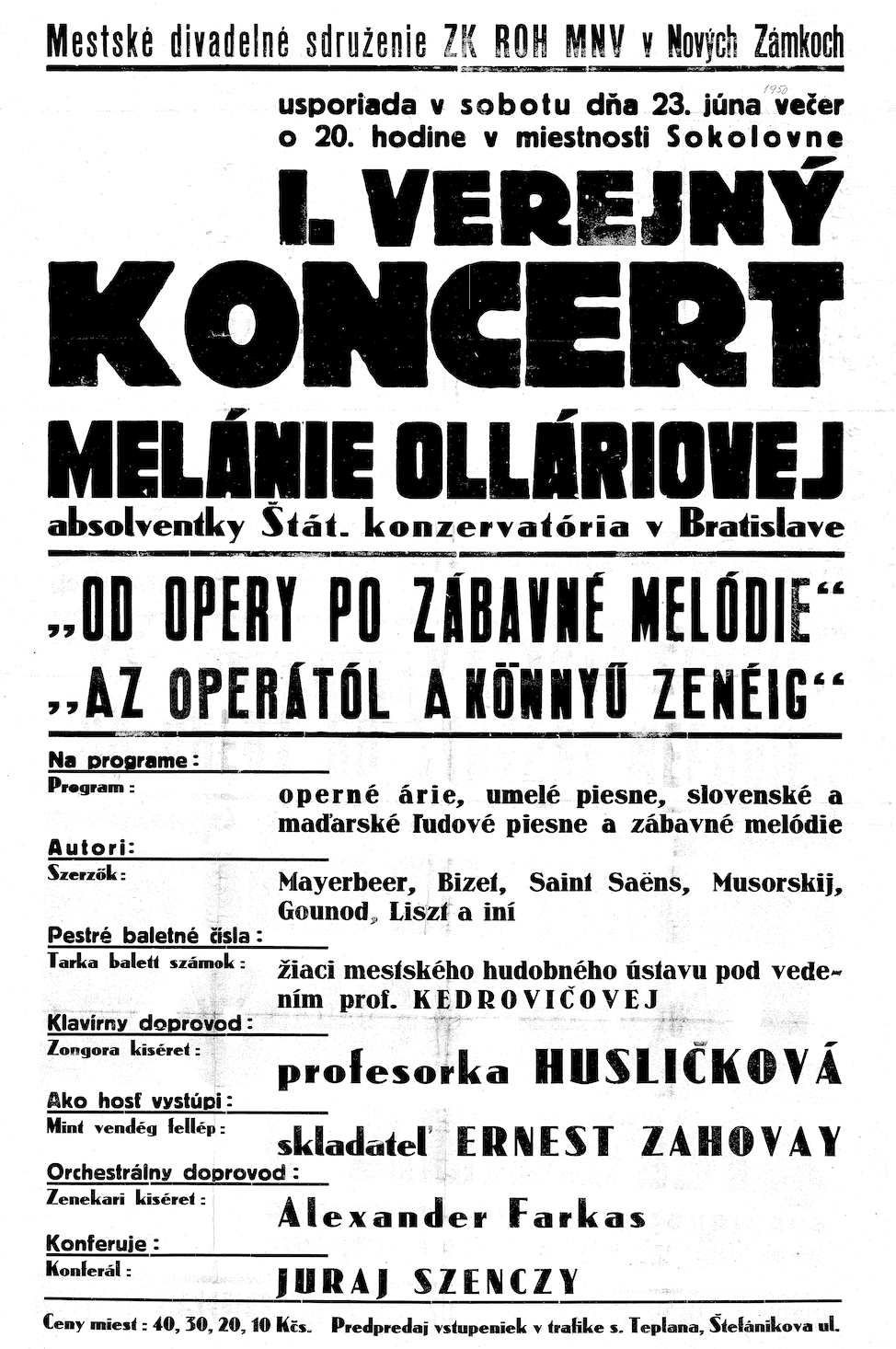
Public concert of the popular Slovak singer Melánia Olláriová. Ernö is listed as the composer.
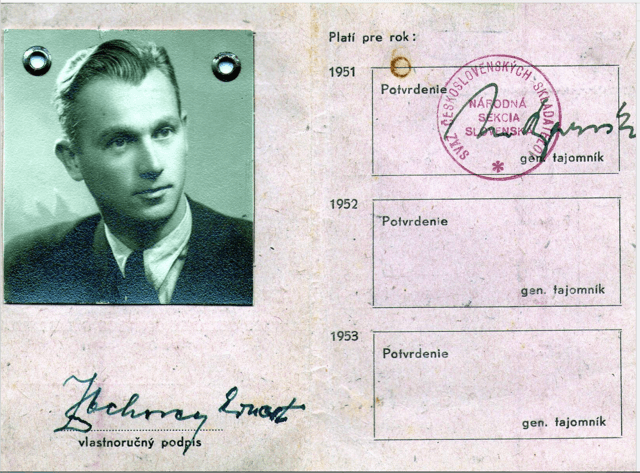
Ernö's membership card of the Czechoslovak Authors’ Union from 1951.
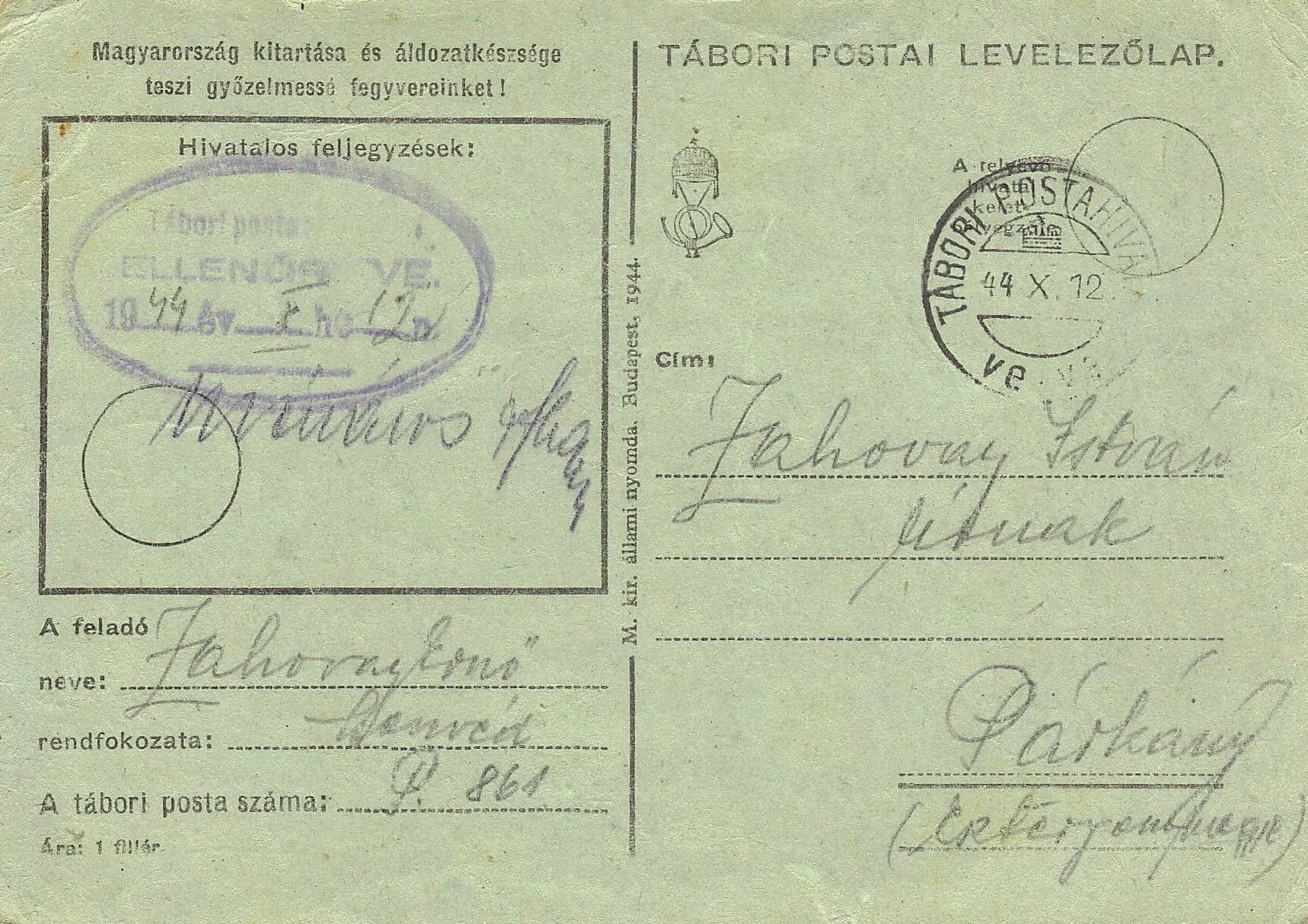
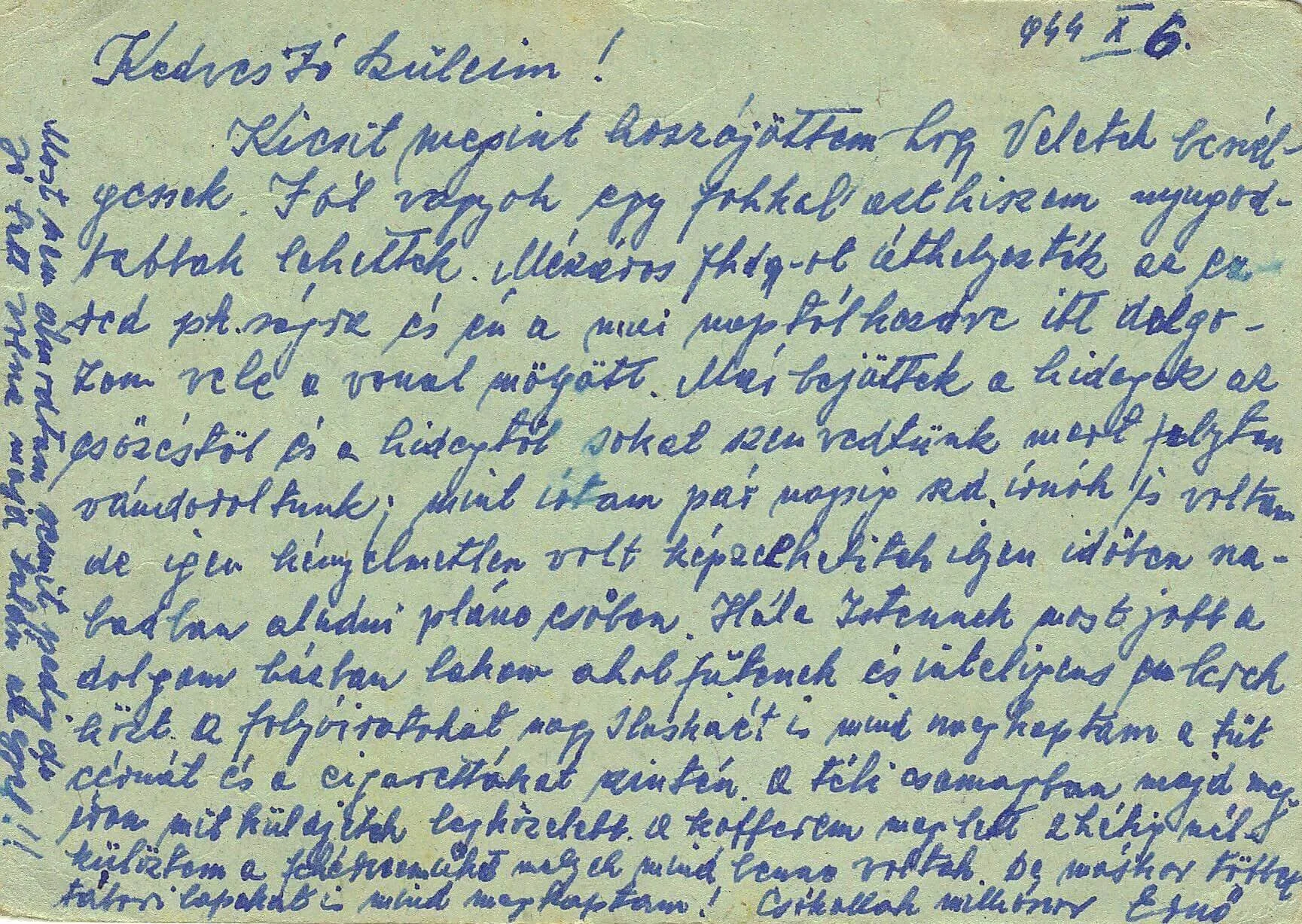
A correspondence card from 1944 from the military hospital in Landshut. Ernö writes home to his parents.
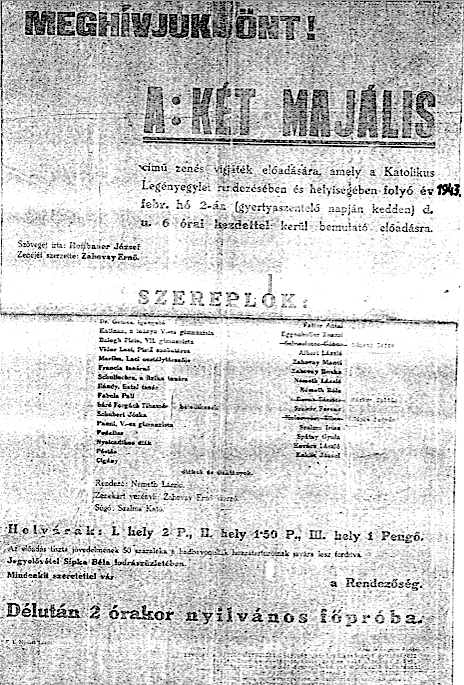
Poster for his first operetta A Két majális on February 2, 1943 in Štúrovo.
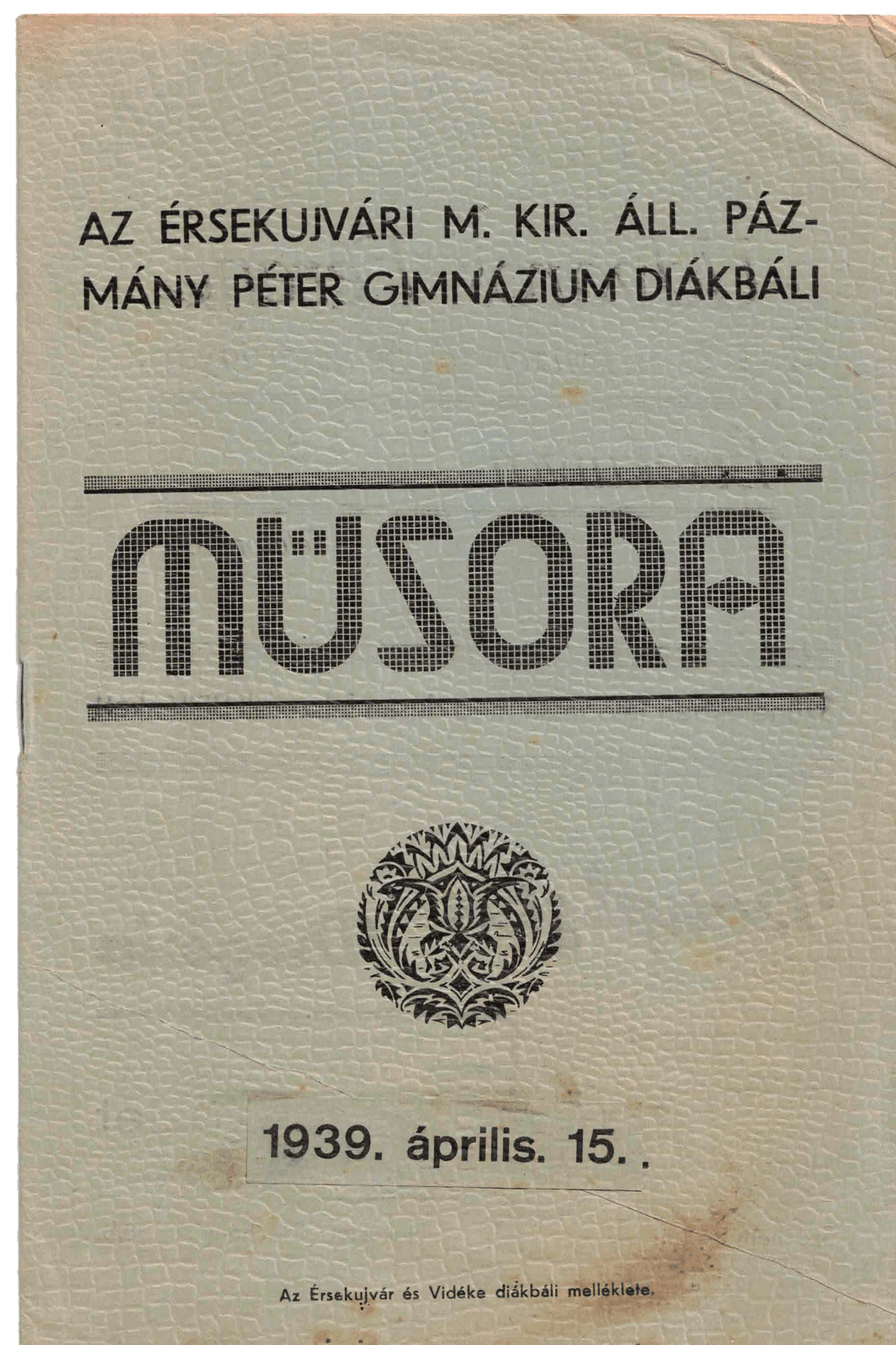
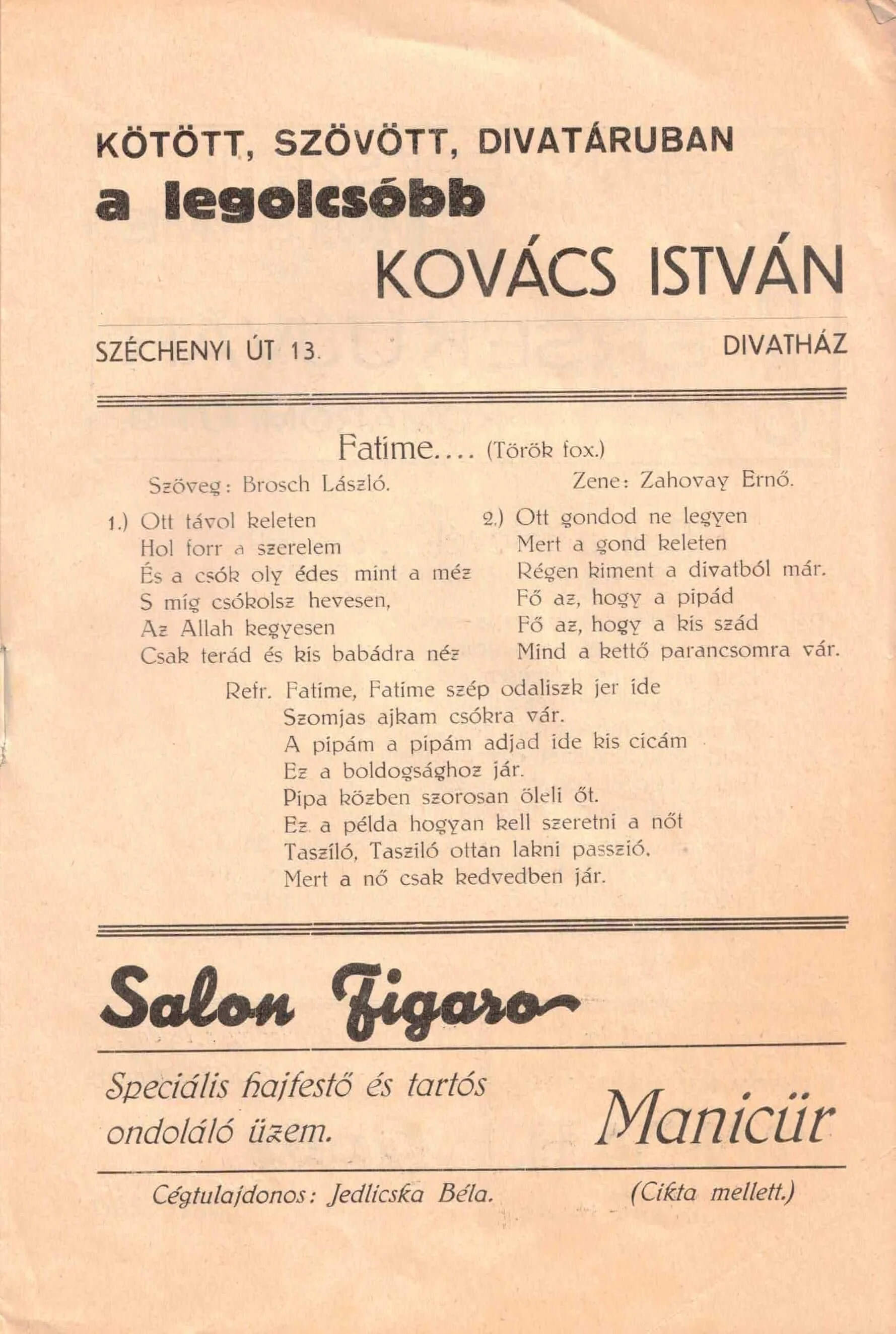
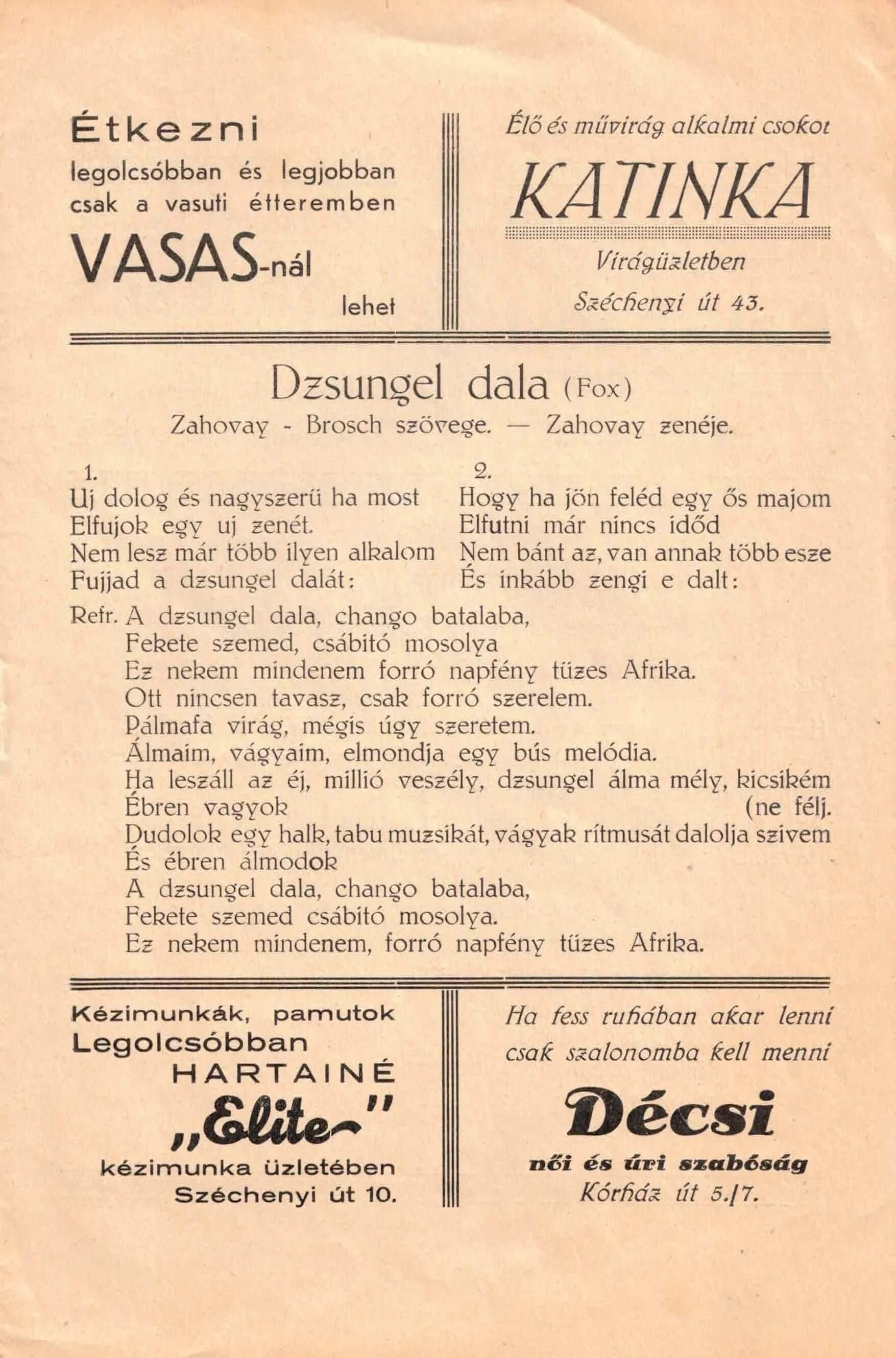
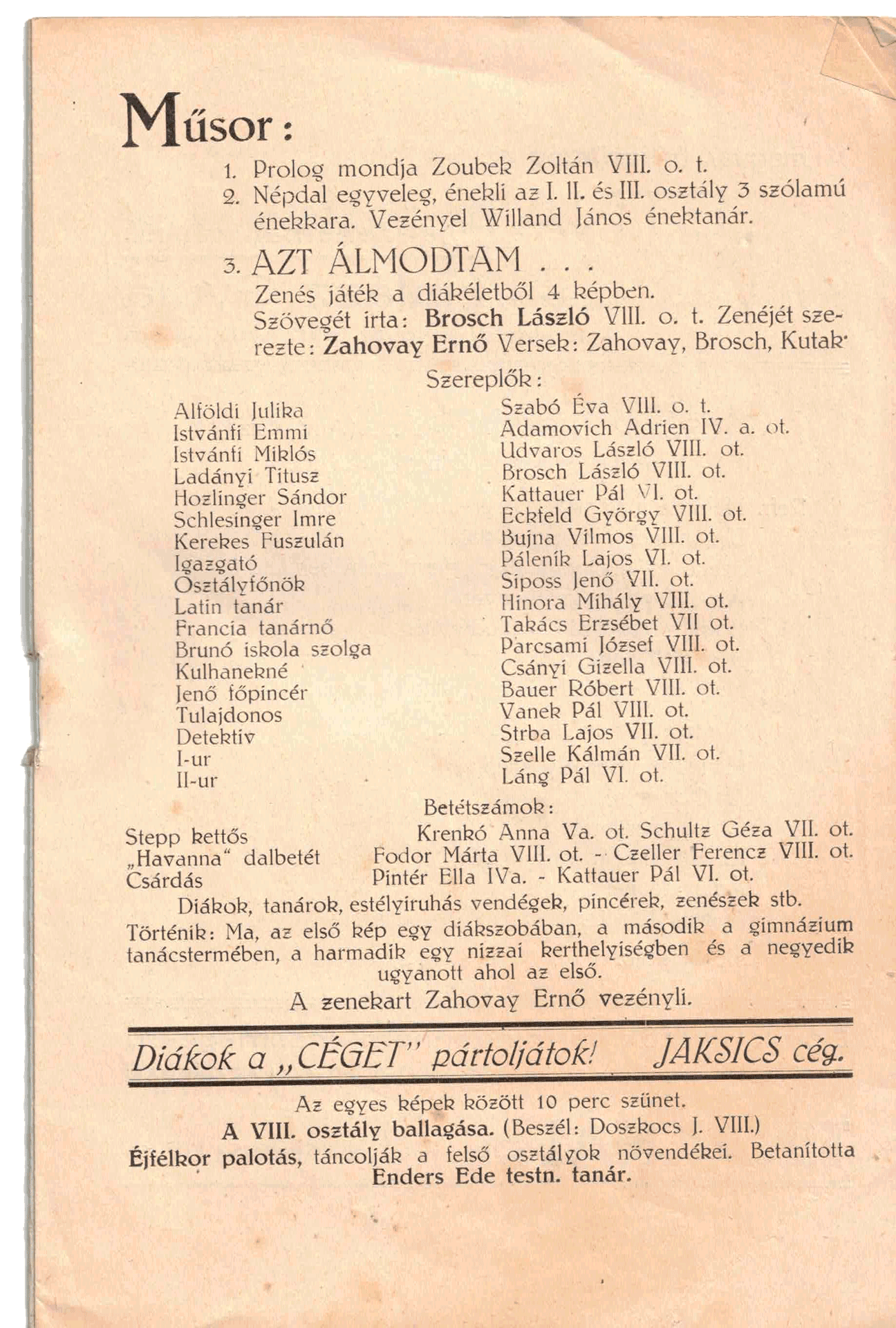
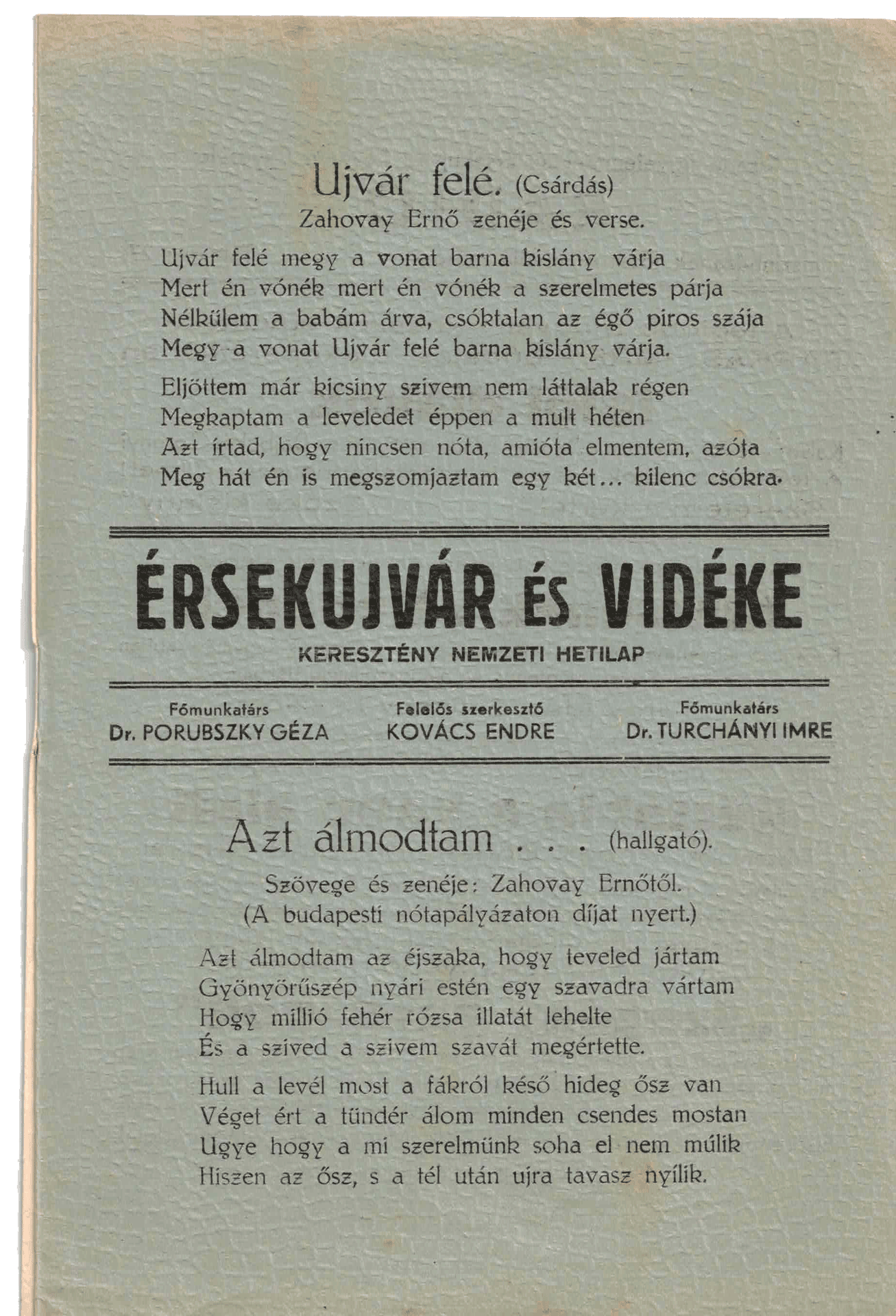
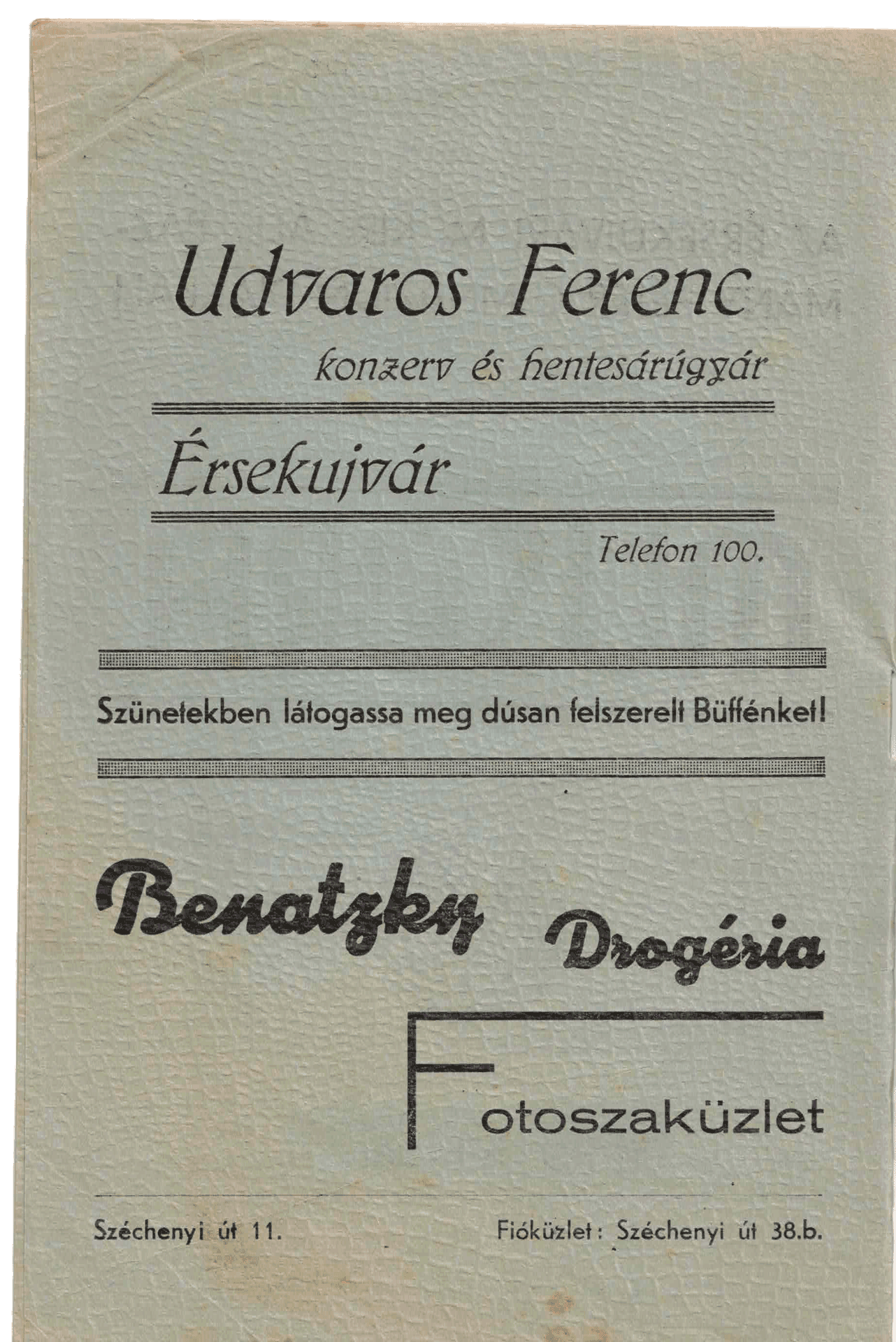
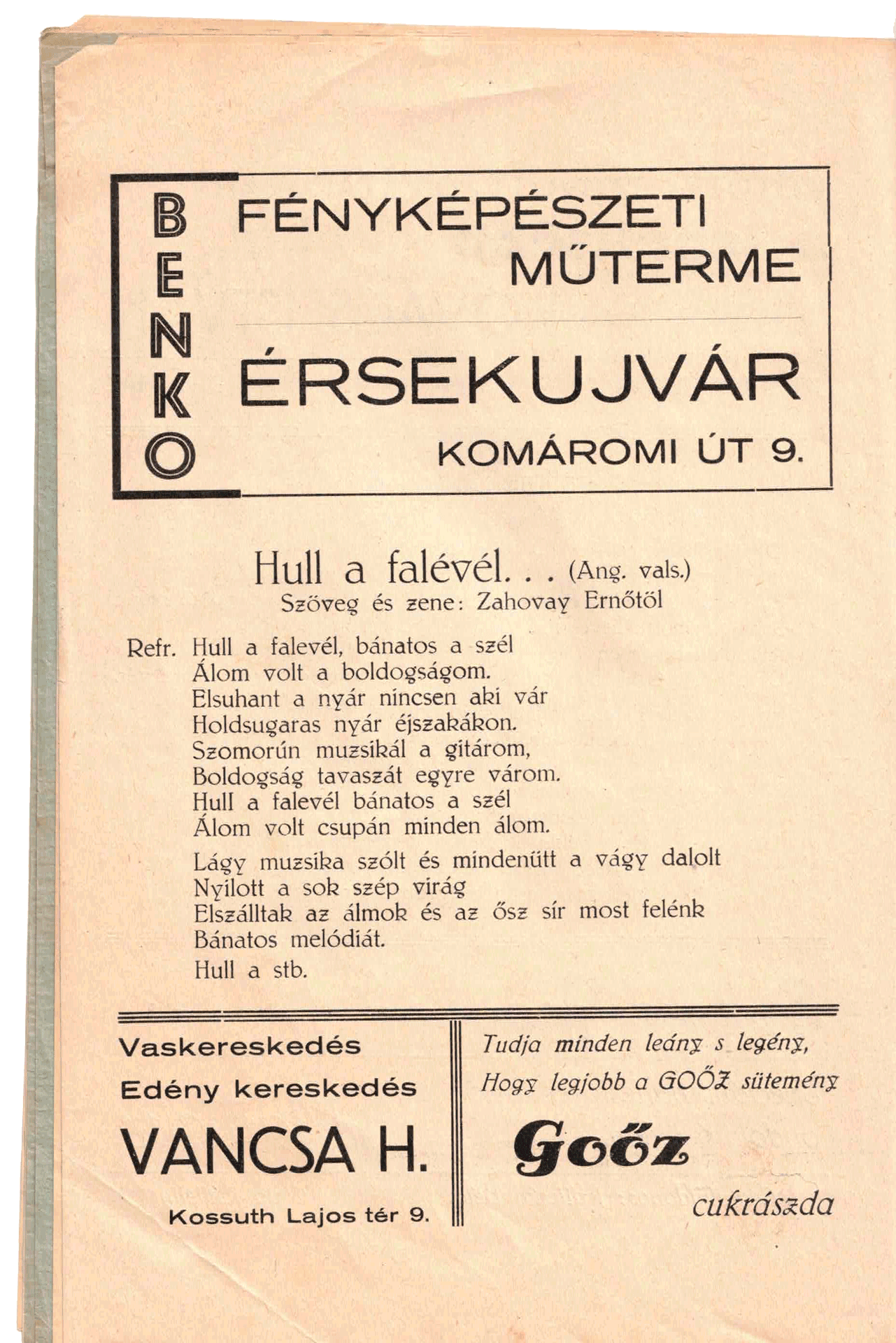
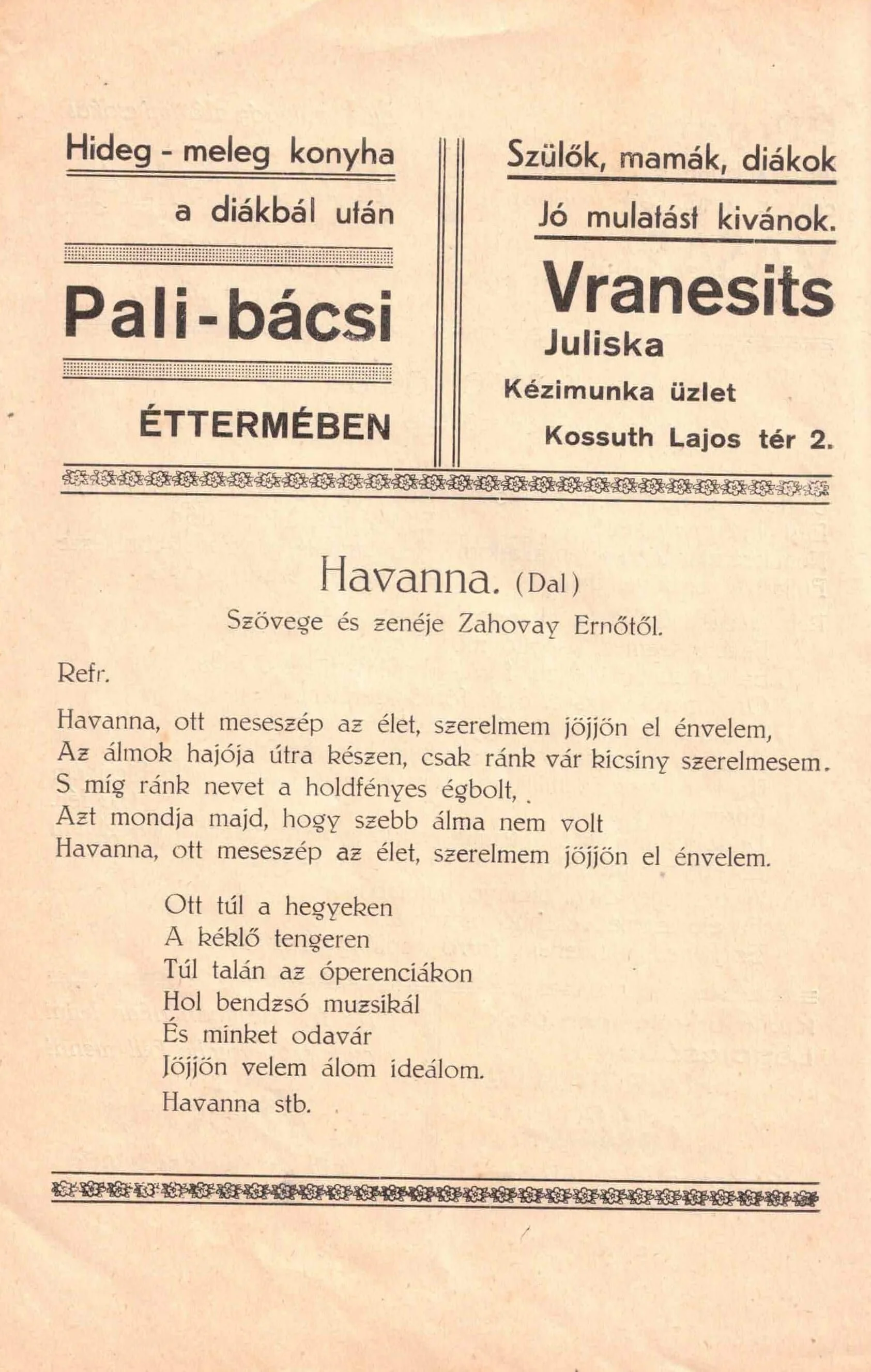
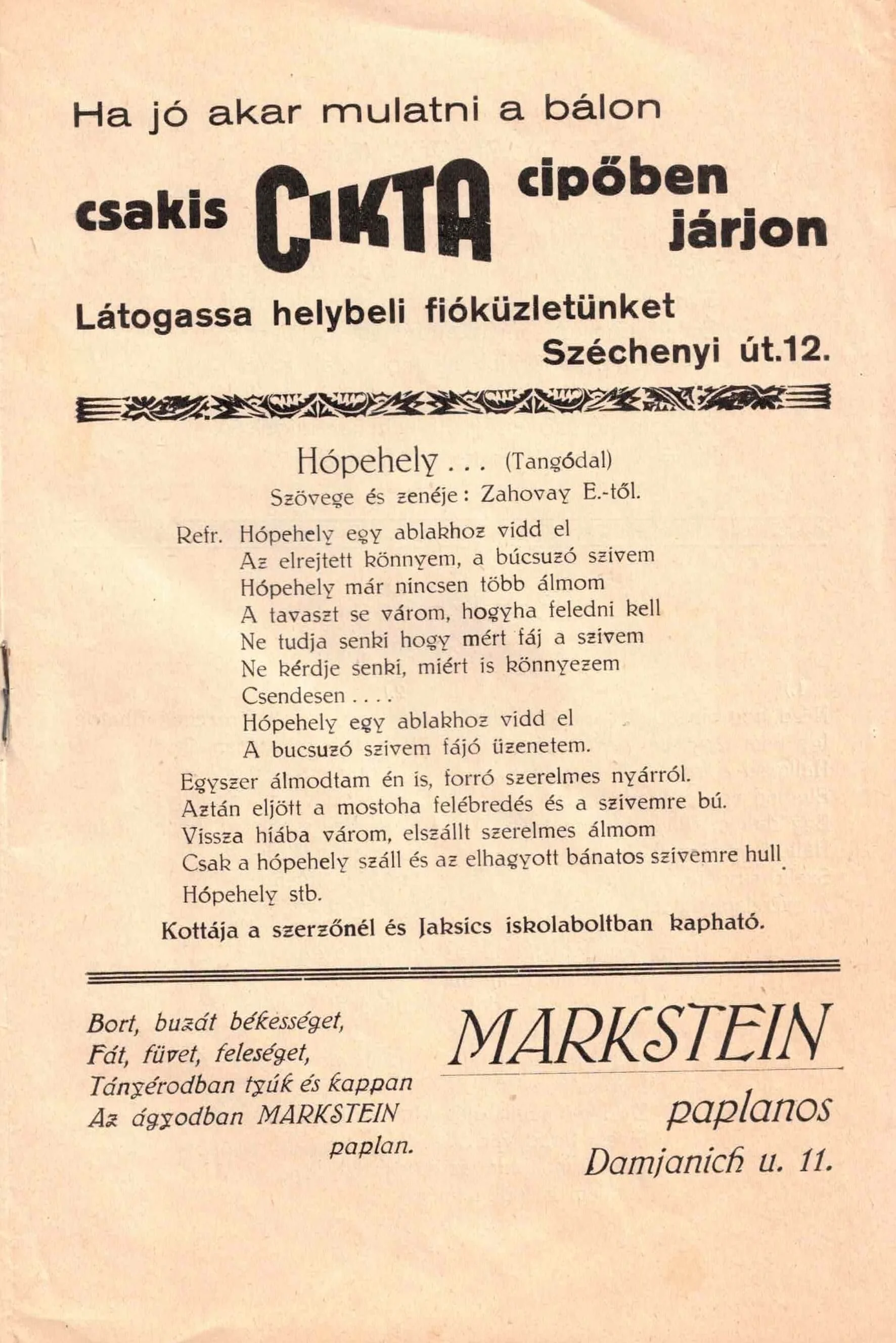
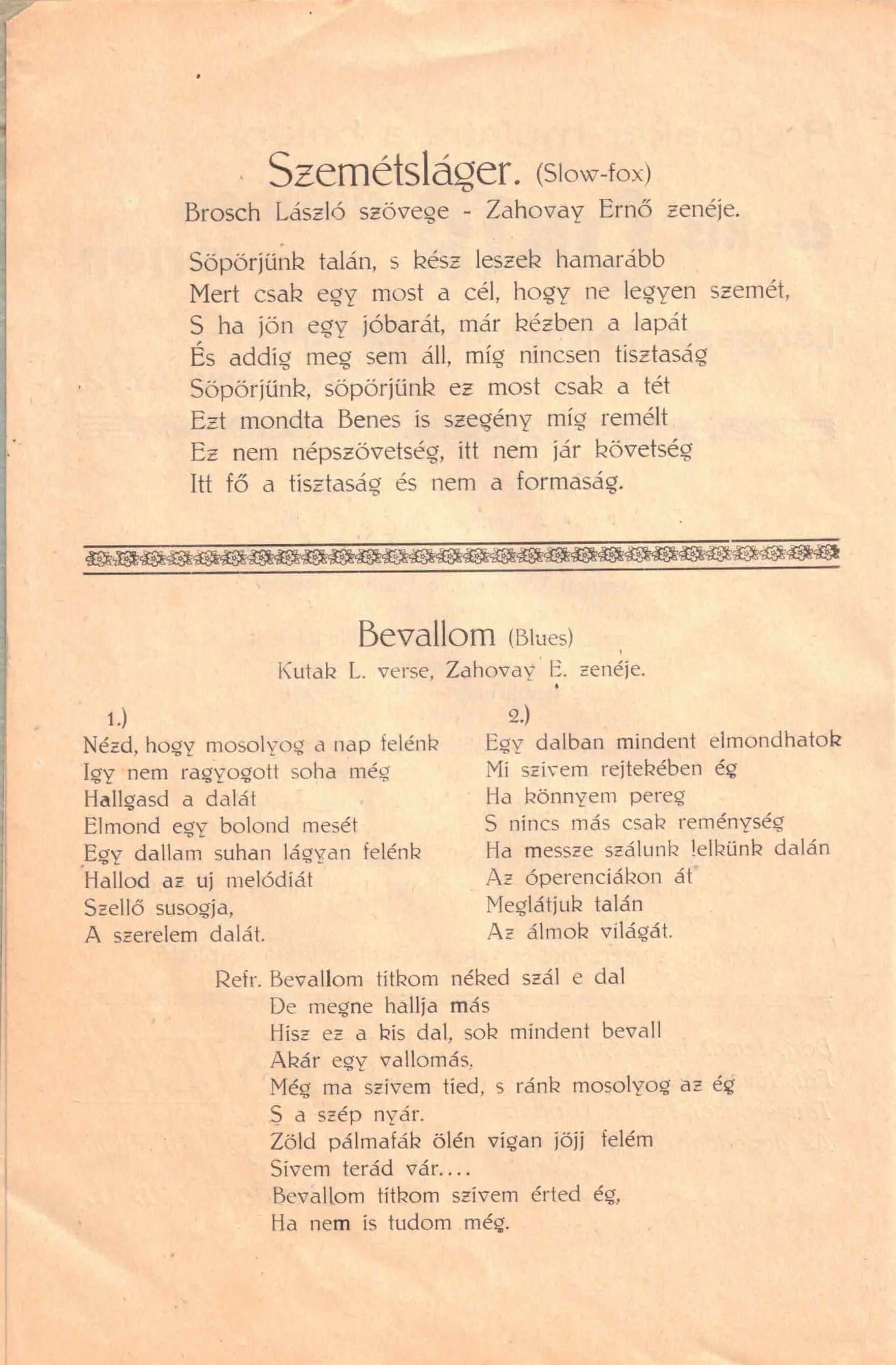
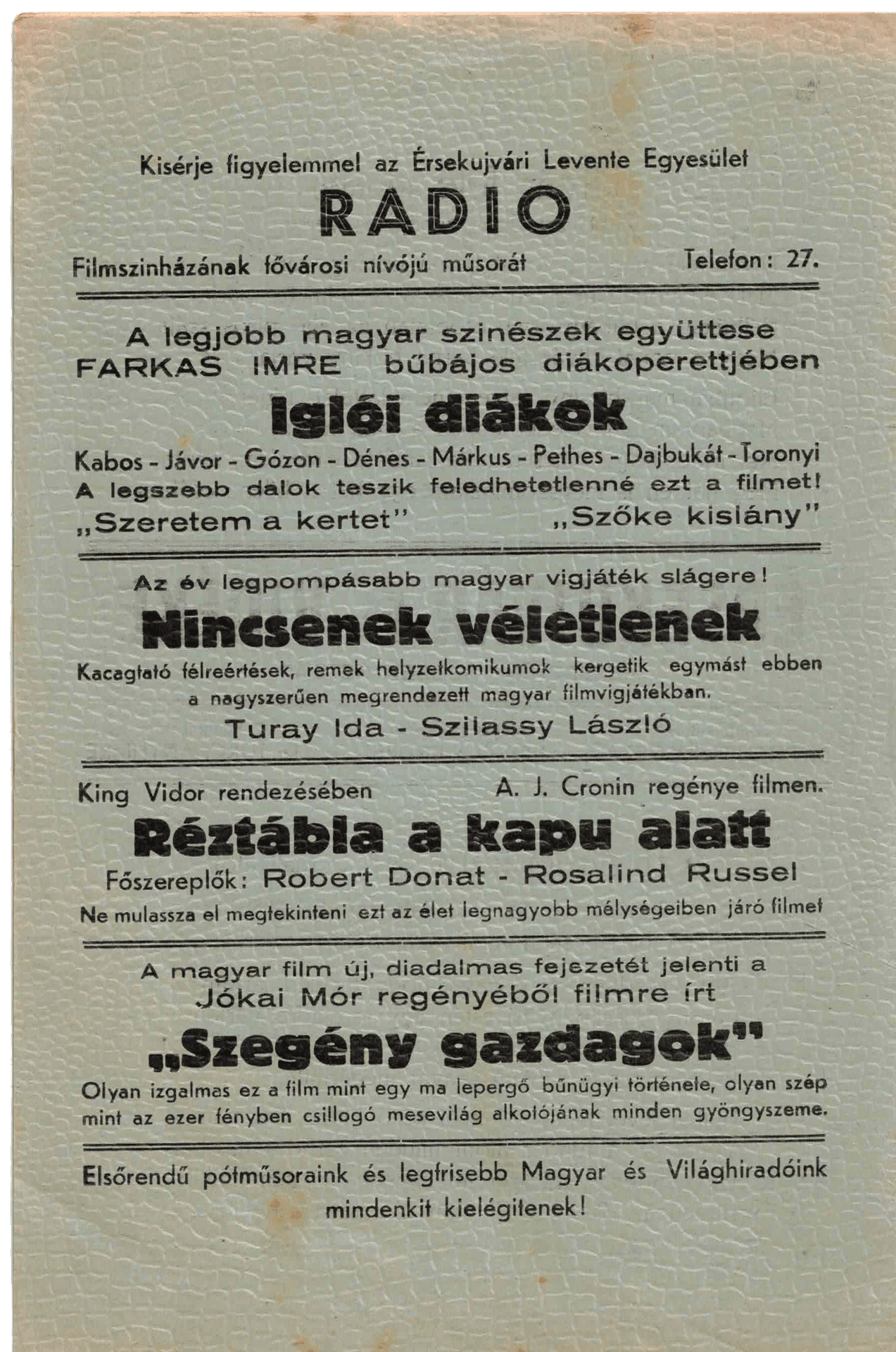
This rare program brochure from April 15, 1939, documents the birth of Zahovay’s first operetta, titled “Azt álmodtam…”. The young composer demonstrated an extraordinary sense of contemporary global music trends, composing songs in the rhythms of tango, blues, and foxtrot. His exceptional talent is further highlighted by the fact that the title song won a prestigious award at a national songwriting competition in Budapest.
This document also captures a vivid picture of local town life at the time. The advertisements printed on every page were placed by local merchants who financially supported the young artists.
Wreath-laying ceremony at Ernö Zahovay’s commemorative plaque
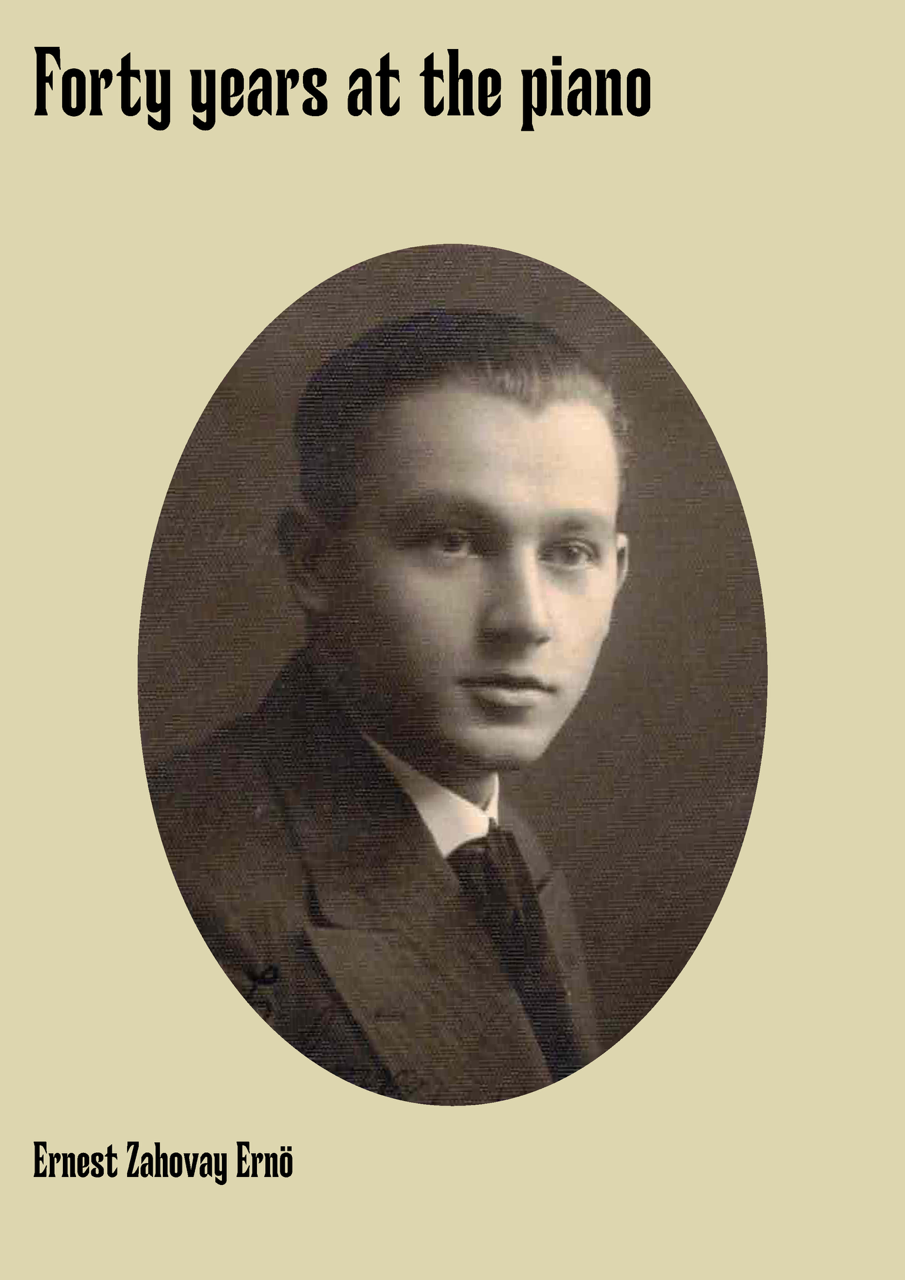
In this downloadable book, you will learn about the life and work of musician Ernö Zahovay, centered around the piano - from his first performances with his band in his native Štúrovo, through cafés and venues across Slovakia, through his wartime captivity, to the post-war years of composing and performing. The book also includes personal memories, stories from the café scene and the world of tango, as well as the names of the musicians he met along the way. The foreword was written by Rudolf Chmel, a prominent writer and former Slovak Ambassador to Hungary.
Štúrovo Music Days – Memorial gala concert dedicated to Ernö Zahovay (full concert)
Created by Ernö Zahovay’s daughter, Agi Ferienčíková.
Remembering you with love, Dad.